Moving to Wellington, Florida: The Honest Relocation Guide for 2026
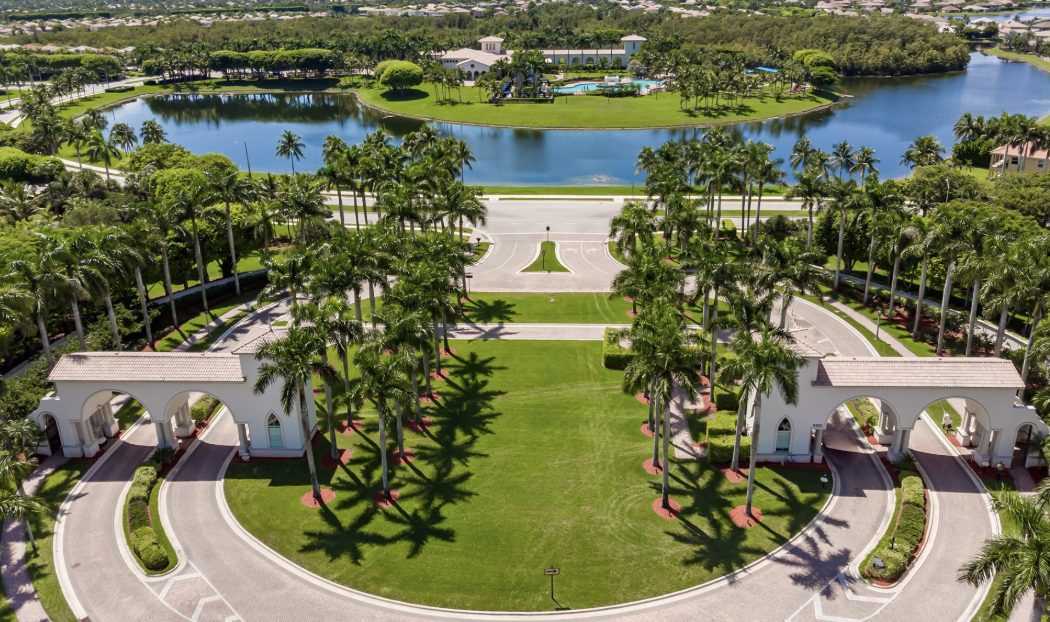
If you’re searching “moving to Wellington, Florida,” here’s the honest answer before the sales pitch: Wellington is one of the best-run suburbs in Palm Beach County, with top-rated schools and a genuinely low crime rate, but it is not a quick commute to anywhere, it turns into a horse-show traffic jam for four months a year, and the price of a home depends entirely on whether you want a quarter-acre lot or a 5-acre equestrian estate with a barn. This guide covers what it actually costs, which neighborhoods fit which kind of buyer, what the equestrian reality really looks like day to day, and what nobody tells you until you’ve already signed a contract.
Wellington incorporated as its own village in 1996 and now holds roughly 60,000 residents across 96,000 acres of what used to be farmland west of West Palm Beach. It’s unincorporated in feel but fully self-governed, with its own council, its own parks department, and its own drainage system tied into the South Florida Water Management District’s canal network. That last part matters more than people think. This is reclaimed Everglades muck land, and the entire village functions because of an engineered water table. Keep that in mind when you’re evaluating flood zones and lot elevation on any property you tour.
Moving to Wellington, Florida: The Honest Relocation Guide for 2026 Starts With the Trade-Offs
Every relocation guide to Wellington skips the trade-offs and jumps straight to “great schools, great lifestyle.” Both are true. But moving to Wellington, Florida means accepting three things upfront:
- There’s no direct interstate access. You’re getting to I-95 or the Turnpike via Southern Boulevard, Forest Hill Boulevard, or State Road 7 (441). All three back up during rush hour, and Southern Boulevard specifically backs up hard near the Turnpike interchange every single weekday.
- Winter Equestrian Festival season changes the town. From January through April, tens of thousands of horses, riders, grooms, and spectators pour into the Palm Beach International Equestrian Center off Pierson Road. Traffic on South Shore Boulevard and Pierson Road during those months is a real, measurable daily delay, not an exaggeration.
- “Wellington” covers wildly different price points. A townhome near Wellington Green Mall and a 10-acre horse farm off Lake Worth Road are both “Wellington,” but they are not the same relocation decision.
If those trade-offs work for your life, Wellington delivers real value: A-rated schools, a low violent crime rate, mature tree canopy, and a level of polish (medians, parks, drainage maintenance) that a lot of newer master-planned communities out west haven’t caught up to yet. For a deeper gut check on whether the town fits your life specifically, read Is Wellington, Florida a Good Place to Live? Honest 2026 Review.
What It Actually Costs to Live in Wellington
Home prices by category
As of 2026, here’s the realistic range by property type:
- Townhomes and villas (Buena Vida, Wellington Preserve, Isles at Wellington): roughly $340,000 to $480,000.
- Standard single-family homes, no acreage (Olympia, Versailles, Binks Forest, Black Diamond): roughly $500,000 to $750,000, depending on lot size, golf course frontage, and how recently the home was updated.
- Small acreage, minimal equestrian use (1 to 2 acres, sometimes zoned for a couple of horses): $800,000 to $1.5 million.
- Full equestrian estates (Saddle Trail Park, Grand Prix Village, Palm Beach Point, South Shore Estates): $2 million to $6 million for a functional setup with a barn and paddocks, climbing past $10 million for showgrounds-adjacent properties with full facilities.
For the full pricing breakdown by segment and how 2026 trends are moving, see Wellington, FL Real Estate Market 2026: Prices, Equestrian Properties & Trends.
HOA fees, and where CDDs do (and don’t) apply
Most of Wellington’s non-equestrian neighborhoods carry HOA fees between $150 and $450 a month, covering common area landscaping, gate staffing (in gated sections like Olympia and Versailles), and amenity upkeep. Because Wellington was largely built out in the 1970s through 2000s rather than through a modern master-developer CDD structure, you won’t find the kind of long-term CDD bond debt that’s common in newer western communities like Westlake or parts of Parkland. That’s a real financial advantage: no 30-year bond assessment riding on top of your tax bill. Always confirm the specific HOA docs and any special assessment history before you write an offer, since older HOAs occasionally levy one-time assessments for infrastructure repairs (drainage, road resurfacing, clubhouse renovations).
Equestrian neighborhoods are a different animal entirely. Saddle Trail Park and Grand Prix Village typically have light or no HOA, but property taxes and insurance run higher because of the acreage and outbuildings, and you’re self-managing well water, septic, and often private drainage on top of the home itself.
Property taxes and insurance
Expect a combined millage rate (Village of Wellington, Palm Beach County, School District of Palm Beach County, South Florida Water Management District) landing around 17 to 19 mills depending on your specific taxing district. On a $650,000 home, that’s roughly $8,000 to $10,000 a year before any homestead exemption. Insurance is a genuine bright spot compared to coastal Palm Beach and Broward: Wellington sits well inland, mostly in Flood Zone X, which means flood insurance is often optional and cheap rather than mandatory and expensive. Wind mitigation credits on newer or updated roofs still matter for your homeowners premium, same as anywhere else in South Florida.
The cost of keeping horses (if that’s why you’re moving)
This is the number that surprises relocators most. Even if you buy land with a barn, board and care add up fast: full-service board at a private facility runs $1,200 to $2,500 a month per horse, and that’s before farrier visits (roughly $150 to $300 every six to eight weeks), vet care, and feed. If you’re self-caring on your own property, budget for footing maintenance, fencing repair after every serious storm, and irrigation. None of this is a dealbreaker, but relocators who budget only for the mortgage and skip the ongoing horsekeeping math get an unpleasant surprise around month three.
The Best Neighborhoods in Wellington, and Who Each One Fits
Wellington isn’t one market, it’s six or seven distinct micro-markets stitched together. Here’s the honest breakdown:
Olympia and Versailles
Gated, golf-course-anchored, HOA in the $350 to $450 a month range. Homes built mostly in the 2000s to 2010s. Good fit for families who want amenities (clubhouse, resort pool, tennis) and don’t need land. Zoned for strong elementary options and close to Wellington’s main retail corridor.
Binks Forest and Black Diamond
Older, more established golf communities with noticeably lower HOA fees than Olympia or Versailles, often $150 to $250 a month. Mature landscaping, larger lots relative to price, and a quieter, less “new construction” feel. Good value play for buyers who want space without the equestrian price tag.
Saddle Trail Park
The closest equestrian neighborhood to the Palm Beach International Equestrian Center, walkable to the showgrounds during WEF. The most expensive dirt in Wellington by the acre. This is where serious competitive riders base themselves for the season. Expect $2.5 million and up for anything functional.
Grand Prix Village (North and South) and Palm Beach Point
Slightly further from the showgrounds than Saddle Trail but still fully built for horse life: barns, paddocks, riding rings, direct or near-direct bridle trail access. Palm Beach Point in particular has a range from serious estates down to more modest 2-to-5-acre setups, giving it a wider price band, roughly $1.5 million to $5 million.
South Shore and Paddock Park
More transitional equestrian-adjacent areas with a mix of small farms and standard single-family homes. Worth a look if you want proximity to the horse world without paying showground-adjacent prices.
Isles at Wellington, Buena Vida, and the townhome cluster near Wellington Green
The entry point. Townhomes and smaller single-family homes from the high $300s to low $500s, close to the Mall at Wellington Green, Wellington Regional Medical Center, and the main retail corridor along State Road 7. This is where most first-time buyers and downsizers land.
For the full neighborhood-by-neighborhood comparison with more detail on each HOA and price band, read Best Neighborhoods in Wellington, FL: The 2026 Honest Guide. If you’re a first-time buyer trying to figure out what’s realistically in reach, First-Time Buyer’s Guide to Wellington, FL: What’s Actually Possible breaks down the entry-level segment specifically.
The Equestrian Reality Nobody Explains
Wellington calls itself the winter equestrian capital of the world, and it’s not marketing spin. The Palm Beach International Equestrian Center runs the Winter Equestrian Festival from January into April, one of the largest and longest-running horse show circuits in the country. That has two real effects on anyone moving here, whether you ride or not.
First, traffic. South Shore Boulevard and Pierson Road, the main arteries near the showgrounds, see a dramatic increase in volume during season: horse trailers, golf carts crossing at designated crossings, staff and spectator traffic layered onto normal commuter flow. If your daily commute crosses that corridor, budget real extra time from January through April. This isn’t a rare inconvenience, it’s a predictable seasonal reality that repeats every year.
Second, the local economy shifts with it. Restaurants, tack shops, and short-term rentals all ramp up for season and quiet down in the off months (May through November). If you’re buying with an eye toward renting out a property or a guest cottage during WEF, that seasonal cycle is your revenue window, and it closes hard once the circuit ends.
None of this means you need to own a horse to live here happily. Most Wellington residents don’t. But if you’re specifically relocating for the equestrian lifestyle or considering an equestrian property as an investment, read Wellington, FL Equestrian Properties: What Buyers Need to Know Before Purchasing before you tour anything with a barn on it. Zoning, well and septic condition, ring footing quality, and bridle trail easements all need real due diligence that a standard home inspection won’t cover.
Schools, Commute, and Daily Life
Schools
This is Wellington’s strongest card. The village is served by the School District of Palm Beach County, and Wellington-zoned schools consistently post some of the district’s better performance ratings, particularly Wellington High School, Wellington Landings Middle, and elementary options like New Horizons and Panther Run. School zoning changes year to year and boundary lines cut through specific neighborhoods in ways that surprise relocators, so verify the exact zoned school for any address you’re considering before you fall in love with the house. The full breakdown of zones, ratings, and which neighborhoods feed which schools is in Wellington, Florida Schools: What Families Need to Know Before Moving.
Commute reality
Wellington has no direct interstate exit. Your options into West Palm Beach, the airport (Palm Beach International, about 30 to 40 minutes depending on traffic and season), or Boca Raton to the south run through Southern Boulevard, Forest Hill Boulevard, or 441. All three are workable but none are fast during peak hours. If your job requires a daily commute east, drive the actual route at 7:30am and 5:30pm before you commit to a neighborhood. The map distance and the real drive time in Wellington are not the same thing.
Daily life
Grocery, retail, and healthcare are well covered locally: the Mall at Wellington Green anchors the main shopping corridor along State Road 7, and Wellington Regional Medical Center covers everyday healthcare needs without a drive to West Palm Beach. Parks and recreation are genuinely strong for a suburb this size, with the Village of Wellington’s amenities and the equestrian trail network giving outdoor access that’s rare this close to South Florida’s coastal sprawl. For a full walkthrough of what a normal week actually looks like living here, from grocery runs to weekend options, read Living in Wellington, Florida: What Daily Life Actually Looks Like.
Wellington vs. Nearby Options
The most common alternative relocators compare against is Boca Raton, about 20 to 30 minutes south depending on route. Boca offers direct I-95 access, a denser retail and dining scene, and coastal proximity that Wellington simply doesn’t have. Wellington answers back with lower density, more land per dollar, and a suburban school-and-space package that Boca’s built-out core can’t match at the same price point. Neither is objectively better, they serve different priorities. If you’re weighing the two directly, the full side-by-side is at Wellington vs. Boca Raton.
How to Actually Move Here: A Realistic Timeline
- Drive the commute first, house-hunt second. Before you fall for a listing, drive your actual daily route at the times you’d actually be driving it, including during WEF season if that overlaps your search window.
- Decide your equestrian tier honestly. Do you need a working barn, a couple of paddocks, or zero horses at all? This single decision cuts your neighborhood list by more than half.
- Confirm the school zone on paper, not by assumption. Boundary lines shift and don’t always follow neighborhood names intuitively.
- Budget insurance and taxes into your monthly number, not just the mortgage. Flood insurance is likely optional here, but confirm your specific flood zone and get a wind mitigation inspection quote before closing.
- Get HOA docs and assessment history in full before you write an offer, especially in older communities like Binks Forest or Black Diamond where a special assessment can appear with little warning.
- If buying equestrian, budget the ongoing costs (board, farrier, footing, fencing) separately from the purchase price. This is where first-time equestrian buyers most often underbudget.
Still have specific questions before you commit? The most common relocator questions, answered directly, are collected in Wellington, FL FAQ: 18 Questions Buyers Ask Before Moving.
The Bottom Line
Moving to Wellington, Florida in 2026 is a strong move for families who want top-tier public schools, low crime, and more land per dollar than the coast offers, and who can live with a commute that runs through Southern Boulevard or Forest Hill rather than a highway on-ramp. It’s a genuinely different decision if horses are part of your life, where the property search, the ongoing costs, and the seasonal rhythm of the town all shift dramatically. Get honest with yourself about which version of Wellington you’re actually moving for before you start touring, and the rest of the process gets a lot more straightforward.
If you’re ready to talk specifics, tell me your budget, your must-have school zone, and whether horses are part of the plan. That’s enough for me to point you at the right two or three neighborhoods instead of sending you on a tour of all of them.

More articles you might like
Wellington, FL FAQ: 18 Questions Buyers Ask Before Moving
13 min readLiving in Wellington, Florida: What Daily Life Actually Looks Like
14 min readIs Wellington, Florida a Good Place to Live? Honest 2026 Review
18 min readBest Neighborhoods in Wellington, FL: The 2026 Honest Guide
18 min readWellington vs. Boca Raton: Which Is Right for Families in 2026?
13 min read