Wellington, FL FAQ: 18 Questions Buyers Ask Before Moving
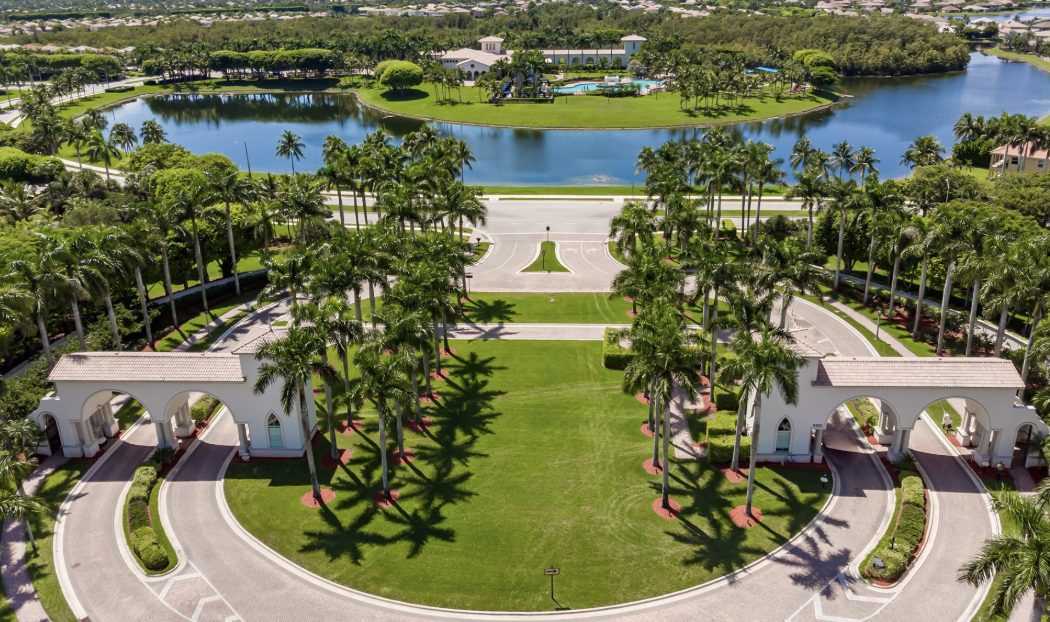
If you’re weighing a move to Wellington, FL, you’ve probably already noticed that the answers you find online contradict each other. One site tells you it’s a sleepy horse town, another tells you it’s packed with A-list equestrian money and eight-figure estates. Both are true, depending on the month and the neighborhood. This Wellington, FL FAQ answers the 18 questions buyers ask most before moving, based on what actually shows up in showings, closings, and conversations with families relocating here from up north, from Miami-Dade, and from Broward.
We wrote the first version of this guide a while back. This is the deeper, updated version for 2026, covering pricing, equestrian season, schools, flooding, commute, taxes, and the practical stuff nobody tells you until you’ve already signed a contract.
Wellington, FL FAQ: 18 Questions Buyers Ask Before Moving (Quick Answers)
Here’s the short version of all 18, so you can jump to the ones that matter to you:
- Is Wellington a good place to live? Yes, for families and horse people specifically. Less so if you want walkable urban density.
- What’s the cost of living like? Higher than Broward’s inland suburbs, lower than coastal Palm Beach.
- What do homes cost? Roughly $500,000 to $700,000 for a standard single-family home, $2 million and up for equestrian estates.
- Is there new construction? Limited, but growing. K Park Residential and Wellington North are the two to watch.
- What is equestrian season and does it affect regular residents? January through April, and yes, it affects traffic, rentals, and restaurant lines even if you don’t own a horse.
- Are the schools good? Yes, several of the best-rated public schools in Palm Beach County are here.
- Does Wellington flood? Not like the coast, but drainage during summer storms is a real consideration.
- What’s the commute to West Palm Beach or the airport? About 25 to 30 minutes.
- Is there an HOA on every property? No. Many equestrian-zoned parcels are non-HOA acreage.
- Are there CDD fees? Less common here than in newer Palm Beach County developments further west.
- What’s the property tax rate? Effectively around 1.8% to 2.1% with homestead exemption factored in.
- Do I need a car? Yes, this is not a walkable town outside a few pockets.
- What are the best neighborhoods? Depends on your budget and whether you want horses, golf, or a standard family subdivision.
- Is Wellington safe? Yes, it’s consistently one of the lower-crime municipalities in the county.
- What’s the rental market like? Tight and expensive in season, softer the rest of the year.
- Can I keep horses on my property? Only in zoned equestrian areas, not throughout the whole village.
- What’s Wellington’s relationship to hurricanes? Inland location helps, but it still gets tropical storm impacts.
- Should I buy in season or off season? Off season, if you can stand touring without the full spectacle running.
Now let’s go deep on each one.
Cost of Living, Home Prices, and What You Actually Get
What does a home in Wellington actually cost in 2026?
A standard single-family home in a subdivision like Olympia, Wellington Landing, or Molasses Run typically runs $500,000 to $700,000 depending on size, age, and lot. That buys you three to five bedrooms, a two-car garage, and usually a community pool or clubhouse rather than a private one. Move into equestrian-zoned property and the range jumps hard. Saddle Trail Park, inside the Village’s Equestrian Preserve (ZIP 33414), is currently seeing custom estates and full rebuilds priced from $4 million to $13 million and up, on non-HOA acreage with direct trailer and golf-cart access to Wellington International’s bridle paths. That’s not a typo. Equestrian real estate in Wellington operates on a completely different price curve than the rest of Palm Beach County, and if you’re shopping in that range, it’s worth reading our full Wellington, FL Equestrian Properties guide before you make an offer.
Is Wellington more expensive than Boca Raton or the rest of Palm Beach County?
Generally less expensive than beachfront Boca or Delray, but pricier than inland Broward suburbs like Coral Springs or Weston for comparable square footage, mainly because you’re paying for lot size, school zoning, and the equestrian economy’s halo effect. If you’re cross-shopping, our head-to-head on Wellington vs. Boca Raton for families breaks down where each town wins.
What can a first-time buyer actually afford here?
More than people assume, if they’re flexible on which side of town. First-time buyers do best in Wellington Landing, South Shore, or parts of Big Blue Trace, where townhomes and smaller single-family homes still trade in the $400,000s. We go through this scenario by scenario in the First-Time Buyer’s Guide to Wellington.
Is there new construction in Wellington?
Some, and more is coming. K Park Residential is a planned walkable mixed-use community in central Wellington, with fewer than 300 townhomes in presale planning, built around pedestrian streetscapes, plazas, and onsite retail. Separately, “Wellington North,” the 96-acre parcel pulled from the Equestrian Preserve as part of the Village Council’s approval of expanded showgrounds, is restricted from residential building until the dressage facility expansion is fully complete. That parcel is tied to the larger “Marketplace” concept, a walkable commercial town center anchored by a boutique hotel, backed in part by high-profile investors in the equestrian world. None of this is available yet, but it’s the clearest signal of where Wellington’s next wave of growth is headed.
Equestrian Season: What It Actually Changes for Regular Residents
What is equestrian season, exactly?
Roughly January through April, when the Winter Equestrian Festival (WEF) and the Adequan Global Dressage Festival run at Wellington International, drawing riders, owners, and spectators from around the world. This isn’t a niche local event. It’s a global season that temporarily makes Wellington one of the wealthiest zip codes in the country.
Does equestrian season affect people who don’t own horses?
Yes, in three concrete ways. Traffic gets noticeably heavier on South Shore Boulevard, Pierson Road, and Wellington Trace, especially late afternoon. Restaurant wait times go up across the village, not just near the showgrounds. And rental prices spike hard, sometimes doubling for short-term leases near the equestrian district, because riders and grooms need housing for the season.
Should I buy a home in season or off season?
Off season, if you have the flexibility. You’ll see the neighborhood at its normal traffic levels, get a more accurate read on how quiet or busy a street actually is, and often negotiate with less competition. If you only have time to visit during WEF, go in, but budget extra time for every drive and expect showings to book up faster.
Is the equestrian scene relevant if I’m not a horse person?
It’s relevant even if you never board a horse. It shapes the local economy, the restaurant and retail scene, the seasonal rental market, and even school enrollment patterns, since some families relocate here specifically for the season and then leave. Understanding that rhythm is part of understanding what daily life in Wellington actually looks like at different points in the year.
Schools and Family Life
Are Wellington’s public schools actually good?
Yes. Wellington sits within the Palm Beach County School District and includes several of the district’s stronger-performing schools, including Elbridge Gale Elementary, Panther Run Elementary, Wellington Landings Middle, Polo Park Middle, and Wellington High School, along with Palm Beach Central High School serving part of the area. This is one of the biggest reasons families relocate here from Miami-Dade and Broward specifically, and we cover school zoning boundaries in detail in the Wellington Schools Guide.
Do I need to check school zoning before I buy, or does it not matter that much?
Check it before you write an offer, not after. Zoning lines in Wellington can split streets that look identical on a map, and the difference between one elementary school zone and another can matter more to resale value than the house itself. This is one of the most common regrets we hear from buyers who fell in love with a house first and checked the school zone second.
What about private schools?
There are private options in and around Wellington, generally strongest for families wanting a smaller, faith-based, or specialized environment. Most families we work with who prioritize private education end up weighing Wellington against West Palm Beach or Boca options for the widest selection, so factor commute into that decision too.
Commute, Location, and Flooding
What’s the commute like from Wellington?
Expect about 25 to 30 minutes to Palm Beach International Airport and roughly 30 minutes to downtown West Palm Beach, mostly via Southern Boulevard (SR-80) or Forest Hill Boulevard, since no interstate runs directly through Wellington. That’s the tradeoff for the horse-country feel: you’re trading highway access for space and quiet. If you commute daily into West Palm Beach or need frequent airport access, factor that drive time into your decision the same way you’d factor in a mortgage payment.
Does Wellington flood?
Not the way coastal Broward or Miami-Dade does. Wellington is inland and doesn’t face storm surge risk directly. But it sits on relatively low, flat land managed heavily by the Lake Worth Drainage District’s canal system, and some streets pond hard during Florida’s summer afternoon thunderstorms, particularly in older sections near canals. Ask for flood zone documentation and elevation certificates before you buy, even if the listing isn’t in a mandatory flood zone, and price out flood insurance separately from your standard homeowner’s policy so there are no surprises at closing.
How does Wellington handle hurricanes compared to the coast?
Better than beachfront property, since there’s no direct storm surge exposure, but it’s not immune. Tropical storm winds, heavy rain, and power outages still hit Wellington during a direct or near-direct hurricane path. The Village has its own emergency management coordination separate from the county, which residents generally rate as responsive.
Do I need a car to live here?
Yes. Outside a few walkable pockets planned around K Park Residential and the future Marketplace concept, Wellington is a drive-everywhere suburb. Grocery runs, school drop-off, and dining out all assume a car. If walkability is a priority, that’s worth weighing against denser Palm Beach County or Broward options.
HOA Rules, CDD Fees, Taxes, and the Practical Stuff
Is every property in Wellington under an HOA?
No, and this surprises a lot of relocating buyers. Standard subdivisions like Olympia, Isles at Wellington, and South Shore are HOA-governed, with typical rules around exterior appearance, landscaping, and sometimes rental restrictions. But a meaningful portion of Wellington’s equestrian-zoned acreage, including much of Saddle Trail Park, is non-HOA, meaning owners have more flexibility with their land, barns, and outbuildings, but also less uniformity enforced on neighbors.
Are there CDD (Community Development District) fees?
Less common in established Wellington neighborhoods than in some of the newer master-planned communities further west in Palm Beach County. Still, always ask specifically, since CDD fees function like a second property tax bill and can add hundreds of dollars a month depending on the community’s infrastructure debt.
What’s the real property tax picture?
Effectively around 1.8% to 2.1% of assessed value once you factor in the homestead exemption, combining Palm Beach County, Village of Wellington, and school district millage. Non-homesteaded and investment properties will run higher since they don’t get the exemption cap on annual increases.
Can I keep horses on any property in Wellington?
No. Horse-keeping is restricted to zoned equestrian areas, primarily within and around the Equestrian Preserve, not the entire village. If owning or boarding horses is part of your plan, confirm zoning before you fall in love with a property, since rezoning an ordinary residential lot for equestrian use is rarely realistic.
Is Wellington actually safe?
Yes, consistently. Wellington maintains its own police department as an incorporated Village (since 1996) rather than relying solely on county sheriff coverage, and crime rates here run lower than the Palm Beach County average across most categories.
What’s the rental market like if I want to test the area before buying?
Tight and expensive during equestrian season, especially near the showgrounds, where short-term rentals cater to riders and grooms willing to pay a premium for proximity. Off season, the rental market loosens up considerably and pricing normalizes. If you’re relocating and unsure which part of Wellington fits your life, a short off-season rental is a smart, low-risk way to test a neighborhood before committing to a purchase.
Which Wellington neighborhoods should I actually be looking at?
It depends entirely on budget and lifestyle. Golf-oriented buyers lean toward Olympia. Families wanting straightforward subdivisions with good school zoning look at Wellington Landing or Panther Run’s zone. Equestrian buyers go straight to Saddle Trail Park, Palm Beach Point, or the broader Preserve. We break these down street by street in our Best Neighborhoods in Wellington guide, which is worth reading before you tour with an agent so you’re not wasting weekends on the wrong side of town.
So, Is Wellington, FL Actually a Good Place to Live?
For families prioritizing schools, space, and a slower pace, yes, and consistently so. For buyers wanting walkable density, direct highway access, or coastal proximity, it’s a harder sell, and you’re better served looking closer to West Palm Beach itself or south toward Boca. The honest answer isn’t universal, it depends on which trade-offs you’re willing to make, and we go deeper on that exact question in our Is Wellington a Good Place to Live review.
If you’re relocating from out of state and still building your full picture of the move, from moving logistics to timing your house hunt around equestrian season, our complete Moving to Wellington, Florida relocation guide walks through the whole process start to finish.
What to Do Next
If you made it through all 18 questions, you already know more about Wellington than most buyers do walking into their first showing. The next step is simple: figure out which two or three of these questions matter most for your situation, whether that’s school zoning, equestrian access, or flood risk, and build your search around those first. Everything else is negotiable. Those aren’t.
DM me “WELLINGTON” and I’ll send you a shortlist of active listings that match your specific priorities, along with the school zone and flood zone pulled for each one before you tour.
Watch: learn more
Go deeper with my South Florida Insider videos.
Solterra: Everything You Need to Know Before You Visit
Solterra: Everything You Need to Know Before You Visit
More articles you might like
Living in Wellington, Florida: What Daily Life Actually Looks Like
14 min readIs Wellington, Florida a Good Place to Live? Honest 2026 Review
18 min readBest Neighborhoods in Wellington, FL: The 2026 Honest Guide
18 min readWellington vs. Boca Raton: Which Is Right for Families in 2026?
13 min readFirst-Time Buyer's Guide to Wellington, FL: What's Actually Possible
16 min read