Living in Wellington, Florida: What Daily Life Actually Looks Like
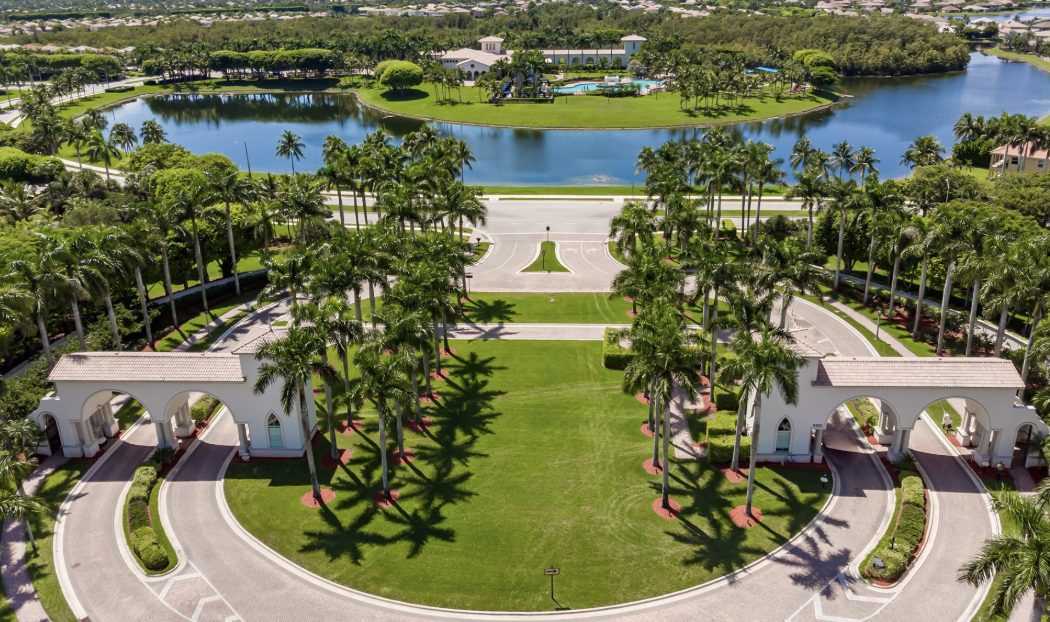
Living in Wellington, Florida means your calendar runs on two seasons: horse show season and everything else. From January through March, Wellington International fills with international riders, grooms, and trailers, Forest Hill Boulevard gets noticeably slower, and restaurants book out weeks in advance. From April through December, Wellington quietly goes back to being a well-run, HOA-heavy Palm Beach County suburb with some of the best public schools in the county and a lot less traffic. Understanding both halves of that calendar is the actual answer to what daily life here looks like, and it’s the part most relocation guides skip.
This piece is the deep version. If you want the shorter buyer FAQ format, we already covered 18 questions buyers ask before moving to Wellington and gave a blunt yes-or-no answer in Is Wellington, Florida a Good Place to Live? Honest 2026 Review. This one is about the day-to-day texture: mornings, commutes, dinner, weekends, and what it actually feels like to live here once the moving boxes are unpacked.
Living in Wellington, Florida: What Daily Life Actually Looks Like, Hour by Hour
Start with a normal Tuesday, not a horse show weekend. Mornings in Wellington start early because school drop-off and equestrian barn schedules both begin before 7:30 a.m. Palm Beach Central High School, Wellington High School, and the string of elementary and middle schools along Greenview Shores Boulevard and Big Blue Trace fill up fast, and parents who work in West Palm Beach are usually on the road by 7:15 to beat the crawl on Forest Hill Boulevard.
By mid-morning, the village settles into a rhythm that’s more suburban than glamorous. The Mall at Wellington Green (locally just “Wellington Green”) on Forest Hill Boulevard is the retail anchor, with Dillard’s, Macy’s, and the usual mall tenants pulling in shoppers from Royal Palm Beach and Loxahatchee too, since Wellington functions as the retail center for the western communities. Publix locations are spread through the Wellington Marketplace and along South Shore Boulevard, and most day-to-day errands happen within a 10 minute drive of home, which is one of the more underrated parts of living here.
Evenings depend heavily on the calendar. During show season, South Shore Boulevard near Wellington International turns into a slow procession of trucks and trailers around 4 and 5 p.m. as riders wrap up for the day. Outside of season, evenings are quiet: dog walks on the Wellington Trace multi-use path, kids at soccer or lacrosse practice at one of the village’s park complexes, and dinner that’s more likely to be at a casual spot on Wellington Trace than anywhere requiring a drive to the coast.
The Commute Reality
Wellington has no direct interstate. That single fact shapes daily life more than almost anything else. Residents rely on three corridors: Forest Hill Boulevard heading east toward West Palm Beach and I-95, Southern Boulevard as the southern alternative toward the airport and Royal Palm Beach, and State Road 7 (US-441) running north-south connecting Wellington to Royal Palm Beach, Loxahatchee, and eventually Boca Raton to the south.
A commute to downtown West Palm Beach typically runs 25 to 35 minutes outside of rush hour, longer during it. Palm Beach International Airport is roughly the same distance. Beach access, meaning actual sand, is a 30 to 40 minute drive to spots like the Lake Worth Municipal Beach or Palm Beach itself. This is the trade-off every Wellington resident makes consciously: you give up a short beach drive in exchange for larger lots, more green space, and a lower-density feel than you’d get closer to the coast. It’s worth comparing directly against a coastal-adjacent suburb like Boca Raton if that trade-off is the deciding factor for your family, which we broke down fully in Wellington vs. Boca Raton: Which Is Right for Families in 2026?
Equestrian Culture Isn’t a Novelty Here, It’s the Local Economy
Outsiders tend to picture Wellington’s horse culture as a quaint backdrop. Locals know it’s closer to an economic engine. Wellington International (formerly the Palm Beach International Equestrian Center) runs the Winter Equestrian Festival every January through March, widely considered the largest and longest-running horse show series in the world. The Adequan Global Dressage Festival runs in parallel, and the International Polo Club Palm Beach hosts high-goal polo matches on Sundays through the winter season on South Shore Boulevard.
During those 12 weeks, Wellington’s population effectively grows by thousands. Riders, trainers, grooms, and owners fly in from Europe and South America and rent everything from modest apartments to eight-figure estates. Restaurants that are half-empty in June have hour-long waits in February. Grocery stores restock more often. Traffic on South Shore Boulevard and Pierson Road slows to a crawl on weekend show days. If you move to Wellington and buy in the Equestrian Preserve Area expecting year-round quiet, you need to understand that this is a seasonal reality, not an occasional event.
You Don’t Need a Horse to Live Here
Here’s what most people don’t realize until they’ve lived here a year: the majority of Wellington residents own zero horses. Communities like Olympia, Versailles, the Isles at Wellington, and most of the neighborhoods east of State Road 7 are standard suburban HOA developments with sidewalks, community pools, and zero barns in sight. The horse culture is concentrated in the Equestrian Preserve Area west of South Shore Boulevard, in neighborhoods like Palm Beach Point, Saddle Trail Park, and Paddock Park, where you’ll find 1 to 5 acre lots, private barns, and no traditional HOA at all, just deed restrictions protecting the equestrian zoning.
If horses are the actual point of your move, whether you’re looking to board, compete, or just live adjacent to the industry, we go deep on lot sizes, zoning categories, and what to actually check before buying equestrian property in Wellington, FL Equestrian Properties: What Buyers Need to Know Before Purchasing. If horses are irrelevant to your decision, that’s fine too. It just means you should be looking east of South Shore Boulevard at the standard HOA communities, not west of it.
Where People Actually Eat and Shop
Wellington’s dining scene is more functional than flashy, which fits the town. Wellington Green Mall and the surrounding Forest Hill Boulevard corridor cover the chains: solid casual dining, a movie theater, and the retail basics. The more distinctive spots are smaller and locally run, clustered around the Wellington Green area and along State Road 7, with a heavier concentration of equestrian-crowd restaurants near South Shore Boulevard that come alive during show season and quiet down in summer.
Grocery-wise, Publix is the default across multiple locations, with a Whole Foods presence serving the western communities as well. For bigger shopping trips, most residents make the 20 to 25 minute drive to Boca Raton or downtown West Palm Beach for specialty retail that Wellington itself doesn’t carry. This is a real trade-off worth naming honestly: Wellington is convenient for daily life, but it is not a destination shopping town, and residents accept the occasional drive for anything beyond the basics.
Weekends in Wellington
Weekends split cleanly along the same seasonal line as everything else. From January through March, Saturdays and Sundays revolve around Wellington International and the International Polo Club. Families who have zero involvement in the horse world still often spend a Sunday afternoon watching polo or wandering the vendor village at WEF, because it’s genuinely one of the more unique things to do in Palm Beach County and it’s a five to fifteen minute drive for most residents.
Outside of show season, weekends look like any well-established suburb. Village-run parks like Village Park and Wellington’s aquatics complex handle youth sports leagues that run heavily through soccer, lacrosse, and swim. Wellington Trace and the Marjory Stoneman Douglas Trail (through the broader western communities system) draw walkers, runners, and cyclists, particularly in the cooler months. Families with younger kids tend to gravitate toward the community pools inside gated developments like Olympia and Versailles rather than driving to the beach every weekend, since the drive time makes it more of a special-occasion trip than a routine one.
Neighborhoods and What They Actually Feel Like
Wellington is not one uniform product. The village breaks into a few distinct pockets that feel genuinely different from each other, and picking the wrong one for your lifestyle is the single most common mistake relocating buyers make.
East Wellington (near State Road 7 and Forest Hill Boulevard) is the most suburban and most affordable stretch, with communities like Olympia offering a Lennar-built master plan with resort-style amenities, a golf course, and HOA dues that cover clubhouse and pool access. This is where most first-time buyers and growing families land, largely because it’s the most accessible price point without sacrificing the good school zones.
Central Wellington (Greenview Shores, Big Blue Trace, Wellington Trace corridor) is the established middle, older single-family neighborhoods with mature landscaping, larger lots than the newer builds, and close proximity to the village’s original town center. Versailles and the Isles at Wellington sit in or near this belt, both gated with HOA-managed amenities.
South Shore and the Equestrian Preserve Area is the horse country stretch, acreage lots, private barns, minimal HOA structure, and the highest price ceiling in the village, running from mid six figures for smaller equestrian properties up into the tens of millions for the ultra-luxury estate developments now under construction near the showgrounds.
We break every one of these pockets down in far more detail, with the actual trade-offs between them, in Best Neighborhoods in Wellington, FL: The 2026 Honest Guide, which is worth reading before you start touring if you haven’t picked a sub-area yet.
Schools and Family Life
Schools are one of the biggest reasons families move to Wellington in the first place, and daily life reflects it. Palm Beach Central High School and Wellington High School both serve the community, alongside a strong feeder pattern of elementary and middle schools along Greenview Shores Boulevard and Big Blue Trace. School pickup lines, youth sports registration, and PTA involvement are a real part of the social fabric here in a way that’s more pronounced than in a lot of South Florida suburbs.
Because school zoning genuinely varies by street, not just by neighborhood name, it’s worth confirming your specific address against current Palm Beach County School District boundaries before you commit to a home, especially since some communities straddle zone lines. We cover the zoning specifics, ratings, and what to verify before you buy in Wellington, Florida Schools: What Families Need to Know Before Moving.
Cost of Living Reality Check
Wellington isn’t cheap, but it isn’t coastal-Palm-Beach expensive either. New construction townhomes at developments like Lotis Wellington, the mixed-use master plan going in at Forest Hill Boulevard and US-441, start from roughly $648,976, with the single-family Promenade Collection running up to around $1,274,990. That gives you a real sense of where new-build entry pricing sits in 2026.
At the other extreme, the ultra-luxury equestrian estate development known simply as The Wellington, a joint venture backed by Tavistock Group, Modon Holding, and equestrian-world names like Tiger Woods and Justin Timberlake, is planning 342 residences on 600 acres adjacent to the Wellington International showgrounds, with pricing starting around $6,000,000 and running past $25,000,000 for the top estates. That project alone tells you how far the price ceiling has moved in this market over the last few years, driven almost entirely by the equestrian industry’s continued expansion.
HOA dues vary widely by community type. Gated amenity-rich communities east of South Shore Boulevard typically carry monthly HOA fees that cover clubhouse, pool, and common-area landscaping, while the acreage properties in the Equestrian Preserve Area often carry lighter deed-restriction fees instead of a full HOA structure, since there’s less shared amenity infrastructure to fund. Property taxes follow standard Palm Beach County millage rates, and buyers coming from out of state should budget for that adjustment specifically, since it catches a lot of relocating families off guard.
For a full financial breakdown, including what’s realistic on a first-time buyer’s budget in this market, see First-Time Buyer’s Guide to Wellington, FL: What’s Actually Possible, and for the broader 2026 pricing trends across the village, Wellington, FL Real Estate Market 2026: Prices, Equestrian Properties & Trends has the current numbers.
New Construction and Growth
Wellington isn’t a static, built-out suburb anymore. The Lotis Wellington development at Forest Hill Boulevard and US-441 is a sub-500-unit gated master plan built on a former shell-rock mining site, now being developed by Lennar into a mixed single-family and townhome community anchored by an 18-acre lake, trails, dog parks, a resort clubhouse, and commercial dining and retail space. It’s actively delivering homes through late 2026, which makes it one of the more relevant new-construction options for buyers who want a modern floor plan without leaving the village.
Further out, the K Park Residential project is a planned walkable mixed-use townhome development still in presale planning, and the previously mentioned Wellington ultra-luxury project is under active infrastructure development with a targeted first-phase debut around 2028. Between these projects, Wellington’s growth over the next few years is happening at both ends of the market simultaneously: accessible new-build townhomes on one side, eight-figure equestrian estates on the other, with comparatively little in between.
Who Wellington Actually Fits (and Who It Doesn’t)
Be honest with yourself about this before you sign anything. Wellington fits families who want top-rated schools, more space per dollar than the coast, and don’t mind a 25 to 35 minute drive for beach days and downtown nightlife. It fits anyone genuinely drawn to the equestrian world, whether as a competitor, owner, or just someone who wants to live near that culture and energy for a few months a year. It fits buyers who value HOA-maintained common areas and don’t mind paying the monthly dues that come with them.
It does not fit people who want to walk to a beach, people who want a dense walkable downtown with nightlife on their doorstep, or people who will resent the seasonal traffic surge every January through March. It also doesn’t fit buyers chasing the lowest possible price point in Palm Beach County, since Wellington’s schools and equestrian prestige keep values well above some neighboring communities like Royal Palm Beach or Loxahatchee.
If you’re still weighing the decision at a higher level before diving into neighborhoods and price points, our full relocation breakdown in Moving to Wellington, Florida: The Honest Relocation Guide for 2026 walks through the entire decision framework step by step, including what to do before you list your current home and what to check before you make an offer here.
Living in Wellington, Florida ultimately comes down to accepting a trade: less beach proximity and no interstate, in exchange for space, schools, and a genuinely unique seasonal culture most South Florida suburbs simply don’t have. For the right buyer, that trade is an easy yes. For someone who needs sand under their feet every weekend, it’s worth touring Delray Beach or Boca Raton instead before you commit. Either way, make the decision with real numbers and real neighborhood comparisons in front of you, not a generalized impression of “horse country,” because the actual day-to-day here is a lot more layered than that.
More articles you might like
Wellington, FL FAQ: 18 Questions Buyers Ask Before Moving
13 min readIs Wellington, Florida a Good Place to Live? Honest 2026 Review
18 min readBest Neighborhoods in Wellington, FL: The 2026 Honest Guide
18 min readWellington vs. Boca Raton: Which Is Right for Families in 2026?
13 min readFirst-Time Buyer's Guide to Wellington, FL: What's Actually Possible
16 min read