Best Neighborhoods in Wellington, FL: The 2026 Honest Guide
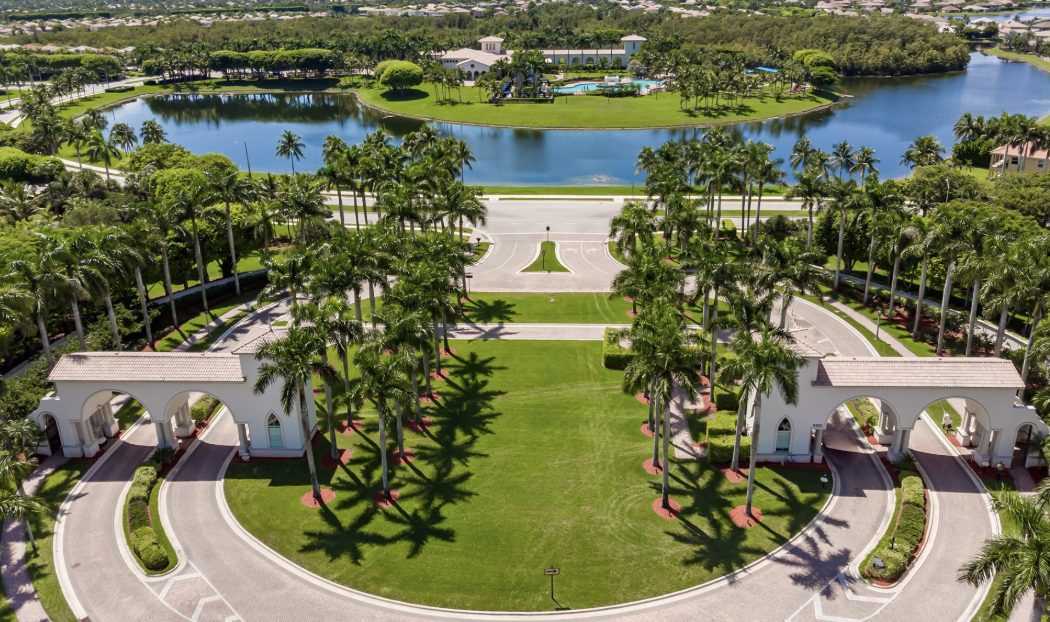
If you ask five different Wellington real estate agents which neighborhood is “the best,” you’ll get five different answers, and honestly, most of them will be wrong for your specific situation. The real answer to best neighborhoods in Wellington, FL, the 2026 honest guide edition, is that there isn’t one best neighborhood. There’s a best neighborhood for a family with two kids in travel soccer, a different one for a dressage rider who needs a barn on the property, and a completely different one for a retiree who wants low maintenance and a short drive to the Mall at Wellington Green. This guide breaks Wellington down by price, lifestyle, and who each area actually fits, based on how the market really works here, not how it looks on a glossy listing sheet.
Wellington isn’t one neighborhood. It’s a patchwork of very different micro-markets stitched together by Forest Hill Boulevard, South Shore Boulevard, and the horse trails that connect the equestrian preserve to everything else. Understanding which patch you’re looking at matters more than almost anything else when you’re house hunting here. I’ve walked buyers through all of these pockets, the ones who show up knowing exactly what they want and the ones who show up only knowing “Wellington” as a name they heard from a coworker or saw on a school ranking list. Both types end up in the same place: they need someone to explain what each neighborhood actually delivers day to day, not just what it looks like from the road.
The Best Neighborhoods in Wellington, FL: The 2026 Honest Guide, by Price Point
Before getting into personality and lifestyle fit, it helps to see the price tiers, because Wellington’s range is enormous. You can find a townhome in the low $400,000s a fifteen-minute drive from a $10 million equestrian estate, and both are technically “Wellington.”
Entry level ($400,000 to $650,000): Binks Forest, older sections of Olympia, and select condo and townhome product near the Wellington Green corridor.
Mid-range ($650,000 to $1.2 million): Versailles, most of Olympia’s single-family sections, Grand Isles, and Isles at Wellington.
Upper mid-range ($1.2 million to $2.5 million): Palm Beach Polo and Country Club’s non-equestrian sections, Meadowood, and parts of South Shore.
Equestrian estates ($2.5 million and up, often well up): Palm Beach Point, Saddle Trail Park, Grand Prix Village, and the acreage properties that ring the Wellington International show grounds.
Notice what these tiers actually track. It’s not square footage, and it’s not even school zoning, since most of Wellington feeds into the same well-regarded schools regardless of price point. What you’re paying for as you move up these tiers is land, privacy, and proximity to the equestrian preserve. A buyer moving from a $550,000 Binks Forest home to a $1.5 million Meadowood property isn’t necessarily getting a bigger house. They’re getting more distance from the next roofline and, often, a barn or the option to add one.
If you want the full price and market breakdown with current trend data, that lives in our Wellington, FL real estate market 2026 report, which pairs well with the neighborhood-level detail here.
The Equestrian Corridor: Palm Beach Point, Saddle Trail, and Grand Prix Village
This is the Wellington that shows up on national news during the Winter Equestrian Festival, and it’s the reason Wellington carries a different reputation than any other suburb in Palm Beach County. The equestrian corridor sits west and south of the Wellington International show grounds, and it’s built around one thing: horses.
Palm Beach Point is the most recognized name here. Lots typically run one to five acres, most properties include private barns, and pricing regularly starts above $2.5 million, climbing well past $10 million for turnkey estates with covered arenas and staff quarters. You do not need to own a horse to buy here, but you should be comfortable with a rural, low-density feel even though you’re only minutes from Publix and the Mall at Wellington Green.
Saddle Trail Park offers a similar lifestyle on slightly smaller lots, often with a bit more density and a marginally lower price floor, though “lower” here still usually means seven figures.
Grand Prix Village sits closest to the show grounds itself, which makes it the top choice for competitive riders who want to walk or golf-cart their horses to the ring during circuit season. Prices flex hard with proximity, and the winter show season creates a genuine seasonal rental market here that doesn’t exist anywhere else in Wellington. During peak circuit weeks, a well-located property with a solid barn setup can rent for what most people pay in mortgage over several months, which is part of why so many of these estates get purchased as investment properties first and personal residences second.
If you’re seriously considering this corridor, don’t skip the due diligence most buyers rush past. Barn condition, footing quality, easement access, and HOA rules around commercial horse activity vary property to property, and it’s easy to overpay for “equestrian potential” that doesn’t actually deliver. A barn with poor drainage or an arena with the wrong footing base can cost six figures to fix properly, and that’s a number that never shows up in the listing photos. Our full breakdown of what to check before buying is in the Wellington equestrian real estate guide.
Olympia: Wellington’s Family-First Master Plan
Olympia is the neighborhood most relocating families end up in, and there’s a reason for it. It’s a large, well-established master-planned community with a genuine town-center feel, anchored by its own K-8 charter school, clubhouse, resort-style pool, and fitness center. Homes range from townhomes and smaller single-family designs in the $500,000s up to larger executive homes pushing past $1 million, which gives Olympia one of the widest price spreads of any single Wellington community.
What makes Olympia work for families isn’t the amenities, it’s the density of other families. If your kids need a built-in social circle from day one, Olympia delivers that faster than the equestrian corridor or the more scattered acreage neighborhoods ever will. Walk the clubhouse pool on any Saturday morning during the school year and you’ll see the pattern immediately: the same families, the same kids, the same weekend rhythm. For a relocating family coming from out of state, that built-in structure often matters more than square footage.
The trade-off is HOA structure. Olympia’s HOA is active and fees are real, typically in the low hundreds monthly depending on section, and the community enforces its rules more consistently than some of Wellington’s older, looser neighborhoods. That’s a feature for some buyers and a frustration for others. If you’re the type who wants to park a boat in the driveway or repaint your front door without a form, Olympia will feel restrictive. If you want predictable curb appeal and a board that actually follows up on violations, it’s exactly what you’re looking for.
Olympia also sits close enough to the Wellington schools corridor that commute times to the zoned elementary, middle, and high schools stay short, which matters a lot once you’re doing carpool twice a day. For the full rundown on which schools zone to which neighborhoods, see our Wellington schools guide.
Versailles: New Construction Feel Without Leaving Wellington
Versailles is Wellington’s answer to buyers who want a newer build, a gated entry, and a more uniform streetscape than you’ll find in the borderline-eclectic older sections of town. Homes here skew newer than Olympia’s original phases, lot sizes are tighter, and the community reads more like a traditional South Florida gated subdivision than a horse town.
Pricing generally runs from the high $600,000s into the low $1 millions depending on model and lot premium. HOA fees are comparable to Olympia’s, and buyers here are almost always trading acreage and horse access for predictability: consistent architecture, active code enforcement, and a shorter list of maintenance surprises than you’d get buying an older equestrian property.
Versailles tends to attract dual-income professional families who work in West Palm Beach or Boca Raton and want a Wellington zip code without the horse country commitment. It’s a common landing spot for buyers relocating from Broward or Miami-Dade who are used to the gated-community layout and want something that feels familiar on day one, just with more breathing room between houses. It’s also one of the more popular starting points for buyers who ask us to compare Wellington against nearby family suburbs. If Boca Raton is also on your shortlist, our Wellington vs. Boca Raton comparison walks through the real trade-offs in commute, schools, and lifestyle.
Binks Forest: Golf Course Living Without the Equestrian Price Tag
Binks Forest is Wellington’s most underrated neighborhood, and it’s the one we point budget-conscious buyers toward most often. Built around the Binks Forest Golf Club, this community offers mature landscaping, larger lots than you’ll typically find in Versailles, and single-family homes that regularly transact in the $500,000s to $750,000s, with some larger or golf-front properties pushing higher.
Binks Forest doesn’t have the polish of Olympia’s town center or the prestige of the equestrian corridor, and that’s exactly the appeal. It’s a quieter, more settled neighborhood with a mix of long-time owners and newer families, and it consistently offers more home and more land per dollar than almost anywhere else in Wellington. If your priority is space and value over amenities and gates, this is where to start looking. Mature oak canopy over the older streets also gives Binks Forest a feel that new construction communities simply can’t replicate for another twenty years, which is worth something even if it doesn’t show up on a comparable sales sheet.
The trade-off is that Binks Forest’s housing stock is older on average, so budget for updates on kitchens, roofs, and AC systems depending on when the home was last renovated. A roof replacement in this price range typically runs $15,000 to $25,000 depending on size and material, and it’s worth factoring into your offer if the current roof is original and past the ten-year mark. It’s a fair trade for the price advantage, but go in with eyes open, not assuming everything has been redone.
South Shore, Paddock Park, and the Show-Season Rental Belt
South Shore Boulevard is the spine that connects Wellington’s equestrian west side to its more suburban east side, and the neighborhoods along it, including Paddock Park, sit in an interesting middle zone. Lots here are larger than Olympia or Versailles but smaller than the true equestrian estates, and a meaningful share of the housing stock gets absorbed into the seasonal rental market every winter during the show circuit, which runs roughly January through April.
If you’re buying here as a primary residence, that seasonal rental activity around you is worth knowing about upfront. Traffic, short-term tenants, and trailer trucks are a normal part of life in season, then things go quiet the rest of the year. Some buyers love the energy, others find it disruptive. It’s a real factor in day-to-day living that doesn’t show up on a listing sheet, and it’s exactly the kind of detail we cover in what daily life actually looks like in Wellington.
Pricing in this belt varies widely by lot size and barn presence, generally landing between $900,000 and $2.5 million, with true equestrian-grade properties pushing higher. Buyers who work remotely or travel frequently tend to do well here, since the seasonal traffic and noise matter less if you’re not commuting through it on a fixed schedule every morning. Retirees who split time between Wellington and a northern home also gravitate toward this belt, since it lets them lock the door for the summer without worrying about an HOA rule they’ve never had to think about.
Wellington’s Newest Growth: The Northern Corridor and What’s Changing
Wellington itself is largely built out, which is part of why buyers priced out of the established neighborhoods are increasingly looking just north, toward Westlake. Westlake isn’t technically Wellington, but it functions as an extension of the same lifestyle corridor and deserves a mention because it’s absorbing a lot of the demand that Wellington’s older neighborhoods can no longer accommodate at an entry-level price.
Westlake, developed primarily by Minto Communities, is delivering thousands of new homes across neighborhoods like The Oaks, The Woodlands, The Orchards, The Terraces, and The Crossings, with pricing from the mid-$300,000s for townhomes up to $900,000-plus for estate lots in The Woodlands. HOA fees are notably low for new construction, around $47 a month in select neighborhoods, and there’s no CDD debt, which is a real financial advantage over a lot of new-build competition elsewhere in Palm Beach County. Cresswind Palm Beach at Westlake adds an age-restricted 55-plus option with its own gated clubhouse and amenity package, priced from the mid-$500,000s, and it’s worth a look for retirees who want new construction without giving up proximity to Wellington’s shopping and medical offices.
Closer to Wellington’s own borders, watch K Park, a smaller walkable townhome redevelopment planned for central Wellington, still in the presale and planning stage as of 2026. It won’t move the needle on inventory immediately, but it signals where Wellington’s next growth is likely headed: denser, more walkable product filling in gaps rather than new sprawl, since the town has little raw land left to develop. For buyers thinking five or ten years out, this matters. Wellington isn’t going to get more land. It’s going to get more infill, and that will slowly change the character of the neighborhoods closest to the town center.
Meadowood, Grand Isles, and the Overlooked Middle Neighborhoods
Not every good Wellington neighborhood gets the attention Olympia and the equestrian corridor get. Meadowood offers larger, more private lots with a country-club-adjacent feel without the equestrian premium, generally in the $1.2 million to $2 million range. It’s popular with move-up buyers who already own in Wellington and want more privacy without leaving the town, since it avoids the price jump into true equestrian acreage while still delivering real space between homes.
Grand Isles and Isles at Wellington provide gated, mid-density single-family living in the $700,000 to $1.1 million range, popular with buyers who want a gate and a homeowners association but don’t need Olympia’s scale of amenities. These communities tend to skew toward buyers who’ve already raised kids through Wellington schools and are looking to right-size without leaving the area, alongside younger professional couples buying their first single-family home after outgrowing a condo closer to the coast.
These middle neighborhoods are worth a serious look if the headline communities don’t fit, either on price or on vibe. They tend to fly under the radar in generic “best of Wellington” content, which usually means less competition when you’re making an offer. In a market where Olympia and Versailles listings can see multiple offers within days, a well-priced Meadowood or Grand Isles home sometimes sits long enough to actually negotiate.
How These Neighborhoods Compare on Commute and Daily Errands
Lifestyle fit isn’t only about the neighborhood itself. It’s about what your week looks like once you’re living there. Olympia and Versailles sit closest to Forest Hill Boulevard and the Wellington Green retail corridor, which means Publix runs, gym trips, and school drop-offs stay under ten minutes in most cases. Binks Forest is similarly convenient, tucked just north of that same corridor.
The equestrian communities trade that convenience for space. Palm Beach Point and Saddle Trail Park residents are typically a fifteen to twenty minute drive from the Mall at Wellington Green, and grocery runs become more of a planned trip than a quick errand. That’s a real adjustment for buyers coming from denser suburbs where everything is five minutes away. South Shore and Meadowood land in between, close enough for convenience but far enough to feel like you’ve left the retail corridor behind.
Commute times to West Palm Beach and the Palm Beach International Airport corridor run roughly 25 to 35 minutes from most of Wellington regardless of neighborhood, since Forest Hill Boulevard and Southern Boulevard both funnel traffic the same direction. The bigger variable is your commute to your own front door once you’re off the highway. That last stretch is where equestrian acreage and gated communities differ most from each other, and it’s worth actually driving it at 7:30 a.m. before you commit, not just checking the map.
Who Should Buy Where: Matching Neighborhood to Lifestyle
Here’s the honest matrix, based on what actually matters to different buyer types:
Families who want a built-in social scene and top-tier walkability to schools and amenities: Olympia first, Versailles second.
Buyers who want the most home and land for the least money and don’t mind an older kitchen: Binks Forest.
Riders, trainers, and anyone who wants proximity to Wellington International, whether or not they currently own a horse: Palm Beach Point, Saddle Trail Park, or Grand Prix Village, depending on budget and how close to the ring you need to be.
Buyers priced out of Wellington proper who still want the lifestyle and school access: Westlake, watching for K Park as it comes to market.
Move-up buyers who want privacy and acreage without full equestrian pricing: Meadowood or the South Shore belt, outside show season if the seasonal rental energy isn’t for you.
Retirees or buyers who split time between Wellington and another home: South Shore or Westlake’s Cresswind, where lock-and-leave living is built into the community rather than something you have to arrange yourself.
First-time buyers testing what’s realistically achievable on a starter budget: start with our first-time buyer’s guide to Wellington, which lays out real numbers for what different budgets buy across these same neighborhoods.
The Questions to Ask Before You Commit
Every neighborhood in this guide comes with its own version of fine print. Ask about HOA fees and what they actually cover, because Olympia’s and Versailles’s fees fund very different amenity packages than the more informal arrangements in Binks Forest or the equestrian corridor. Ask about flood zone designation, since it varies block to block even within the same community, and it directly affects your insurance premium, sometimes by thousands of dollars a year between two homes a quarter mile apart. Ask what the seasonal population shift looks like if you’re anywhere near South Shore Boulevard. Ask about well versus municipal water on the larger equestrian lots, since not every acreage property is on the same system, and that changes both your monthly cost and your maintenance responsibility.
And ask a local agent, not a national portal, what’s actually changed in the last twelve months, because Wellington’s inventory and pricing move faster than most generic real estate content accounts for. A listing site can tell you what sold. It can’t tell you why a particular Meadowood lot sat for ninety days while an identical one three streets over went under contract in a week, and that kind of context is usually the difference between a good deal and a mistake you live with for years.
If you’re still working through the bigger relocation questions, whether Wellington is even the right move before you get into which neighborhood, our honest 2026 review of whether Wellington is a good place to live and our full relocation guide are the right next stops. And if you’ve still got specific questions about schools, commute, or day-to-day logistics, the Wellington FAQ answers the eighteen questions buyers ask most before they move.
The reality is that Wellington rewards buyers who slow down and match the neighborhood to the life they actually want to live, not the one that photographs best. Get that match right, and you’ll be glad you looked past the obvious answer.
More articles you might like
Wellington, FL FAQ: 18 Questions Buyers Ask Before Moving
13 min readLiving in Wellington, Florida: What Daily Life Actually Looks Like
14 min readIs Wellington, Florida a Good Place to Live? Honest 2026 Review
18 min readWellington vs. Boca Raton: Which Is Right for Families in 2026?
13 min readFirst-Time Buyer's Guide to Wellington, FL: What's Actually Possible
16 min read