palm-beach, FL Real Estate Market 2026: Prices, Trends & What Buyers Should Expect
If you are researching the Palm Beach, FL real estate market in 2026, here is the answer up front: this is a buyer’s market with more inventory, longer days on market, and real negotiating room, but “Palm Beach” is not one market. It is at least two, and confusing them is the single biggest mistake relocators make before they ever call an agent.
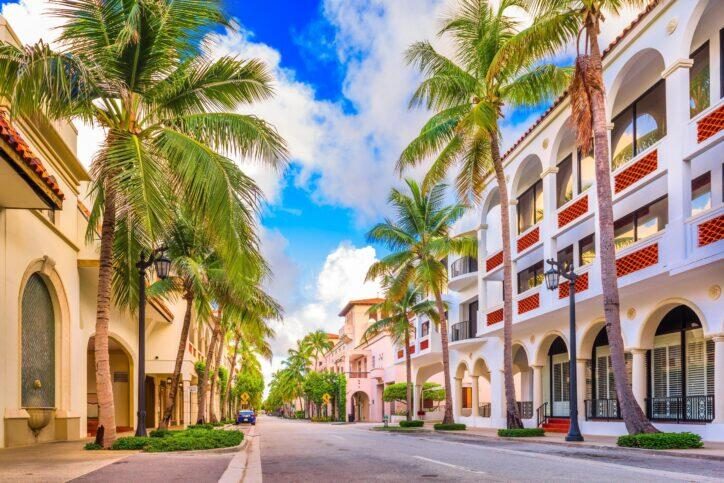
The Town of Palm Beach, the barrier island itself, home to Worth Avenue, Mar-a-Lago’s neighborhood, and some of the most expensive real estate in the country, operates on its own economy. Multi-million dollar minimums, cash-heavy buyers, and inventory that barely moves. Then there is everything most people actually mean when they say “I want to live near Palm Beach”: West Palm Beach, Palm Beach Gardens, Jupiter, Wellington, Boynton Beach, and the rest of Palm Beach County. That’s where the vast majority of relocating families, retirees, and professionals actually end up buying, and it’s a completely different price conversation.
This guide breaks down both sides honestly: what’s happening with prices and trends across Palm Beach County in 2026, what buyers should realistically expect to find at different budgets, and how to think about the island versus the mainland before you fall in love with a listing photo.
Palm Beach, FL Real Estate Market 2026: Prices, Trends & What Buyers Should Expect
Here’s the honest framing. Palm Beach County as a whole has shifted from the frenzied seller’s market of 2021 and 2022 into a slower, more balanced market. Months of supply have climbed into buyer’s market territory in most segments, sitting somewhere between 7.8 and 11.3 months depending on price point and property type. Anything above six months of supply generally favors buyers, so this is a real shift, not a marketing phrase.
What that means in practice:
- Homes are sitting longer before going under contract, often 45 to 75 days instead of the under-two-week timelines of a few years ago.
- Price reductions are common again. Sellers who list at 2022 pricing are getting corrected by the market.
- Buyers can ask for concessions, inspection repairs, and closing cost credits without losing the deal, something that was nearly impossible two years ago.
- Cash offers still move faster, but financed offers with strong pre-approvals are competitive again, especially outside the island.
None of this means prices are crashing. It means the market has normalized. Sellers who bought years ago still have equity and aren’t desperate, so pricing is softening gradually rather than collapsing. If your plan is “when it’s right” rather than “I need to close in the next two weeks,” 2026 is a far more forgiving year to be a buyer than 2021 was.
The Island vs. The Mainland: Two Completely Different Markets
The Town of Palm Beach (the island)
This is the actual barrier island, roughly 10 miles long, sitting between the Atlantic Ocean and the Intracoastal Waterway. It includes Worth Avenue’s designer shopping, oceanfront estates, and a housing stock that skews heavily toward multi-million dollar single family homes and high-end condos. Entry-level single family homes on the island start well above $3 million, and oceanfront or lakefront estates regularly trade in the eight and nine figure range. Condos on the island can start lower, often in the $800,000 to $2 million range for smaller units, but even those numbers put it out of reach for the average relocating family.
Inventory on the island is thin by nature. There is limited land, strict architectural review, and most owners are not motivated sellers. This segment doesn’t really respond to “buyer’s market” conditions the way the mainland does, because the buyer pool is small, cash-heavy, and less rate-sensitive.
The mainland: West Palm Beach, Palm Beach Gardens, Jupiter, and beyond
This is where the real 2026 market story is happening. Mainland Palm Beach County offers a much wider range of price points and housing types, from condos and townhomes in the $250,000s to new construction single family homes in the $500,000s to $900,000s, up to estate properties well into the millions in gated communities like Old Palm or Frenchman’s Reserve.
If your search is really about proximity to Palm Beach’s beaches, restaurants, and culture without the island price tag, you want to be looking at West Palm Beach, Palm Beach Gardens, or Jupiter. Our Buyer’s Guide to Palm Beach, FL walks through exactly how to think about this tradeoff before you start touring homes.
What’s Actually Driving Prices in 2026
Three forces are shaping the mainland Palm Beach County market this year.
1. Inventory has caught up to demand
New listings have been outpacing sales for over a year now. That’s the mechanical reason months of supply has climbed. It’s not that fewer people want to live here, it’s that more sellers who sat out the market during the low-rate years are finally listing, whether because of relocation, downsizing, or simply cashing in equity built since 2020.
2. Mortgage rates are keeping some buyers on the sidelines
Rates well above the 3 percent era mean monthly payments are meaningfully higher than they were for the same home three or four years ago. That has cooled demand at the margins, especially for first-time buyers and move-up buyers who are rate-sensitive. It has not stopped cash buyers, retirees, and relocators from out of state who are often selling a home in a higher-cost market and buying with significant equity.
3. New construction is competing directly with resale
Builders across Palm Beach County are still delivering new communities, and many are offering rate buydowns, closing cost credits, or design center incentives that resale sellers can’t easily match. If you’re cross-shopping resale against new construction in 2026, factor those incentives into your comparison, not just the sticker price.
What Buyers Should Realistically Expect by Budget
Under $400,000
This tier is mostly condos, townhomes, and villas, concentrated in areas like Greenacres, Lake Worth, and parts of West Palm Beach and Boynton Beach. Expect HOA fees in the $300 to $600 per month range depending on amenities, and budget for special assessments if the building is older, since many South Florida condo associations are catching up on reserve funding after recent state law changes tightened structural inspection requirements.
$400,000 to $700,000
This is the heart of the mainland single family market. Starter and move-up homes in West Palm Beach neighborhoods, Palm Beach Gardens, Royal Palm Beach, and parts of Jupiter fall here. New construction communities in this range often carry both an HOA and, depending on the community, a CDD (Community Development District) fee that funds infrastructure like roads and drainage. Always ask for the actual HOA and CDD numbers in writing before you get attached to a floor plan, the same rule that applies to any new build in South Florida.
$700,000 to $1.5 million
Larger single family homes, waterfront or near-waterfront properties, and gated communities with more robust amenities. Palm Beach Gardens and Jupiter both have strong inventory here, often with A-rated school zoning that justifies the premium for relocating families.
$1.5 million and up
Estate homes, golf course communities, and properties edging toward the island’s price gravity without actually being on the island. This is also where you start seeing serious competition from the ultra luxury buyer pool that gets priced out of the island itself but still wants proximity to it.
West Palm Beach, Palm Beach Gardens, or Jupiter: Which Fits You?
This is the question almost every relocating buyer asks once they understand the island isn’t realistic. There’s no universally right answer, it depends on your daily life.
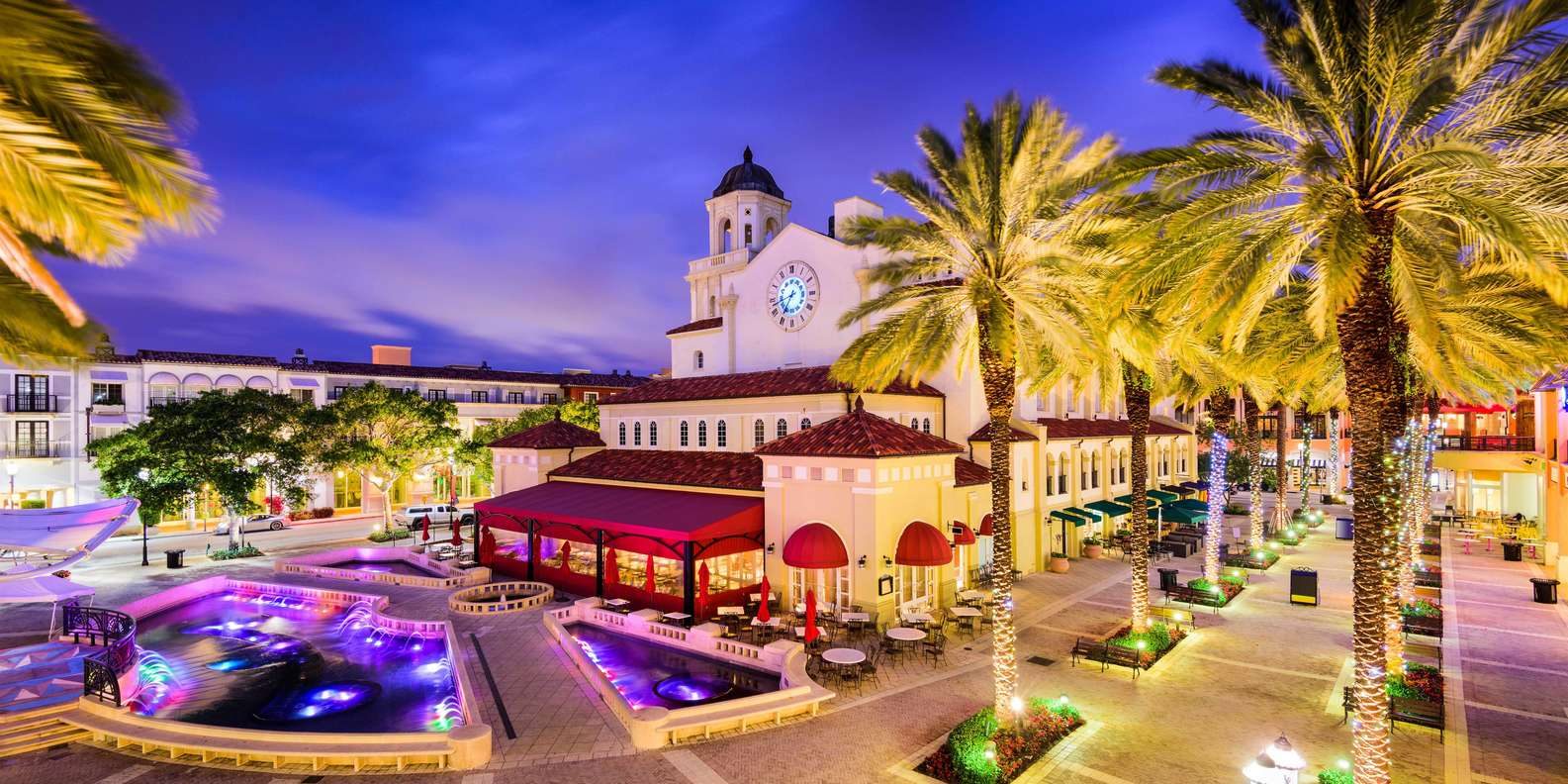
West Palm Beach gives you the most urban energy: downtown walkability, CityPlace/Rosemary Square, a shorter commute if you work near the city core, and a wide range of neighborhoods from historic bungalows to new high rise condos. Our breakdown of West Palm Beach vs Palm Beach Gardens goes deep on this exact comparison if downtown energy versus suburban comfort is the decision you’re weighing.
Palm Beach Gardens leans more suburban and family-oriented, with strong schools, planned communities, and easy access to both the Gardens Mall corridor and I-95. It’s a common landing spot for families who want proximity to Palm Beach without island pricing.
Jupiter sits further north and offers a beach town feel with less density, strong schools, and a market that’s been drawing steady relocation interest from families and retirees who want quieter, less urban surroundings. If you’re torn between Jupiter and Palm Beach Gardens specifically, our head-to-head comparison covers commute, schools, and lifestyle in more detail.
If you’re casting a wider net across the county, Best Palm Beach County Suburbs for Families Relocating in 2026 is worth reading before you narrow your search to one or two cities.
HOA, CDD, and the Real Monthly Number
The mortgage payment is never the whole number, and this trips up more buyers than any price negotiation ever will. New construction and many planned communities across Palm Beach County carry HOA fees, and some also carry CDD assessments that show up as a separate line on your property tax bill, not folded into the HOA.
Before you commit to a community, get the actual numbers:
- What is the current HOA fee, and has it increased in the last two years?
- Is there a CDD, and what is the current annual assessment?
- Are there any planned or pending special assessments, especially in older condo buildings?
- What does the fee actually include: roof, exterior insurance, landscaping, amenities, cable/internet?
A wise move isn’t a fast move, it’s an informed one. Get these numbers in writing before you fall for a floor plan or a view.
Condos: A Market Within the Market
Condo buyers in Palm Beach County in 2026 need to pay closer attention than ever. Since Florida’s post-Surfside condo safety reforms, associations in older buildings are required to complete structural integrity reserve studies and fund reserves more aggressively. That’s a good thing for long-term building health, but it means some buildings are hitting owners with large special assessments or steep HOA increases to catch up.
Practically, this means:
- Buildings built after roughly 2010 tend to have fewer surprises, since they’re not yet subject to the same milestone inspection timelines.
- Ask for the association’s most recent reserve study and financials before writing an offer, not after.
- A lower list price on an older building can be erased fast by a five or six figure special assessment. Factor that into your real cost comparison, not just the price per square foot.
This dynamic is part of why condo inventory has grown across the county, some owners are choosing to sell rather than absorb rising costs, which is good news for buyers willing to do the homework on a building’s financial health.
Is Palm Beach (and the Surrounding Area) Actually Worth It?
Worth it compared to what, is the honest question. If you’re comparing the Town of Palm Beach itself to almost anywhere else in the country, you’re paying for scarcity, prestige, and a barrier island lifestyle that genuinely doesn’t exist in many other places. If you’re comparing mainland Palm Beach County to other South Florida metros, you’re getting strong schools in pockets like Palm Beach Gardens and Jupiter, a less frenetic pace than Miami-Dade, and beach access without Broward or Miami-Dade traffic density, at a price that, while not cheap, remains more attainable than the island.
For a deeper, unfiltered take on whether the broader area lives up to the hype, Is Palm Beach a Good Place to Live? Honest 2026 Review covers the tradeoffs beyond just price, including traffic, seasonal population swings, and what daily life actually feels like here.
Mistakes Buyers Keep Making in This Market
Assuming “Palm Beach” means the island. Most agents, listings, and even some other websites use “Palm Beach” loosely to describe the whole county. Always clarify whether a listing is on the actual barrier island or in a mainland city that shares the name.
Skipping the HOA and CDD math. Covered above, but it deserves repeating because it’s the number one source of buyer’s remorse in new construction communities across the county.
Waiting for the “bottom.” Nobody rings a bell at the bottom of a buyer’s market. If a home fits your budget and your life, negotiate hard, but don’t wait indefinitely for a crash that historically hasn’t materialized in this market.
Ignoring flood zone and insurance costs. Homeowner’s insurance in Palm Beach County has climbed significantly in recent years, especially in flood zones and older homes without impact windows. Get a real insurance quote before you’re under contract, not during your final walkthrough.
Not touring at different times of year. Season (roughly November through April) brings more traffic, higher restaurant wait times, and busier beaches. If you’re relocating, visit in both season and off-season before deciding where to land.
What Buyers Should Do Next
- Get specific about budget first, location second. Once you know your real number, the island-versus-mainland decision usually makes itself.
- Get pre-approved with a lender who knows Florida’s insurance and tax environment. Property taxes and insurance swing monthly payments more here than in most states.
- Request HOA, CDD, and condo reserve documents early, not after you’ve already picked a favorite.
- Compare at least two or three suburbs, not just one. West Palm Beach, Palm Beach Gardens, and Jupiter all serve different lifestyles at different price points, and our suburb comparisons above are built specifically to help with that side-by-side.
- Work with someone who will tell you the real number, mortgage, HOA, CDD, insurance, and taxes combined, before you get emotionally attached to a house.
The Bottom Line
The Palm Beach, FL real estate market in 2026 rewards buyers who do their homework and punishes buyers who rush. Inventory is up, price growth has slowed, and there’s real room to negotiate across most of mainland Palm Beach County, even as the Town of Palm Beach itself continues to operate in its own ultra luxury lane. Know which market you’re actually shopping in, get the full monthly cost picture before you commit, and take the extra week to compare suburbs properly. That’s the difference between a purchase you’re proud of in five years and one you’re still explaining to friends.
Watch: learn more
Go deeper with my South Florida Insider videos.

The Best Flex-Space Townhome in West Palm Beach: Pulte's Nautical Plan
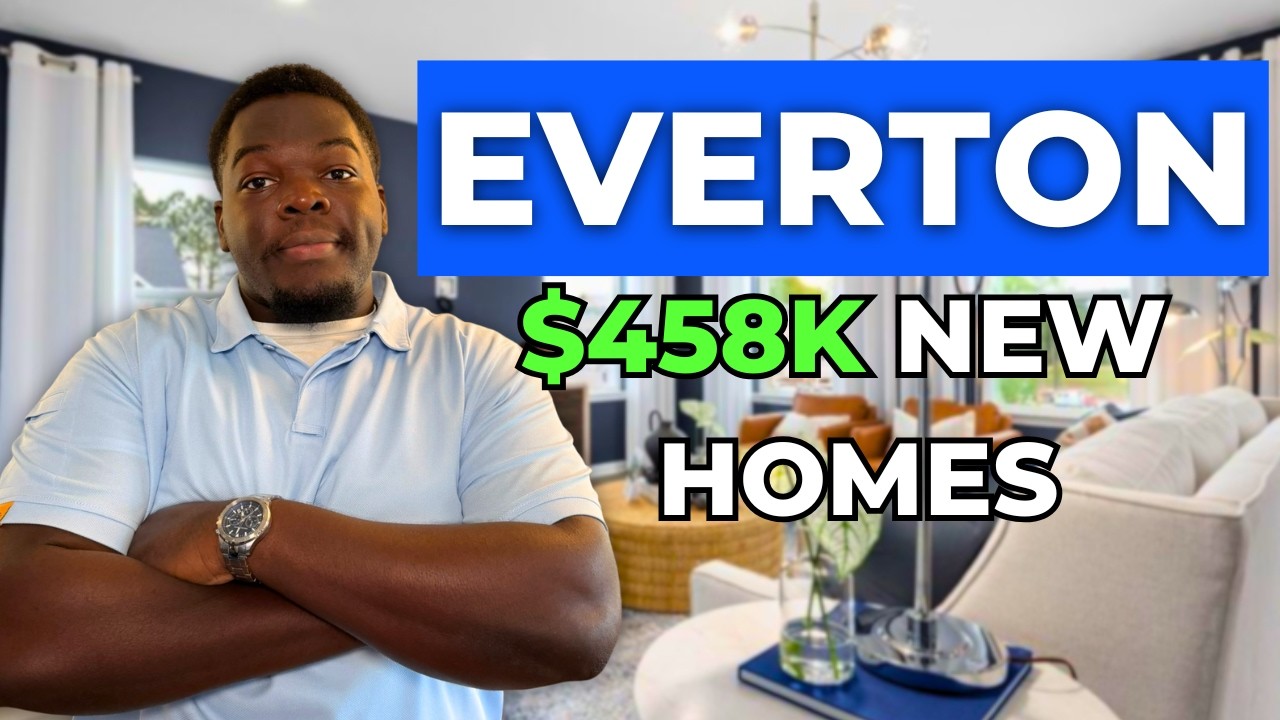
Inside Everton's Latitude II Model: $458k New Homes In Palm Beach
The Best Flex-Space Townhome in West Palm Beach: Pulte's Nautical Plan
More articles you might like
Buyer's Guide to Palm Beach, FL: What to Know Before You Purchase
13 min readIs palm-beach a Good Place to Live? Honest 2026 Review
18 min read
Coconut Creek Real Estate Market (2026): Prices, Trends, and What It Means for Buyers
18 min read
Weston Real Estate Market Update: Prices and Conditions in Mid-2026
13 min read
Westlake, FL Real Estate Market 2026: Prices, Trends & What Buyers Should Expect
13 min read