Is palm-beach a Good Place to Live? Honest 2026 Review
Is Palm Beach a good place to live? If you can afford it, yes, it’s one of the best places to live in the country. The honest 2026 review is that “Palm Beach” the town (the actual barrier island, not the county, not West Palm Beach) is a tiny, ultra-exclusive market built for people who have already won financially and now want privacy, architecture, and a walkable, low-density lifestyle. It is not built for the typical relocating family, and most people who say they want to “live in Palm Beach” end up buying in West Palm Beach or Palm Beach Gardens instead, whether they realize that going in or not.
This guide breaks down what the island actually is, what it costs, who it’s right for, who should look elsewhere, and what nobody tells you before you sign a contract.
Is Palm Beach a Good Place to Live? The Short Answer
Palm Beach is a good place to live if three things are true for you: you can comfortably afford a multimillion-dollar home or a seven-figure condo, you value privacy and architectural consistency over convenience and variety, and you don’t need a large public school system, big-box retail, or nightlife within walking distance. If those three things line up, very few places in the country compete with it. If they don’t, Palm Beach will frustrate you, and you’ll be happier (and probably a lot less stressed) in a mainland community.
That’s the honest answer. Everything below explains why, including the parts most listing agents won’t tell you until after you’ve already fallen in love with a house.
What Palm Beach Actually Is (And Isn’t)
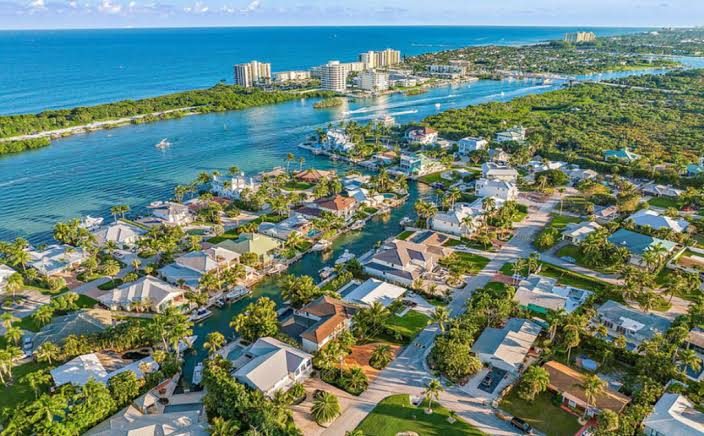
This sounds basic, but it trips up more relocating buyers than anything else: Palm Beach is not a county, and it’s not the same thing as West Palm Beach. Palm Beach County is the massive county that stretches from Boca Raton to Jupiter. West Palm Beach is the mainland city, home to downtown, Clematis Street, the office corridor, and most of the everyday retail. The Town of Palm Beach is a separate, incorporated barrier island municipality, about 3.75 square miles, connected to the mainland by three bridges: the Flagler Memorial Bridge, the Royal Park Bridge, and the Southern Boulevard Bridge.
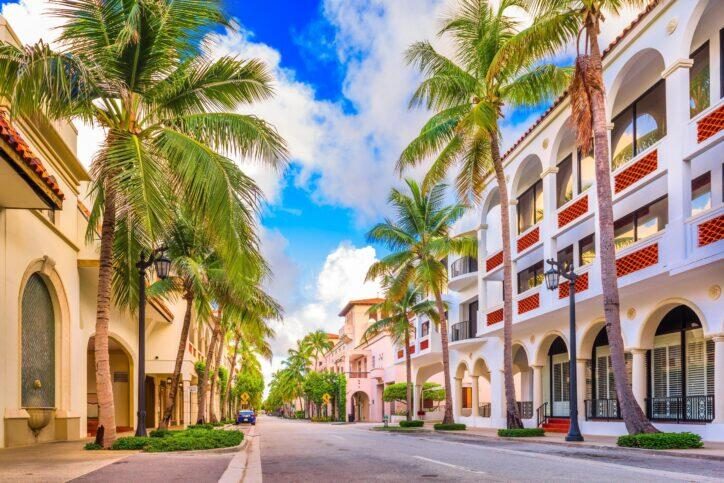
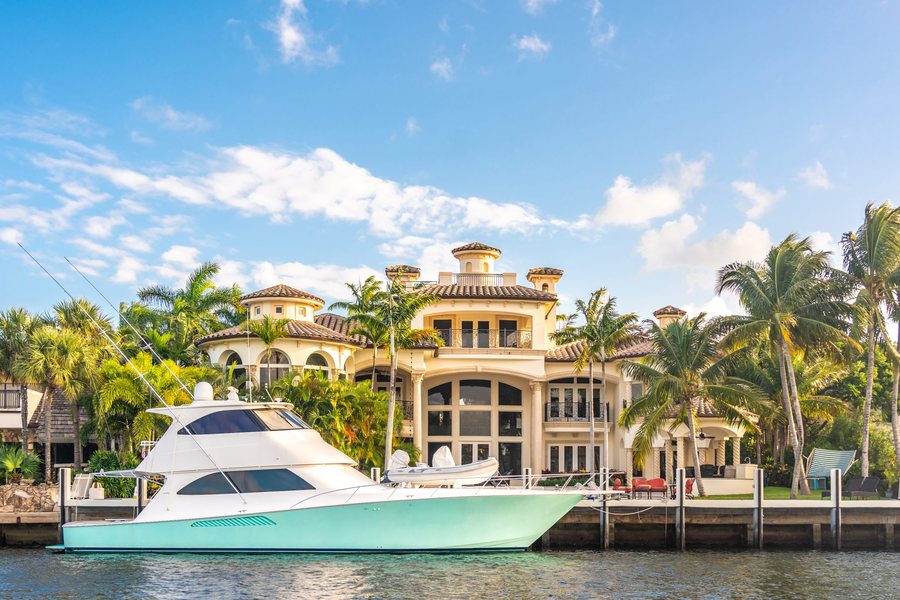
The island runs roughly 16 miles north to south and, in most places, is only a few blocks wide. On it you’ll find Worth Avenue’s boutiques, The Breakers resort, Mar-a-Lago, Bethesda-by-the-Sea, the Everglades Club, and mile after mile of hedge-lined estates you mostly can’t see from the road because privacy is the whole point. There is no downtown skyline, no big commercial strip, and that’s intentional. If you want restaurants, offices, hospitals, and everyday shopping, that’s a bridge away in West Palm Beach, which is exactly why so many people researching “Palm Beach real estate” actually need the broader Palm Beach real estate market overview to understand what they’re really comparing.
Because the island is so narrow, geography does a lot of the work in explaining pricing and character. The north end, roughly from the Palm Beach Country Club up to the inlet, is quieter, has a more residential feel, and tends to draw year-round families and retirees who want distance from the Worth Avenue crowds. Midtown, centered on Worth Avenue and the blocks around it, is the commercial and social heart of the island, walkable, dense with shops and restaurants, and where you’ll pay a premium just for proximity. The south end, below Sloan’s Curve and toward the Lake Worth pier area, has a mix of condo buildings and smaller lots, and it’s often where buyers find relatively more attainable entry points, if “relatively” can be used on an island where a million dollars buys a dated one-bedroom. Understanding which stretch you’re actually looking at matters more here than in almost any mainland market, because two properties a half mile apart can differ in price by millions depending on which side of Worth Avenue, and which side of the road (lake side or ocean side), they sit on.
The Real Cost of Living on the Island
This is where the honesty matters most, because the price point filters out almost everyone before lifestyle even becomes a question.
Condos: Entry-level units in older mid-century buildings along South Ocean Boulevard or on the north end of the island can start around $1 million to $1.5 million, and that’s for something modest, often a one-bedroom or small two-bedroom with dated finishes and no direct beach access. Better buildings with direct ocean access, updated systems, and lower density push $2 million to $5 million. Many older buildings still restrict financing (some are cash-only or limit loan-to-value to 50 percent or less), and boards conduct serious financial and personal vetting before approving a buyer, including in-person interviews in some buildings. That approval process alone eliminates a chunk of otherwise qualified buyers, and it’s worth asking your agent upfront which buildings are financing-friendly before you fall for a unit you can’t actually close on.
Single-family homes: This is the range most people picture when they think of Palm Beach. Smaller, non-waterfront homes on the north end or in the mid-town section can start in the $3 million to $5 million range, and that typically buys a three or four bedroom home on a modest lot, not a landmark estate. Move toward the lake (Intracoastal) or ocean side, and prices run $8 million to $20 million routinely, with true trophy estates on North Ocean Boulevard or South Ocean Boulevard clearing $30 million to $100 million-plus. There isn’t a “starter home” tier on the island in any conventional sense. Even a modest cottage-style home in a less prestigious pocket still lands well north of most mainland buyers’ entire budgets.
Taxes and insurance: There’s no CDD (Community Development District) fee structure on the island the way you’d see in a new-construction community out west, but don’t mistake that for cheap. Property taxes are based on assessed value, and when the assessed value is $8 million, the tax bill is proportionally large regardless of millage rate, often running well into six figures annually on the larger estates. Add in windstorm and flood insurance for a barrier island property (this is Florida’s most exposed stretch of coastline for hurricane landfall), and total carrying costs on an oceanfront or lakefront estate can run six figures a year before a mortgage payment is even part of the conversation. Buyers coming from out of state, especially the Northeast, are consistently surprised by this number even after they think they’ve budgeted for it.
HOA and condo fees: Condo association fees on the island are often higher than comparable buildings on the mainland, because older buildings require more structural and mechanical upkeep, and because post-Surfside reserve requirements have pushed reserve funding up across almost every coastal Florida condo building. It’s common to see monthly fees of $2,000 to $5,000 or more in older oceanfront buildings once full reserve funding is factored in. Ask for the last two years of the association’s financials and the most recent structural/milestone inspection report before you write an offer. This is non-negotiable in 2026, and it’s the single most common source of post-closing regret I see with condo buyers on the island.
Who Palm Beach Is Actually Right For
Ultra-affluent retirees and semi-retirees. If your daily life doesn’t depend on a commute, a large school system, or affordable everyday retail, the island’s slower pace and privacy are a genuine upgrade in quality of life. Many of these buyers are downsizing from a large primary residence elsewhere and want fewer square feet, a shorter to-do list, and a walkable routine centered on Worth Avenue, the beach, and a handful of favorite restaurants.
Seasonal residents (“snowbirds”). A huge share of Palm Beach’s population is seasonal, roughly November through April. If you’re planning to spend part of the year elsewhere and want a turnkey, low-maintenance property when you’re on the island, this is one of the best seasonal markets in the country. Full-service buildings that handle maintenance, security, and even mail and package management while you’re away are common here in a way they simply aren’t on most of the mainland.
Privacy-focused buyers. The town’s Architectural Commission reviews exterior changes closely, hedge heights and landscaping are taken seriously, and paparazzi/security culture around high-profile residents (this is, after all, home to Mar-a-Lago) has made privacy infrastructure (gates, walls, hedges, security services) a normal part of life here, not a luxury add-on. If you’re a buyer who values not being seen from the street, this is one of very few American markets built around that expectation as a baseline, not an upgrade.
Buyers who want to walk to Worth Avenue. If a walkable lifestyle centered on boutique shopping, art galleries, and a handful of excellent restaurants matters more to you than variety and volume, the island delivers something no mainland suburb can replicate. You genuinely can leave the car in the garage for days at a time if you live within a few blocks of Worth Avenue.
Who Should Look Elsewhere
Families who need public schools nearby. The island has one public elementary school, Palm Beach Public School, and after that, families either go private (Palm Beach Day Academy and others) or commute off-island to West Palm Beach or Palm Beach Gardens schools. If a strong, large public school district is a priority, you’ll be better served researching the best Palm Beach County suburbs for families relocating in 2026 rather than the island itself.
Budget-conscious buyers. There is no realistic entry point under $1 million on the island in 2026. If your budget is anywhere near the $500,000 to $900,000 range that fits most relocating buyers, you’re shopping West Palm Beach, Palm Beach Gardens, or further west, not the Town of Palm Beach. I get calls almost every month from buyers who say “Palm Beach” and mean “somewhere near Palm Beach that I can actually afford,” and once we walk through real numbers, they’re relieved to hear West Palm Beach and Palm Beach Gardens can deliver the lifestyle they actually want.
Anyone who needs day-to-day convenience. Grocery options on the island are limited (a Publix GreenWise near the north end covers most residents), and for anything beyond that, big-box retail, hardware stores, larger medical facilities, you’re crossing a bridge. In season, bridge traffic and single points of access can turn a five-minute mainland errand into a twenty-five-minute round trip. If you’re the kind of buyer who runs errands daily rather than stocking up in advance, this friction adds up faster than people expect.
Buyers who want nightlife or a younger social scene. Palm Beach is quiet by design, especially after 9 or 10pm. If you want restaurants that stay lively late, more bars, and a younger crowd, that scene lives in downtown West Palm Beach, not on the island. Our honest review of whether West Palm Beach is a good place to live covers that comparison directly.
Two Real Buyer Scenarios
It helps to see this play out with real profiles, because the “right answer” changes completely depending on who’s asking.
Scenario one: a retiring couple from Connecticut, budget $6 million, no kids at home. This is close to a textbook Palm Beach buyer. They don’t need schools, they want walkability, they’ve sold a large house up north and want to simplify, and $6 million comfortably buys a well-located home or a high-end condo on the island. For this couple, buying on the mainland to “save money” would actually cost them the exact lifestyle they’re paying for. The island is the right call.
Scenario two: a family of four relocating from Chicago, budget $900,000, two school-age kids. This family says “Palm Beach” in their first email to me, and almost every time, what they mean is coastal, upscale, and well-maintained, not literally the barrier island. At $900,000, they’re not buying on the island in any form. They need Palm Beach Gardens or a strong West Palm Beach neighborhood, both of which give them newer or well-kept housing stock, real school options, and a lifestyle close enough to “the Palm Beach feel” that they stop mentioning the island by month two of living there. Steering this family correctly in week one saves them from touring homes for six weeks that were never going to work on their budget.
Daily Life on the Island
A typical day for a Palm Beach resident looks different depending on the season. In-season (winter), Worth Avenue and the restaurants along it are busy, charity galas and events fill the social calendar, and traffic on the bridges and Cocoanut Row peaks in the late afternoon. Off-season (summer), the island is noticeably quieter, many seasonal residents are gone, and some restaurants reduce hours or close for renovations. Long-time residents will tell you the island genuinely feels like two different places depending on the calendar, and new buyers should tour it in both seasons if possible before committing.
Groceries and errands mean a short drive to the Publix on the north end or a bridge crossing into West Palm Beach for more variety. Dining out on the island runs from casual (Green’s Pharmacy for breakfast, a longtime local institution) to formal (Café Boulud, The Breakers’ restaurants). For anything beyond that, downtown West Palm Beach and CityPlace/Rosemary Square are a five to ten minute drive across the Royal Park or Flagler Memorial Bridge.
Commuting off-island for work is common. Palm Beach International Airport is about 15 to 20 minutes away depending on bridge traffic, which makes the island workable for people who travel frequently for business but don’t want a daily office commute themselves. Residents who still work full-time in a mainland office should plan for that bridge crossing to add real time to their commute during season, particularly between 4 and 6pm.
Fitness, medical care, and personal services follow a similar pattern: there are a handful of options on the island itself, but most residents split their routines between the island and West Palm Beach or Palm Beach Gardens for anything specialized, from a cardiologist to a larger gym.
Schools and Family Life
Palm Beach Public School (K-8) serves island residents and has a strong reputation, but it’s small, and after 8th grade, families typically go private (Palm Beach Day Academy, Oxbridge Academy in West Palm Beach, or boarding school) or move to a mainland district with more high school options. Families who want the full public school pipeline, more kids in the neighborhood, and more organized youth sports infrastructure are almost always better served in Palm Beach Gardens, Jupiter, or the western Palm Beach County suburbs, where school-anchored master-planned communities are built specifically around that need.
It’s worth being direct about this because it’s the number one reason families end up disappointed after buying on the island: the same $1.5 million that buys a small condo on Palm Beach can buy a substantial single-family home with a yard in a top-rated school zone in Palm Beach Gardens or Jupiter. For most families, that trade is not close.
The Tradeoffs Nobody Tells You
Flood and hurricane exposure. This is a barrier island. Every property here sits close to sea level with ocean on one side and Intracoastal on the other. Flood insurance is mandatory and expensive, and after a direct hurricane hit, evacuation and bridge closures are a real logistical issue, not a hypothetical one. If a storm is approaching, the island can be under mandatory evacuation while mainland West Palm Beach residents are simply hunkering down at home.
Resale liquidity at the top end. Multimillion-dollar estates and higher-end condos don’t move as fast as mainland homes in the $500,000 to $1 million range. If you need to sell quickly, the buyer pool at $10 million-plus is genuinely small, even in a strong market, and it’s not unusual for a well-priced estate to sit on the market for six months to a year while it finds the right buyer.
Architectural Commission review. Any exterior renovation, from a new roofline to a fence, goes through the town’s Architectural Commission. It protects the town’s character (which is part of the appeal), but it also means renovations take longer and cost more in permitting and design review than an equivalent project on the mainland. Buyers planning to renovate should budget extra months, not weeks, for approvals.
Congestion in season. Three bridges serve the entire island. In February and March, when seasonal population peaks, bridge traffic at peak hours is a real daily friction point, not an occasional inconvenience. A bridge opening for boat traffic during rush hour can add fifteen or twenty minutes to a trip that should take five.
Condo board scrutiny. Older buildings, especially co-op style associations, can be selective about buyers, sometimes requiring interviews, extensive financial documentation, and board approval before a sale closes. Budget extra time in your contract timeline for this, sometimes 30 to 60 additional days beyond a typical mainland condo closing.
Buying in Palm Beach: What to Know Before You Purchase
If you’ve read all of the above and Palm Beach is still the right fit, treat the purchase differently than a typical mainland transaction. Get the condo association’s full financials and most recent structural inspection before you go under contract, not after. Confirm flood zone and expected insurance costs early, since they materially affect what you can actually afford to carry. Understand the Architectural Commission’s rules before you buy if renovation is part of your plan. And work with someone who knows the island’s specific pocket differences (north end versus midtown versus the estate section south of Worth Avenue), because pricing and character shift block by block in a way that a countywide market report won’t capture. Our full buyer’s guide to Palm Beach walks through the purchase process step by step.
Palm Beach vs Nearby Alternatives
Most people who say “I want to live in Palm Beach” are really describing a lifestyle: coastal, upscale, walkable, well-maintained. That lifestyle exists at multiple price points across the county, not just on the island. If budget is a real constraint, West Palm Beach delivers walkability and coastal proximity at a fraction of the island’s entry price, and our breakdown of West Palm Beach vs. Palm Beach Gardens lays out the tradeoff between city energy and suburban comfort. Families weighing new construction further north should also look at our Jupiter vs. Palm Beach Gardens comparison, since both offer newer housing stock, strong schools, and a lower cost of entry than the island by a wide margin.
If what you actually want is proximity to Palm Beach without island pricing, look at neighborhoods just across the bridges, like El Cid or Flamingo Park in West Palm Beach, where you get walkability and older architectural character at a small fraction of island prices. Buyers who want new construction and don’t mind being 15 to 25 minutes further inland do best in Palm Beach Gardens communities, several of which are still under active development right now, with base pricing in the high $800,000s to $1.5 million range, a very different conversation than anything on the barrier island itself.
The Bottom Line
Is Palm Beach a good place to live? For the buyer who can afford it and wants privacy, prestige, and an island pace of life, it’s genuinely one of the best places in the country. For everyone else, and that’s most relocating buyers, the honest move is to use “Palm Beach” as the lifestyle target and buy the version of it that fits your budget in West Palm Beach or Palm Beach Gardens instead. Figure out which category you’re actually in before you start touring, and you’ll save yourself months of looking at homes you were never going to buy.
If you want a straight answer on whether your specific budget and priorities point toward the island or the mainland, message me directly. I’ll tell you honestly which one fits, not just which one sounds better.
Watch: learn more
Go deeper with my South Florida Insider videos.

The Best Flex-Space Townhome in West Palm Beach: Pulte's Nautical Plan
Inside Everton's Latitude II Model: $458k New Homes In Palm Beach
The Best Flex-Space Townhome in West Palm Beach: Pulte's Nautical Plan
More articles you might like
palm-beach, FL Real Estate Market 2026: Prices, Trends & What Buyers Should Expect
13 min readBuyer's Guide to Palm Beach, FL: What to Know Before You Purchase
13 min read
Is Westlake a Good Place to Live? Honest 2026 Review
13 min read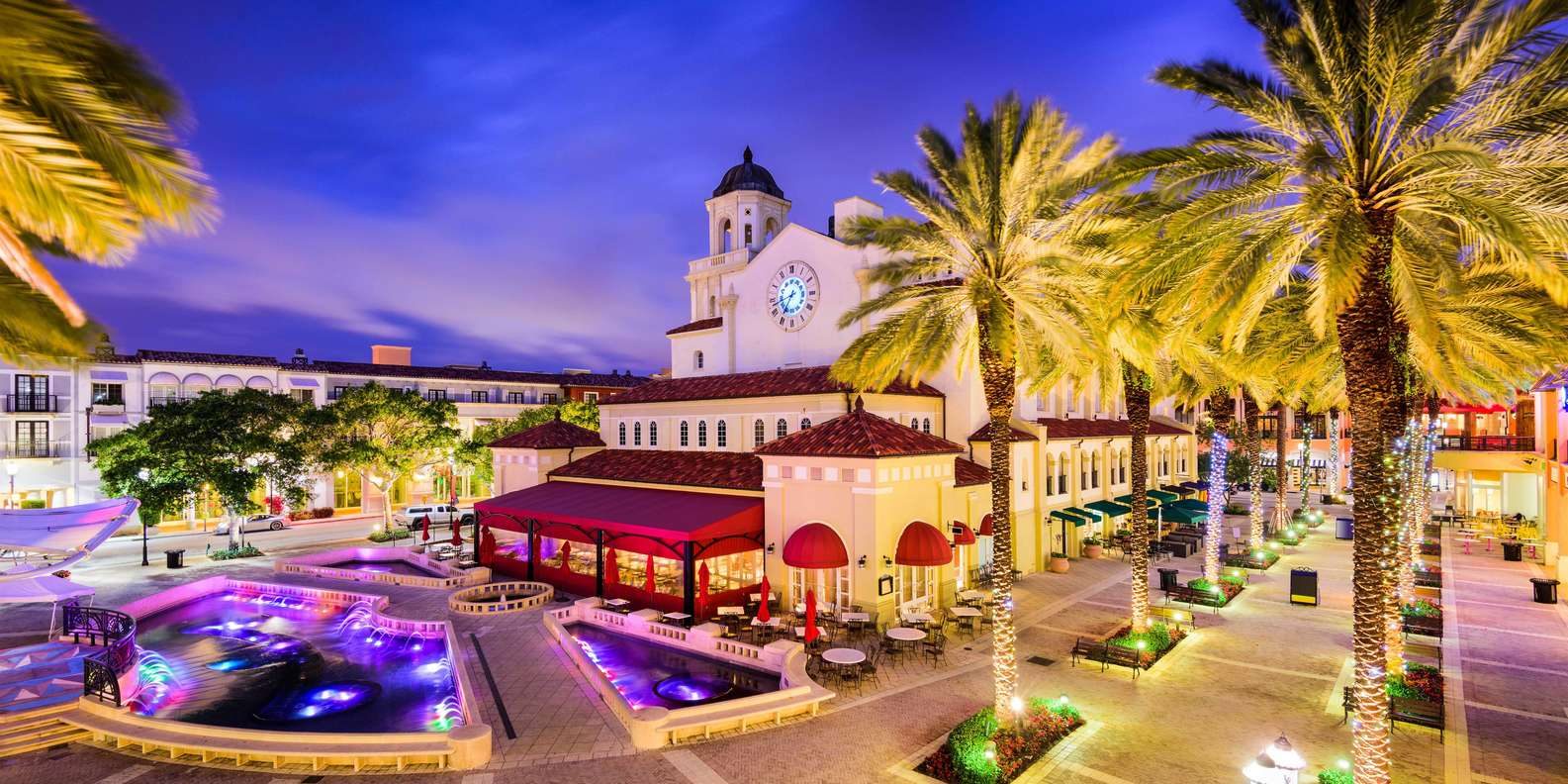
Is West Palm Beach a Good Place to Live? An Honest 2026 Review
18 min read
Is Wellington, Florida a Good Place to Live? Honest 2026 Review
18 min read