Oakland Park, Florida Guide (2026): The Complete Relocation and Living Guide
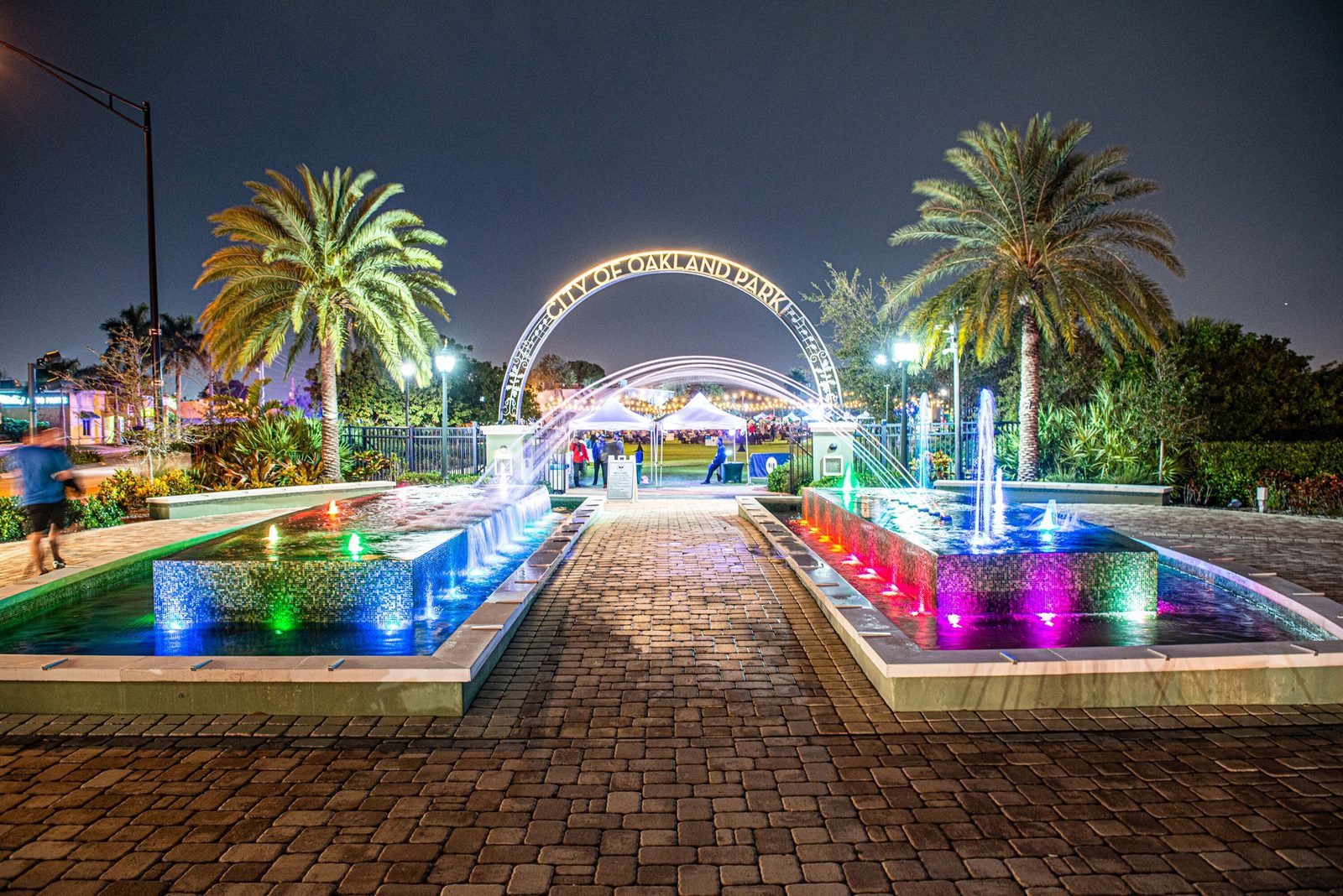
Oakland Park, Florida Guide (2026): The Complete Relocation and Living Guide
This Oakland Park Florida guide exists because most of what gets written about this city is either a real estate agent’s highlight reel or a dry Wikipedia summary. Neither tells you what it’s actually like to live here, what a house costs right now, or who should keep driving north or south instead.
Oakland Park is a roughly 45,000-person city in central Broward County, wedged between Fort Lauderdale to the south and east, Wilton Manors to the southeast, Lauderdale Lakes to the west, and Pompano Beach to the north. It’s not a beach town. It’s not a curated new-build suburb out west. It’s an older, canal-cut, tree-canopied city that’s quietly become one of the better value plays in Broward for people who want to be close to everything without paying a Fort Lauderdale or Wilton Manors address premium.
The short version: Oakland Park works for first-time buyers, renovators, young professionals, and anyone who wants walkable proximity to Wilton Drive, downtown Fort Lauderdale, and the beach (10 to 15 minutes by car) without the price tag that comes with living in those cities directly. It does not work for people who want new-construction everything, a gated HOA amenity package, or a single top-rated school zone across every grade level. Below is the rest of this Oakland Park Florida guide: price reality by home type, neighborhoods, schools, commute, lifestyle, and what’s actually being built here in 2026.
Who Oakland Park Actually Fits
Who it fits
Oakland Park fits buyers who have been priced out of Wilton Manors or Fort Lauderdale’s Victoria Park and Imperial Point corridors but still want the same proximity to downtown, the beach, and the restaurant and nightlife scene on Wilton Drive. It fits renovators and house hackers, because the housing stock is almost entirely 1950s through 1970s concrete block construction with good bones and dated kitchens, which is exactly the kind of inventory that rewards sweat equity. It fits commuters who need fast access to I-95, Fort Lauderdale Executive Airport, or downtown Fort Lauderdale’s office corridor without sitting in beach traffic every morning. And it fits anyone, LGBTQ+ singles and couples especially, who wants the walkability and community feel of Wilton Manors but at a lower buy-in.
Think about the actual buyer profile here, not the abstract one. A 31-year-old nurse working at Broward Health Medical Center who wants a 20-minute commute and a yard for a dog is a classic Oakland Park buyer. So is a couple who got outbid three times in Wilton Manors and realized the house they wanted at $550,000 there is the same bones, same era, same square footage as a house at $460,000 two minutes north in Oakland Park. So is an investor who wants a 1960s block home with a workable floor plan, because the renovation math pencils out better here than it does in a market where the land alone is already priced at a premium.
Who should keep looking
If you want a new-build home with a builder warranty, a clubhouse, and a resort pool as part of your HOA dues, Oakland Park is the wrong city. That product exists in Broward, but it’s out west in places like Coconut Creek and Parkland, not here. If your top priority is a single, uniformly excellent school zone from kindergarten through twelfth grade, you’ll want to cross-shop against a guide like Coconut Creek Schools Guide (2026) before committing, because Oakland Park’s zoning is solid but not uniform. And if you’re set on oceanfront or direct Intracoastal living, look at Lauderdale-by-the-Sea, Florida: The Complete Guide (2026) or Hillsboro Beach, Florida: The Complete Guide (2026) instead. Oakland Park is inland. The closest beach access is a drive, not a walk.
There’s also a maintenance-tolerance question worth being honest about. A concrete block home built in 1962 is a different ownership experience than a home built in 2019. Galvanized or cast iron plumbing, older electrical panels, and roofs that are past their insurable age show up regularly in Oakland Park inspections. None of that makes the city a bad buy. It makes it a buy where you budget for an inspection, a possible 4-point insurance inspection, and some near-term capital improvements instead of assuming everything behind the walls is new.
Price Reality by Home Type (2026)
Here’s where most Oakland Park content gets vague. It shouldn’t be.
Single-family homes
The bulk of Oakland Park’s housing stock is 1950s to 1970s concrete block single-family homes on interior lots, typically 3 bedroom, 2 bath, 1,200 to 1,800 square feet. In 2026, that product is running roughly $425,000 to $575,000 depending on condition, lot size, and whether the kitchen and roof have been updated. Fully renovated homes in the same footprint can push toward $625,000, especially in the more established pockets closer to Wilton Manors.
To put that in perspective: that same 1,400 square foot, 3-bedroom block home with an updated kitchen and a newer roof would likely list $80,000 to $150,000 higher if it sat two minutes south in Wilton Manors or Victoria Park, simply because of the zip code and school chatter attached to the address, not because the house itself is better built. That gap is the entire reason Oakland Park shows up on so many first-time buyer shortlists right now. A buyer putting down 10 percent on a $475,000 home is looking at a monthly payment, taxes and insurance included, that’s meaningfully lower than the same math on a $600,000-plus house a few blocks away, and that difference is what actually determines whether someone qualifies.
Canal and waterfront lots
Oakland Park was built around canals, and canal-front lots with dock potential or direct Middle River access are a different category entirely. Expect $650,000 to $950,000 for a canal lot home, and over $1 million for larger, updated properties with true boat access toward the river. This is the segment where buyers coming from Wilton Manors or Fort Lauderdale often land, because it’s the closest thing Oakland Park has to a premium product.
Buyers in this bracket need to do their homework on seawalls, not just square footage. A lot of Oakland Park’s canal infrastructure dates back to the original 1950s and 1960s platting, and a seawall replacement or repair can run well into six figures depending on linear footage and condition. Before you fall in love with the dock, get a seawall and dock inspection, not just a general home inspection. It’s the single biggest hidden cost in this segment of the market.
Townhomes
Newer townhome product, mostly concentrated along the Powerline Road and Prospect Road corridors, generally runs $350,000 to $475,000, with HOA dues in the $300 to $450 a month range covering exterior maintenance and sometimes a small pool. There are no CDD fees in Oakland Park. The city is fully built out, so you won’t see the bond assessments that come with newer master-planned communities further west.
That no-CDD detail matters more than people realize when they’re comparing a monthly payment on paper. A Parkland or Coconut Creek new-build townhome at a similar price point often carries a CDD bond assessment layered on top of the HOA, sometimes adding $150 to $300 a month to the real cost of ownership. Oakland Park’s older, fully built-out status means you’re not paying off someone else’s road and sewer infrastructure for the next 20 to 30 years. That’s a real, quantifiable advantage, not just a talking point.
Condos
Older, garden-style and low-rise condo product, much of it 55-plus or investor-owned, runs $150,000 to $280,000, with monthly HOA dues of $350 to $600 depending on the building’s age and reserves. This is the segment where Florida’s post-Surfside condo safety and reserve requirements matter most. Buildings three stories and over are now required to carry fully funded reserves and pass structural milestone inspections, and in older Oakland Park buildings that haven’t funded reserves properly, buyers are seeing special assessments in the five figures. Ask for the most recent reserve study and milestone inspection report before you make an offer, not after. If you’re comparing this segment against other Broward value plays, Moving to Margate, Florida (2026): The Honest Relocation Guide and Coconut Creek Real Estate Market (2026): Prices, Trends, and What It Means for Buyers are worth reading side by side with this one, because the three cities compete for a similar buyer at a similar price point, just with different housing stock ages and different commute profiles.
Neighborhoods: Where to Buy and Why
Oakland Park doesn’t have the branded, gated subdivisions you’d find out west. What it has are older, named pockets, each with its own character.
Downtown and the Oakland Park Boulevard corridor
The civic core, running along Oakland Park Boulevard between Dixie Highway and Andrews Avenue, is home to city hall, the library, and the bulk of the city’s redevelopment activity. This is where you’ll see the newest multifamily and mixed-use product going up, and it’s the area to watch if you want to be close to whatever retail and dining growth happens next. If you’re the type of buyer who wants to get ahead of a redevelopment wave rather than buy into one that’s already peaked, this corridor is worth watching over the next three to five years as the city’s land use planning plays out.
Island City and the canal streets
The area around Middle River, sometimes still referred to by its historic nickname Island City, is Oakland Park’s best waterfront value. Bungalow-style homes on canal lots here offer the dock access and boat-friendly living that normally costs far more in neighboring cities. This is also where you’ll find the highest concentration of true 1950s architectural character, terrazzo floors, original jalousie windows on some homes, and lot sizes that are larger than what you’d find on the interior streets further west.
North Andrews Gardens
On the west side near Andrews Avenue, this pocket is Oakland Park’s most affordable entry point into single-family ownership, with smaller lots and a straightforward commute profile for anyone working along the Andrews Avenue or I-95 corridor. It’s also the area where renovation-minded buyers tend to find the best price-to-upside ratio, since the base price of entry is lower and the renovated comps nearby still support meaningful equity gains.
Lloyd Estates
Straddling the Oakland Park and Fort Lauderdale line, Lloyd Estates has leafy, mid-century streets and some of the most consistent, well-maintained housing stock in the city. It’s a quiet, established choice for buyers who want proximity to Fort Lauderdale without the Fort Lauderdale tax bill. Because part of Lloyd Estates actually sits across the line in unincorporated Broward or Fort Lauderdale depending on the specific street, this is one pocket where confirming the exact taxing jurisdiction before you write an offer actually changes your numbers.
Twin Lakes and Royal Palm Isles
These neighborhoods sit near the city’s small lake and canal network and attract families and move-up buyers who want a quieter street without giving up canal or water proximity. Lot sizes here tend to run slightly larger than the interior North Andrews Gardens streets, and the housing stock skews toward homes that have already seen at least one round of renovation, which means less of a fixer-upper discount but also less deferred maintenance risk.
The Powerline and Prospect corridor
This is Oakland Park’s more industrial and transitional zone, home to breweries, artist studios, and most of the newer townhome construction. It’s the area most likely to keep changing over the next five years as redevelopment continues. Buyers who want to be close to the brewery and arts district energy, and who don’t mind some ongoing construction noise in the near term, tend to do well here. It’s also realistically the only part of Oakland Park where you’ll find a genuinely newer structure under $500,000.
Schools and Family Logistics
Oakland Park is zoned to Broward County Public Schools, and the zoning here is a genuine strength, not a footnote.
Elementary and middle
Depending on address, families are zoned to either Oakland Park Elementary or Floranada Elementary. Middle school zoning runs to James S. Rickards Middle School, which is located within the city itself. Because Oakland Park’s boundaries are irregular and interlock with Fort Lauderdale, Wilton Manors, and Lauderdale Lakes in places, two homes a few streets apart can land in different elementary zones. Always confirm zoning on the specific parcel through the Broward County Public Schools locator before you assume a listing’s advertised school is correct.
High school
The standout is Northeast High School, located in Oakland Park, which runs a well-regarded International Baccalaureate program that draws families from across central Broward, not just from inside city limits. Some western pockets of Oakland Park are zoned to Boyd Anderson High School in Lauderdale Lakes instead, so confirm your specific address before assuming IB eligibility. For families where the IB program is the actual deciding factor in where they buy, this is worth confirming with a licensed Realtor or directly with the district before writing an offer, not after closing.
If you’re cross-shopping school zones against other central Broward suburbs, the Coconut Creek Schools Guide (2026) is a useful side-by-side, since Coconut Creek draws a similar family buyer but with a very different housing stock age and price point.
Commute and Location Advantage
This is Oakland Park’s real selling point, and it doesn’t get talked about enough.
The highway and corridor access
Oakland Park sits right on I-95 at the Oakland Park Boulevard exit, with Dixie Highway (US-1), Andrews Avenue, and Powerline Road all running through the city as additional north-south options. That gives residents multiple ways to avoid I-95 backups during peak hours, which is a bigger deal in Broward than most new residents realize.
Drive times that actually hold up
Downtown Fort Lauderdale is roughly 10 minutes away. Fort Lauderdale-Hollywood International Airport is about 20 minutes. Fort Lauderdale Executive Airport sits just north of the city, which is a selling point for small-plane owners but worth noting if you’re sensitive to overhead traffic noise in the neighborhoods closest to it. The beach, whether you’re headed to Fort Lauderdale Beach or north toward Lauderdale-by-the-Sea, Florida: The Complete Guide (2026), is a 10 to 15 minute drive, not a walk, which is the tradeoff you make for Oakland Park’s lower price point.
Who benefits most
Anyone commuting to downtown Fort Lauderdale, Wilton Manors, or along the Andrews Avenue office corridor gets the most out of this location. If your commute runs north toward Boca Raton or Delray Beach, Oakland Park still works, it’s roughly 25 to 30 minutes via I-95, but you’ll want to compare it against Moving to Margate, Florida (2026): The Honest Relocation Guide, which sits slightly closer to that northern stretch.
Getting around without a car
Oakland Park is more walkable in pockets than people expect, especially around Wilton Drive’s edge and the Powerline corridor, but it is not a walk-everywhere city the way parts of downtown Fort Lauderdale or Wilton Manors are. Broward County Transit runs bus routes along Oakland Park Boulevard and Dixie Highway, and the Sun Trolley extends service into some adjacent areas, but day-to-day life here still assumes a car. Budget for that reality rather than assuming you’ll walk or bike to everything.
Lifestyle: What Living in Oakland Park Actually Feels Like
Oakland Park’s unofficial identity, reflected in its own branding, is “where the trees meet the sea,” a nod to the mature tree canopy over its older streets and its canal and river network feeding toward the Intracoastal. That’s a more accurate description than any marketing copy about “luxury living.”
Day to day
Life here revolves around the canal system (kayaking and paddleboarding on Middle River are genuinely popular), a small but real craft brewery and warehouse arts scene along the Powerline corridor, and spillover access to Wilton Drive’s restaurants and nightlife just a few minutes south. Jaco Pastorius Park and the city’s canal-side green spaces give the city a different feel from the manicured, HOA-landscaped parks you’d find in newer western suburbs. The weekly farmers market and the city’s ongoing push to activate the downtown corridor with events give Oakland Park more of a small, independent-town feel than a lot of people expect from a city this close to Fort Lauderdale.
How it compares to its neighbors
Oakland Park is deliberately less polished than Lighthouse Point, Florida: The Complete Guide (2026) or the ultra-exclusive, gated feel of Sea Ranch Lakes, Florida: The Complete Guide (2026). Those cities trade affordability for manicured canal living and tighter zoning control. Oakland Park trades some of that polish for a lower buy-in and a more mixed, working city feel. Neither is wrong, they’re just different products, and you should know which one you’re actually buying before you fall for curb appeal alone.
Who actually enjoys living here long term
The residents who stay happy in Oakland Park long term tend to be people who value proximity and character over polish, who don’t mind a mixed streetscape where a renovated home sits next to one that still needs work, and who use the canal and park system as their actual recreation rather than expecting a clubhouse to do it for them. Buyers who move here expecting a manicured, uniform subdivision feel tend to be the ones who end up unhappy, not because the city changed, but because they bought the wrong product for their expectations.
New Construction and What’s Actually Being Built
Here’s the honest answer most people searching “Oakland Park new construction” don’t get: there is no large, builder-branded new-home community here. Oakland Park is fully built out. There’s no vacant land for a 200-home master-planned subdivision the way there is in Coconut Creek or Parkland.
What growth actually looks like
Growth in Oakland Park happens two ways. First, infill teardown-and-rebuild, where an older canal or interior lot home is demolished and replaced with a new single-family home, typically selling in the $700,000 to $900,000-plus range once finished. Second, mixed-use and multifamily redevelopment concentrated along the Oakland Park Boulevard corridor and parts of Dixie Highway, driven by the city’s own downtown redevelopment planning, which is adding apartments, townhomes, and ground-floor retail rather than detached single-family product.
What that means for buyers
If you want a brand-new, builder-warrantied single-family home with a community pool and clubhouse, you’ll find that product in Coconut Creek or further west, not in Oakland Park. The Coconut Creek Real Estate Market (2026) guide and Best Neighborhoods in Coconut Creek (2026) are the right next reads if that’s your priority. If instead you’re comparing Oakland Park’s urban infill redevelopment pattern against another Broward city doing something similar, Hallandale Beach, Florida: The Complete Guide (2026) is a useful parallel, since Hallandale Beach is working through its own version of dense, corridor-driven redevelopment on a larger scale.
What that means for sellers and renovators
If you already own an older home on a larger interior or canal lot in Oakland Park, the infill rebuild trend is worth understanding even if you’re not selling yet. Builders and investors are actively pricing teardown potential into their offers in some pockets of the city, which means your land value alone may be worth more than your home’s current renovated-condition comps suggest. Before you list, or before you renovate assuming you’ll recoup the cost, get a read on whether your specific lot is sitting in a rebuild corridor. It changes the math on whether a full renovation or a sale as-is is the smarter move.
The Bottom Line
Oakland Park is a value play with a real identity, not a leftover city between better-known neighbors. It fits buyers who want proximity to Fort Lauderdale and Wilton Manors, don’t need new construction, and are willing to put some work into an older concrete block home in exchange for a lower price and a faster commute. It doesn’t fit buyers chasing a gated amenity package or a single, uniformly top-tier school zone.
If Oakland Park’s price point and commute profile sound right but you want to see how it stacks up against the next tier of options, start with Moving to Margate, Florida (2026): The Honest Relocation Guide for a similar-budget comparison, and Coconut Creek Real Estate Market (2026): Prices, Trends, and What It Means for Buyers if new construction is non-negotiable for you. Either way, know what you’re buying in Oakland Park before you make an offer: an older home, a central location, and a canal system that’s the real reason people stay once they move in.

More articles you might like
Moving to Tamarac, Florida (2026): The Honest Relocation Guide
17 min read
Moving to Margate, Florida (2026): The Honest Relocation Guide
13 min read
Moving to Coconut Creek, Florida (2026): The Honest Relocation Guide
17 min readMoving to Parkland FL: The Honest Relocation Guide (2026)
16 min readMoving to Doral, FL: The Honest Relocation Guide (2026)
17 min read