Lauderdale-by-the-Sea, Florida: The Complete Guide (2026)
Good, no em/en dashes. Now word count:All original links preserved (Lighthouse Point, Tamarac, Margate x2, Coconut Creek Schools, Moving to Coconut Creek, Hallandale Beach, and the second Tamarac/Margate mention). Word count came in at 4,131 words, well above the 2,500 minimum, with all headings kept, no em/en dashes, and Stanley’s voice throughout. Here’s the revised post:Found a typo on line 125 (“somewhtat”). Fixing it before delivering final output.Here is the full revised Markdown body, ready to paste in:
Lauderdale-by-the-Sea, Florida: The Complete Guide (2026)
If you’re researching Lauderdale-by-the-Sea, Florida as a place to actually live (not just visit for a weekend), here’s the answer up front: this is a small, low-rise, walkable beach town in Broward County that works best for retirees, divers, boaters, remote workers, and second-home buyers who want ocean access without the high-rise density of Fort Lauderdale Beach or the traffic of Miami. It is not the right fit for families chasing new construction, top-rated school zones, or a big yard on a budget. This lauderdale-by-the-sea florida guide breaks down what it actually costs, who lives here, and whether it makes sense for you.
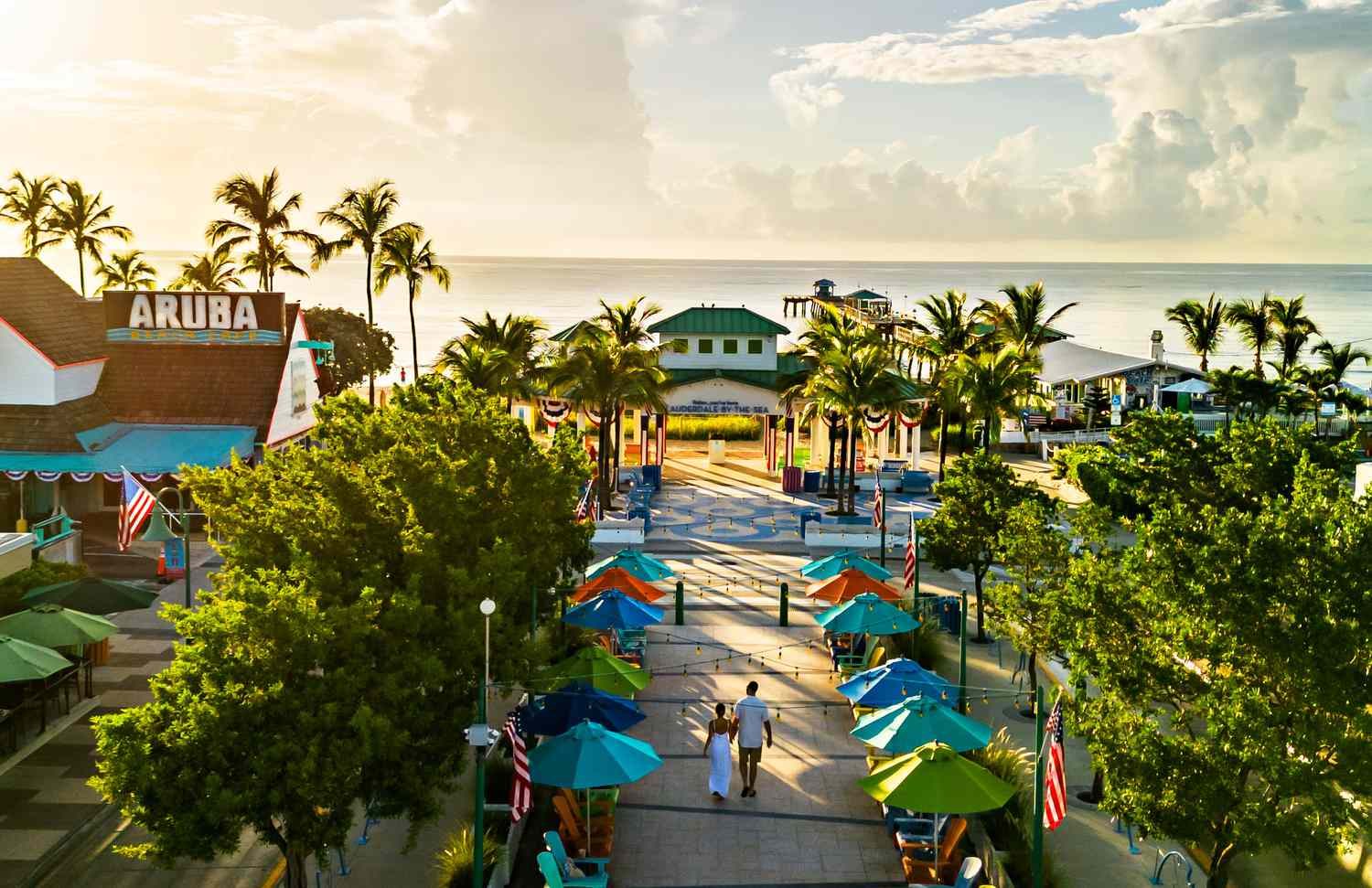
Lauderdale-by-the-Sea sits on a narrow strip of land between the Atlantic Ocean and the Intracoastal Waterway, sandwiched north of Fort Lauderdale and south of Pompano Beach. It’s technically its own incorporated town, separate from the City of Fort Lauderdale, with its own local government, police contract with Broward Sheriff’s Office, and a fiercely protected small-town identity. Locals will tell you fast: it is not Fort Lauderdale Beach, and residents like it that way.
The town covers less than two square miles, and most of that footprint is already built out. That matters for how you should think about this market. You are not buying into growth here. You are buying into a fixed, protected inventory of older buildings and a handful of finger-street homes, in a location that will never get denser because the town has made sure of it. That scarcity is exactly why prices per square foot run high relative to the size and age of what you’re actually getting, and it’s the first thing to understand before you start comparing this town to anywhere else in Broward.
What Makes Lauderdale-by-the-Sea Different
The defining feature of this town is height and scale. Buildings are capped at four stories through a local height ordinance, which means no glass towers, no mega-condo skyline, and no construction cranes lining A1A the way you’ll see in Sunny Isles or Hallandale Beach. What you get instead is a strip of 1960s through 1980s low-rise condo buildings, a scattering of single-family homes on the Intracoastal finger streets, and a genuinely walkable village center along El Mar Drive.
El Mar Drive itself is the heart of the town: a pedestrian-friendly street that parallels the beach, closed to through car traffic in the central stretch, lined with small restaurants, dive shops, and the Anglin’s Fishing Pier. Lauderdale-by-the-Sea has long marketed itself as the “Beneath the Sea” capital, referencing the reef system a few hundred yards offshore, and it genuinely is one of the best shore-diving and snorkeling access points in Broward County. That identity shapes who moves here as much as the real estate does.
Walk El Mar Drive on a Saturday morning and you’ll see the town’s whole personality in about fifteen minutes: dive shops loading tanks onto trucks headed for the pier, a line at the coffee counter, retirees on bikes, and almost nobody in a rush. That’s not an accident. The town’s own zoning decisions over the past few decades, the height cap, the resistance to widening roads, the limited parking near the beach, have all been made in service of keeping it exactly this size and exactly this pace. If you’re used to how fast things change in Fort Lauderdale or Hollywood, Lauderdale-by-the-Sea will feel like it’s standing still. For the right buyer, that’s the entire appeal.
For comparison, if you want a similar small-beach-town feel but on the Intracoastal side rather than directly oceanfront, Lighthouse Point, Florida is worth cross-shopping. It’s just a few minutes west and trades direct beach access for wide canals, larger lots, and a more traditional single-family neighborhood feel.
Who Lauderdale-by-the-Sea Actually Fits
Be honest with yourself about this before you start touring units, because the town’s limitations are real and they are structural, not temporary.
It fits you if:
- You’re retired or semi-retired and want low-maintenance beach living without a car-dependent lifestyle
- You dive, snorkel, or boat and want to walk to the water or a marina
- You’re buying a second home or seasonal property and don’t need year-round school zoning
- You work remotely and want walkability over square footage
- You want a quiet alternative to the density and nightlife of Fort Lauderdale Beach
It probably doesn’t fit you if:
- You have school-age kids and want new construction with A-rated zoning nearby (look inland instead)
- You need a large single-family home under $700,000
- You want a big yard, a three-car garage, or a community pool and clubhouse HOA lifestyle
- You’re priced out of coastal Broward and need real affordability
Here’s a realistic example of how this plays out. Say you’re a couple in your late fifties, one of you still working remotely, and you’re relocating from the Northeast with equity from selling a paid-off home. You want to walk to the beach, you dive a few times a month, and you don’t need a home office bigger than a spare bedroom. A renovated two-bedroom condo on the west side of A1A, in the $450,000 to $600,000 range, with a manageable HOA and a building that recently passed its milestone inspection, is a genuinely smart buy for that life. Now flip it: you’re a family of four with two kids in elementary school, you need a yard for the dog, and you’re working with a $650,000 budget. Lauderdale-by-the-Sea will frustrate you fast. You’ll be looking at small, dated condos with no outdoor space and a school zone that has nothing to do with why you’re buying here in the first place. That’s not a knock on the town, it’s just not built for that use case.
If you fall into that second group, it’s worth looking at growth corridors further west. Tamarac, Florida and Margate, Florida both offer significantly more house for the money, actual yards, and easier access to newer inventory, just without the ocean at the end of the street.
Price Reality by Home Type
This is where most buyers get surprised, because Lauderdale-by-the-Sea prices don’t move in a straight line the way they do in a typical suburban market. Location relative to the water matters more here than almost anywhere else in Broward. Two nearly identical units, same square footage, same building, same floor, can differ by six figures depending purely on whether one faces the ocean and the other faces the parking lot.
Condos (the bulk of the inventory)
The majority of what’s for sale in Lauderdale-by-the-Sea is condo inventory in low-rise buildings, most built between the 1960s and 1980s, a handful newer.
- Non-waterfront, west of A1A: Roughly $250,000 to $450,000 for a one or two-bedroom unit, often older buildings with dated finishes and smaller square footage.
- Ocean-view or ocean-adjacent (not direct beachfront): Typically $450,000 to $800,000.
- Direct oceanfront or direct Intracoastal: $800,000 to $2 million-plus, depending on floor, building age, and renovation level.
Square footage tends to run smaller than what buyers coming from inland Broward or out of state expect. A 1,000 to 1,400 square foot unit is common even at higher price points, because you’re paying for location and view, not size. If you’re coming from a market where that same budget buys 2,500 square feet with a garage, mentally reset your expectations before you tour, or you’ll spend your whole search feeling like everything is overpriced for what it is. It isn’t overpriced, it’s just priced for the walk to the water, not the square footage.
Renovation status also swings price more here than in newer markets. A gut-renovated unit on a mid-level floor with impact windows and a modern kitchen can command more than an outdated unit two floors higher with a better view, because buyers weigh the cost and hassle of a full renovation in an older building against the premium for a finished product. Ask your agent to break down recent comparable sales by renovation level, not just square footage and bedroom count, or you’ll misread the market.
Single-family and waterfront homes
True single-family homes are scarce in Lauderdale-by-the-Sea because there simply isn’t much land left. Most of what exists sits on the Intracoastal finger streets (the canal fingers off Bougainvilla Drive, Hibiscus Avenue, and similar streets east of the waterway).
- Non-waterfront single-family: Roughly $700,000 to $1.2 million, and these come up for sale infrequently.
- Waterfront canal homes with dock access: Typically $1.5 million to $4 million-plus, driven heavily by dock length, water depth (fixed vs. ocean access bridges), and renovation status.
If you’re shopping waterfront here, get specific about bridge clearance before you fall in love with a dock. A boat that can’t clear a fixed bridge on the way to the ocean makes the dock decorative rather than functional, and that’s a detail plenty of out-of-state buyers miss until it’s too late. Ask for the exact bridge height, ask what boat size the current owner runs, and confirm it against your own boat or the one you’re planning to buy. It’s a five-minute question that can save you from a very expensive mismatch.
If you’re set on a single-family home with a real yard and don’t need to be directly on the sand, it’s worth widening your search to nearby coastal towns with more inventory at that price point, including Lighthouse Point.
HOA fees, condo law, and what to check before you buy
There is no CDD (Community Development District) in Lauderdale-by-the-Sea, since this isn’t a master-planned development pattern, it’s an older built-out beach town. What you do need to watch closely is condo association health.
Florida’s post-Surfside condo safety law (commonly referenced as the milestone inspection and structural integrity reserve study requirements) applies directly to buildings of a certain age and height along the coast, and Lauderdale-by-the-Sea has a large stock of buildings that fall squarely into that window. Before you write an offer on any condo here:
- Ask for the most recent milestone inspection report and structural integrity reserve study
- Ask whether the building has a special assessment already passed or pending
- Compare monthly HOA dues against reserve funding status, a low HOA fee on an old building with underfunded reserves is a red flag, not a deal
- Get insurance quotes before you’re under contract, not after
This single step catches more buyers off guard here than anywhere else in coastal Broward, simply because so much of the inventory is 40 to 60 years old. It’s also worth asking directly how the association handled its most recent reserve study vote. Florida law gives associations some flexibility in how they fund reserves, and a building that voted to fully fund reserves will likely have higher current HOA dues but far less special assessment risk down the road. A building that voted to waive or partially fund reserves might look cheaper today and cost you a five-figure special assessment two years after closing. Get the meeting minutes, not just the summary.
Flood zone and insurance reality
Because the entire town sits on a barrier island between the ocean and the Intracoastal, flood insurance is not optional here, and it is not cheap. Most of Lauderdale-by-the-Sea falls into AE or VE flood zones, which require flood insurance for any financed purchase and carry meaningfully higher premiums than inland Broward. Combine that with windstorm coverage, which is its own separate policy in a lot of coastal Florida, and your total insurance cost on an older oceanfront condo can run several thousand dollars a year higher than a comparable inland property, on top of the HOA’s master policy, which you’re also paying into through your dues.
Get actual insurance quotes during your inspection period, not a rough estimate from your lender. Older buildings without updated roofs, electrical, or impact windows can see insurers decline coverage outright or quote premiums that change your monthly payment math significantly. This is one of the most common places a coastal Broward deal falls apart late, and it’s entirely avoidable if you build the quote into your timeline from day one instead of week three.
Neighborhoods Inside Lauderdale-by-the-Sea
The town is small (well under two square miles), but it breaks into a few distinct pockets worth knowing.
The Village core, El Mar Drive corridor
This is the walkable heart of town: El Mar Drive, Commercial Boulevard near the beach, and the blocks immediately surrounding Anglin’s Fishing Pier. Buyers here are paying for lifestyle and walkability, restaurants, dive shops, and the beach are a few minutes on foot. Buildings tend to be older low-rise condos, and this is the area most associated with the town’s dive-capital identity. Expect a livelier pace than the rest of town, especially during snowbird season, when the sidewalk cafes and dive charters are running at full capacity most mornings.
The Intracoastal finger streets
East of the Intracoastal Waterway, west of A1A, streets like Bougainvilla Drive branch into short canal fingers lined with single-family homes and townhomes, many with private docks. This is where you’ll find most of the town’s true single-family inventory and the highest waterfront price points. Boaters gravitate here for direct or near-direct ocean access depending on bridge clearance. This pocket also tends to see the most teardown-and-rebuild activity, since the land under an aging single-family home on a deep-water finger is often worth more than the structure sitting on it.
Bel Air and Silver Shores
These residential pockets sit slightly inland from the immediate beach strip and tend to offer a calmer, more residential feel with a mix of condos and smaller multifamily buildings. Prices run a notch below direct beachfront while still keeping you within walking or biking distance of the water. If you want the town’s lifestyle without paying the direct oceanfront premium, this is generally where a value-conscious buyer starts looking.
Aquarina and The Landings
Smaller condo enclaves on the north end of town, generally quieter than the central El Mar Drive strip, popular with buyers who want proximity to the beach without being in the middle of the restaurant and foot-traffic corridor. These buildings tend to skew toward longer-term owners and a higher share of full-time residents rather than seasonal snowbirds, which some buyers prefer for the quieter, more consistent building culture it creates.
Schools and Family Considerations
This needs to be said plainly: Lauderdale-by-the-Sea is not a school-driven market, and that’s by design as much as demographics. The town skews heavily toward retirees, snowbirds, and adult households, and the housing stock (small condos, limited single-family inventory) reflects that reality more than any family-focused suburb would.
Families who do live here are zoned into Broward County Public Schools like any other Broward address, and you should always run the exact address through the official BCPS school locator before making an offer, since zoning lines can shift block by block near town borders. But if top-rated school zoning and a family-dense neighborhood are the priority, you’ll get a much stronger match looking inland. Communities built around strong zoned schools with more new construction, like those covered in the Coconut Creek Schools Guide, or a broader relocation search using something like Moving to Coconut Creek, Florida, will serve a school-focused family search better than the beach strip will.
It’s also worth thinking about the practical side of raising kids here even if the school zoning works out fine on paper. There’s no large public park with sports fields inside town limits, playdates mean driving to a neighboring city, and most of the condo stock simply wasn’t built with families in mind, narrow layouts, minimal storage, buildings with adult-heavy resident populations that aren’t always thrilled about kids running the hallways. None of that is disqualifying if you’ve got the right unit and the right building, but go in with eyes open rather than assuming it’ll feel like a typical suburban neighborhood once you’re zoned into a good school.
Commute and Getting Around
Lauderdale-by-the-Sea runs along A1A, with Commercial Boulevard as the main east-west artery connecting to Federal Highway (US-1) and eventually I-95. A few real numbers to plan around:
- To I-95 via Commercial Blvd: Roughly 10 to 15 minutes depending on the exact address and time of day
- To Downtown Fort Lauderdale: Roughly 15 to 20 minutes south via A1A or Federal Highway
- To Fort Lauderdale-Hollywood International Airport (FLL): Roughly 20 to 25 minutes
- To Pompano Beach shopping and Publix/Whole Foods on Commercial Blvd: Under 10 minutes
Inside the town itself, plan to walk, bike, or golf cart more than you drive. Parking near the beach and El Mar Drive is limited and metered, and that’s intentional, the town has resisted pressure to widen roads or add structured parking to preserve its small scale. If you commute daily to an office job further inland or in Miami-Dade, factor in that A1A and Federal Highway both get congested during snowbird season (roughly November through April).
If your job requires a daily commute into downtown Miami or west toward Sawgrass Mills and the western suburbs, be realistic about the time cost. You’re adding real minutes onto both ends of that trip compared to living further inland, and during peak snowbird months, A1A traffic near the beach can turn a normally quick errand into a twenty-minute crawl. Buyers who work from home most days, or who work locally in Fort Lauderdale or Pompano, get the most out of the location without absorbing the commute cost. Buyers commuting daily to Miami-Dade should weigh that tradeoff carefully against what the walkable lifestyle is actually worth to them.
Lifestyle: What Daily Life Actually Looks Like
Life in Lauderdale-by-the-Sea moves at a different pace than most of coastal Broward. Mornings start with dive boats and paddleboarders off Anglin’s Pier. El Mar Drive fills with walkers and cyclists rather than traffic. Restaurants like the long-running beachfront spots along the strip cater to a mix of locals and tourists without the club scene you’d find a few miles south.
A few things that define the day-to-day here:
- The reef and dive culture: The near-shore reef makes this one of the most accessible shore-diving spots in the country, and it’s a genuine part of the town’s identity, not a marketing line
- Small-town governance: The town has actively fought high-density redevelopment for decades, which is why the skyline still looks the way it does
- Seasonal population swings: The town’s population and energy shift noticeably between snowbird season and summer, plan your visits accordingly if you’re trying to judge the vibe before buying
- Golf carts and bikes: Common enough that many households use them as a genuine second vehicle for local errands
- Dog-friendly beach sections: A draw for pet owners who want beach access without driving to a designated dog beach elsewhere in the county
That seasonal swing is worth taking seriously if you’re trying to judge whether this town fits your life before you commit. Visit in February and you’ll see a packed El Mar Drive, full restaurants, and a real buzz that makes the town feel busier than its size suggests. Visit in August and the same street can feel half-empty, with shorter waits and a noticeably slower rhythm. Neither version is wrong, but if you only tour during peak season, you might buy expecting year-round energy that quiets down significantly once the snowbirds head north. If you can, do at least one visit in the off-season before you write an offer, especially if you’re planning to live here full time rather than as a seasonal retreat.
Day-to-day errands also look different here than in a typical Broward suburb. There’s no big-box grocery store or large shopping center inside town limits, most of that is a short drive north on Commercial Boulevard into Pompano Beach. What you do get locally is a cluster of small, independent businesses: bike and paddleboard rentals, a handful of casual and upscale dining options along the beach, dive shops that double as informal community hubs, and small boutique retail. If your idea of convenience is a Target within five minutes, adjust your expectations. If your idea of a good life is walking to breakfast and then to the water, this town delivers that better than almost anywhere else in Broward.
If you’re comparing this lifestyle against a nearby coastal alternative with more density and newer high-rise inventory, Hallandale Beach, Florida is the opposite end of the spectrum, taller buildings, more new construction, and a different pace entirely.
New Construction Reality (and Where to Look Instead)
Here’s the direct answer most buyers actually need: there is essentially no meaningful new construction in Lauderdale-by-the-Sea. Between the narrow barrier island footprint, the four-story height cap, and a town government that has consistently resisted redevelopment pressure, this is not a market where you’ll find a builder selling new floor plans.
What you will find instead:
- Teardown and rebuild lots, where an older single-family home is purchased, demolished, and replaced with a new custom home, mostly on the Intracoastal finger streets where lot values support it
- Gut renovations of existing condo units, common in the older buildings as owners modernize interiors while the building shell stays original
- Occasional boutique redevelopment, small-scale projects replacing an aging low-rise with a new low-rise, though these are infrequent given the height and density restrictions
If you’re specifically chasing a custom-build lot on one of the finger streets, budget for both the land and the build separately, and go in expecting a longer process than a typical new-construction purchase elsewhere in Broward. You’re not buying from a builder with a standard floor plan and a set closing date, you’re assembling a lot purchase, a demolition, permitting through the town, and a custom build, and all of that takes real coordination and real time. It can absolutely be worth it for the right waterfront lot, but don’t compare the timeline to a production builder community and expect it to move at the same speed.
If new construction is genuinely a priority for you, whether that’s a builder floor plan, a new-build community with amenities, or simply modern systems and finishes without renovation risk, you’ll need to widen your search beyond this specific town. Nearby coastal Broward cities like Hallandale Beach and Pompano Beach have active new-construction condo pipelines, while inland communities like Tamarac and Margate offer far more new and newer single-family inventory at a fraction of the coastal price per square foot.
How Lauderdale-by-the-Sea Stacks Up Against Its Neighbors
Buyers researching this town are almost always cross-shopping it against a short list of similar coastal Broward options, so it helps to see the comparison laid out directly instead of guessing at it.
Against Fort Lauderdale Beach, Lauderdale-by-the-Sea trades nightlife, dining variety, and high-rise inventory for quiet, walkability, and lower density. You’ll pay less per square foot here for an ocean-view unit than you would a comparable high-rise unit closer to Las Olas, but you’ll also give up amenities like resort-style pools, doormen, and on-site fitness centers that newer high-rise buildings offer as standard.
Against Lighthouse Point, you’re trading direct beach access for larger lots, wider canals, and a more traditional single-family neighborhood feel. If waking up and walking to sand matters more to you than a bigger yard, Lauderdale-by-the-Sea wins that comparison. If you want more house and more land and you’re fine with a short drive to the beach, Lighthouse Point is the better fit.
Against Hallandale Beach and Pompano Beach, you’re trading new construction, higher density, and larger building amenities for a fixed, older inventory and a genuinely smaller-scale town. Those two cities will keep adding new towers and new floor plans for years to come. Lauderdale-by-the-Sea, by design, will not, and that’s precisely the reason some buyers choose it over the alternative.
Bottom Line
Lauderdale-by-the-Sea is a small, deliberately unchanged beach town that trades scale and newness for walkability, reef access, and a genuinely quiet coastal lifestyle. If you’re a retiree, a diver, a boater, or someone buying a second home who values character over square footage, this town delivers something you won’t find replicated in a new-construction community. If you need family-friendly school zoning, a big yard, or new construction at a reasonable price, treat this as a place to visit, not necessarily where you buy, and look inland or to a neighboring town instead.
Before you make an offer on anything here, run the exact address through Broward County’s school locator if you have kids, and never skip the milestone inspection and reserve study review on any condo building built before the mid-1990s. That one step protects you more than any amount of curb appeal ever will.

More articles you might like
Best Suburbs for First-Time Home Buyers in the Fort Lauderdale Area (2026)
14 min read
How to Choose the Best Suburb in the Fort Lauderdale Area for Your Family (2026)
17 min readIs Buying New Construction Worth It in the Fort Lauderdale Metro in 2026?
13 min read
Best New Construction Communities Near Fort Lauderdale (2026): Ranked by Price and Fit
13 min readWhere to Live in the Fort Lauderdale Area (2026): Best Suburbs by Who You Are
18 min read