How to Choose the Best Suburb in the Fort Lauderdale Area for Your Family (2026)
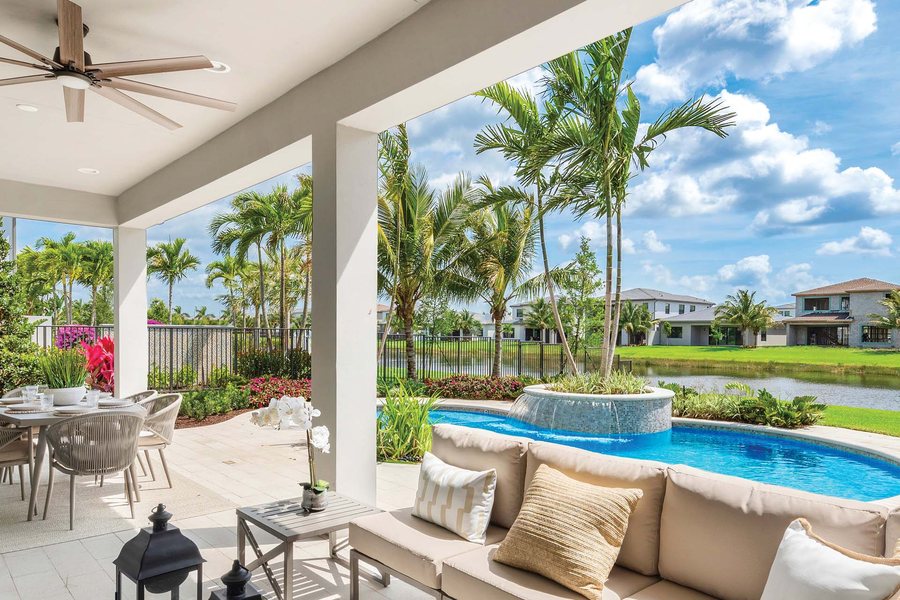
How to Choose the Best Suburb in the Fort Lauderdale Area for Your Family in 2026
The reality is, most people pick a Fort Lauderdale-area suburb the wrong way. They drive through on a Saturday, like the landscaping, see a model home with a lazy river in the amenity center, and make a decision based on curb appeal. Then eighteen months later they’re stuck in a school zone that doesn’t fit their kid, paying a CDD bill they didn’t budget for, or driving 45 minutes to work because nobody told them which corridor actually connects to I-95 or the Turnpike.
I see this play out the same way almost every time. A family relocating from out of state tours three communities in one afternoon, falls for the one with the nicest clubhouse, and puts in an offer before ever pulling up the actual school zone map for that address. Six months later they’re emailing me asking how to transfer their daughter into a different elementary school, and the honest answer is usually that they can’t, not without moving again.
How to choose the best suburb in the Fort Lauderdale area for your family in 2026 comes down to three filters, applied in this order: school zone first, HOA and CDD cost second, property type third. Get those three right and almost any suburb from Parkland to Pembroke Pines can work for your family. Get them backwards and you’ll be relisting your house in three years.
This guide walks through the framework, then breaks down the actual suburbs relocators and growing families are choosing between right now, with real numbers.
Why “Fort Lauderdale” Doesn’t Mean the City of Fort Lauderdale
Quick clarification that trips up almost every out-of-state buyer. When people say they’re “moving to Fort Lauderdale,” they usually mean the metro, not the city itself. The city of Fort Lauderdale is mostly older neighborhoods, condos, and a handful of family pockets. The suburbs that families actually move to for schools and new construction, Parkland, Coral Springs, Weston, Coconut Creek, Cooper City, Plantation, Pembroke Pines, are all a 25 to 40 minute drive west or southwest of downtown. They fall under Broward County, and they’re what people mean when they say the “Fort Lauderdale area.”
Understanding that distinction changes how you search and how you compare. You’re not choosing a neighborhood inside one city. You’re choosing among a dozen separate municipalities, each with its own school zoning, its own HOA culture, and its own commute profile. It also changes how you search online. If you’re typing “downtown Fort Lauderdale homes for families” into Zillow, you’re searching the wrong inventory entirely. The family stock is west, not east.
Step 1: Start With Your School Zone, Not the Zip Code
Broward County Public Schools zones by address, not by city name, and zone lines cut through suburbs in ways that surprise people. Two homes half a mile apart can feed into completely different elementary schools. This is the single biggest mistake I watch relocators make: they fall in love with a community, then find out after closing which school their kid is actually zoned for.
Before you tour a single model home, pull the actual Broward County school zone map for the address, not the neighborhood name. Cross-reference:
- Elementary zone (matters most if your kids are young, since this is the longest stretch)
- Middle school zone (this is where quality gaps widen the most in Broward)
- High school zone, and whether it has the magnet or IB program you want
Parkland and Coral Springs both feed into some of Broward’s strongest high schools. Weston does the same through Broward’s western zones. Cooper City has its own standalone high school that consistently ranks near the top of the county. Pembroke Pines and Coconut Creek have solid, improving options but you need to check the specific zone, not assume the whole city is uniform.
I’ve had clients assume that because a listing says “Coral Springs” or “Pembroke Pines,” the school situation is uniform across the whole city. It’s not. In Pembroke Pines specifically, the western sections and the older eastern sections can zone to schools with noticeably different track records. In Coconut Creek, a street on one side of a canal can zone differently than the street on the other side. The only way to know for certain is to run the actual property address through the district’s zoning tool before you get emotionally attached to a house.
If schools are your non-negotiable, this step alone will eliminate half your suburb list before you even look at price. It’s also worth asking whether the school is at capacity. Some of the most in-demand elementary zones in Parkland and Coral Springs are running near or above capacity, which means portables, larger class sizes, or boundary changes down the road. Ask the school directly, not just the real estate agent, what their enrollment trend looks like.
Step 2: Understand What HOA and CDD Actually Cost You
This is the part most listing photos and open house conversations gloss over, and it’s the part that actually moves your monthly payment the most in new construction communities.
HOA dues pay for amenity centers, common area landscaping, gate staffing, and community upkeep. In newer Broward communities you’re typically looking at $150 to $450 a month depending on how loaded the amenity package is (resort pool, clubhouse, fitness center, tennis or pickleball courts, gated entry with staffed guardhouse). The more resort-style the community, the higher the number.
CDD fees are a different animal entirely. A Community Development District is a bond the developer takes out to build the roads, water, sewer, and drainage infrastructure for the community, then passes that debt on to homeowners as an annual assessment on your tax bill. CDD payments typically run $1,500 to $3,500 a year and can last 15 to 30 years depending on the bond term. Unlike HOA dues, CDD debt doesn’t buy you an amenity, it pays off infrastructure that already exists. It’s baked into the county tax bill, so a lot of buyers don’t notice it until their first full property tax statement arrives.
Here’s what that looks like in real dollars. Say you’re comparing a new construction home in a Parkland community priced at $825,000 with $350 a month HOA and $2,800 a year CDD, against a resale home in Plantation priced at $780,000 with $120 a month HOA and no CDD. On paper the new construction home costs $45,000 more. Once you run the full monthly carrying cost (mortgage, HOA, CDD divided by twelve, insurance, and property tax), the gap narrows to almost nothing, and depending on your interest rate, the resale home can actually run higher per month because of the higher tax basis on an older home that’s been reassessed over time. The sale price alone tells you almost nothing. The monthly carrying cost tells you everything.
Here’s the practical takeaway: when you’re comparing a new construction community in Parkland or Cooper City against an established resale home in Plantation, don’t just compare the sale price. Ask for the total monthly carrying cost, mortgage plus HOA plus CDD plus insurance. New construction with a hefty CDD can end up costing more monthly than an older resale home priced $40,000 higher with no CDD at all.
If you’re evaluating specific communities, look at how the real numbers break down. Reviews like the Marigold Review, the Estates by Turnberry Review, and the Parkland Royale by Lennar Review all publish the actual HOA and CDD figures rather than making you dig for them at the sales office.
Step 3: Match Property Type to Your Family’s Life Stage
Once school zone and carrying costs are locked in, the third filter is whether new construction or resale actually fits where your family is right now.
New construction fits you if:
- You want a current floor plan (open concept, flex rooms, primary suite on the ground floor)
- You’re comfortable paying CDD fees in exchange for a builder warranty and modern systems
- You have some flexibility on move-in timeline, since inventory homes move fast but built-to-order can take 8 to 12 months
- You want a Next Gen or multi-generational layout, which communities like Parkland Royale and Solterra by Lennar offer directly
Resale fits you if:
- You want mature landscaping and an established neighborhood feel
- You want to avoid CDD debt entirely (many older Plantation, Coral Springs, and Cooper City neighborhoods have no CDD)
- You need to move in the next 30 to 60 days
- You want more land or an established pool already in place, which costs significantly more to add post-close in new construction
There’s also a middle scenario worth naming: the family that’s outgrown a starter home but isn’t ready for a brand-new $800,000 build. For that buyer, a resale home in an established Coral Springs or Cooper City neighborhood built in the late 1990s or 2000s often gives you the square footage and the school zone without the CDD debt, at a price that a comparable new build in Parkland simply won’t match. You give up the brand-new kitchen, but you gain immediate move-in and a lower monthly number.
If you’re weighing this tradeoff seriously, Is Buying New Construction Worth It in the Fort Lauderdale Metro in 2026? walks through the math in more detail.
Suburb-by-Suburb: What Each One Actually Delivers
Parkland
Parkland is the ceiling for school quality and low crime in this part of Broward, and the price reflects it. New construction here regularly starts in the $700s and climbs well past $1.5 million in communities like the Estates by Turnberry. CDD fees on newer Parkland communities run on the higher end of the range given the infrastructure built out for master-planned sections. Families choose Parkland specifically for the school zone and are willing to pay the CDD and HOA premium for it. It’s also one of the most horse-property-friendly suburbs left in this part of the county, which matters to a specific type of buyer who wants land, not just a bigger house. Read the full breakdown in Living in Parkland, Florida (2026).
Coral Springs
Coral Springs delivers a large share of Parkland’s school quality at a meaningfully lower price point, often $150,000 to $250,000 less for a comparable home. It’s more built out, so there’s less new construction inventory, but resale stock is deep and HOA structures in older sections are lighter, sometimes under $100 a month with no CDD at all. This is the suburb I point value-conscious school-focused families toward most often, especially move-up buyers who already have equity from a starter home elsewhere in Broward and want to stretch it as far as it goes without leaving the good school zones.
Weston
Weston is the westernmost of the family suburbs, tucked against the Everglades, with excellent schools, low crime, and a heavily planned, master-community feel. It commands prices similar to Parkland, with most single-family homes landing in the $700s to well over $1 million depending on the section. The tradeoff is commute, Weston sits further from I-95 and downtown Fort Lauderdale, so if one parent works east, factor that drive time in before committing. Weston also has a notably international, corporate-relocation feel to it, driven by nearby employers, which shapes the community culture differently than Parkland or Coral Springs.
Cooper City
Cooper City is the under-the-radar pick. It has its own standout high school, tight-knit community feel, and pricing that undercuts Parkland and Weston while still delivering strong academics. New construction here is limited but communities like Hanson Preserve are worth a close look if you want new construction inside Cooper City’s boundaries specifically. Because inventory is limited, homes here don’t sit long, so if Cooper City is on your shortlist, be ready to move faster than you would in a suburb with deeper resale supply.
Pembroke Pines
Pembroke Pines is one of the larger, more affordable family suburbs, with a wide range of housing stock from starter resale homes to newer construction in the western sections. School quality varies more by zone here than in Parkland or Cooper City, so this is a suburb where step one of this framework (checking the exact zone) matters even more than usual. Pembroke Pines also gives you the widest price range of any suburb on this list, which makes it a good fit for families whose budget sits well below Parkland or Weston pricing but who still want to stay in Broward’s family corridor rather than pushing further south into Miami-Dade.
Coconut Creek
Coconut Creek has quietly become one of the better value plays for families who want new construction without Parkland or Weston pricing. It’s closer to the Sawgrass Expressway corridor, has a butterfly-and-nature-preserve identity that keeps density lower than you’d expect, and is picking up new development that didn’t exist five years ago. It’s a suburb that still flies under a lot of relocators’ radar simply because it doesn’t have the name recognition of Parkland, but the school zones in its newer sections are competitive and the entry price is friendlier.
Plantation
Plantation is the most established suburb on this list, meaning mature trees, larger lots in older sections, and in most neighborhoods, no CDD debt at all. It’s a strong value pick if you want more house and land for the money and don’t need brand-new construction. It sits closer to downtown Fort Lauderdale too, which helps commute times for parents working east. Plantation is also a good fit for a family that wants a quarter-acre lot for a pool and a yard, something that’s getting harder to find in new construction communities where lot sizes have shrunk to fit more homes per acre.
Commute Reality Check Before You Commit
School zone and HOA math will narrow your list, but don’t skip the drive test. Do the actual commute at 7:30am on a weekday, not a Sunday afternoon. Key corridors to know:
- Sawgrass Expressway connects Coral Springs, Parkland, and Coconut Creek toward the Turnpike and I-95
- University Drive is the main north-south spine through Coral Springs, Pembroke Pines, and Plantation, and it gets heavy at rush hour
- I-75 serves Weston and Pembroke Pines’ western sections, feeding toward the Turnpike
- Powerline Road is a useful surface-street alternative through Coconut Creek and Pompano when 95 backs up
If your job is east of I-95, add 15 to 20 minutes to whatever a map app tells you during peak hours, especially from Parkland or Weston. I’ve had clients clock a Sunday afternoon drive from Parkland to downtown Fort Lauderdale at 28 minutes, then find out their actual Tuesday morning commute runs closer to 50. That’s a real difference over a five-day week, and it’s the kind of thing that shows up in family stress levels long before it shows up in a spreadsheet.
Common Mistakes When Choosing a Suburb
Picking the amenity center over the school zone. A resort pool doesn’t matter in September when the school bus stop is the wrong one.
Not asking for the CDD payoff schedule. Some CDD bonds run 15 years, others run 30. Ask when it terms out, not just what it costs today.
Assuming new construction is always more expensive than resale. Once you add up HOA, CDD, and insurance on an older home with an aging roof or outdated electrical, the math sometimes favors new construction.
Ignoring the commute until after closing. Do the actual drive before you write an offer, not after.
Comparing suburbs on price per square foot alone. A cheaper home in a weaker school zone can cost you more long-term in tutoring, private school tuition, or a resale that doesn’t hold value the way a strong zone does.
Skipping the insurance quote until under contract. Florida homeowners insurance varies more by suburb, roof age, and construction type than most out-of-state buyers expect. A quote on a 2026 build in Parkland can run meaningfully lower than a quote on a 1990s roof in an older Plantation neighborhood. Get a real quote before you fall in love with a house, not after you’re locked into a contract.
Three Real Buyer Scenarios
Scenario one: the out-of-state relocation with two elementary-age kids. This family’s non-negotiable is school zone, full stop. They’re not price-sensitive up to about $900,000, but they are time-sensitive, they need to be in a house before the school year starts. For this buyer, I’m running Parkland and Coral Springs first, checking capacity at the specific elementary zone, then deciding between new construction and resale based on which has faster move-in timing that fall.
Scenario two: the growing family upgrading from a Coral Springs starter home. They have equity, they want more space, and they’re debating whether to stay in Coral Springs or stretch into Parkland. Here the CDD math actually matters more than the school difference, since both suburbs zone well. I walk them through the full monthly carrying cost on both options before they tour a single new model home, because the emotional pull of a brand-new Parkland community can overshadow a math problem that resale Coral Springs solves better.
Scenario three: the family that wants land and doesn’t need brand-new. They want a pool, a real yard, and no CDD bill. Plantation or an established Cooper City neighborhood almost always wins this comparison over new construction, because lot sizes in newer master-planned communities have shrunk to fit density, and adding a pool post-close in new construction is a five-figure project on top of the purchase price.
Notice that none of these three families end up in the same suburb. That’s the point of running the framework in order instead of picking based on which model home looked the nicest on a Saturday afternoon.
Putting the Framework Together
If you’re weighing multiple suburbs right now, run every option through the same three questions in order: what school zone am I actually buying into, what’s the true monthly cost once HOA and CDD are added in, and does new construction or resale fit my timeline and budget. Suburbs that survive all three filters are your real shortlist, everything else was just a pretty model home.
For a broader look at how these tradeoffs play out for buyers earlier in their homeownership journey, Best Suburbs for First-Time Home Buyers in the Fort Lauderdale Area (2026) covers the entry-level end of this same market. And if new construction is on your radar, Best New-Construction Communities in Broward County (2026) is the full, ranked rundown with real pricing across every suburb covered here.
Next Step
If you want help running your specific situation, budget, school priorities, commute, timeline, through this framework, send me a message with the suburbs you’re comparing and I’ll give you the honest read, including which ones I’d rule out for you and why.

More articles you might like
How to Choose the Best Suburb in Palm Beach County for Your Family (2026)
17 min readHow to Choose the Best Suburb in Miami-Dade for Families in 2026
17 min read
How to Choose the Best New-Construction Community in Broward County (2026)
14 min read
Lauderdale-by-the-Sea, Florida: The Complete Guide (2026)
23 min readBest Suburbs for First-Time Home Buyers in the Fort Lauderdale Area (2026)
14 min read