How to Choose the Best New-Construction Community in Broward County (2026)
Choosing the best new-construction community in Broward County in 2026 comes down to five things: the corridor you’ll actually commute on, the builder’s track record on your specific product type, the real math behind the CDD and HOA fees, whether the “incentive” is real money or a marketing trick, and whether the amenities match how you actually live day to day. Get those five right and the floor plan almost picks itself. Get them wrong and you’ll be the person two years from now explaining to friends why the CDD bill was so much higher than they expected, or why the HOA won’t let them park a work truck in their own driveway.
I’ve walked buyers through Broward’s new-construction market long enough to know the sales center pitch rarely matches the spreadsheet. This is the framework I actually use with clients, not the glossy version.
How to Choose the Best New-Construction Community in Broward County (2026): The Framework
Before you tour a single model home, answer these questions on paper:
- What corridor do you actually drive every day, and what does that commute look like at 7:45am, not 11am on a Tuesday?
- Which school zone are you buying into, and have you checked the zone (not just the city name), because Broward school boundaries split neighborhoods block by block?
- Is this a CDD community, an HOA-only community, or both, and what’s the total monthly carrying cost once you add both?
- What is the builder actually known for delivering on time, and what does their warranty and punch-list process look like?
- Does the amenity package match your life this year, not the aspirational version of your life?
Everything below expands on these five in order. Skip a step and you’re guessing.
Step 1: Decide What “Location” Actually Means for Your Life
In Broward, “location” is really three separate decisions: the corridor, the school zone, and the flood/insurance zone. Most buyers only think about the first one.
Pick your corridor, not your city
Broward doesn’t have one commute pattern, it has several, and new construction clusters along specific corridors:
- I-95 / Federal Highway corridor (Hollywood, Dania Beach, Fort Lauderdale) puts you closest to the beach and Fort Lauderdale-Hollywood International Airport, but you’re paying for it in density and price per square foot.
- Sawgrass Expressway / Coral Springs, Coconut Creek, Parkland belt is where most of Broward’s new single-family and townhome product is being built right now, with easy access north to Palm Beach County and south via 441 or the Sawgrass to the rest of the county.
- State Road 7 / 441 corridor (Pembroke Pines, Davie, Cooper City, Miramar) is Broward’s family suburb backbone, dense with A and B-rated schools and steadily filling in with new phases inside existing master plans rather than brand-new greenfield communities.
- I-595 corridor (Davie, Plantation, Sunrise) is the commuter shortcut to both I-95 and the Turnpike, useful if your job is anywhere between downtown Fort Lauderdale and western Broward.
If you work in Fort Lauderdale or Aventura, a Parkland new-build might look perfect until you’re doing that drive twice a day. If you work remote or in western Broward, Parkland or Coconut Creek makes a lot more sense than fighting I-95 traffic for a beach-adjacent zip code you rarely use anyway.
School zone, not school district
Broward County Public Schools zones can split two new-construction communities half a mile apart into completely different elementary schools. Parkland and Cooper City both carry reputations for strong, high-performing zoned schools, which is a real part of why new construction in both cities commands a premium over comparable product in, say, Tamarac or Margate. Before you fall for a floor plan, look up the actual zoned elementary, middle, and high school for that specific address on the district’s boundary tool, not the city’s marketing page. Builders will tell you a community is “zoned for great schools” without naming which one, because sometimes half the community feeds one school and the other half feeds another.
Flood zone and insurance reality
New construction in Broward is built to current elevation and wind codes, which genuinely helps on insurance compared to a 1980s resale. But “new” doesn’t mean “no flood zone.” Coastal-adjacent cities like Dania Beach, Hallandale Beach, and parts of Hollywood still carry flood zone designations that affect your insurance quote even in a brand-new home. Get a real quote before you’re under contract, not after.
Step 2: Compare Builders Like You’re Comparing Contractors, Because You Are
Every major builder active in Broward (Lennar, GL Homes, Pulte, Century Communities, Mattamy, K. Hovnanian, among others) has a different approach to construction quality, standard finishes, and how they handle the punch list after closing. Treat this like hiring a contractor, because that’s exactly what you’re doing.
What to actually ask a builder rep
- What’s included standard versus what’s a paid option? Impact windows, tile flooring beyond the wet areas, and upgraded cabinetry are often “options” that competitors include standard.
- What’s the actual delivery timeline for your specific lot, not the community’s general timeline? Ask for the build stage of homes closing in the last 60 days.
- Who handles warranty claims after closing, and what’s the average response time? Ask this directly, and if the rep dodges it, that’s data too.
- How many phases are left in this community, and what’s the projected total build-out? A community with 400 more homes to build means years of construction traffic and noise around you.
Track record over sales pitch
Some of Broward’s most talked-about recent communities are worth using as reference points for what “well-executed” looks like. Hanson Preserve in Cooper City has drawn attention for delivering on its floor plan promises in a school zone that’s genuinely hard to find new inventory in. Marigold and Solterra by Lennar are useful comparisons if you’re weighing Lennar’s standard package against a competitor at a similar price point. Reading a straight review of the actual finished product, not the pre-construction rendering, tells you more than any sales center walkthrough.
Step 3: Decode CDD and HOA Fees Before You Fall in Love With a Floor Plan
This is where most Broward new-construction buyers get surprised, and it’s completely avoidable if you ask the right question up front.
CDD fees explained straight
A Community Development District (CDD) fee exists because someone had to pay for the roads, water lines, sewer systems, and sometimes the amenity center before a single house was built. Instead of the builder eating that cost and baking it into the home price, many Broward communities (especially newer, larger master-planned ones in Parkland, Pompano Beach, and parts of Sunrise) finance it through a bond, and that bond gets paid down through your annual CDD assessment, usually on your property tax bill, for 20 to 30 years.
Two things to check before you buy in a CDD community:
- Ask for the current annual CDD assessment in dollars, not a percentage or a range. It should be a real number tied to that specific lot.
- Ask whether the CDD bond is fully funded (meaning the infrastructure is already built and the district is just collecting on the debt) or still being issued in phases (meaning your assessment could increase as more infrastructure gets built).
HOA fees are a different animal
Your HOA fee is separate from any CDD fee and covers ongoing costs like landscaping of common areas, gate and clubhouse staffing, pool maintenance, and reserve funds for future repairs. Unlike a CDD, an HOA fee never gets paid off, it’s a permanent monthly or quarterly cost. Communities with resort-style amenities (multiple pools, fitness centers, tennis or pickleball courts, staffed gates) will run higher HOA fees than a smaller townhome community with basic landscaping.
Run the real total
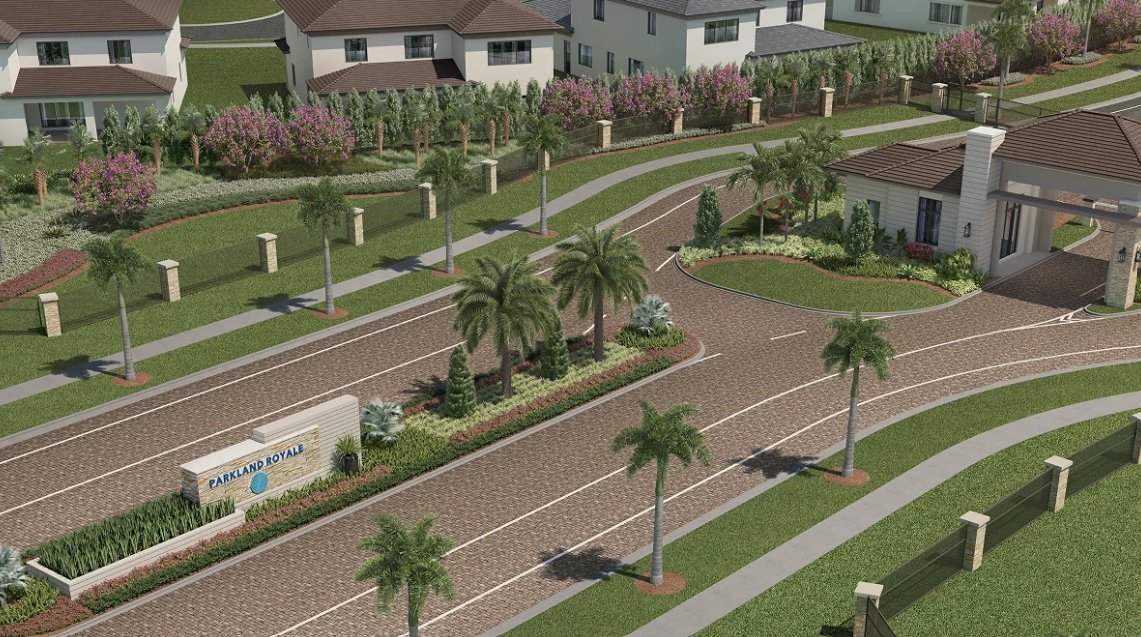
Add the mortgage payment, property taxes (Broward’s effective rate typically lands in the 1.7 to 2 percent range of assessed value depending on city and homestead status), HOA, CDD if applicable, and insurance together before you commit to a price point. A $650,000 single-family home in a CDD community with a $3,500 annual CDD assessment and a $350 monthly HOA carries a materially different monthly payment than the same price home in a non-CDD community with a $150 monthly HOA. Communities like Estates by Turnberry or Parkland Royale by Lennar are worth pulling the actual fee schedules on before you compare them side by side against a non-CDD alternative, because the sticker price alone won’t tell you the real story.
Step 4: Spot Real Incentives vs Marketing Noise
Builders in Broward are actively competing for buyers right now, which means incentives are common, but not all incentives are equal.
Real money incentives
- Rate buydowns through the builder’s in-house lender. These can genuinely lower your payment for the life of the loan or for the first few years, but only if the base rate they’re buying down from is competitive to begin with. Get an outside quote first so you know what “competitive” actually looks like.
- Closing cost credits. Often the most straightforward incentive, usually $10,000 to $20,000 depending on the community and how motivated the builder is to move inventory in a given phase.
- Design center credit. Useful, but read the fine print on what it can and can’t be applied to, because some credits exclude structural options like extended lanais or impact window upgrades, which are exactly the options worth having in Broward.
Incentives that sound bigger than they are
- “Free” upgrades that are actually just the builder including a package they were going to include anyway to move a slow-selling elevation or lot.
- A rate buydown tied to a lender rate that’s 0.375 to 0.5 points above market, which can cost you more over five years than taking the closing cost credit and shopping your own lender.
- End-of-quarter “sales events” that create urgency but often reappear the following quarter with a nearly identical structure.
The honest test: ask the builder rep to show you the same numbers with and without the incentive applied to an outside lender’s rate. If they hesitate, that tells you the incentive is doing more marketing work than financial work.
Step 5: Match the Community to How You Actually Live
This is the step buyers skip because it feels less “practical” than the fee math, but it’s the difference between loving your neighborhood and quietly resenting the HOA newsletter every month.
If you have young kids
Prioritize school zone first, then look at whether the community has sidewalks connecting to the school or if you’re driving regardless. Communities in Cooper City and Parkland lean hard into this family profile, with parks and splash pads built into the amenity package specifically because that’s who’s buying.
If you’re empty-nesting or downsizing
A townhome or villa product with a smaller HOA footprint and less lawn to manage often beats a large single-family lot, even at a similar price point. Look at whether the community has age-neutral or 55-plus sections, because the amenity calendar and pace of the neighborhood differ noticeably.
If you work from home
Internet infrastructure and HOA rules on home offices (signage, parking for clients, noise) matter more than they used to. Ask specifically, because some Broward HOAs still have restrictive language written for a pre-remote-work era.
If resale in 5 to 7 years matters to you
Look at build-out timeline. Buying into phase one of a 600-home community means you’ll be competing with the builder’s own inventory (often at builder-favorable pricing and incentives) when you try to sell in year three or four. A community closer to build-out has less of that internal competition.
Real Broward Examples: Applying the Framework
Here’s how this plays out with actual communities buyers are comparing right now:
A family prioritizing zoned schools and willing to pay for it should be cross-shopping Hanson Preserve in Cooper City against resale in the same zone, then checking whether the HOA and any CDD assessment still pencil out against the school-zone premium. A buyer who wants new construction without the CDD bond tacked on for 25 years should specifically ask, community by community, whether a CDD exists at all, since not every Broward new-build carries one. Someone comparing finish quality and standard inclusions across Lennar communities should read Marigold and Solterra side by side rather than assuming “it’s the same builder so it’s the same product,” because standard packages vary meaningfully by community and price tier. And if you’re still deciding whether new construction beats a well-priced resale at all, that’s a separate, honest breakdown worth reading before you commit to any of this: Is Buying New Construction Worth It in South Florida?
If you’re earlier in the process and haven’t narrowed a suburb yet, start broader. Best Suburbs for First-Time Home Buyers in the Fort Lauderdale Area and Living in Parkland, Florida are good starting points if you’re still deciding between suburbs before you narrow down to a specific community, and Best New-Construction Communities in Broward County (2026) gives you the fuller ranked list once you know what you’re optimizing for.
Common Mistakes Buyers Make Choosing New Construction in Broward
Falling for the model home instead of the actual lot. The model home almost always has every design center upgrade included. Walk the actual floor plan on your specific lot, or at minimum get a detailed spec sheet of what’s standard versus what’s shown.
Not asking about future phases. A community that looks quiet today might have three more phases of construction traffic, dust, and noise ahead of it. Ask for the master plan and the projected completion date for the entire community, not just your phase.
Ignoring lot premiums. A “corner lot” or “lake view” premium can add $20,000 to $60,000 to a base price. Decide in advance what view or lot feature is actually worth paying for versus what’s just upsell.
Skipping the independent home inspection. New construction still needs an inspection before closing. Builders make mistakes, and a third-party inspector working for you, not the builder, catches things the municipal inspector’s checklist doesn’t.
Comparing total price instead of total monthly cost. As covered above, two homes at the same purchase price can carry very different monthly costs once CDD, HOA, insurance, and taxes are factored in. Always compare the full monthly number.
Not touring at different times of day. Traffic on the corridor you’ll use, noise from a nearby road or rail line, and how packed the community pool gets on a Saturday all look different at 9am on a Tuesday versus 5pm on a Friday. Tour both if you can.
The Bottom Line
The best new-construction community in Broward County for you isn’t the one with the best sales center or the flashiest rendering, it’s the one where the corridor works for your actual commute, the school zone fits your family, the CDD and HOA math is transparent and affordable, the builder has a real track record of delivering, and the incentive on the table is genuine savings rather than a marketing wrapper. Run the five steps in this framework before you sign anything, and you’ll make a decision you’re still happy with in year five, not just on move-in day.
If you want a second set of eyes on a specific Broward community, the fee schedule, or a builder’s incentive offer, that’s exactly the kind of thing worth a direct conversation before you’re under contract, not after.

More articles you might like
How to Choose the Best Suburb in Palm Beach County for Your Family (2026)
17 min readHow to Choose the Best Suburb in Miami-Dade for Families in 2026
17 min readHow to Choose the Best Suburb in the Fort Lauderdale Area for Your Family (2026)
17 min read
Is Solterra, Sunrise Worth It? An Honest Look at Lennar's Newest Broward Community
18 min read
Is Vineyards Worth It? An Honest Look at D.R. Horton's Davie Community
13 min read