Is Solterra, Sunrise Worth It? An Honest Look at Lennar's Newest Broward Community
Is Solterra, Sunrise Worth It? An Honest Look at Lennar’s Newest Broward Community
Is Solterra, Sunrise worth it? Yes, for a specific buyer. Solterra makes sense if you want brand new construction, a gated clubhouse community, and a west-central Broward location close to Sawgrass Mills, I-595, and the Sawgrass Expressway, and you’re comfortable paying HOA dues plus a CDD assessment on top of your mortgage. It does not make sense if you’re chasing the cheapest possible monthly payment in Broward County or you have an allergy to community development district fees. Everything below explains why, with the real numbers.
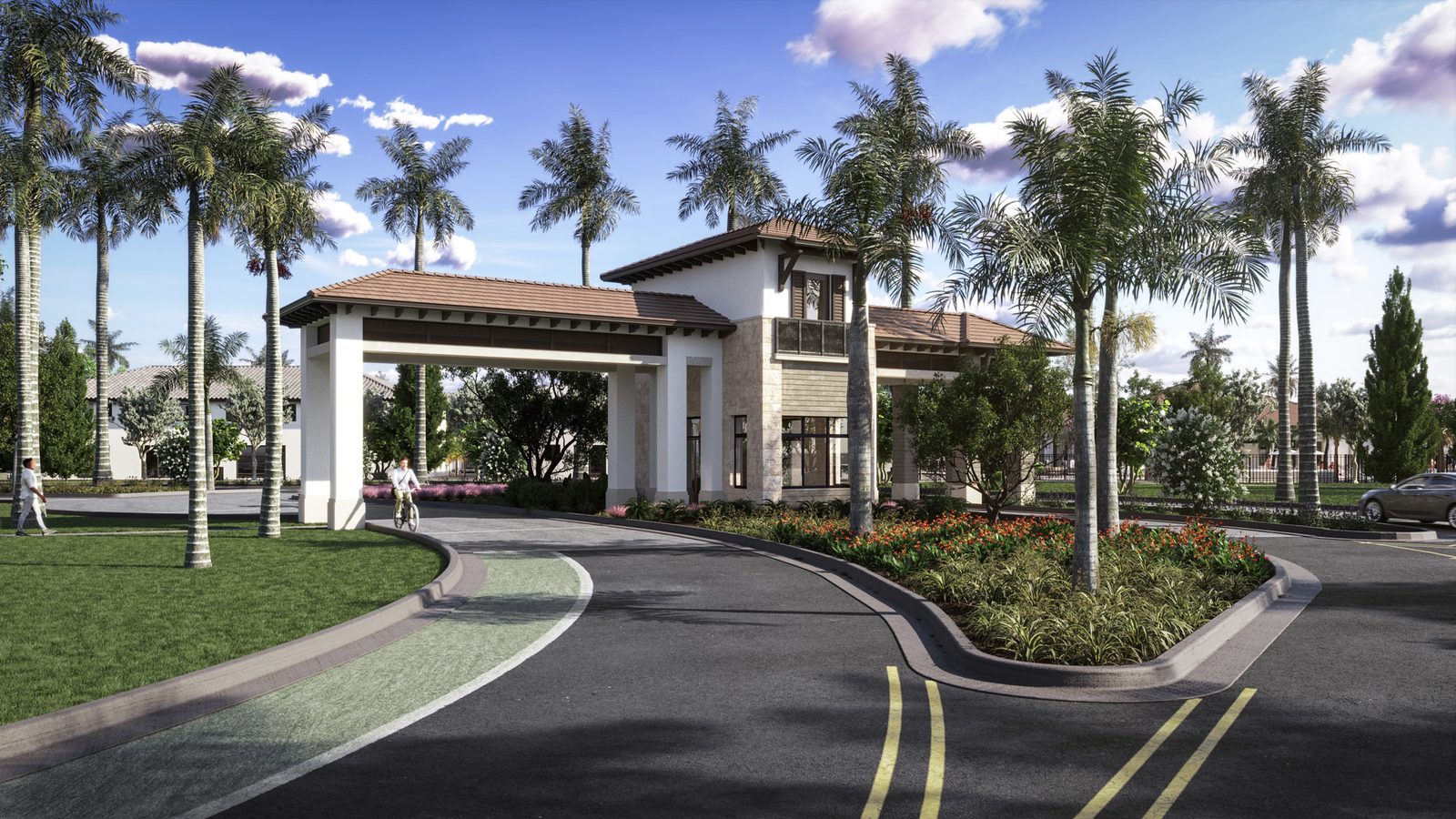
Solterra is Lennar’s master-planned community at 7440 NW 24th Place in Sunrise, built as a mix of villas, townhomes, and single-family homes behind a manned security gate. It’s one of the more talked-about new construction options in this part of Broward right now, and Stanley gets asked about it constantly, so let’s go through the actual case for and against buying here, with real numbers instead of sales-office talking points.
Is Solterra, Sunrise Worth It? What “Worth It” Actually Means Here
“Worth it” is the wrong question if you ask it in a vacuum. The right question is: worth it compared to what, and worth it for whom. Compared to buying an older resale home in Sunrise or Lauderhill with no HOA, Solterra costs more every month. Compared to buying new construction anywhere else in west Broward with a CDD (and most new construction west of University Drive has one), Solterra is priced competitively for what you get.
So the honest answer breaks into three parts: what you’re paying for, what it actually costs monthly once you add HOA and CDD to the mortgage, and who ends up happy living there five years from now. We’ll take each in order, and we’ll also walk through a couple of real buyer scenarios so the math isn’t abstract.
One more thing worth saying up front. A lot of the confusion around Solterra online isn’t about the community itself, it’s about the builder. Some of the floor plan documents use an internal file naming code that starts with “DAH,” and that’s led a few buyers to ask around whether this is a D.R. Horton community. It isn’t. Every authoritative document, from the brochure to the “Everything’s Included” features list to the current availability sheet, confirms Lennar is the builder and Lennar Realty Inc. is the listing broker. If you’re cross-shopping builders, know who you’re actually buying from.
What You’re Actually Buying at Solterra
Solterra is built in three distinct collections, and this matters because “Solterra” isn’t one price point, it’s three completely different products with three completely different buyers in mind.
The Aurora Collection (Villas)
Aurora villas start at $543,990 for the Elaris (1,426 square feet, 2 bedrooms plus an office, 2.5 baths, no garage) and $563,990 for the Olaria (1,633 square feet, 3 bedrooms, 2.5 baths, no garage). These are FHA-eligible, which opens the door for buyers who don’t have a large down payment saved. No garage is the tradeoff. If you need covered parking or extra storage, this collection will feel tight.
Think about who actually lives well in Aurora. It’s a strong fit for a young couple without kids yet, a single professional who wants equity instead of rent, or a downsizing empty nester who doesn’t need a garage because they’ve already sold the boat and the extra vehicles. It’s a tougher fit for a family with two working parents who each drive a separate car and want covered parking in July when the asphalt hits 140 degrees. Be honest about your own daily routine before you assume the lowest price point is automatically the right fit.
The Lusso Collection (Townhomes)
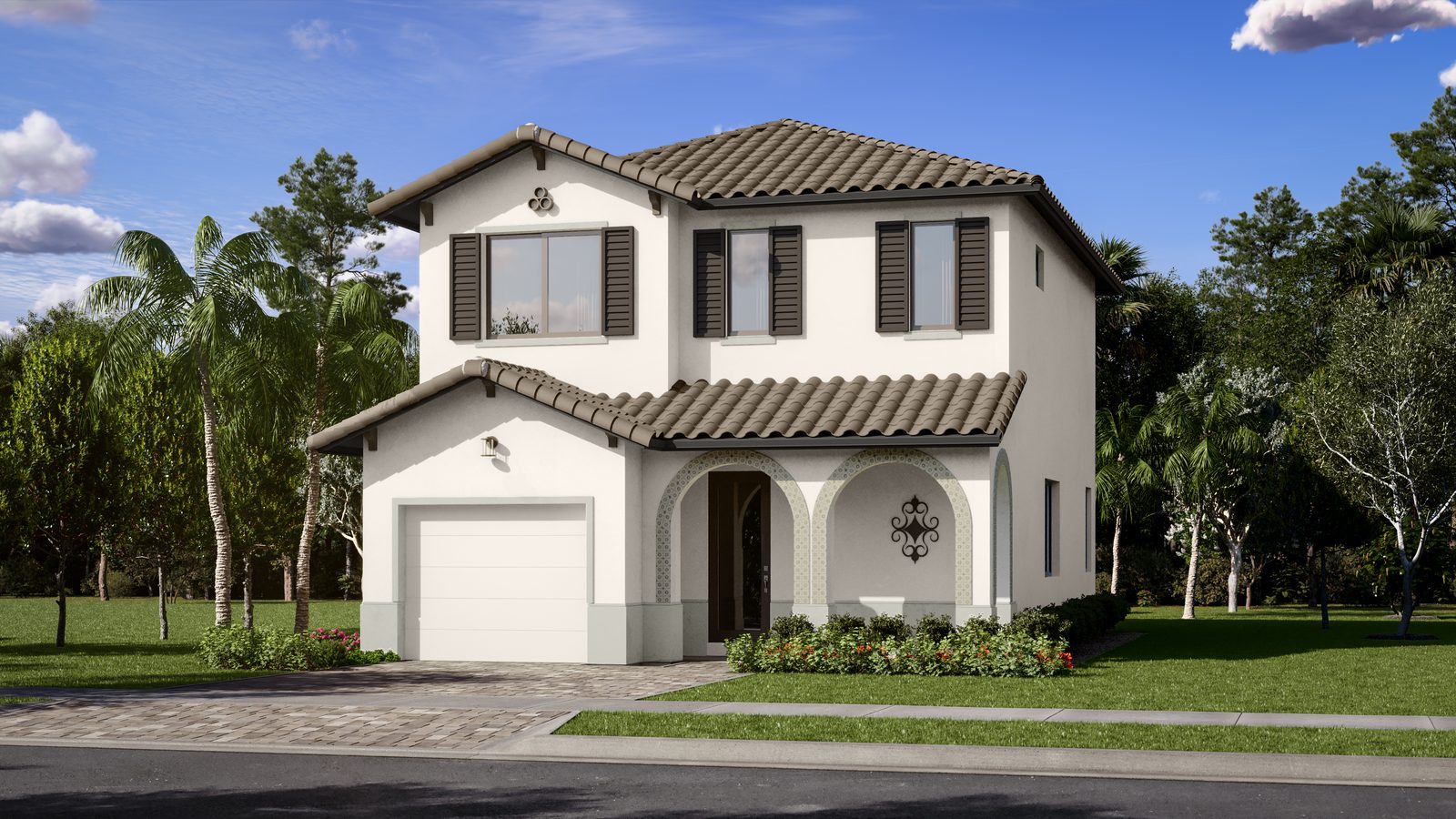
Lusso townhomes start at $615,990 for the Amara (1,776 square feet, 3 bedrooms, 2.5 baths, 1-car garage) and $630,990 for the Bellini (1,785 square feet, 3 bedrooms, 2.5 baths, 1-car garage), with additional floor plans in the lineup. These are also FHA-eligible and add the garage that Aurora lacks, which is the main reason buyers step up from villa to townhome even though the price jump is real, roughly $70,000 to $87,000 more depending on which models you’re comparing.
That jump matters. On a 30-year loan, an extra $75,000 financed at a typical rate in this market adds somewhere in the neighborhood of $480 to $520 a month to principal and interest alone. So the real question isn’t “do I want a garage,” it’s “is a garage worth roughly $500 more a month to me.” For a lot of buyers with two cars, tools, or a home gym setup, the answer is yes. For a buyer who parks on the street anyway in their current rental, it might not be.
The Radiance Collection (Single-Family)
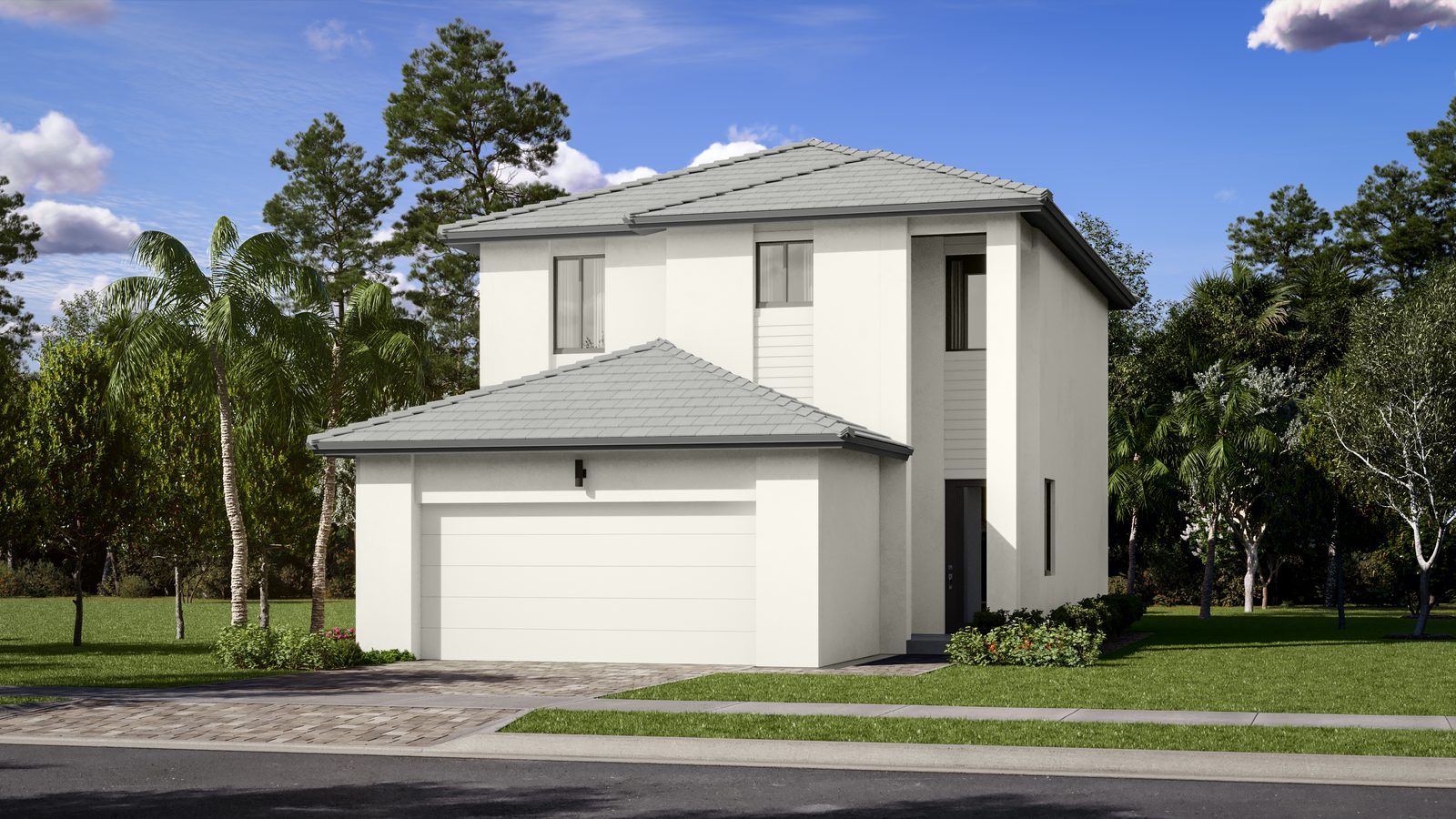
Radiance single-family homes start at $750,990 and run up toward $838,990 at the top of the community’s published price range. This collection requires conventional financing, not FHA, and it’s the collection built for buyers who need more square footage, a yard, and a full garage rather than a shared wall.
Radiance is the collection for the family that’s outgrowing an apartment or a starter condo and needs a real yard for a dog, a swing set, or Sunday cookouts without a shared wall on either side. It’s also the collection where the CDD assessment is highest in dollar terms ($2,544 a year versus $2,160 for Aurora and Lusso), which we’ll break down fully below. Conventional financing also means you’ll need a stronger down payment and credit profile than the FHA-eligible collections require, so talk to a lender early if Radiance is your target rather than after you’ve already picked a lot.
For the full breakdown of every model, square footage, and layout, Solterra, Sunrise Floor Plans Explained (2026) walks through which plan actually fits a given household size, and the full Solterra community page has the current availability.
The Real Location: What West Sunrise Actually Offers
Solterra sits in west-central Broward, off NW 24th Place in Sunrise, which puts it within a short drive of Sawgrass Mills, one of the largest outlet malls in the country, and gives residents fast access to I-595, I-95, Florida’s Turnpike, and the Sawgrass Expressway. That’s a real commuting advantage if you work anywhere along the I-595 corridor, in Plantation, in downtown Fort Lauderdale, or you fly frequently out of Fort Lauderdale-Hollywood International Airport, which is a manageable drive on I-595 outside of peak congestion.
The surrounding corridor is worth understanding, not just the highways. Solterra sits close to the Sunrise Boulevard and NW 136th Avenue area, with Lauderhill to the south, Tamarac and North Lauderdale to the north, and Plantation and Weston a short drive further west and south. Markham Park, one of the larger regional parks in Broward with camping, an archery range, and a model airplane field, is nearby for families who want green space without leaving the west side of the county. Amerant Bank Arena, home to the Florida Panthers, sits just off the Sawgrass Expressway a few minutes from the community, which matters if hockey or concerts are part of your household’s routine.
This is not a beachfront location and it’s not trying to be one. It’s a commuter and family location. The value proposition is: new construction, gated security, resort-style amenities, and a highway network that gets you to work and the airport quickly, in exchange for being inland rather than near the coast. If proximity to the beach is your top priority, Solterra is the wrong community regardless of price, and you’re better off looking east toward Fort Lauderdale or Hollywood where the CDD structures are different but the price per square foot climbs fast. If your priority is a reasonable commute plus new construction plus a gate, west Sunrise does that job well.
Families should confirm current Broward County Public Schools zoning directly with the district before writing an offer, since boundary lines shift and Solterra’s newly built section may draw from a different assignment than an older nearby subdivision. Don’t take a builder rep’s word for the school zone. Verify it yourself through the district’s official boundary tool, and if a specific school matters enough to your decision, call the school directly to confirm current enrollment zone before you’re under contract, not after.
The HOA and CDD Math Nobody Explains Upfront
This is where most buyers get surprised, and it’s the section that actually answers “is Solterra worth it” more than the purchase price does.
Solterra is inside a Community Development District, confirmed directly from the builder’s HOA and Tax disclosure page. That means every homeowner pays three separate ongoing costs beyond the mortgage: HOA dues, a CDD special assessment, and property tax at a stated rate of 1.55%.
Here’s the actual table, broken out by collection:
| Collection | HOA (monthly, approx) | CDD / Special Assessment (annual, approx) | Property Tax Rate |
|---|---|---|---|
| Aurora (Villas) | $496 | $2,160 | 1.55% |
| Lusso (Townhomes) | $385 | $2,160 | 1.55% |
| Radiance (Single-Family) | $385 | $2,544 | 1.55% |
Notice that Aurora, the cheapest collection to buy, actually carries the highest HOA dues at $496 a month. That’s a real inversion buyers don’t expect: the entry-level villa costs more per month in HOA fees than the pricier townhome. Ask why before you assume villas are automatically the “affordable” choice once you add up total monthly carrying cost, not just purchase price. The likely explanation is that villa maintenance, exterior upkeep, and shared grounds care are bundled more heavily into the Aurora dues since those units tend to have less individual yard space to maintain themselves, but confirm the exact HOA scope of work with the association documents before you close, not the sales center.
The CDD is the part that catches out-of-state buyers especially. A CDD is not an HOA. It’s a public financing mechanism that bonds out the cost of the roads, utilities, and amenities inside the community, and homeowners repay that bond through an annual assessment collected on the property tax bill. It typically runs for 20 to 30 years and does not disappear when you sell. The next buyer inherits it too. It can sometimes be paid off early in a lump sum, but very few owners do that, mostly because the annual cost is manageable and paying off a 20-year bond early rarely makes financial sense compared to investing that lump sum elsewhere. For the full line-item breakdown of what shows up on a Solterra tax bill every year, Solterra, Sunrise HOA & CDD Fees: What You’ll Actually Pay Every Month has the complete math.
If you’re relocating from a state without this structure, here’s the mental model that helps: think of the CDD as financing for infrastructure that, in an older established city, would already be built and paid for by decades of prior tax revenue. In a brand new community, someone has to pay for the roads, the gate, the clubhouse, and the drainage system, and the CDD spreads that cost across every homeowner over time instead of the builder baking the full cost into day-one pricing. It’s not a hidden fee. It’s disclosed. It’s just easy to miss if you’re only looking at the base price on a spec sheet.
What You’re Really Paying Every Month
Let’s run the numbers on two real examples so “worth it” stops being an abstraction.
Aurora Elaris, $543,990:
- Property tax at 1.55%: roughly $8,432/year, or about $703/month
- HOA: $496/month
- CDD: $2,160/year, or about $180/month
- Non-mortgage carrying cost: roughly $1,379/month before you add principal and interest
Radiance entry-level, $750,990:
- Property tax at 1.55%: roughly $11,640/year, or about $970/month
- HOA: $385/month
- CDD: $2,544/year, or about $212/month
- Non-mortgage carrying cost: roughly $1,567/month before you add principal and interest
That means before a single mortgage payment, an Aurora villa owner is carrying close to $1,380 a month, and a Radiance single-family owner is carrying close to $1,570 a month. Lenders qualify buyers on total housing payment, which includes taxes, insurance, HOA, and CDD, not just principal and interest. If you’re budgeting off the sticker price alone, you will get a rude surprise at underwriting.
To put a full number on it, take the Elaris at $543,990 with 10% down and a 30-year loan. That’s roughly $489,590 financed. Depending on your rate and credit profile, principal and interest alone could land somewhere around $3,100 to $3,300 a month in today’s market. Add the $1,379 in taxes, HOA, and CDD, and add homeowner’s insurance, which in Broward County for new construction typically runs somewhere in the $150 to $250 a month range depending on your carrier and coverage, and you’re realistically looking at a total housing payment in the $4,600 to $4,900 range before you’ve furnished a single room. Run these numbers with your lender before you fall in love with a floor plan. A pre-approval based on price alone, without HOA and CDD baked in, is not a real pre-approval.
How Solterra Stacks Up Against Other West Broward New Construction
Solterra doesn’t exist in isolation. West Broward, roughly the corridor from Sunrise through Tamarac, North Lauderdale, and out toward Coconut Creek and Parkland, has become one of the busier new construction zones in the county, and almost all of it carries some form of CDD or enhanced HOA structure because raw land in that corridor is mostly being developed by large production builders on bonded infrastructure.
What separates Solterra from a lot of that competing inventory is the collection structure itself. Instead of one product type at one price point, Lennar built three distinct collections on the same footprint, which means a single community can serve a first-time FHA buyer and a move-up family without either one feeling like they compromised on location. That’s not universal in this corridor. Some competing communities offer only single-family product, which prices out FHA buyers entirely, or only attached product, which prices out families who need a real yard.
The tradeoff buyers should weigh is that Solterra’s HOA on the Aurora collection, at $496 a month, runs higher than some comparable villa products nearby. Whether that’s worth it depends on what’s actually included in the dues, gate staffing, clubhouse and pool maintenance, landscaping, and exterior building upkeep on the attached units. Ask for the exact scope of the HOA’s responsibilities in writing before you compare it apples to apples against a different community’s lower monthly number, because a lower HOA fee sometimes means the homeowner is personally responsible for more of the exterior maintenance that Solterra’s dues cover.
Resale: What Happens When You Sell in 5 to 10 Years
Resale in a CDD community works differently than resale in a fee-simple, no-HOA neighborhood, and buyers need to think this through before they close, not after.
The CDD assessment doesn’t disappear when you sell. It transfers to the next buyer, and it shows up in their monthly qualifying number the same way it showed up in yours. That means your resale buyer pool is anyone comfortable with the same math you just ran above. It doesn’t shrink your buyer pool dramatically in a market like Broward where CDD communities are common, but it does mean your home won’t out-compete a similarly priced non-CDD resale home on pure monthly cost. Your competitive advantage on resale is the newer construction, the gated amenities, and (depending on timing) a shorter remaining bond term than a brand new buyer would take on today.
Appreciation in west Broward tracks the broader Sunrise, Plantation, and Lauderhill corridor more than it tracks anything specific to Solterra. New construction communities tend to hold value well in the first several years because there’s no competing inventory of “used” homes in the same footprint, but that advantage fades as the community matures and resales start hitting the market from the earliest buyers. If you’re buying purely as an investment with a short hold period, run the CDD payoff math against your expected hold time. If you’re buying as a primary residence for 7-plus years, the CDD math matters less because you’re paying it down over time regardless, and you’re not trying to time a quick flip against a bond balance disclosure that a savvy resale buyer’s agent will absolutely surface during negotiations.
One more resale detail buyers skip. When you eventually sell, your listing agent needs to accurately disclose the remaining CDD balance and current assessment amount, because Florida law requires it and because a buyer’s lender will ask for it during underwriting regardless. Keep your closing documents and any annual CDD statements you receive over the years. It makes your eventual sale faster and it protects you from a disclosure dispute down the line.
For a full side-by-side on how Solterra compares to other current new construction options in Broward, Solterra Sunrise New Construction: The Complete Buyer’s Guide to Floor Plans, Pricing, and HOA Costs covers that comparison directly.
Who Solterra Actually Serves
Be honest with yourself about which of these you are before you go under contract.
First-time buyers using FHA financing fit the Aurora villas and Lusso townhomes well. The FHA eligibility on those two collections is a genuine advantage over communities where every plan requires conventional financing and a larger down payment. A buyer with a 3.5% down payment and a steady W-2 income can realistically land in an Elaris villa where they’d be priced out of a comparable conventional-only new construction community.
Growing families who need a yard and a full garage fit Radiance. The tradeoff is conventional financing only, which means a larger down payment and stronger credit requirements than the villa or townhome buyer needs. Picture a family of four moving from a two-bedroom apartment in Plantation, tired of paying rising rent with nothing to show for it. Radiance gives them the yard, the garage, and the room to grow, at the cost of a meaningfully higher monthly commitment than Aurora or Lusso.
Buyers relocating from out of state who are used to lower property taxes and no CDD in their home state need to sit with the monthly math above before they commit. It’s not a bad deal, it’s just a different structure than what they’re used to, and the surprise usually comes from not budgeting for it rather than the actual dollar amount. If you’re coming from a state with a flat, low property tax bill and no CDD concept at all, budget an extra hour with your lender specifically to walk through Florida’s tax and assessment structure before you get emotionally attached to a specific floor plan.
Empty nesters downsizing from a larger single-family home often land well in Aurora. Less square footage to maintain, a gated community with amenities instead of an isolated large lot, and a lower entry price than what they may have just sold their prior home for. The lack of a garage matters less if you’re down to one car and don’t need workshop or storage space anymore.
Buyers who prioritize the lowest possible monthly payment above all else should look at older resale inventory in Sunrise, Lauderhill, or North Lauderdale without an HOA or CDD attached. Solterra will lose that comparison every time on pure monthly cost. It wins on being new, gated, and amenity-rich, not on being cheap.
The Honest Verdict
Solterra is a well-built, well-located community for the buyer who wants new construction in west-central Broward, values the gated security and amenities, and goes in with clear eyes on the full monthly number, mortgage plus HOA plus CDD plus property tax, not just the base price on the price sheet. It’s not the cheapest way into Broward homeownership, and Lennar isn’t pretending it is. The FHA eligibility on Aurora and Lusso genuinely lowers the barrier to entry for buyers who might not otherwise qualify for new construction, and the three-collection structure means the community actually serves a wider range of buyers than most single-product new construction developments in the same corridor.
If you’re evaluating Solterra against other options, read the full Solterra, Sunrise Review (2026) for the complete picture on prices, floor plans, HOA, and CDD in one place, then run your own numbers with a lender who will show you the real total monthly payment before you write an offer. That’s the only way to answer “is Solterra, Sunrise worth it” for your specific situation instead of in general.
If you want to walk a specific floor plan, compare Aurora against Radiance side by side, or talk through whether the CDD math works for your timeline, reach out and we’ll go through it together before you’re standing in a sales office signing paperwork.
Watch: learn more
Go deeper with my South Florida Insider videos.
Solterra: Everything You Need to Know Before You Visit
Solterra: Everything You Need to Know Before You Visit
More articles you might like
Is Vineyards Worth It? An Honest Look at D.R. Horton's Davie Community
13 min read
Is Avenir Worth It? An Honest Look at Multiple builders's Palm-Beach-Gardens Community
20 min read
Is Westview at Doral Worth It? An Honest Look at Lennar's Doral Community
13 min read
Is Cascata at MiraLago Worth It? An Honest Look at GL Homes's Parkland Community
16 min read
Is Hanson Preserve Worth It? An Honest Look at Toll Brothers's Cooper City Community
20 min read