Moving to Weston: Broward's Most Polished Suburb and What It Costs
Here’s the expanded draft, deepened throughout with more specifics, buyer scenarios, and a new comparison to Estates by Turnberry, while keeping every heading and link intact and staying dash-free.
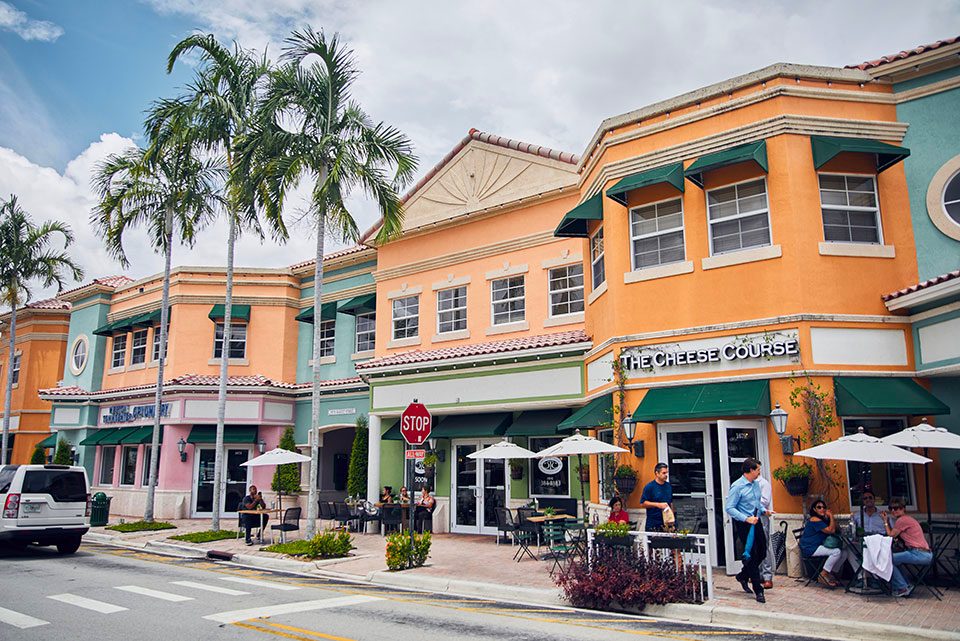
If you’re moving to Weston, Broward’s most polished suburb, here’s what it actually costs: a typical single-family home runs in the mid-$700,000s, and the bigger estate homes in the gated sections run from $900,000 up past $2.5 million. That’s the number. Everything else in this guide is about whether that number makes sense for your family, because Weston is not a suburb you drift into. It’s a suburb you choose on purpose, and it comes with a specific set of trade-offs that nobody at an open house is going to walk you through.
I’ve sold real estate in Broward long enough to watch the same pattern play out over and over. Families relocating from the Northeast or California land in Weston first, because it looks and feels like the version of Florida they pictured before they moved here: manicured medians, sidewalks that actually connect, gates with a guard who knows your name, and schools that don’t require a lottery to access. Then they see the price tag and either commit or start looking at Coral Springs and Coconut Creek instead. Both are reasonable decisions. This guide is here to help you make an informed one.
I’ll be straight with you the way I am with clients sitting across from me at the kitchen table: if the mid-sevens number makes you wince, don’t force it. There is no shame in that, and there are good alternatives nearby that get you most of what Weston offers at a real discount. But if you can comfortably carry that price and what you want is predictability, order, and a school assignment you never have to worry about, keep reading, because Weston is going to make sense by the end of this.
What Makes Weston Different From the Rest of Broward
Weston isn’t an organically grown town that added zoning rules over time. It was master-planned from the ground up by The Arvida Company starting in the mid-1990s, built out on reclaimed Everglades land west of Interstate 75, and incorporated as its own city in 1996. That origin story matters more than most buyers realize, because it explains almost everything about how the place feels today.
There’s no strip of older, mismatched housing stock dragging down the aesthetic. There’s no patchwork of different developers with different standards fighting each other block to block. Nearly every section of Weston was built to a unified plan, with consistent setbacks, consistent landscaping requirements, and homeowner associations that actually enforce their rules instead of treating them as suggestions. If you’ve toured Weston and thought “this feels almost too tidy,” that’s not an accident. That’s the product Arvida sold, and it’s the product homeowners associations here still protect aggressively.
This matters practically, not just aesthetically. Because the whole city was planned around a small number of master developers instead of dozens of competing builders, the infrastructure was built to handle the population from the start. Wide arterial roads, retention lakes sized for South Florida’s rainy season, parks and greenways woven between neighborhoods instead of bolted on afterward. Compare that to a lot of older Broward suburbs that grew piecemeal over fifty years, where drainage and road capacity are still catching up to the housing stock. Weston doesn’t have that problem, and it’s part of why the city has held its value so consistently even through the market swings of the last two decades.
For the full picture of how the city is laid out and where the different sections sit relative to each other, the complete guide to Weston is the deeper reference. This piece is focused specifically on the financial and lifestyle reality of relocating here in 2026.
What Moving to Weston, Broward’s Most Polished Suburb, Actually Costs
Weston isn’t one price point. It’s several distinct markets stacked inside one city limit, and where you land depends entirely on which section you’re looking at.
Entry Level: Bonaventure
Bonaventure sits on the eastern edge of Weston and is the most affordable way into the city, mostly through townhomes and smaller single-family homes, along with some condo product. This is where first-time buyers and younger families land when they want the Weston school zoning without paying for a half-acre lot in Windmill Ranch. If you’re trying to figure out what realistic entry-level pricing looks like here, including what you give up to get in at that number, the first-time buyer breakdown for Weston walks through it in detail.
I’ve worked with young families who assumed Bonaventure was a compromise, and it can be, but it’s a specific kind of compromise: smaller lot, older finishes in some units, HOA-managed exterior maintenance in the townhome sections. What you don’t compromise on is the school zoning or the address. A family relocating from a $500,000 starter home up north can often replicate that budget in Bonaventure and still walk their kids into the same elementary and middle school pipeline that feeds Cypress Bay. That’s the trade a lot of people don’t realize they’re getting until they map it out.
The Middle: Weston Hills, Country Isles, Savanna
This is where most Weston relocations actually land, and it’s the mid-sevens range I mentioned above. Weston Hills is built around the Weston Hills Country Club golf course and draws buyers who want a country club lifestyle without a Boca-level price tag. Country Isles and Savanna are more traditional single-family neighborhoods, gated, well-maintained, walkable to Tequesta Trace Middle and Country Isles Elementary. Homes here typically run from the high $600,000s into the $800,000s depending on lot size, waterfront access, and how recently the kitchen was updated.
This middle tier is where I spend most of my time with relocating buyers, because it’s the range where the math actually works for a dual-income family moving from a higher cost-of-living market. A household coming from New Jersey or Westchester selling a $900,000 home with a $12,000 property tax bill can often move into a $750,000 Country Isles home with a lower effective tax burden once you account for Florida’s lack of state income tax. I always tell people to run that full comparison, not just the sticker price on the house, because it changes the math more than most buyers expect.
The Top End: Windmill Ranch Estates, Savanna’s Estate Sections, Tequesta Point
At the top of the market you’re looking at estate-sized lots, several with private pools, screened outdoor living space built for the humidity, and in Windmill Ranch Estates, actual equestrian zoning. These properties start around $900,000 and run up past $2.5 million for the largest custom estates. Tequesta Point offers a different flavor entirely: mid-rise condos and townhomes right against Weston Town Center, popular with buyers who want walkability to restaurants and the AMC theater without maintaining a large lot. If you want a full breakdown of what buyers actually get at this level, and what’s marketing versus what’s real, the Weston luxury homes guide covers it neighborhood by neighborhood.
Windmill Ranch Estates in particular deserves its own explanation, because it’s genuinely unusual for Broward County. This is one of the only pockets of true equestrian zoning left this close to a major metro, with acre-plus lots, private stables permitted on the property, and a rural feel that sits less than twenty minutes from a Publix and a Whole Foods. Buyers who want horse property but also want their kids zoned for Cypress Bay and a twenty-five minute drive to Fort Lauderdale International tend to end up here, because there simply aren’t many other places in Broward that offer both.
For a snapshot of exactly where prices sit as of mid-2026 across all these segments, the Weston market update has the current numbers. Markets move, and any price range in a guide like this one is a starting point for your conversation with an agent, not a guarantee.
The Schools Are the Reason People Pay the Premium
Be honest with yourself about this before you commit to Weston: you are paying for Cypress Bay High School as much as you’re paying for the house. Cypress Bay routinely ranks among the top 20 high schools in the entire state of Florida, and unlike magnet programs in Miami-Dade or specialty programs elsewhere in Broward, zoning into it doesn’t require a lottery. You buy in the boundary, your kid attends. That predictability alone is worth real money to families relocating from out of state who don’t want to gamble on a school assignment.
Below Cypress Bay, the elementary and middle school options, Indian Trace, Country Isles, Manatee Bay, Tequesta Trace, are consistently A-rated and well-resourced. This is a genuinely different proposition than paying Parkland prices for Marjory Stoneman Douglas zoning, or paying Boca prices for a district that’s good but not exceptional. For families whose entire relocation decision hinges on the school piece, I’d point you to the Weston schools guide before you write an offer on anything, because school zoning boundaries in Weston can shift slightly street to street and it’s worth confirming before you fall in love with a specific house.
I want to put a real number on this, because “it’s worth it” is the kind of thing agents say without backing it up. Comparable A-rated public school access without the lottery risk in Miami-Dade often means paying a premium in Pinecrest or Coral Gables that puts you well past Weston’s numbers for similar square footage. In Broward, the honest comparison is Parkland, and Weston frequently comes in at or below Parkland pricing for comparable homes, while offering a more established town center and less new-construction turnover. If school certainty is driving your move, Weston gives you that certainty without necessarily costing you more than the alternatives that also claim to offer it.
HOA and CDD Reality: The Part Nobody Explains Clearly
Here’s what most relocation guides skip, and it’s the part that actually affects your monthly budget. Because Weston was built entirely as a master-planned community, nearly every single home here belongs to a homeowners association. There is very little unrestricted, HOA-free inventory in the entire city.
Fees vary widely by section. In the more modest, older parts of Bonaventure and Weston Hills, you might see HOA dues in the $150 to $300 a month range covering common area landscaping and maintenance. In gated, guard-staffed communities, especially the estate sections, monthly dues can run $500 to $800 or more, and that’s before you factor in the master association fee that covers the city’s broader landscaping and entry monument upkeep, which most Weston homes also pay into separately.
What you’re paying for is real: 24-hour guard gates in many communities, strict architectural review before you can change your exterior paint color or add a fence, code enforcement on parking and landscaping that actually gets followed up on. This is the flip side of “meticulously planned.” The rules are real, and they get enforced. If you’re someone who wants to park a boat in your driveway or paint your house a color the architectural review board doesn’t approve of, Weston is going to frustrate you. If you want your neighbor’s overgrown lawn to actually get a citation, Weston delivers exactly that.
I’ve had clients relocating from states with looser HOA culture get genuinely frustrated by this in year one, then tell me two years later they’d never go back to a neighborhood without it. The pattern is consistent enough that I bring it up on the first showing now: ask yourself honestly whether you’re the kind of homeowner who wants that level of oversight, or the kind who’ll fight it. There isn’t a wrong answer, but there’s a wrong fit, and it’s cheaper to figure that out before closing than after.
CDD (Community Development District) fees are less universal in Weston than in newer western Broward and Palm Beach developments, since Arvida largely self-funded the original infrastructure rather than passing bond costs through a CDD. Still, always confirm the specific fee structure on any property you’re seriously considering. The HOA disclosure package will spell it out, and I’d rather you see the real number before you’re under contract than after. When you’re doing your budget, add HOA plus master association plus any CDD together and treat it as a fixed monthly cost the same way you’d treat your mortgage payment, because lenders increasingly do exactly that when they calculate your debt-to-income ratio.
The Commute Is the Real Trade-Off
I tell every client considering Weston the same thing: if your job is in downtown Fort Lauderdale, that commute is manageable. If your job is in Miami or Miami Beach, you need to test-drive it at actual rush hour before you commit, not on a quiet Sunday afternoon showing.
Weston sits west of I-75, and getting out of the city funnels through a handful of arterial roads, primarily Royal Palm Boulevard, Griffin Road, and Weston Road, before you even reach the interstate. During weekday rush hour, that bottleneck is real, and it stacks on top of whatever congestion you’re already dealing with on I-75 or the turnpike heading south into Miami-Dade. Plenty of Weston residents make this work by adjusting their hours, working hybrid, or accepting the trade for the school and safety benefits. But I’ve had clients who didn’t test the drive first and regretted it within six months. Do the drive at 7:45 a.m. on a Tuesday before you write an offer.
Here’s a scenario I’ve seen play out more than once. A family relocates from Westchester County, the husband works hybrid out of a downtown Fort Lauderdale office three days a week, and the wife works fully remote. Weston works great for them, the commute is a manageable twenty-five to thirty-five minutes on his in-office days, and she never leaves the neighborhood except for school runs and Town Center. Now flip it: a couple where one spouse has a fixed 8 a.m. start time at a hospital in Miami’s medical district. That same commute stretches past an hour during peak traffic, and I’ve watched that scenario sour a Weston purchase within a year. Know which version of that story you are before you sign anything.
For a broader sense of what daily life actually looks like once you’re past the commute question, from Weston Town Center’s restaurants and the AMC to the parks system and weekend routine, life in Weston day to day covers the parts of the decision that aren’t about price at all.
New Construction in Weston: Mostly Not an Option
If part of your plan is buying new construction in Weston, adjust your expectations now. The city is essentially built out. Arvida completed its master plan decades ago, and there’s very little vacant, developable land left inside city limits. What new construction does exist tends to be small infill projects or rebuilds on already-developed lots, not the master-planned new-build communities you’d find further west in places like Parkland’s remaining edges or unincorporated west Broward.
This is actually one of the clearest signals of whether Weston or a neighboring suburb is the right call for you. If a brand-new floor plan with a builder warranty is non-negotiable, Weston probably isn’t your city, and you should be looking further west or in Palm Beach County instead. If you’re comfortable buying resale in a community that’s already mature and landscaped in, Weston’s lack of new construction is honestly a feature, since it means the trees are grown in and the neighborhood already has its character established. For the honest version of what limited new-build inventory does exist and whether it’s worth the premium builders charge for it, see new construction in Weston.
If new construction is truly the priority and you still want to stay close to Weston’s orbit, look just east into Davie. There’s a community called Estates by Turnberry, a joint project from CC Homes and Turnberry, sitting along the Shotgun Road corridor in what’s known locally as the Oak Hill Village area of west Davie. It’s positioned in the gap between Weston, which is built out with tight lots and tight HOAs, and Southwest Ranches, where a custom build usually means buying raw land and hiring a builder yourself. For buyers who’ve looked at Weston and felt the lots were too small, but don’t want the full headache of a ground-up custom build in Southwest Ranches, that stretch of west Davie is worth a look before you settle.
Weston vs. the Alternatives
I’d be doing you a disservice if I didn’t put Weston next to its closest competitor directly. Coral Springs sits just to the north and offers genuinely strong A-rated schools at a noticeably lower price point, single-family median around $657,000 as of this year, with the added benefit of a city actively investing in a new downtown at Cornerstone Plaza. It’s not as polished as Weston, and some pockets feel dated, but the value gap is real.
Parkland, further north, is zoned for Marjory Stoneman Douglas and carries its own premium, often exceeding Weston’s for comparable square footage, with less of a walkable town center feel. Coconut Creek offers more green space and a lower median around $558,000 with solid schools including Monarch High, but a less manicured, less regulated feel than Weston.
There’s also Southwest Ranches to consider if acreage and privacy matter more to you than walkability and a town center. It’s low-density, custom acreage, horse-friendly zoning in a lot of pockets, but you’re generally buying land and building rather than buying a finished, move-in-ready home. That’s a completely different kind of project than anything else on this list, with a longer timeline and more moving parts, and it’s not the right fit for a family that needs to be settled and enrolled in school by August.
If you’re weighing Weston specifically against its most natural comparison point, I broke the two down head-to-head, HOA rules, school ratings, price per square foot, commute, in the Weston vs. Coral Springs comparison. That’s worth reading before you commit to either one.
Choosing the Right Neighborhood Inside Weston
Weston isn’t a single decision, it’s several. Bonaventure, Weston Hills, Country Isles, Savanna, Windmill Ranch Estates, and Tequesta Point each serve a genuinely different buyer, at a genuinely different price point, with different HOA structures and different day-to-day feel. Picking “Weston” without picking the right section inside it is how people end up house-hunting twice. The full neighborhood-by-neighborhood breakdown, including which sections are walkable to Town Center, which have equestrian zoning, and which back up to the Everglades preserve, is in the Weston neighborhoods guide.
A quick way to narrow it down before you dive into that full guide: if walkability and a low-maintenance lifestyle matter most, start at Tequesta Point. If you want the classic single-family Weston experience with strong schools and a gate, start in Country Isles or Savanna. If golf and a country club membership are part of the plan, start in Weston Hills. If you want land, privacy, and the option to keep a horse, Windmill Ranch Estates is the only realistic answer inside city limits. And if budget is the primary constraint and you’re not willing to compromise on the school zoning, Bonaventure is where you start the search, not where you settle for after getting priced out elsewhere.
Who Should Move to Weston, and Who Shouldn’t
Weston makes sense if you want Cypress Bay zoning without gambling on a lottery, you value HOA enforcement that actually protects your property values, you’re relocating from a market where these prices don’t shock you, and your commute either ends in Fort Lauderdale or you have real flexibility on hours.
Weston doesn’t make sense if new construction is a requirement, if a five-figure annual HOA and master association fee stack feels like a dealbreaker, if you need to be in Miami-Dade by 8 a.m. sharp every day, or if you’d rather put that premium toward more square footage in Coral Springs or Coconut Creek and accept a slightly less polished finish.
There’s also the “bubble” factor worth naming honestly. Weston is insulated, and it’s meant to be. That’s exactly what draws a lot of relocating families, especially from the Northeast and Latin America, who want predictability and don’t want to feel like outsiders. But it does mean Weston can feel disconnected from the rest of Broward, and if you want more grit and variety in your daily surroundings, this isn’t that city.
One more honest note before you decide: Weston is essentially built out, which means the inventory you’re competing for today is largely the same finite pool of resale homes everyone else relocating here is also looking at. That’s different from a growth market where new phases keep releasing fresh inventory every few months. In Weston, when a well-priced home in Country Isles or Savanna hits the market, it can go under contract inside a week during peak relocation season, which typically runs late spring through late summer as families time their move around the school calendar. If you’re serious about Weston, get your financing squared away before you start touring, not after you find the house.
Next Steps
If the numbers in this guide put Weston in range for your family, the next move is narrowing down which section actually fits your budget and commute tolerance, then getting real-time pricing on active listings, since anything published here is a snapshot and Weston’s limited inventory moves fast when the right house hits the market.
DM me “WESTON” and I’ll send you current listings by neighborhood along with the school zoning map, so you’re working from real numbers instead of guesswork.
More articles you might like
Weston, Florida: The Complete Guide for People Considering a Move
18 min readWeston vs Coral Springs: Which Broward Family Suburb Wins?
16 min readWeston Luxury Homes: What the Premium Market Looks Like in 2026
13 min readFirst-Time Buyer in Weston: What the Entry Level Looks Like
13 min readNew Construction in Weston: What Is Available and Is It Worth the Premium?
14 min read