Life in Weston: Town Center, Parks, Dining, and the Day-to-Day Reality
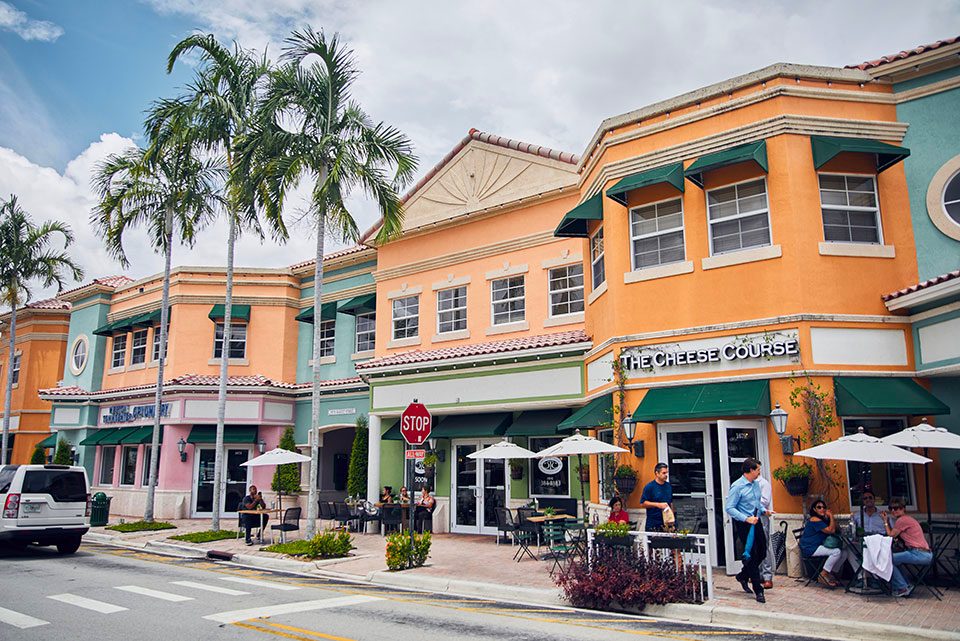
Life in Weston, Florida runs on a rhythm most other Broward County suburbs don’t have: a walkable Town Center that functions as the social hub, a genuinely deep park and trail system, restaurants that range from national chains to real local favorites, and an HOA structure so consistent it shapes almost every visual detail of the city. That consistency is exactly why people move here, and it’s also exactly what some people end up fighting against two years in. This is the honest version of what day-to-day life looks like, not the marketing version.
If you’re deciding whether Weston fits your life, start with Weston, Florida: The Complete Guide for People Considering a Move for the full picture on the city itself. This piece goes deeper into the part people actually live inside: the Town Center, the parks, the food, the HOA reality, and the tradeoffs that don’t show up in a listing description.
Weston Town Center: Shopping, Dining, and the Social Hub
Weston Town Center sits along Weston Road and Town Center Circle, and it was designed from the start to be the heart of the city, not something that grew organically over decades the way downtowns in older cities do. That’s worth understanding before you visit, because it changes what you should expect. This is a planned village center, built in the late 1990s as part of the original Arvida/JMB Partners master plan for what was then called Indian Trace before the city incorporated in 1996.
What’s actually there: a Whole Foods anchoring one end, a Regal Cinema multiplex, an outdoor amphitheater and bell tower that host the weekly farmers market and seasonal events (the holiday tree lighting draws a real crowd), and a walkable strip of restaurants and shops along Main Street and Market Street. You can park once and walk to dinner, a movie, and ice cream afterward, which is genuinely rare in a city built mostly around HOAs and cul-de-sacs.
The retail mix leans toward national and regional names rather than independent boutiques: PF Chang’s, Kona Grill, and a rotating cast of fast-casual spots sit alongside a handful of longer-running local restaurants. Weston Town Center also functions as office space, with several mid-rise buildings housing corporate tenants, law firms, and medical offices, so on a weekday it has real foot traffic during lunch hours, not just evenings and weekends.
The tradeoff: Town Center is polished, but it’s not large. If you’re used to a sprawling downtown with dozens of independent restaurants and a late-night scene, Weston Town Center will feel small after a few visits. Most residents treat it as their default option for a Tuesday dinner or a Saturday morning coffee, not as their only option.
Bonaventure Town Center: The Older, Quieter Version
Weston also has a second, older commercial node in the Bonaventure section of the city, closer to Bonaventure Boulevard. It’s more of a strip retail center with a grocery store, pharmacy, and a handful of restaurants, and it reads noticeably more dated than the newer Town Center. Residents in Bonaventure, Fairway Isles, and the older sections of the city tend to use it for quick errands and drive to the main Town Center for anything more.
Parks, Trails, and Outdoor Life in Weston
This is where Weston genuinely earns its reputation, and it’s not hype. The city has one of the more extensive park systems in Broward County relative to its size, and it was built into the master plan from day one rather than added later.
Weston Regional Park, on Bonaventure Boulevard, is the anchor. It has multiple lit sports fields for soccer and baseball, tennis and basketball courts, a skate park, a dog park, and playgrounds spread across a large footprint. If your kids play travel soccer or Little League, there’s a real chance a Saturday game happens here.
Peace Mound Park, tucked along the New River corridor near the eastern edge of the city, is smaller and quieter, built around a Native American burial mound that gives the park its name and its unusual layout. It’s popular for picnics and for people who want a park without a sports crowd.
Vista Park and the network of smaller neighborhood parks scattered through Weston Hills, Savanna, and Tequesta Reserve give most residents a park within a five to ten minute walk or bike ride, which matters more day to day than the big regional parks.
Beyond the named parks, Weston has an extensive greenway and trail system connecting neighborhoods, with paved paths for walking and biking that run along canals and through green corridors rather than forcing you onto Weston Road. Equestrian trails exist too, mostly concentrated near the Windmill Ranch Estates area on the city’s western edge, which borders Southwest Ranches and still carries some of that horse property character.
The honest tradeoff here: Weston sits at the literal edge of the Everglades. That gives you the parks, the green space, and the trail system, but it also means mosquito season is real (especially after summer rain), and you’ll see wildlife you don’t get in more urban parts of Broward, including the occasional alligator sighting in a retention pond. Most residents treat it as background noise after the first year. If it bothers you, it’s worth knowing before you buy, not after.
The Day-to-Day Reality: Commute, Traffic, and Distance From the Beach
This is the part that gets glossed over in most Weston content, and it shouldn’t be, because it’s the tradeoff that actually affects your daily life more than anything else.
Weston sits at the far western edge of Broward County, well past the I-75 corridor. That location is what gave you the space for the parks, the larger lots, and the master-planned layout. It’s also what puts you 30 to 40 minutes from Fort Lauderdale beach on a normal day, and closer to an hour during peak traffic or snowbird season (roughly November through April). If beach access multiple times a week is part of your vision for South Florida living, be honest with yourself about whether a 35-minute drive each way fits that vision.
The commute picture for work is more forgiving than it used to be. Weston has developed a real corporate presence of its own, anchored by Cleveland Clinic Florida’s main hospital campus and a cluster of corporate offices along the I-75 and Weston Road corridor, so a meaningful share of residents work inside the city or close to it. For anyone commuting east toward Fort Lauderdale, Plantation, or Miami, I-75 and the Sawgrass Expressway (State Road 869) are the two routes, and both see real congestion during rush hour, particularly where I-75 narrows heading into the Everglades on-ramp sections.
Local traffic inside Weston itself is generally manageable, since the road grid was planned with wide arterials like Weston Road, Bonaventure Boulevard, and Royal Palm Boulevard. The exception is drop-off and pickup times near the schools, which back up predictably every weekday. If you’re looking at a home near Cypress Bay High School or one of the K-8 schools, drive the route at 7:45am and 3:00pm before you commit, not just on a quiet Sunday showing.
Weston also continues to see new residential development on its remaining buildable land, mostly on the western fringes near Southwest Ranches. If you’re curious what’s currently being built and whether the premium is worth it, New Construction in Weston: What Is Available and Is It Worth the Premium? breaks down the current builder landscape and pricing.
Dining Beyond Town Center: Where Locals Actually Eat
Town Center gets the attention, but a meaningful share of Weston’s actual dining happens outside it, spread across strip centers along Royal Palm Boulevard, Griffin Road, and Bonaventure Boulevard. Weston has a large Venezuelan and broader Latin American population (residents sometimes call it “Westonzuela” affectionately), and that shows up directly in the food scene. Arepa spots, Peruvian rotisserie chicken counters, and Colombian bakeries are as much a part of daily life here as the national chains in Town Center.
For a sit-down dinner, residents split between Town Center’s PF Chang’s and Kona Grill, longer-running local spots tucked into the Market Street strip, and a rotating list of Latin American restaurants that don’t always show up on national review sites but have loyal regulars. Weekday lunch crowds skew toward the fast-casual options near the office buildings, while weekend dinners tend to spread out toward Bonaventure and the areas closer to Southwest Ranches.
The honest limitation: Weston is not a nightlife destination, and it was never designed to be one. If you want late-night bars, live music venues, or a real restaurant row with a dozen chef-driven spots within walking distance, you’ll be driving to Las Olas in Fort Lauderdale or into Miami. Most Weston residents accept this tradeoff because it comes paired with quieter streets and a more family-oriented pace, but it’s worth naming directly rather than pretending Weston has something it doesn’t.
HOA Life: Rules, Fees, and What You’re Trading For Them
Weston is one of the most HOA-governed cities in Broward County, and this shapes daily life more than almost anything else on this list. Nearly every neighborhood, whether it’s a gated community like Weston Hills, Isles at Weston, or Windmill Ranch Estates, or a non-gated section, operates under an HOA with real enforcement power over exterior paint colors, landscaping, parking, and architectural changes.
This is the tradeoff people underestimate before they move here and then either love or resent once they’ve lived under it for a year. The upside is real: consistent property values, well-maintained common areas, controlled architecture that keeps the whole city looking uniform, and community amenities (pools, clubhouses, tennis and pickleball courts) that are genuinely well-kept because the HOA dues fund ongoing maintenance rather than deferred repairs.
The downside is also real. You will need approval before painting your front door a different color, replacing your roof tile style, or putting up certain types of fencing. Parking a work truck or an RV in your driveway overnight can trigger a violation notice in most Weston communities. If you value the freedom to do what you want with your own property without asking permission, this is the part of Weston that will frustrate you fastest.
Fees vary significantly by community and amenity level. Non-gated single-family sections typically run lower, often in the low hundreds per month. Gated communities with guard staffing, clubhouses, and resort-style pools commonly land between $300 and $600 a month, and some of the more amenity-heavy gated sections run higher than that. These numbers move, and they’re the single most important thing to verify in writing before you make an offer, not something to estimate from a listing sheet. For a full breakdown of how the individual communities differ in gate style, fee structure, and lot size, Weston Neighborhoods and Communities: What to Know Before You Choose is the resource to read before you start touring.
Schools and Family Life
For a large share of buyers, Weston’s schools are the entire reason they’re paying the premium to live here, and the day-to-day reality mostly backs that up. Weston is zoned within Broward County Public Schools, and its schools, including Cypress Bay High School, Tequesta Trace Middle School, and elementary schools like Country Isles, Manatee Bay, and Eagle Point, consistently rank among the strongest in the county on state assessment data.
Day to day, this means school-zone boundaries matter enormously when choosing a specific street, not just a general neighborhood. Two homes a half mile apart can be zoned for different elementary schools, and that difference affects both your daily carpool routine and your resale value. Families also lean on private options inside and near the city, including Sagemont School, when they want an alternative to the zoned public track.
The broader family rhythm in Weston revolves around youth sports leagues at Weston Regional Park, weekend activities at Town Center, and a genuinely high density of families with school-age kids, which shows up in the demographics and in the general feel of the neighborhoods on any given weekday afternoon. For a full look at why families pay what they pay to live inside these school boundaries, Weston Schools: The Reason Families Pay the Premium goes deeper into the specific zones and the tradeoffs of buying just outside them.
Who Weston Actually Fits (and Who It Doesn’t)
Weston works well for families prioritizing schools, HOA-maintained consistency, and a genuine park and trail system, and who are comfortable trading beach proximity and nightlife for that package. It also works for professionals working at or near Cleveland Clinic Florida or one of the corporate campuses along the I-75 corridor, since the commute in that case can be five to fifteen minutes instead of forty.
Weston fits less well for buyers who want walkable urban density beyond a single town square, buyers who want daily, quick beach access, and anyone who bristles at HOA oversight of their own property. It also matters where you land in the price spectrum. Entry-level buyers should read First-Time Buyer in Weston: What the Entry Level Looks Like before assuming Weston is out of reach, since the entry point is narrower but not nonexistent. On the other end, buyers looking at the top of the market should see Weston Luxury Homes: What the Premium Market Looks Like in 2026 for what that tier actually includes.
If you’re weighing Weston against a similar Broward family suburb, Weston vs Coral Springs: Which Broward Family Suburb Wins? lays out the direct comparison on schools, price, and commute. And if timing and current pricing are part of your decision, Weston Real Estate Market Update: Prices and Conditions in Mid-2026 has the current numbers rather than estimates.
The Bottom Line
Life in Weston is orderly, family-centered, and genuinely well-designed around parks and green space, with Town Center functioning as a real, if small, social hub. The tradeoffs are just as real: you’re 30 to 40 minutes from the beach, HOA rules govern more of your daily life than in most other Broward cities, and the nightlife and independent restaurant scene you’d find in Fort Lauderdale or Miami simply isn’t here. Whether that trade is worth it depends entirely on what you’re optimizing for. If it’s schools, safety, and consistency, Weston delivers on all three. If it’s beach access and urban energy, you’ll want to look elsewhere in Broward County.
If you’re still deciding whether Weston is the right move, walk Town Center on a Saturday morning during the farmers market, drive Weston Road at both 7:45am and 5:30pm, and sit in on an HOA meeting if the community allows guests before you write an offer. The marketing photos will show you the amenities. Only that kind of direct, unglamorous research will show you the actual day-to-day reality.
More articles you might like
Weston Luxury Homes: What the Premium Market Looks Like in 2026
13 min readWeston, Florida: The Complete Guide for People Considering a Move
18 min readWeston vs Coral Springs: Which Broward Family Suburb Wins?
16 min readFirst-Time Buyer in Weston: What the Entry Level Looks Like
13 min readNew Construction in Weston: What Is Available and Is It Worth the Premium?
14 min read