Moving to Miami Beach: The Honest Relocation Guide for 2026
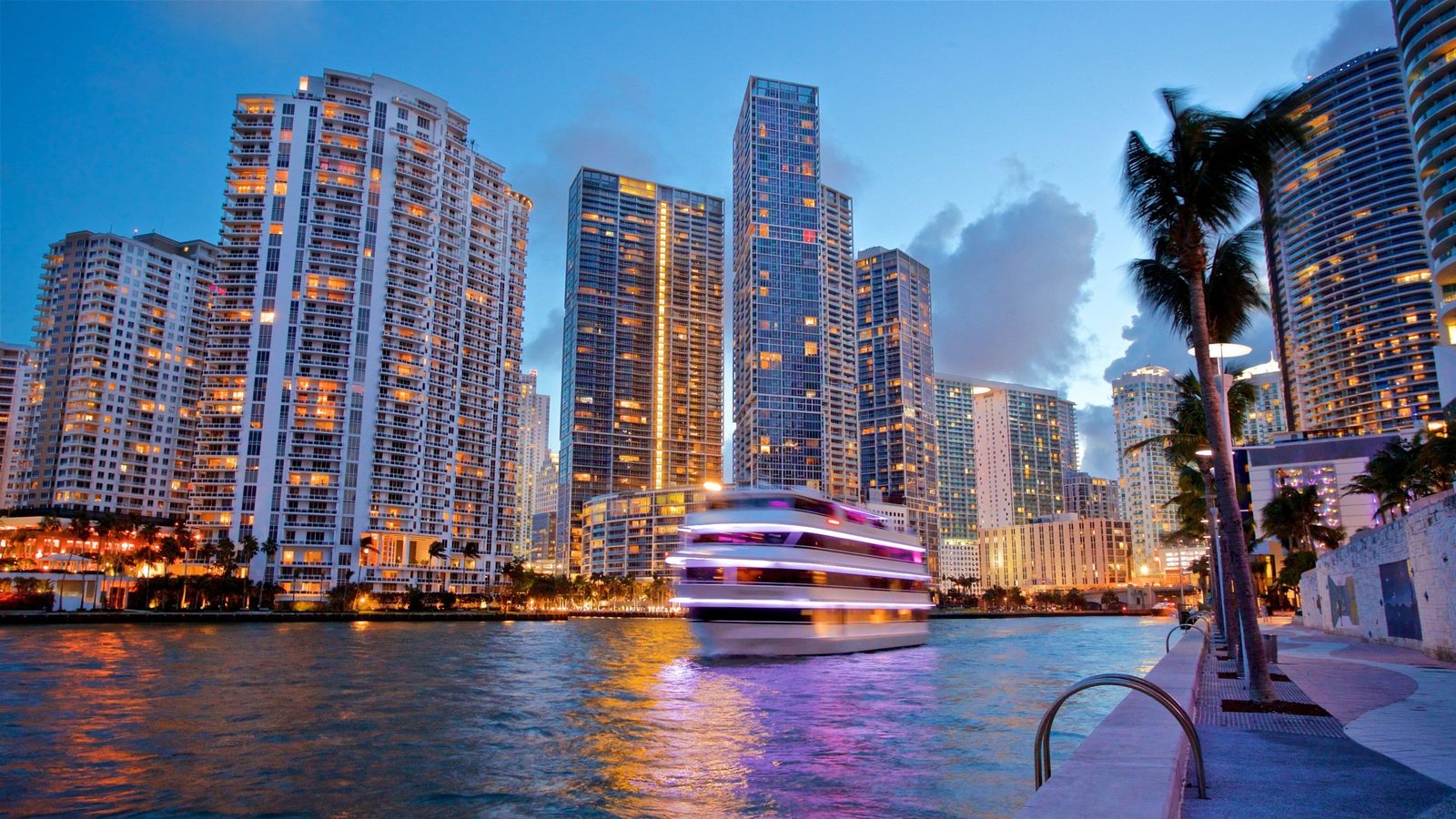
Moving to Miami Beach in 2026 means one thing above all else: you are buying into a lifestyle, not a starter home budget. This is South Florida Insider’s honest relocation guide for 2026, the one that tells you what the brochures skip, the real neighborhood differences, what a condo actually costs once HOA fees and flood insurance are added in, and who this island genuinely fits. If you want the full neighborhood-by-neighborhood and lifestyle picture beyond relocation logistics, pair this with our complete guide to Miami Beach.
Miami Beach is not one market. It is eight or nine distinct micro-markets stacked on a seven-mile barrier island, and the difference between South Beach and North Beach is bigger than the difference between most Broward suburbs 20 miles apart. Get the geography wrong and you will overpay for a lifestyle you did not actually want.
What It Actually Costs to Move to Miami Beach in 2026
Here is the number most relocation guides bury: the purchase price is not the real cost of living in Miami Beach. The HOA fee is.
Condos. A non-waterfront one-bedroom in an older, mid-century building (think Flamingo Park or parts of North Beach) starts around $350,000 to $450,000. Move to a bay view or ocean view unit in a full-service building and you are at $800,000 to $2 million for a one or two-bedroom. New construction luxury towers on Collins Avenue or in Sunset Harbour are pricing at $2,000 to $3,000-plus per square foot, which puts a modest two-bedroom north of $3 million.
HOA fees. This is where people get blindsided. Older buildings without much in the way of amenities run $600 to $1,200 a month. Full-service buildings with a pool, gym, valet, and 24-hour front desk run $1,500 to $2,500 a month. Ultra-luxury towers with beach service, restaurants, and spa amenities can run $3,000 to $4,500-plus a month. That is a second mortgage payment before you have spent a dollar on your actual mortgage.
Single-family homes. Miami Beach has very little single-family inventory left, and what exists is concentrated on the Venetian Islands, Sunset Islands, Palm Island, and North Bay Road. Entry point for a non-waterfront single-family home is around $1.5 million to $2 million. Waterfront estates on the islands start at $5 million and run into the tens of millions.
Property taxes. Miami-Dade millage rates plus Miami Beach’s city rate put you around 1.9 percent to 2.2 percent of assessed value annually, and that assessment resets to full market value when you buy, not the seller’s old homesteaded number. Budget for that jump.
Run the actual math before you fall for a listing photo. Take a $900,000 bay view two-bedroom in a full-service Mid-Beach building. A 20 percent down payment leaves a $720,000 mortgage, which at current rates lands somewhere around $4,800 to $5,200 a month in principal and interest. Add a $2,000 HOA fee, $650 a month in flood insurance, and $1,500 a month in property taxes once the assessment resets, and your real monthly housing cost is closer to $9,000 to $9,500, not the $5,000 the mortgage calculator on the listing page shows you. This is the single biggest mistake relocating buyers make here: they qualify for the mortgage and assume that is the number. On Miami Beach, the mortgage is often the smaller half of the payment.
Compare that to a similar budget on the mainland. A buyer with $900,000 to spend in Coral Gables or Pinecrest is looking at a single-family home with a yard, no HOA at all in most cases, and a fraction of the flood insurance exposure. That is not an argument against Miami Beach, it is the tradeoff you are actually making: density, walkability, and beach access in exchange for a materially higher carrying cost. Go in knowing the number, not discovering it at your first HOA board meeting.
For the most current pricing snapshot before you commit to a number in your head, check our Miami Beach market update for mid-2026, because prices here move faster than most of the mainland.
Moving to Miami Beach: The Honest Relocation Guide for 2026, Neighborhood by Neighborhood
This is the part that actually determines whether you will be happy here. Miami Beach neighborhoods are not interchangeable, and picking one because it is “Miami Beach” without understanding which micro-market you landed in is how relocating buyers end up miserable in year one.
South Beach (South of 23rd Street)
This is what most people picture when they say Miami Beach: Ocean Drive, Lincoln Road, Art Deco buildings, nightlife, tourists. Living here means walkability to almost everything, but also noise, parking headaches, and a transient tourist population that locals either love or eventually get tired of. Flamingo Park, the residential pocket just west of Washington Avenue, is the exception, a genuinely quiet, tree-lined neighborhood with pre-war homes and a real sense of community, still walking distance to the beach and Lincoln Road.
If you are picturing yourself waking up to ocean views on Ocean Drive itself, know what you are signing up for: music noise from the strip most nights, a constant churn of short-term renters and tourists in and out of the building next door, and trash and street cleaning schedules built around a nightlife district, not a residential one. South Beach works best for buyers under 40 without school-age kids, or anyone who genuinely wants to be in the middle of it and treats the noise as part of the deal rather than a surprise.
Mid-Beach (23rd to 63rd Street)
This is where a lot of relocating professionals and families land. Quieter than South Beach, home to the Faena District, the Fontainebleau, and a stretch of newer luxury condo towers. Fewer bars, more residential feel, still a short drive or bike ride to South Beach’s restaurants when you want them.
Mid-Beach is also where you will find the widest range of building ages side by side, from 1950s and 60s MiMo-style mid-rises with lower HOA fees to brand-new towers with resort-level amenities and the price tag to match. A relocating couple in their 40s or 50s who wants beach access without the South Beach circus tends to gravitate here first, and it is usually the right instinct. Just know that “Mid-Beach” covers a wide price band, a renovated MiMo unit near 40th Street can run half what a new construction tower near the Faena runs for comparable square footage.
Sunset Harbour and West Avenue
The most walkable, least touristy part of the island right now. Sunset Harbour has become Miami Beach’s food and fitness corridor (Barry’s Bootcamp, Pura Vida, Lulu’s), with newer mid-rise condo buildings that are more residential and less resort-style than South Beach towers. West Avenue is the practical, everyday-errands neighborhood, closer to Publix, CVS, and the causeway to the mainland.
This is the pocket we point remote workers and young families toward most often. It is bikeable, it has an actual grocery store you can walk to, and the building stock skews newer with better-funded reserves than the older South Beach and North Beach inventory. The tradeoff is price: Sunset Harbour has run up significantly over the last five years and no longer counts as a value play the way it did a decade ago.
North Beach and Normandy Isle
The most affordable, most local part of the island, and the part most likely to feel like an actual neighborhood rather than a resort. Older buildings, a growing wave of renovation, and a lot more space for the money. If your budget is tight but you still want to be on the island, this is where to look first. For a deeper cut on how the neighborhoods stack against each other on price, vibe, and commute, see our full Miami Beach neighborhoods breakdown.
North Beach is also where the city has been pushing redevelopment incentives for over a decade, so expect construction noise and a slower pace of restaurant and retail buildout compared to the rest of the island. The upside is real: you can still find a two-bedroom on the ocean side of Collins Avenue here for well under what a comparable Mid-Beach unit costs, and the local, less-touristy feel that South Beach lost 20 years ago is still genuinely present in Normandy Isle.
Fisher Island, Venetian Islands, and the Man-Made Islands
Fisher Island is its own private world, accessible only by ferry, and functions more like a gated resort than a neighborhood; entry-level condos start around $2 million. The Venetian Islands and Sunset Islands offer single-family waterfront living minutes from South Beach without the density, at a price that reflects the privacy.
Buyers considering the islands need to think about logistics most relocation guides skip entirely. Fisher Island residents commute by a private ferry that runs on a schedule, not on demand, so day-to-day life there requires a different rhythm than driving off a causeway whenever you want. The Venetian Islands and Sunset Islands, by contrast, drive like a normal neighborhood, just with dramatically higher land value and, in many cases, no HOA at all since these are largely single-family, non-associated properties. That absence of an HOA is a real selling point for buyers who want privacy and control without a board approving their renovation plans.
The HOA, Flood Insurance, and Assessment Reality Nobody Explains
Miami Beach does not have CDD fees the way new construction communities in Broward do (Parkland, Coral Springs, Weston, and similar suburbs finance infrastructure through Community Development District bonds because they are built on former farmland). Miami Beach is a fully built-out barrier island; there is almost no raw land left to develop, which is why CDDs are not part of the conversation here. But the ongoing cost structure is arguably more complicated, not less.
Flood insurance is not optional. Every property on this island sits in a flood zone, and lenders require it. Depending on the building’s elevation and flood zone designation, expect $2,000 to $8,000-plus a year on top of your HOA fee and homeowner’s policy. Older, ground-floor units carry the highest premiums.
Building recertification is real money. After the Surfside collapse in 2021, Florida tightened 40 and 25-year recertification requirements statewide, and Miami-Dade enforces them aggressively. Buildings that need structural work assess owners directly, sometimes for tens of thousands of dollars per unit. Before you buy into any building older than 30 years, ask for the last engineering report and reserve study. This is not a step to skip, it is the single biggest financial risk in older Miami Beach condo buying.
To put a real number on it: it is not unusual for an owner in a 1960s-era South Beach or North Beach building to get hit with a special assessment of $25,000 to $60,000 per unit once a recertification report flags concrete spalling, balcony repair, or roof replacement. These assessments are typically due within 12 to 18 months, sometimes payable in a lump sum. That is why the engineering report and the last two years of board meeting minutes matter more than the HOA fee listed on the MLS sheet. A buyer who skips this step is not saving time, they are gambling five figures.
Reserve funding matters more than the HOA fee itself. A building with a lower monthly fee but underfunded reserves is a future special assessment waiting to happen. A building with a higher fee and fully funded reserves is actually the safer buy, even though it looks more expensive on paper.
Ask your agent or the listing agent for the building’s most recent reserve study and structural integrity reserve study (SIRS), required under Florida’s post-Surfside statute for buildings three stories or taller. If the association cannot produce one, or produces one that shows reserves funded below 50 percent of what is required, treat that as a red flag worth walking away from, not a detail to negotiate around later.
Rental restrictions vary building to building. Some Miami Beach buildings allow short-term and Airbnb-style rentals, others prohibit anything under a year, and a few sit in between with minimum stay requirements. If investment income is part of your plan, confirm the building’s rental policy before you fall in love with the unit; this matters even more if you are weighing Miami Beach against other South Florida investment markets, which our Miami Beach investment property breakdown covers in more detail.
The Condo Approval Process: Slower Than You Think
This is the part relocation buyers from other states are least prepared for. Miami Beach condo associations run their own approval process on top of your mortgage underwriting, and it is not a formality.
Most buildings require a board application, personal and financial references, an in-person or video interview with the board or a screening committee, and background and credit checks, all separate from what your lender requires. Turnaround varies widely: a straightforward building might approve you in two to three weeks, while a stricter, older, or more exclusive building can take six to eight weeks. Some buildings on Fisher Island and in the more established co-op-style structures reject buyers outright with no explanation required, which is legal under Florida condo law as long as the rejection is not based on a protected class.
Build this timeline into your contract. If you are relocating on a job start date or a lease expiration, do not assume a 30-day close is realistic on an older Miami Beach building. Ask your agent to confirm the building’s specific approval timeline before you write an offer, not after you are under contract with a hard closing date you cannot hit.
Schools, Commute, and Daily Life on the Island
Schools. Miami Beach Senior High serves the island for public high school, and the general reputation is solid but uneven depending on the specific program. Feeder elementary and middle schools like Fienberg-Fisher K-8 and Nautilus Middle draw mixed reviews from local parents. A meaningful share of Miami Beach families with school-age kids choose private options: Beach Bay Academy, Hebrew Academy (RASG), or SLAM Miami. If schools are your top priority, do not assume Miami Beach solves that problem the way a suburb like Weston or Parkland does; get the specific, current picture in our Miami Beach schools guide before you commit.
Commute. Everything runs through three causeways: the MacArthur (connecting to downtown Miami and I-395), the Julia Tuttle (I-195, the fastest route to the mainland), and the Venetian Causeway (slower, scenic, tolled). During season (roughly November through April) and any time there is an event on the island, causeway traffic backs up hard. If your job is on the mainland in Brickell or downtown, commute times of 20 minutes can become 45 during peak season. Budget for that reality, not the Google Maps off-season estimate.
For a concrete comparison: a South Beach resident commuting to Brickell during an off-peak summer morning might genuinely make it in 15 to 20 minutes over the MacArthur. That same commute on a January weekday morning, with tourist traffic, cruise ship days at the Port of Miami, and normal rush hour stacked on top of each other, can stretch past 45 minutes for two or three miles of actual distance. If your work schedule is flexible or remote, this barely matters. If you are commuting downtown on a fixed 9am schedule five days a week, factor season into your daily life the same way you would factor in weather.
Seasonality. Miami Beach’s population and traffic swing dramatically between summer (quieter, hotter, more humid, hurricane season running June through November) and winter season (snowbirds, tourists, Art Basel in December, higher prices at restaurants and for parking). If you want the island at its calmest, you will be here in August. If you want it at its most alive, you will be here in January, paying for the privilege.
Hurricane season deserves its own line item for relocating buyers, especially those coming from inland states with no storm experience. Being on a barrier island means evacuation orders come earlier and apply more broadly than they do on the mainland. Storm surge risk is a real planning consideration, not a formality, and buildings will have their own hurricane shutter and preparation protocols that residents are expected to follow. If you have never ridden out a named storm before, talk to your future building’s property manager about what the evacuation and re-entry process actually looks like before your first June on the island.
Parking. Budget real money and real patience for this. Many older buildings have one assigned spot per unit, some have none. Street parking in South Beach is metered and enforced aggressively. If you are used to a two-car suburban garage, this is the single biggest lifestyle adjustment. Two-car households moving from suburban Broward or Palm Beach in particular need to plan for this before move-in day, not after: confirm in writing how many spots come with the unit, whether a second spot can be rented from the building or another owner, and what visitor parking actually looks like, because “street parking is available” in a listing description often means something very different in practice.
Renting First vs Buying: What Makes Sense in 2026
If you are relocating to Miami Beach from out of state and have not lived on the island before, renting for six to twelve months before buying is the honest recommendation, not a sales pitch against buying, just a realistic one. The neighborhoods are different enough, and the building-by-building risk (reserves, assessments, rental restrictions) is significant enough, that a short lease costs you far less than an ownership mistake.
Rental rates in 2026 run roughly $2,800 to $3,800 a month for a one-bedroom in a standard building, $4,500 and up for a nicer building with amenities, and considerably more for anything oceanfront or in a luxury tower. That is not cheap, but it buys you a real trial run of a specific neighborhood before you commit capital.
Use the lease year deliberately. Live in Mid-Beach for six months and take work calls at a Sunset Harbour coffee shop for the other six. Ride out one full season and one full off-season so you actually feel the traffic and crowd swings described above rather than reading about them. Talk to neighbors in the building about the HOA before your own board application, not after. Relocating buyers who do this almost always end up buying in a different neighborhood than the one they assumed they wanted on their first visit, and that is the entire point of the exercise.
If you do decide to buy as your entry point, especially as a first-time buyer, understand that Miami Beach is one of the harder South Florida markets to break into on a starter budget. Our first-time buyer guide for Miami Beach walks through realistic entry points and what condo association approval processes actually look like here, which can take longer and require more documentation than a typical mainland purchase.
Miami Beach vs Other South Florida Beach Markets
Relocating buyers often shortlist Miami Beach alongside Fort Lauderdale Beach, Hollywood Beach, or Sunny Isles Beach, and it is worth being direct about how they actually compare rather than letting the name recognition make the decision for you.
Fort Lauderdale Beach gets you a similar walkable, oceanfront feel with meaningfully lower HOA fees in most buildings and an easier drive north to Broward’s suburbs if family is spread across the county. It does not carry Miami Beach’s global name recognition or its restaurant and nightlife density, and that is a fair tradeoff for a lot of relocating families.
Hollywood Beach is the value play of the three. Lower price per square foot, a more local, less international crowd, and a genuinely walkable Broadwalk, but a smaller inventory of new construction and fewer ultra-luxury options if that is what you are shopping for.
Sunny Isles Beach sits just north of Miami Beach and competes most directly on the ultra-luxury end, with newer towers, generally larger floor plans, and HOA fees that run in a similar range to Mid-Beach and South Beach full-service buildings. The tradeoff there is a car-dependent daily life; Sunny Isles is far less walkable than Miami Beach proper, and Collins Avenue traffic through Sunny Isles during season is its own well-known headache.
None of these is objectively “better.” They are different answers to different priorities, and the honest move is to tour at least one building in each before assuming Miami Beach’s name recognition means it is automatically the right fit for your budget and lifestyle.
Who Miami Beach Is Actually Right For
Be honest with yourself about this before you start touring buildings.
Miami Beach fits you if: you want walkable, dense, urban island living; you do not need a yard or a garage; you work remotely or your job is flexible on commute; you want beach access as a daily habit, not a weekend drive; and you can absorb HOA fees and flood insurance as a real, ongoing line item, not an afterthought.
Miami Beach probably does not fit you if: you are prioritizing top-tier public schools above everything else; you want a quiet cul-de-sac and a yard for kids or dogs; you need two dedicated parking spots and a garage; or your budget assumes the mortgage payment is the whole housing cost, without the HOA and insurance layered on top.
A few real scenarios to test yourself against. A retired couple downsizing from a large suburban home, selling a paid-off house in the Northeast or Midwest and buying a Mid-Beach or Sunset Harbour condo in cash, tends to do extremely well here: no mortgage, HOA absorbed comfortably by home equity, and daily life built around walking, the beach, and restaurants rather than a commute. A young remote-work couple without kids fits well too, especially in Sunset Harbour or West Avenue, where the walkability replaces the need for two cars entirely.
A family with two kids under 12 who both need to be at a specific commute time on the mainland is the harder fit. It can work, plenty of families do it, but it usually means a Mid-Beach or North Beach unit chosen specifically for a workable causeway commute, a private school decision made early, and a realistic conversation about where the kids will actually play day to day, since a condo building’s pool deck is not the same as a yard.
If any of that second list sounds like you, that is not a failure, it just means your relocation target should probably be Pinecrest, Coral Gables, or one of the western Broward suburbs instead, and that is a completely legitimate answer. Part of doing this move right is admitting when a different part of South Florida fits your actual life better than the one with the postcard views.
The Bottom Line
Moving to Miami Beach in 2026 is a lifestyle decision first and a financial decision second, and the two need to line up before you sign anything. Get specific about which of the island’s neighborhoods actually matches how you want to live day to day (South Beach energy, Mid-Beach quiet, Sunset Harbour walkability, or North Beach value), get the real HOA and reserve numbers on any building before you fall for the view, and be honest about whether schools, parking, and space matter more to you than being able to walk to the sand. For a fuller sense of what daily life here actually looks like once the moving boxes are unpacked, read our Miami Beach lifestyle guide.
If you are seriously considering this move, the cost here: https://southflinsider.com/. Tell me which part of the island you are leaning toward and your rough budget, and I will give you the honest breakdown of what actually fits, not just what is listed.



Watch: learn more
Go deeper with my South Florida Insider videos.

The Best Flex-Space Townhome in West Palm Beach: Pulte's Nautical Plan

Inside Everton's Latitude II Model: $458k New Homes In Palm Beach
The Best Flex-Space Townhome in West Palm Beach: Pulte's Nautical Plan
More articles you might like
Miami Beach, Florida: The Complete Guide for People Considering a Move
18 min readMiami Beach Schools: What Parents Need to Know
18 min readFirst-Time Buyer in Miami Beach: Is It Realistic and Where Do You Start?
13 min readNew Construction in Miami Beach: Pre-Sales, New Buildings, and What Is Coming
13 min readMiami Beach Investment Property: What the Numbers Look Like in 2026
13 min read