Miami Beach Real Estate Market Update: Prices and Trends in Mid-2026
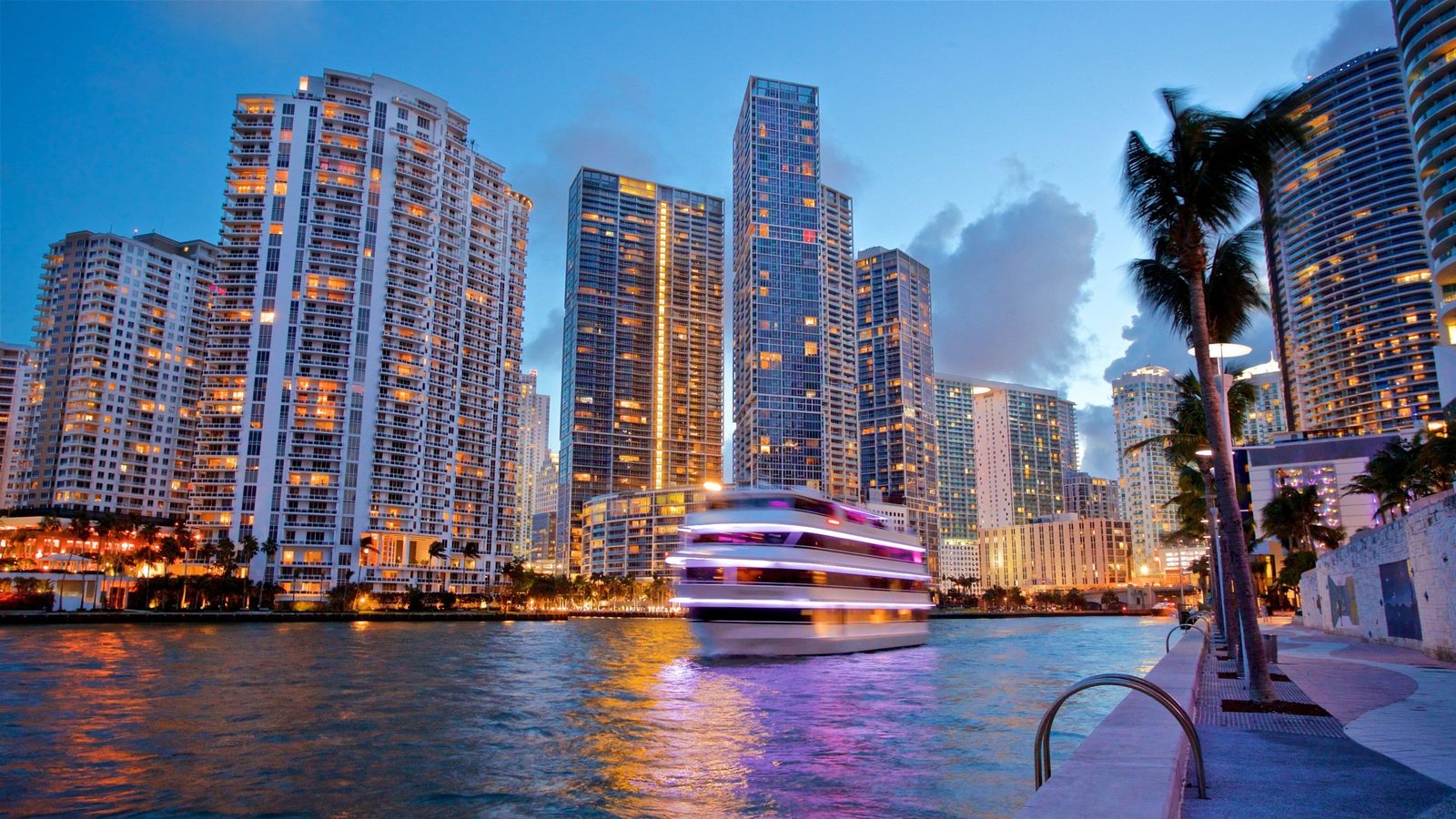
If you’re trying to figure out where the Miami Beach real estate market update for prices and trends in mid-2026 actually lands, here’s the short version: condos are sitting longer, sellers of older buildings are cutting prices to compete with rising HOA costs, and new construction and ultra-luxury are the two segments still moving with real momentum. This isn’t a crash. It’s a market correcting after years of pandemic-era price growth, running into a very specific 2026 problem: aging buildings, mandatory safety inspections, and insurance premiums that have changed what “affordable” even means on the island.
This guide breaks down what’s actually happening by property type and neighborhood, why it’s happening, and what it means depending on whether you’re buying, selling, or just trying to understand the island before you commit to it. If you’ve been watching headlines about “Miami real estate cooling off” and trying to figure out whether that applies to the property you’re actually looking at, the honest answer is: it depends entirely on the building, the year it was built, and whether its reserves are funded. That distinction is the whole story in 2026, and most of the national coverage skips right past it.
Miami Beach Real Estate Market Update: Prices and Trends in Mid-2026
Three things are true at once in Miami Beach right now, and understanding all three is the key to reading this market correctly.
First, resale condo inventory is up significantly compared to 2023 and 2024. Sellers who bought or refinanced when rates were low, or who are facing a large special assessment notice, are listing. Buyers are not moving as fast, so listings are stacking up and days on market have stretched from a typical two to three weeks in 2022 to well over sixty days for a lot of 1970s and 1980s buildings today. In some of the older buildings along Collins Avenue and Bay Drive, it’s not unusual to see units sit for four to six months before a price cut finally brings in an offer.
Second, pricing is bifurcated hard by building age and condition. A renovated unit in a post-2015 building with a funded reserve account is holding its value. A dated unit in a 1970s building facing a six-figure special assessment is getting real price cuts, sometimes 10 to 15 percent off 2022 comps, just to find a buyer willing to take on the assessment. It’s not unusual anymore to see two nearly identical two-bedroom units, one block apart, priced $150,000 apart purely because one building finished its milestone inspection and the other hasn’t started.
Third, new construction and the true luxury tier (roughly $4 million and up) are largely insulated from all of this. Buildings like The Perigon Miami Beach in Mid-Beach ($4.5 million to $15 million-plus) and the Ritz-Carlton Residences South Beach ($4.2 million to $20 million) are pre-construction or under construction with no assessment risk, no deferred maintenance, and buyer pools that aren’t rate-sensitive. Scarcity, not demand softness, is the story at the top of the market. These buyers are frequently paying cash, often relocating from high-tax states, and are less concerned with financing costs than with getting into a limited-unit building before it sells out.
If you want the full picture of what’s actually available on the island right now, New Construction in Miami Beach: Pre-Sales, New Buildings, and What Is Coming breaks down every active project by neighborhood and price band.
Why This Market Doesn’t Look Like 2021 Anymore
In 2021 and 2022, Miami Beach was absorbing a wave of relocation buyers from New York and the Northeast, cash was cheap relative to today, and condo buildings hadn’t yet faced the post-Surfside regulatory reckoning. Every one of those conditions has shifted. Rates are higher, the relocation wave has normalized into a steadier (smaller) flow, and Florida passed structural safety legislation that changed the math on owning anything built before 1990. None of that means Miami Beach stopped being desirable. It means the market stopped being irrational, and pricing is now doing what pricing does when it has to reflect real carrying costs.
There’s also a psychological shift happening among buyers that’s worth naming directly. In 2021, the fear was missing out on a rising market. In 2026, the fear has flipped: buyers are afraid of walking into a building that’s about to hit them with a six-figure assessment six months after closing. That fear is rational, it’s backed by real headlines about real buildings, and it’s the single biggest reason older inventory is taking longer to move even when the price looks attractive on paper. Sellers who understand this and get ahead of it, by having their documents ready and their story straight before listing, are the ones closing deals in this environment.
Condo Prices Across Miami Beach’s Neighborhoods
Miami Beach isn’t one market. South Beach, Mid-Beach, North Beach, and Sunset Harbour each behave differently, and lumping them together is how buyers end up confused by “average” price data that doesn’t apply to the building they’re actually looking at.
South Beach
South Beach remains the most expensive and most bifurcated submarket. Art Deco district studios and one-bedrooms in older buildings can still be found in the $350,000 to $550,000 range, but many of those buildings are now mid-assessment or post-assessment, meaning the sticker price is deceptive until you factor in what the HOA is asking for. On the other end, new and recent luxury product like The Shore Club Residences ($5 million-plus) is pricing in a completely different universe, tied to branded hospitality, ocean frontage, and a buyer who isn’t comparing it to a 1960s walk-up three blocks away.
The middle of South Beach, meaning buildings from the 1990s and early 2000s that are neither historic Art Deco nor brand new, is where the most negotiating actually happens right now. These buildings are old enough to be mid-cycle on major capital items like roofing, elevators, and balcony concrete restoration, but new enough that most already meet current structural standards. Buyers who do their homework here can often find a well-run building with a manageable, already-completed assessment at a price that’s meaningfully below what the same square footage costs three blocks closer to Ocean Drive.
Mid-Beach
Mid-Beach has become the island’s steadiest submarket. It’s less saturated with 1970s stock than South Beach, has a strong run of 2010s-era buildings with better-funded reserves, and is where a lot of the current new development is concentrated, including The Perigon. Resale pricing in solid, well-managed Mid-Beach buildings has held up better than South Beach’s older inventory, generally trading flat to slightly up year over year.
Mid-Beach also tends to attract a different buyer profile than South Beach: fewer short-term investors chasing nightlife proximity, more full-time residents and part-time owners who want quiet, walkable access to the beach without the tourist density. That buyer base tends to be more patient and less prone to panic-selling, which is part of why Mid-Beach inventory hasn’t stacked up the way South Beach’s has. If you’re comparing a 1,200-square-foot two-bedroom in a 2016 Mid-Beach building against a similarly sized unit in a 1975 South Beach building, the price gap has narrowed in recent years, largely because the older building’s carrying costs have caught up to it.
North Beach
North Beach is the value play on the island, and it’s also where the most new construction has landed, notably 72 Park Miami Beach ($759,000 to $2.2 million, completed and actively selling with 206 units) and 72 Carlyle ($995,000 to $10 million, pre-construction, 134 units). North Beach gives buyers a genuine entry point into Miami Beach ownership at a meaningfully lower basis than South Beach or Mid-Beach, with the tradeoff being a longer walk to the nightlife corridor and a neighborhood still mid-transition in terms of retail and dining density.
For buyers who are priced out of South Beach and Mid-Beach but still want to say they own on the island, North Beach is frequently the answer, and the fact that 72 Park is already completed and selling (rather than a pre-construction promise) removes a layer of risk that a lot of first-time Miami Beach buyers aren’t comfortable taking on. The neighborhood’s ongoing retail buildout along 71st Street means buyers today are partly betting on North Beach’s continued transition, not just buying into what’s there now.
Sunset Harbour
Sunset Harbour has quietly become one of the most in-demand micro-neighborhoods for buyers who want a walkable, low-key lifestyle (Purdy Avenue’s restaurant row, Whole Foods, boutique fitness) without South Beach’s tourist density. Inventory here is tight because the neighborhood is small, and pricing has been more resistant to the citywide softening than almost anywhere else on the island.
Part of what protects Sunset Harbour is its building stock. Much of it is newer or has been substantially renovated, so the neighborhood hasn’t been hit as hard by the assessment wave working through older South Beach and North Beach buildings. Buyers who find something here tend to move fast, because listings that do come up, especially two-bedrooms under 1,800 square feet, are getting multiple offers in a market where multiple offers have otherwise become rare. For a full neighborhood-by-neighborhood comparison, see Miami Beach Neighborhoods: South Beach, Mid-Beach, Sunset Harbour, and Beyond.
Single-Family Home Prices: Islands, North Bay Road, and Flamingo Park
Single-family inventory in Miami Beach is genuinely scarce, and scarcity has kept this segment from seeing the same price softening as older condos.
On the man-made islands (Sunset Islands, Venetian Islands, Di Lido, San Marino), waterfront homes with dock access routinely trade from $4 million into the $20 million-plus range depending on lot size, dock length, and whether the home is original construction or a modern rebuild. North Bay Road, the island’s most storied waterfront corridor, sees comparable numbers, often higher for homes with unobstructed bay views and larger lots.
Buyers shopping this tier should understand that “waterfront” on Miami Beach’s islands isn’t a single category. A home on a narrow finger canal with a fixed bridge limiting boat height is a different asset than a home on open bay water with no bridge restrictions, even if the list prices look similar. Serious buyers in this range are almost always working with a broker who can walk the seawall, confirm dock permitting status, and check FEMA flood elevation requirements before an offer goes in, because those details move value by seven figures, not thousands of dollars.
Flamingo Park, the historic single-family neighborhood just west of Ocean Drive, is the more attainable entry point for buyers who want a house instead of a condo. Renovated 1930s and 1940s homes here typically run from $1.5 million to $3.5 million, with unrenovated properties available lower for buyers willing to take on a gut renovation, which is common in this historic district and comes with its own preservation review process. Buyers considering a renovation project in Flamingo Park need to budget real time, not just money, for that review process. The historic preservation board has real authority over exterior changes, window replacement, and additions, and projects that don’t plan for that timeline from the start routinely run six to twelve months longer than a buyer expected going in.
Across all of these segments, days on market for single-family homes has ticked up modestly compared to 2021 and 2022, but nowhere near as much as condos. Sellers of well-located, updated houses are still getting close to asking. Sellers of dated or awkwardly positioned lots are the ones absorbing price cuts. This is the clearest evidence that Miami Beach’s softness is a condo-specific, reserve-and-assessment story, not a broad referendum on the island itself. Land and single-family homes, which don’t carry the same structural reporting requirements, simply aren’t experiencing the same pressure.
The Special Assessment and Insurance Problem Nobody’s Pricing In
This is the single biggest factor shaping Miami Beach condo pricing in 2026, and it’s the part a lot of out-of-state buyers don’t fully understand until they’re under contract.
Florida’s SB 4-D law, passed after the Surfside collapse, now requires condo buildings 30 years or older (25 years if within 3 miles of the coast, which covers essentially all of Miami Beach) to complete milestone structural inspections and Structural Integrity Reserve Studies (SIRS). Associations found to have underfunded reserves are now legally required to fully fund them, no more waiving or reducing reserves the way many buildings did for decades.
The practical result: buildings that spent thirty years collecting minimal reserves are now issuing special assessments in the tens of thousands to hundreds of thousands of dollars per unit to catch up, on top of monthly HOA dues that have already climbed 20 to 40 percent in many buildings since 2023. Layer property insurance costs on top of that (Miami Beach condo buildings have seen master policy premiums double or worse in some cases) and you get a real, non-theoretical reason why older condo prices are under pressure even as the neighborhood itself remains desirable.
Walk through a real scenario to see how this actually plays out. Say you’re looking at a two-bedroom in a 1972 building on Collins Avenue listed at $475,000, down from $540,000 a year ago. On paper, that looks like a $65,000 discount. But if that building completed its milestone inspection last year and the SIRS report shows an $85,000 per-unit assessment being phased in over three years, plus HOA dues that jumped from $850 to $1,240 a month to cover the new reserve funding requirement, the real cost of ownership is dramatically different from the list price. Compare that to a similar unit in a building that finished its assessment process in 2023 and already has funded reserves: the HOA dues might be higher today, but there’s no assessment shock coming, and the total cost of ownership over five years can actually be lower despite a higher sticker price.
What this means for buyers: never evaluate a Miami Beach condo on list price alone. Request the association’s most recent SIRS report, reserve study, and board meeting minutes before writing an offer. A $450,000 unit with a pending $80,000 assessment is not a $450,000 purchase. Ask specifically whether any assessment has already been approved by the board, whether it’s a single lump sum or phased over multiple years, and whether special assessment financing is available through the association or a third-party lender, because that changes the monthly cash flow math significantly. What this means for sellers: if your building has already completed its assessment and funded its reserves, say so prominently in your listing, because buyers are actively screening for exactly this. Listings that lead with “reserves fully funded, milestone inspection complete” in the first line of the description are getting more serious inquiries than listings that bury that information or leave it out entirely.
Where New Construction and Pre-Construction Stand
New construction is the clearest exception to the softening trend, and it’s not close. Buildings delivering now or in pre-construction don’t carry deferred maintenance risk, come with modern building codes and hurricane-rated construction, and are priced by developers who have full visibility into their own reserve funding from day one.
The current pipeline spans a wide price range. 72 Park Miami Beach in North Beach, completed and actively selling, starts at $759,000, making it one of the more accessible new-construction entry points on the island. Its sister project 72 Carlyle is in pre-construction from $995,000 up to $10 million, showing the range developers are now targeting within a single site plan. Further south, The Perigon Miami Beach in Mid-Beach is under construction from $4.5 million to $15 million-plus, and in South Beach, The Shore Club Residences ($5 million-plus, under construction) and the pre-construction Ritz-Carlton Residences South Beach ($4.2 million to $20 million) represent the top end of what’s being built on the island right now.
It’s worth understanding why developers can hold firm on pricing even as resale softens. Construction financing, land costs, and labor costs on Miami Beach haven’t gone down, so developers have little room to discount without eating into margins they’ve already committed to lenders and equity partners. On top of that, buildings like 72 Park and The Perigon are selling into a genuinely limited supply of new, code-current inventory on an island where new land to build on barely exists. When a project like 72 Carlyle sells down its remaining inventory, there’s no guarantee another comparable North Beach project breaks ground anytime soon, and that scarcity is exactly why pre-construction pricing tends to hold or increase as a building approaches completion rather than soften the way resale has.
Buyers considering pre-construction should understand the tradeoff clearly: you’re buying certainty about the physical asset (new systems, modern engineering, funded reserves from day one) in exchange for construction timeline risk and, in many cases, a higher per-square-foot basis than comparable resale. It’s also worth understanding the deposit structure before signing a reservation agreement. Most Miami Beach pre-construction projects require deposits in stages, commonly 10 percent at contract, additional deposits at construction milestones, and the balance at closing, which means buyers need to plan liquidity across the entire build timeline, not just at close. For buyers specifically weighing $1 million to $10 million-plus options, Miami Beach Luxury Condos: What $1M to $10M+ Buys You on the Island walks through the tradeoffs building by building.
How Miami Beach Compares to the Rest of South Florida’s New Construction Market
It’s worth zooming out, because Miami Beach’s dynamics aren’t happening in a vacuum. Broward’s new construction market, concentrated in cities like Fort Lauderdale, Hollywood, and Pompano Beach, doesn’t carry the same density of pre-1990 high-rise stock that’s driving Miami Beach’s assessment wave, so buyers shopping Broward new construction are dealing with a more straightforward supply-and-demand conversation rather than a structural-reserve one. Palm Beach County’s new construction story skews further toward horizontal, single-family product in newer master-planned communities, which sidesteps the condo-specific SB 4-D pressure almost entirely.
That contrast matters for buyers who are cross-shopping the region rather than locked into Miami Beach specifically. If your priority is genuinely just “new construction with no assessment risk,” you have real alternatives north in Broward and Palm Beach County at a lower basis than Miami Beach’s new product. If your priority is specifically Miami Beach, meaning the barrier island lifestyle, the walk to the sand, the density of restaurants and culture, then the assessment and insurance realities covered above are simply part of the cost of that specific address, and no amount of shopping Broward or Palm Beach will substitute for it.
What Buyers Should Actually Expect in the Second Half of 2026
Here’s the practical reality for anyone shopping the island through the rest of the year.
Negotiating room exists, but it’s concentrated. It’s in older, resale condo buildings, especially anything built before 1990 that hasn’t completed its milestone inspection and SIRS process. Sellers in this category are motivated, and offers below list with assessment contingencies are being taken seriously.
Cash still wins. With mortgage rates elevated and condo lending tightened further by lenders reacting to the same SB 4-D dynamics, all-cash offers are getting priority even in a buyer-friendly market. If you’re financing, get pre-approved with a lender who specifically understands Florida condo insurance and reserve requirements, not just a generic pre-approval letter. Some national lenders are still pricing Florida condo loans as if it’s 2019, and their underwriting stalls out the moment a condo questionnaire comes back showing a pending assessment, which can blow up a closing timeline if you haven’t confirmed your lender’s Florida experience up front.
New construction has no discount to wait for. Developers aren’t cutting pre-construction pricing to match resale softness. If the building and price point work for you, waiting for a “correction” in new construction specifically is likely to just mean paying more once the building tops out and inventory tightens.
Due diligence has gotten longer, not shorter. Between requesting SIRS reports, reviewing insurance certificates, and confirming special assessment status, expect condo due diligence periods in 2026 to run longer than they did pre-2023. Build that into your timeline if you’re relocating on a schedule. A due diligence period that used to take ten to fifteen days on an older building can now reasonably stretch to thirty, simply waiting on association documents and insurance quotes to come back.
Insurance quotes need to happen before you fall in love with a unit, not after. Get a quote on the master policy adequacy and, if needed, an HO-6 walls-in policy before you’re deep into a contract. Buyers who wait until the financing contingency deadline to shop insurance sometimes discover the numbers don’t work, and by then they’ve lost leverage and time.
If you’re weighing whether now is realistically the time to buy at all, especially as a first-time buyer trying to find an entry point, First-Time Buyer in Miami Beach: Is It Realistic and Where Do You Start? lays out the actual numbers for getting in at the lower end of this market.
Who Should (and Shouldn’t) Buy in Miami Beach Right Now
Buyers who should be moving now: anyone targeting new construction in North Beach or Mid-Beach where inventory is being absorbed steadily, anyone with cash looking at distressed-assessment resale units willing to negotiate hard, and long-term holders who care more about owning on the island than timing a bottom that may not arrive in the way people expect.
A relocating family from New York moving for a job and planning to stay five-plus years is a good candidate for a well-managed Mid-Beach building right now, because the timeline is long enough to ride out any near-term softness and short enough carrying costs to matter more than the exact entry price. An investor chasing short-term appreciation on an older South Beach unit purely because it “looks cheap” compared to two years ago is the buyer most likely to get burned, because that discount usually exists for a documented, specific reason tied to reserves or an upcoming assessment, not because the seller is simply motivated.
Buyers who should slow down: anyone stretching to buy an older South Beach condo without a full reserve study review, anyone assuming HOA dues quoted today will stay flat, and anyone financing a purchase without first confirming the building’s insurability, some older buildings are becoming genuinely difficult to insure at reasonable rates, which affects both your mortgage approval and your resale pool later. Retirees on a fixed income considering an older building purely for the lower purchase price should run the worst-case assessment and dues scenario before committing, not the current-year numbers, because those numbers are demonstrably not stable across a ten-year hold in Miami Beach’s 1970s and 1980s stock.
For a broader view of what actually living on the island looks like day to day, beyond the price sheet, Life in Miami Beach: Restaurants, Culture, Beach, and What a Day Actually Looks Like and Miami Beach, Florida: The Complete Guide for People Considering a Move are worth reading before you commit to a neighborhood based on price alone.
The Bottom Line
Miami Beach in mid-2026 is a market with two different realities living side by side. Older condo stock is working through a painful but necessary reckoning with deferred maintenance, and that’s created real price softness and real buyer leverage for people willing to do their homework. New construction and the true luxury tier are essentially unaffected, still moving on scarcity and buyer pools that aren’t sensitive to rates or reserve studies. Understanding which of those two markets you’re actually shopping in, and pricing your offer, your financing, and your timeline accordingly, is the difference between getting a genuinely good deal on the island and inheriting someone else’s assessment problem at a price that only looked like a deal on paper.
If you’re serious about buying or selling in Miami Beach this year, get the building’s financial documents before you fall in love with the unit. That one step will tell you more about whether a price is fair than any comparable sale from two years ago.


Watch: learn more
Go deeper with my South Florida Insider videos.

The Best Flex-Space Townhome in West Palm Beach: Pulte's Nautical Plan
Inside Everton's Latitude II Model: $458k New Homes In Palm Beach
The Best Flex-Space Townhome in West Palm Beach: Pulte's Nautical Plan
More articles you might like
Miami Beach, Florida: The Complete Guide for People Considering a Move
18 min readMiami Beach Schools: What Parents Need to Know
18 min readFirst-Time Buyer in Miami Beach: Is It Realistic and Where Do You Start?
13 min readNew Construction in Miami Beach: Pre-Sales, New Buildings, and What Is Coming
13 min readMiami Beach Investment Property: What the Numbers Look Like in 2026
13 min read