Moving to Hollywood, Florida: The Underrated Coastal City Between Fort Lauderdale and Miami
Moving to Hollywood, Florida: The City Between Fort Lauderdale and Miami
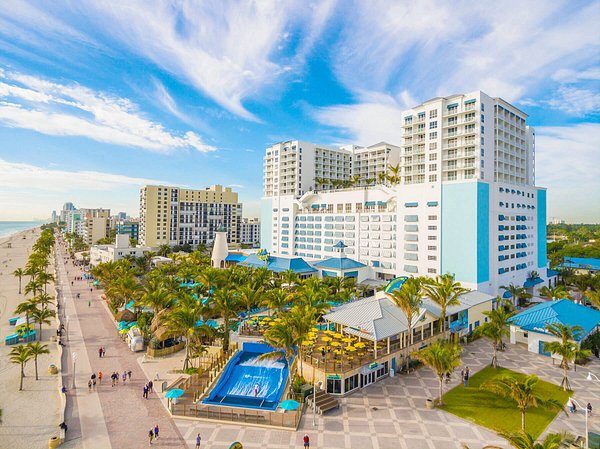
If you are cross-shopping Fort Lauderdale and Miami and feeling priced out of both, Hollywood, Florida is the answer nobody puts in the headline. It sits almost exactly between the two, it has real beach access with a walkable Broadwalk that neither city can fully replicate, and as of 2026 it still prices below both of its more famous neighbors. Moving to Hollywood, Florida means trading a little bit of name recognition for a lot more house, and for most buyers I work with, that trade is an easy one once they actually see the numbers side by side.
I grew up in South Florida, and Hollywood has always been the city people drive through on their way to somewhere else, US-1 to Miami, I-95 to Fort Lauderdale, A1A along the beach. That is exactly why it is underrated. Nobody stops to look. The people who do stop end up staying, and once you understand why, it is hard to un-see it.
Why Hollywood Gets Overlooked, and Why That’s Good for You
Hollywood does not have a marketing budget like South Beach or a brand like Las Olas. What it has is geography. It is a full beach city, with its own stretch of Atlantic coastline, its own downtown, and its own identity, wedged between two markets that get all the attention and most of the price appreciation headlines.
That gap between reputation and reality is where the value is. Buyers who are willing to look past the name recognition of Fort Lauderdale or Miami and actually compare square footage, lot size, and monthly costs consistently find that Hollywood gives them more house, a shorter commute in either direction, and a slower pace without giving up beach access. It is not a secret to locals. It is a secret to relocators, which is exactly the gap this guide is meant to close.
Part of why Hollywood stays under the radar is that it was built out decades before the current relocation wave, so there is no glossy new master-planned marketing machine pushing it in front of out-of-state buyers the way Parkland or Weston get pushed. What you get instead is a real, lived-in city with mature landscaping, established neighborhoods, and pricing that has not fully caught up to what it actually offers. Locals know this. That is why you will meet longtime Broward residents who grew up in Hollywood, moved away for a stretch, and specifically moved back once they had the means to choose anywhere. For the full breakdown of the city beyond this comparison, the Hollywood, Florida: The Complete Relocation Guide for 2026 covers the ground-level details neighborhood by neighborhood.
Where Hollywood Actually Sits, and Why the Location Matters
Hollywood occupies a coastal strip in southeast Broward County, directly south of Dania Beach and Fort Lauderdale, and directly north of Aventura and North Miami Beach in Miami-Dade. Downtown Fort Lauderdale is about 15 to 20 minutes north depending on traffic. Downtown Miami is closer to 30 to 35 minutes south. Fort Lauderdale-Hollywood International Airport (FLL) sits just north of the city line in Dania Beach, which means most Hollywood neighborhoods put you 10 to 15 minutes from a major international airport, something you pay a premium for if you want it in Fort Lauderdale proper.
The corridors that matter here are I-95 running along the western edge of the city, US-1 (Federal Highway) cutting through the middle north-south, and A1A hugging the beach. The Florida Turnpike also runs through western Hollywood, which matters if your commute is west toward Weston, Pembroke Pines, or Miramar rather than up or down the coast. That combination, three real north-south options plus quick airport access, is a bigger deal than most relocators realize until they are the ones sitting in beach traffic every Sunday.
There is also a Brightline station consideration worth knowing about if you commute for work meetings between Fort Lauderdale, Miami, and West Palm Beach. Hollywood itself does not have its own stop, but the Fort Lauderdale and Aventura-area access points are both within a reasonable drive, which matters for buyers who want the train option without living directly downtown in either city. For someone who splits work between Miami and Broward, or who has family in both directions, Hollywood’s position stops being a compromise and starts being the actual strategic pick.
What It Actually Costs to Live in Hollywood in 2026
Pricing is where Hollywood earns the “underrated” label. As of 2026, single-family homes across most Hollywood neighborhoods, Hollywood Hills, Emerald Hills, Boulevard Heights, Driftwood, are generally trading in the $450,000 to $650,000 range for a standard 3-bedroom, 2-bath home on a quarter-acre or smaller lot. That is meaningfully below what the same square footage costs in Fort Lauderdale neighborhoods like Victoria Park or Coral Ridge, and well below almost anything comparable in Miami-Dade east of I-95.
To put that in real terms: a buyer who can afford $600,000 in Victoria Park is often looking at a smaller, dated 2-bedroom bungalow with real renovation needs. That same $600,000 in Hollywood Hills or Boulevard Heights regularly buys a 3-bedroom, 2-bath home with a garage, a real yard, and updated systems. It is not a marginal difference. It is often the gap between “we can afford a starter home” and “we can afford the home we actually want.”
Condos are where the value gets even more obvious. You can still find 1 and 2-bedroom condos in Hollywood, particularly west of the beach and in the Lakes Section, priced well under $300,000, with beachfront and near-Broadwalk condo pricing climbing from there depending on building age, amenities, and view. Compare that to a comparable unit in Fort Lauderdale beach or Sunny Isles Beach on the Miami-Dade side, and you are frequently looking at a 30 to 50 percent premium for a similar distance to sand.
The premium neighborhoods are where Hollywood starts to look more like its neighbors. Hollywood Lakes, the historic, tree-canopied neighborhood just west of the Intracoastal and close to downtown, commands a real premium for its lot sizes and walkability. Canal-front and Intracoastal-access homes carry boat-dock pricing that competes with similar waterfront product in Fort Lauderdale. If waterfront is the priority, the full pricing and canal-access breakdown is in Waterfront Living in Hollywood, Florida: Canal Homes and Intracoastal Access.
Most single-family neighborhoods in Hollywood do not carry CDD fees, since this is largely built-out, established Broward housing stock rather than new master-planned development. HOA fees vary widely, non-existent in a lot of the older single-family pockets, moderate in condo buildings, and higher in gated or amenity-heavy communities. Always confirm HOA docs and reserve study status before you write an offer, especially in older beachfront condo buildings where post-Surfside assessments have become a real line item to budget for. If a building’s reserve study shows deferred maintenance, that is not a dealbreaker by default, but it needs to be priced into your offer, not discovered after closing.
Insurance is the other cost most out-of-state buyers underestimate. Hollywood is a coastal Broward city, so wind and flood coverage matter more here than they do in western suburbs like Cooper City or Coral Springs. Homes east of US-1 and anything near the Intracoastal or on a canal should be evaluated with a real flood zone check and an actual insurance quote before you fall in love with the property, not after. Property taxes follow Broward County’s millage rate, and if you are relocating from a state with no homestead exemption, budget time to understand how Florida’s homestead exemption and the Save Our Homes cap work, since it materially changes your year-two and year-three tax bill compared to what you pay as a first-year non-homesteaded owner.
For where the market stands right now, month to month, Hollywood, Florida Real Estate Market: Where Prices Stand in 2026 tracks the actual numbers rather than the general range I just gave you.
The Broadwalk: What Living Near It Is Actually Like
The Hollywood Broadwalk is the single biggest reason people fall in love with this city, and it is also the reason certain blocks price higher than you would expect. It is a 2.5 mile paved, car-free promenade running along Hollywood Beach, lined with restaurants, small hotels, coffee shops, and a steady flow of bike and rollerblade traffic from early morning until late at night. It is not manufactured the way a lot of newer beach developments feel. It has decades of history, a real neighborhood feel, and it functions as the social spine of the whole beach community.
Living within walking distance of the Broadwalk changes your day-to-day in a way that is hard to appreciate until you have done it, morning coffee runs on foot, dinner without moving your car, actual foot traffic instead of a beach you drive to and leave. That lifestyle comes at a price premium over inland Hollywood, and it is worth understanding block by block before you commit, since a few streets can mean a big difference in both price and noise level, especially near the more tourist-heavy stretches by Johnson Street and Hollywood Boulevard.
The northern stretch of the Broadwalk, closer to the border with Dania Beach, tends to be quieter and more residential in feel, while the central stretch near Johnson Street carries more restaurant and hotel density and, with it, more foot traffic and noise on weekends. Buyers who want the lifestyle but not the crowd noise generally do better a block or two west of A1A rather than directly fronting the Broadwalk itself, still an easy walk, with meaningfully less late-night activity outside your window. That lifestyle side of this, not just the real estate side, is covered in detail in Life on the Hollywood Broadwalk: What It Is Actually Like to Live Here.
Hollywood’s Neighborhoods: Picking the Right One
Hollywood is not one housing market, it is several, and picking the wrong one for your lifestyle is the most common mistake I see relocators make.
Hollywood Beach and the Broadwalk corridor is for buyers who want walkability, tourism-adjacent energy, and true oceanfront or near-oceanfront living, mostly condos with some smaller single-family and duplex product on the barrier island streets. This is also where you will find the highest concentration of short-term and seasonal rental activity, which is worth knowing whether you are buying as an investment or trying to avoid living next to a rotating cast of weekly renters.
Hollywood Lakes is the historic, close-to-downtown neighborhood with mature oak canopies, larger lots, and an easy walk or bike ride to both the beach and downtown Hollywood’s Young Circle and ArtsPark district. This is the highest price point among the single-family neighborhoods, and it draws buyers who want a walkable, established feel closer to what you would find in Fort Lauderdale’s Colee Hammock or Rio Vista, at a lower entry price.
Emerald Hills is a golf-course community in the western part of the city, quieter, more suburban, popular with families who want more house and yard and are fine trading some beach proximity for space and a slower pace. It reads more like a Plantation or Cooper City street than a beach town, which is exactly the appeal for buyers who want Hollywood’s location without a coastal lifestyle attached.
Hollywood Hills and Boulevard Heights are solid, established middle-market neighborhoods, good bones, real value, popular with first-time buyers and move-up buyers who want single-family living without Hollywood Lakes pricing. These are the neighborhoods where I most often point buyers who tell me they got priced out of Fort Lauderdale’s inland suburbs but still want a real single-family home rather than a condo.
Driftwood and the areas closer to the western city line trend more affordable still, with a mix of older ranch-style homes and some newer infill. This is where budget-conscious buyers land when they want to be in Hollywood specifically, close to family, close to a job, close to the schools they are zoned for, without stretching for beach proximity.
Downtown Hollywood itself, centered on Young Circle and Harrison Street, has been steadily revitalizing, with a walkable restaurant and arts scene and a mix of historic buildings and newer mixed-use development. The ArtsPark, the Hollywood Art and Culture Center, and a growing restaurant row along Harrison Street give it a genuine urban feel without paying Fort Lauderdale’s Las Olas prices, and it is worth a look for buyers who want to walk to dinner without owning oceanfront property.
The full neighborhood-by-neighborhood comparison, including which ones are trending and which are quietly transitioning, is in Hollywood, Florida Neighborhoods: Where to Live Based on What You Want.
Schools and Family Life
Hollywood is served by Broward County Public Schools, and school assignment is address-specific, so this is one of the areas where I tell every family to confirm zoning before falling in love with a house. McArthur High School, South Broward High School, and Hollywood Hills High School are the main zoned high schools depending on where in the city you land, and there are also charter and magnet options within reach for families who want alternatives to the neighborhood-zoned school.
Families weighing Hollywood against Fort Lauderdale suburbs like Plantation or Cooper City should know the honest trade-off going in: Hollywood’s schools are solid but not uniformly top-tier the way Broward’s western suburbs are known for, so if a specific A-rated school zone is non-negotiable for you, that needs to be step one of the search, not step three. I have seen buyers fall for a house in Hollywood Lakes, only to find out the zoned elementary school was not the fit they expected, and by then they had already emotionally committed to the neighborhood. Confirm the zone with Broward County Public Schools directly, using the actual address, before you write an offer, not based on what a listing agent tells you or what a neighborhood’s general reputation implies. The full school-by-school breakdown, ratings, and how boundaries actually work here is in Hollywood, Florida Schools: What Parents Need to Know.
Beyond schools, family life in Hollywood benefits from real infrastructure, Topeekeegee Yugnee (TY) Park for hiking, kayaking, and picnicking, the ArtsPark at Young Circle for events and a splash pad, and the Broadwalk itself as a genuinely safe, car-free space for kids to bike. Anniversary Park and the city’s network of smaller neighborhood parks add to that, and the proximity to the Seminole Hard Rock Hotel and Casino just west of the city line, while not for everyone, brings entertainment and dining options that a lot of comparably priced suburbs simply do not have nearby. It is a city that was built for families before it was rediscovered by anyone else.
Getting Around: Commute, Airport, and the Corridors That Matter
The location that makes Hollywood valuable also makes it functional day to day. I-95 gives you a straight shot north to Fort Lauderdale or south to Miami. US-1 is the slower, more local surface-street option that runs through the heart of the city and connects you to Dania Beach, Hallandale Beach, and Aventura without ever touching the highway. The Florida Turnpike, running through the western part of the city, is the better option if your job or your kids’ school is west toward Miramar, Pembroke Pines, or Weston rather than along the coast.
For buyers commuting into downtown Fort Lauderdale for work, Hollywood realistically adds 10 to 15 minutes over living in Fort Lauderdale itself, a trade a lot of my clients happily make in exchange for a materially lower purchase price. For buyers commuting into Miami’s Brickell or Downtown core, that same drive from Hollywood runs closer to 35 to 45 minutes depending on time of day, comparable to or better than what you would face commuting in from parts of North Miami-Dade at a fraction of the price.
Fort Lauderdale-Hollywood International Airport sits just over the city line in Dania Beach, which means most Hollywood addresses are a 10 to 15 minute drive from an international airport, a real advantage for anyone who travels for work or has family flying in regularly. That proximity, without the price premium of living in Dania Beach or Fort Lauderdale proper, is one of the more underrated practical reasons people end up here.
New Construction and What’s Actually Being Built
Hollywood is a built-out, established city, so this is not a market defined by master-planned new-construction communities the way you would find further west in Broward. What new construction does exist tends to be infill single-family homes on teardown lots, townhome and condo redevelopment near downtown and the beach corridor, and mixed-use development around Young Circle. Buyers who specifically want the new-build experience, a builder warranty, modern hurricane-rated construction, and an HOA-run amenity center, are usually better served looking west toward Miramar, Pembroke Pines, or further out to Parkland and Southwest Ranches, where that product actually exists at scale.
That said, infill construction in Hollywood has been picking up in pockets of Hollywood Hills and Boulevard Heights, where older ranch homes on larger lots are being replaced with modern 3 and 4-bedroom builds that carry higher price points but come with none of the deferred maintenance concerns of the surrounding older housing stock. If new construction specifically is your priority, it is worth understanding what is realistically available here versus what you would find in the western suburbs, covered in New Construction in Hollywood, Florida: What Is Being Built and What It Costs.
Hollywood vs. Fort Lauderdale vs. Miami: The Side-by-Side Buyers Actually Need
When buyers tell me they are torn between Fort Lauderdale, Miami, and Hollywood, the decision usually comes down to three questions: what do you actually get for your money, how much commute flexibility do you need, and how much do you care about brand name versus substance.
On price, Hollywood wins clearly against both. A buyer with a $600,000 budget is choosing between a small, dated unit in Fort Lauderdale beach, a condo well inland from the water in Miami-Dade, or a real single-family home with a yard in Hollywood Hills or Boulevard Heights. On commute, Hollywood is the compromise position, worse than living directly in either downtown, but better than most of the alternatives on the far side of either city, and better than almost anything comparable in outlying Miami-Dade suburbs if your job pulls you in both directions. On lifestyle, Fort Lauderdale wins on Las Olas-style polish and Miami wins on nightlife and international flair, but Hollywood wins on authenticity, the Broadwalk, the historic bungalow streets, and downtown Young Circle feel lived-in rather than developed for a demographic.
The buyers who end up happiest in Hollywood are the ones who go in understanding this trade-off clearly rather than treating Hollywood as a consolation prize. It is not Fort Lauderdale. It is not Miami. It is its own thing, and for the right buyer, its own thing is exactly what they were looking for.
Who Hollywood Is Actually For, and Who It Is Not For
The reality is Hollywood is not the right fit for everyone, and I would rather tell you that now than after you have already toured ten houses.
Hollywood is for buyers who want real beach access and a walkable downtown without paying Fort Lauderdale or Miami prices for it. It is for people who value a central location between two job markets over living directly inside either one. It is for first-time buyers who want more house for the money in a coastal Broward location, a group covered specifically in First-Time Buyer in Hollywood, Florida: Coastal Broward at an Accessible Price. It is also a legitimate rental and investment market, with steady demand from both tourism-driven short stays near the Broadwalk and long-term renters priced out of Fort Lauderdale beach, detailed in Hollywood, Florida Investment Property: Rental Market and Returns in 2026.
Hollywood is not for buyers who want brand-new master-planned communities with resort-style amenity centers and CDD-funded clubhouses, that product is further west in cities like Parkland, Weston, or Southwest Ranches. It is also not the right fit if a specific A-rated school zone is your top priority and you are not willing to be flexible, since Hollywood’s school options are solid but uneven across the city compared to some of Broward’s western suburbs. And it is not the right fit for buyers who want total quiet and zero tourist presence anywhere near them, since the Broadwalk corridor, by design, brings visitors year round.
Buyer Scenarios: Where Real Clients Have Landed
A young couple relocating from up north for remote work, no kids yet, wanting walkability and a beach lifestyle without Miami’s price tag, typically lands in a Broadwalk-adjacent condo or a small single-family home a block or two off A1A. They trade square footage for lifestyle and do not regret it.
A family of four leaving a higher cost-of-living state, prioritizing a yard, a garage, and a manageable commute to a job in either Fort Lauderdale or Miami, typically lands in Hollywood Hills, Boulevard Heights, or Emerald Hills. They get a real single-family home, often with more space than they had before, at a price that would not have bought a comparable home in either neighboring city.
A retiring couple downsizing from a bigger house elsewhere in Florida or from out of state, wanting low-maintenance living close to the water without full oceanfront pricing, often lands in a condo in the Lakes Section or a smaller single-family home in Driftwood, with the Broadwalk as a walkable amenity rather than a daily necessity.
An investor looking for rental yield rather than personal lifestyle often looks specifically at the Broadwalk corridor for short-term rental potential, or at Hollywood Hills and Boulevard Heights for stable long-term rental demand from renters priced out of Fort Lauderdale beach. Each of those is a genuinely different strategy with different numbers, and conflating them is the most common mistake I see new investors make in this market.
Where I’d Point You in Hollywood
If you want beach walkability and don’t mind condo living, start in the Broadwalk corridor and compare buildings carefully on age, reserves, and HOA health before you fall for a view. If you want a single-family home with character and you’re close to your budget ceiling in Fort Lauderdale, Hollywood Lakes or Hollywood Hills deserve a serious look before you assume you can’t afford a coastal Broward zip code. If you want space, a yard, and a quieter pace with the beach still a short drive away, Emerald Hills and Boulevard Heights are where I’d send a family. And if new construction specifically is non-negotiable for you, be honest with yourself early that Hollywood is a renovation-and-infill market, not a new-build market, and decide whether that trade-off works for your timeline and budget.
Moving to Hollywood, Florida means accepting that you are choosing substance over brand name, and for most buyers I work with once they actually walk the Broadwalk and drive the neighborhoods, that trade stops feeling like a compromise and starts feeling like the smart move. If you’re weighing Hollywood against Fort Lauderdale or Miami and want a straight answer on where your budget actually gets you the most, reach out before you start touring. On resale it costs you nothing to have representation, and I’d rather tell you honestly whether Hollywood fits your situation than sell you on a city that doesn’t. Make a wise decision, not just a fast one.

More articles you might like
Hollywood, Florida: The Complete Relocation Guide for 2026
19 min readNew Construction in Hollywood, Florida: What Is Being Built and What It Costs
13 min readHollywood, Florida Schools: What Parents Need to Know in 2026
14 min readFirst-Time Buyer in Hollywood, Florida: Coastal Broward at an Accessible Price
20 min readHollywood, Florida Investment Property: Rental Market and Returns in 2026
13 min read