First-Time Buyer in Hollywood, Florida: Coastal Broward at an Accessible Price
Here is the revised draft, expanded and grounded in real Hollywood specifics, in Stanley’s voice, with no em dashes or en dashes.
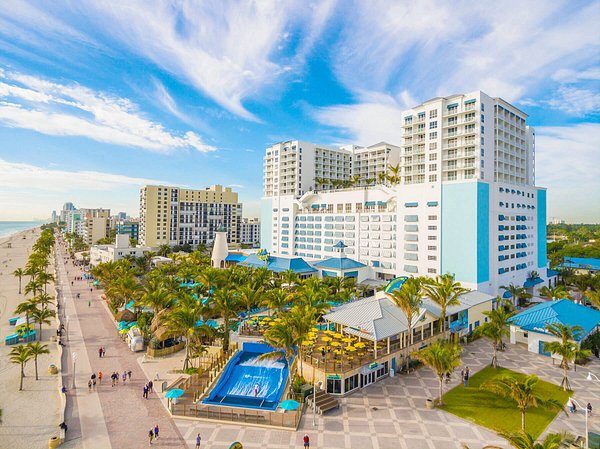
If you are a first-time buyer looking at Hollywood, Florida, coastal Broward at an accessible price is not a myth, but it is narrower than it was five years ago. Realistically, that means a $280,000 to $450,000 condo or townhome inland from the beach, or a $400,000 to $550,000 starter single-family home in a neighborhood like Boulevard Heights, Liberia, or Driftwood, all still a 10 to 15 minute drive from the Broadwalk and the ocean. It is not beachfront. It is not new construction. But it is real, it is livable, and it is still meaningfully cheaper than the equivalent purchase in Fort Lauderdale or Miami.
This guide is the deep version. Prices, HOA traps, financing realities, and the actual neighborhoods where first-time buyers are closing deals in Hollywood right now. No filler, no generic “South Florida is great” talk. Just what your money buys and where the risk actually sits.
Why Hollywood Instead of Fort Lauderdale or Miami
Hollywood sits between two more expensive markets, and that geography is the whole value proposition. You are 20 minutes north of Aventura and the Miami border, and 15 minutes south of downtown Fort Lauderdale. Buyers who get priced out of Wilton Manors, Victoria Park, or Edgewater end up here, and for good reason.
The comparison that matters for a first-time buyer is price per square foot on comparable product. A 2-bedroom condo in a 1970s or 1980s mid-rise in Fort Lauderdale’s beach-adjacent buildings often starts $50,000 to $80,000 higher than a similar unit in Hollywood, even though the drive to sand is nearly identical. Hollywood has not been rezoned and redeveloped at the same pace as Fort Lauderdale Beach or Flagler Village, which means older, smaller buildings with lower price points are still on the market. That is changing (see the new luxury towers going up along the beach), but the older inland stock is still where first-time buyers find room.
There is also a commute math argument that gets ignored too often. A buyer who works in Aventura or North Miami and looks exclusively at Fort Lauderdale is often overpaying for proximity they do not need. Hollywood puts you closer to the Miami-Dade job centers than most of Fort Lauderdale does, while still keeping the price tag Broward-level instead of Miami-level. If your job is anywhere along the Aventura, North Miami Beach, or Sunny Isles corridor, Hollywood can actually be the shorter commute and the cheaper purchase at the same time. That combination does not happen often in this market, so it is worth stating plainly.
For the bigger picture on why people are relocating here in the first place, the Complete Relocation Guide for 2026 covers the full picture: commute times, cost of living, and what makes Hollywood distinct from its neighbors. This post is narrower, it is about what you can actually afford to buy and how to do it without getting burned.
What “Accessible” Actually Means at Different Price Points
Accessible is relative. Here is what your money actually buys in Hollywood as of 2026, broken down by category.
Under $250,000: Older Condos, West of Federal Highway
This is the true entry tier. You are looking at 1-bedroom or small 2-bedroom units in buildings from the 1960s through 1980s, mostly west of Federal Highway and away from the immediate beach corridor. These buildings were not built with today’s reserve requirements in mind, which is both the opportunity and the risk (more on that below). Expect dated finishes, smaller square footage (700 to 950 square feet is common), and HOA dues anywhere from $350 to $700 a month depending on amenities and the building’s insurance situation.
A realistic example: a 1-bedroom, 1-bath unit in an older Hollywood mid-rise, roughly 750 square feet, listed around $195,000 with HOA dues near $480 a month. That monthly HOA covers water, exterior maintenance, and building insurance, but it does not tell you whether the roof was replaced in 2019 or 1999. At this price tier, the purchase price is almost never the number that determines whether the home is actually affordable. The building’s financial health is.
$250,000 to $450,000: Townhomes and Newer Condos
This is where most first-time buyers in Hollywood actually land. Townhomes built in the last 10 to 15 years, or condos in buildings constructed after 2000, fall in this range. As a reference point, Hollytown, a modern townhouse community built by ABH Developer Group on Pierce Street, delivered units averaging around 1,500 square feet under air with private entryways and HOA dues near $250 a month, a much lighter carrying cost than the older beachfront condo stock. That project has since sold out, but it is a useful benchmark for what “attainable new construction” looked like in Hollywood, and similar product does resurface as smaller builders infill lots throughout the city.
Buyers in this bracket typically fall into two camps. The first wants a low-maintenance lifestyle, does not mind shared walls, and values predictable monthly costs over square footage. The second is stretching toward this range specifically to avoid the older condo reserve risk described later in this article, even if it means a smaller unit. Both are legitimate strategies. What matters is picking one intentionally instead of drifting into whichever listing shows up first on a portal search.
$400,000 to $550,000: Starter Single-Family Homes
This is the range where you can buy an actual house with a yard, typically 3 bedrooms, 2 bathrooms, 1,200 to 1,800 square feet, on a standard 6,000 to 7,500 square foot lot. Homes in this range are concrete block construction from the 1950s through 1980s, often updated, in neighborhoods discussed below. No HOA in most cases, which matters a lot for predictable monthly costs.
This is also the range where inspection findings matter most. A 1965 concrete block home with an updated kitchen can still have original cast iron plumbing or an electrical panel that an insurer will flag immediately. The house can look renovated and still carry real deferred maintenance underneath. Do not let a fresh coat of paint and new countertops substitute for a real inspection here, the age of the bones matters more than the age of the finishes.
Above $550,000: You Are Now Competing With Move-Up Buyers
Past this point you are in renovated single-family homes closer to the water, or newer townhomes in in-demand pockets like Downtown Hollywood or the areas near Emerald Hills. Worth knowing about even if it is out of reach today, because it tells you what “waterfront” actually costs. If canal access is the long-term goal, the Waterfront Living guide breaks down what canal homes and Intracoastal-adjacent property actually run.
For contrast, the ultra-luxury end of Hollywood’s market, places like Icon Beach Hollywood or Eturna Beachside Residences on the sand, start at $1.3 million and climb well past $3 million. That is not first-time buyer territory, but it is worth knowing it exists so you understand the full spread of what “Hollywood real estate” means when you see headlines about the market. It also explains why median price figures you see in news coverage can be misleading. A handful of eight-figure beachfront closings pull the average up, while the actual first-time buyer market a few miles inland is moving at a completely different number.
The Neighborhoods Worth Your List
Not every part of Hollywood works for a first-time budget, and not every affordable neighborhood is one you want to live in long-term. Here is the honest breakdown.
Boulevard Heights
West of I-95, south of Sheridan Street. Solidly middle-class, mostly single-family homes on quiet streets, good access to Sheridan Street and Pines Boulevard for commuting. This is one of the more reliable starter-home pockets in the city, with homes regularly transacting in the $400,000 to $500,000 range for 3-bedroom concrete block houses. Lot sizes here tend to run a little larger than the more central Hollywood neighborhoods, which matters if a yard for kids or pets is part of the decision. Inventory turns over steadily rather than in sudden bursts, so buyers who move decisively when a well-priced listing comes up generally do better than those waiting for something better to appear.
Liberia
Central Hollywood, west of Federal Highway and north of Hollywood Boulevard. One of the city’s older, historically Black neighborhoods, currently in a visible transition as investors and first-time buyers renovate older homes. Prices are lower here than in Boulevard Heights, often $350,000 to $450,000 for similar square footage, but do your homework on which specific blocks have seen the most reinvestment before you commit. Walk the streets around any listing at different times of day before writing an offer, not just during a scheduled showing. Transitioning neighborhoods reward buyers who do the legwork and can genuinely cost buyers who skip it.
Driftwood
South Hollywood, straddling both sides of Park Road near Sheridan Street. A mix of starter single-family homes and smaller multifamily, generally affordable, with decent access to Hollywood’s south side and the Hallandale Beach border. Good option if your daily commute runs toward Aventura or North Miami. Driftwood also tends to have a higher share of small multifamily properties mixed in with single-family homes, so if house hacking or future rental income is part of your long-term plan, it is worth looking at what is on the same block, not just the property you are buying.
Emerald Hills
More established, with larger lots and a golf course community feel. This is above true first-time-buyer pricing in most cases (homes here often start well above $550,000), but it is worth knowing as the neighborhood you might move up into after your first purchase. Buyers who start in Boulevard Heights or Driftwood and build equity over five to seven years frequently name Emerald Hills as the target for their next move, so it is worth driving through even if you are not buying there today. Knowing what you are working toward changes how you think about your first purchase.
Downtown Hollywood
Walkable, dense with restaurants and events, and increasingly popular with younger buyers who want urban energy without a Fort Lauderdale price tag. Condos and townhomes here run higher than the inland neighborhoods above, generally $350,000 to $600,000, but you are paying for walkability, not square footage. If your daily life revolves around being able to walk to dinner, the farmers market, or ArtsPark rather than driving everywhere, this premium is a lifestyle decision, not a financial mistake, but you should go in understanding that is exactly what it is.
For a full neighborhood-by-neighborhood breakdown with more detail on lifestyle fit, see Hollywood Neighborhoods: Where to Live Based on What You Want.
The HOA and Condo Reserve Trap Every First-Time Buyer Needs to Understand
This is the single most important section of this article, and it is the part most first-time buyers skip. Florida passed legislation after the Surfside condo collapse, commonly referred to as SB 4-D, that requires condo and co-op buildings three stories or taller and over 30 years old to complete milestone structural inspections and fund full structural integrity reserve studies. No more waiving reserves. No more kicking maintenance costs down the road.
What this means in practice for a first-time buyer looking at an older Hollywood condo:
- Ask for the milestone inspection report before you make an offer. If the building has not completed one and it is due, that is a red flag, not a minor detail.
- Ask for the reserve study and the funding percentage. A building that is only 20 or 30 percent funded on required reserves is going to hit owners with a special assessment, sometimes tens of thousands of dollars per unit, to catch up.
- Budget for HOA dues to rise, not stay flat. Many older Broward buildings have already seen dues jump 30 to 60 percent in the last two years specifically because of these new reserve requirements. A $450 monthly HOA payment today could be $650 in two years.
- Get the master insurance policy and check the deductible. Coastal Broward buildings carry higher windstorm and flood premiums than inland product, and that cost gets passed through in your HOA dues.
Here is what this looks like when it goes wrong in practice. A buyer purchases a $220,000 1-bedroom condo in an older Hollywood building, sees a $400 monthly HOA fee, and does the math on a comfortable payment. Eight months later, the building completes its milestone inspection, discovers the reserves are 25 percent funded against the new state requirement, and issues a special assessment of $18,000 per unit, payable over 24 months. That turns a $400 monthly HOA fee into closer to $1,150 a month once the assessment is added in. The purchase price never changed. The real cost of ownership did, dramatically, and the buyer had no way to see it coming because they never asked for the reserve study before closing.
None of this means avoid condos. It means do the diligence, and lean on an agent and attorney who will actually pull these documents rather than assuring you it is fine. This is the exact area where a first-time buyer without local guidance gets hurt financially in South Florida right now, and it is more relevant in Hollywood’s older condo stock than almost anywhere else in Broward.
Financing a First Home in Hollywood
Loan Programs Worth Knowing
FHA loans remain the most common first-time buyer tool, with down payments as low as 3.5 percent and more flexible credit requirements than conventional financing. Conventional loans with as little as 3 to 5 percent down are also available for well-qualified buyers. Florida Housing offers down payment assistance programs that can be paired with either option, worth investigating early in the process since funds and eligibility can change year to year. The Florida Hometown Heroes program is worth a specific look if you work in an eligible profession such as teaching, healthcare, law enforcement, or another public service field, since it offers below-market rates and down payment assistance stacked on top of standard FHA or conventional financing.
VA loans are also worth mentioning given South Florida’s large veteran population. Zero down payment, no private mortgage insurance, and often a more competitive rate than conventional financing. If you or a co-borrower has eligibility, run the comparison before defaulting to FHA.
Insurance Is the Real Wildcard
Homeowners insurance in Broward County, and especially anywhere near the coast or in a flood zone, has become the biggest unknown in a monthly payment estimate. Get a real insurance quote before you go under contract, not after. A property that looks affordable on price can become unaffordable once you see the annual premium, particularly for older homes with original roofs or older electrical panels, both of which insurers now scrutinize heavily. It is common in Broward right now to see annual premiums on older homes run $4,000 to $7,000 a year, sometimes higher depending on roof age and wind mitigation features. That is $330 to $580 a month added to your payment before you have spent a dollar on the mortgage itself.
Flood Zones
Much of Hollywood sits in FEMA-designated flood zones given its proximity to the Intracoastal and canals throughout the city. Flood insurance is a separate policy from your standard homeowners coverage, and it is not optional if your lender requires it. Check the FEMA flood zone designation for any specific property before you fall in love with it. Two homes three blocks apart can carry very different flood zone designations, and therefore very different insurance costs, simply based on elevation and proximity to a canal. This is a five-minute check that can change your monthly payment by hundreds of dollars, so do it before you tour, not after you make an offer.
Property Taxes and the Homestead Exemption
Property taxes are the other line item first-time buyers consistently underestimate. Broward County’s millage rate, combined with city and school district portions, typically lands total property taxes somewhere around 1.8 to 2.2 percent of assessed value annually, though the exact number depends on the specific taxing district within Hollywood. On a $420,000 purchase, that is roughly $7,500 to $9,200 a year, or $625 to $765 a month, before insurance or HOA dues are even added in.
If Hollywood will be your primary residence, file for the Florida Homestead Exemption as soon as you close. It reduces your taxable assessed value by up to $50,000 and, more importantly over time, caps annual increases in your assessed value under the Save Our Homes provision, even if the market value of your home rises faster. This is one of the most overlooked tools a first-time buyer has for keeping long-term costs predictable, and it costs nothing to file. Mark your calendar for January 1st of the year after closing, that is the deadline that matters for the following tax year.
New Construction vs. Resale for First-Time Buyers
New construction in Hollywood right now skews toward the luxury end, think the towers and beachside developments discussed above, not entry-level product. That is the honest reality: builders are chasing the higher-margin buyer, not the first-time buyer. Hollytown was an exception, and it sold out.
That does not mean new construction is irrelevant to your search. Smaller infill townhome projects continue to pop up on individual lots throughout the city as older single-family homes get torn down and redeveloped, and these can land in the $450,000 to $600,000 range with lower maintenance costs than an older resale home. If you want to track what is actually being built and at what price point, the New Construction in Hollywood guide stays current on active projects and builders.
For most first-time buyers, though, resale is still the more realistic path to an accessible price point in this city. Older homes and condos carry more maintenance risk, but they also carry the lower entry price that makes homeownership possible at all. The right way to think about this tradeoff is not new versus old in the abstract, it is upfront price versus ongoing maintenance reserve. A resale home at $420,000 with no HOA still needs a buyer who is setting aside money monthly for a future roof, water heater, or AC replacement. That obligation does not disappear just because there is no HOA collecting it for you, it just becomes your responsibility to manage instead of the building’s.
What Living Here Actually Feels Like
Buying in Hollywood is not just a financial decision, it is a lifestyle one, and it is worth being honest about what daily life looks like. The Hollywood Broadwalk, the 2.5-mile oceanfront promenade, is genuinely one of the best amenities in Broward County, and it is free. You do not need to own beachfront property to use it every day. If you are inland in Boulevard Heights or Driftwood, you are still a 10 to 15 minute drive from walking, biking, or just sitting along the water. For a real sense of what that day-to-day looks like, read Life on the Hollywood Broadwalk.
Beyond the Broadwalk, Hollywood’s day-to-day rhythm is quieter than Fort Lauderdale and less frantic than Miami. Downtown Hollywood’s ArtsPark hosts regular events and a Friday night market that draws a genuinely local crowd rather than a tourist one. Young Circle anchors the walkable core of downtown, and the drive time from most of the inland starter neighborhoods to that core rarely exceeds 15 minutes. This matters for first-time buyers weighing whether to stretch into Downtown Hollywood pricing versus buying inland and driving in when they want the walkable experience. For many buyers, owning inland and visiting downtown on weekends is the financially smarter version of the same lifestyle.
Schools matter too if you are planning to stay long-term or start a family. Hollywood is zoned into Broward County Public Schools, with a mix of strong and average options depending on the specific neighborhood, so this should factor into where you buy, not just what you can afford. The Hollywood Schools guide breaks down which zones perform best.
Closing Costs and Cash You Actually Need on Hand
First-time buyers frequently budget for the down payment and forget everything else. In Florida, buyer-side closing costs typically run 2 to 3 percent of the purchase price, covering lender fees, title insurance, recording fees, and prepaid items like the first year of homeowners insurance and property tax escrow. On a $420,000 home, that is roughly $8,400 to $12,600 in addition to your down payment. Add in inspection costs (typically $400 to $600 for a standard home inspection, more if you add a four-point inspection or wind mitigation report, both of which are often required by insurers on older homes) and you should walk into this process expecting to need more liquid cash than the down payment percentage alone suggests. Sit down with a lender early and get a real Loan Estimate, not a rough guess, so there are no surprises in the final week before closing.
Step-by-Step: How to Actually Buy Your First Home in Hollywood
- Get pre-approved before you look, not after. Know your real number, including estimated insurance and, if applicable, HOA dues.
- Decide condo, townhome, or single-family based on what you can maintain, not just what you can afford monthly. A cheaper condo with rising HOA dues can cost more over five years than a slightly pricier house with no HOA at all.
- Pull comparable sales in the specific neighborhood, not just “Hollywood” as a whole. Liberia and Emerald Hills are both technically Hollywood, and they are not comparable markets.
- For any condo, request the milestone inspection report, reserve study, and master insurance policy before writing an offer. Do not skip this step to move faster.
- Get an independent home inspection regardless of property type. Older Broward housing stock often has roof, plumbing, and electrical issues that are not visible on a walkthrough.
- Lock your insurance quote before closing. Do not assume the seller’s current premium will transfer to you.
- File your Homestead Exemption immediately after closing if this will be your primary residence. It is free, it caps future assessed value increases, and too many first-time buyers forget to do it in the first year.
- Understand the current market conditions before you negotiate. Pricing power has shifted in different directions across property types over the last two years, and knowing where things stand helps you negotiate from an informed position. The Hollywood Market Update tracks where prices actually sit right now.
The Bottom Line
Hollywood is still one of the more genuinely accessible coastal markets in Broward County for a first-time buyer, but “accessible” today means being specific about property type, neighborhood, and diligence, not just chasing the lowest listed price. A $250,000 condo with an underfunded reserve account and a looming special assessment is not actually cheaper than a $420,000 house in Boulevard Heights with no HOA at all. Do the math on total carrying cost, not just the purchase price, and you will make a wise decision rather than a rushed one.
If you want help running the numbers on a specific property, or want a shortlist of what is actually available right now in your price range, that conversation is worth having before you start scheduling showings on your own.
More articles you might like
Hollywood, Florida: The Complete Relocation Guide for 2026
19 min readNew Construction in Hollywood, Florida: What Is Being Built and What It Costs
13 min readHollywood, Florida Schools: What Parents Need to Know in 2026
14 min readHollywood, Florida Investment Property: Rental Market and Returns in 2026
13 min readWaterfront Living in Hollywood, Florida: Canal Homes and Intracoastal Access
13 min read