Hollywood, Florida Neighborhoods: Where to Live Based on What You Want
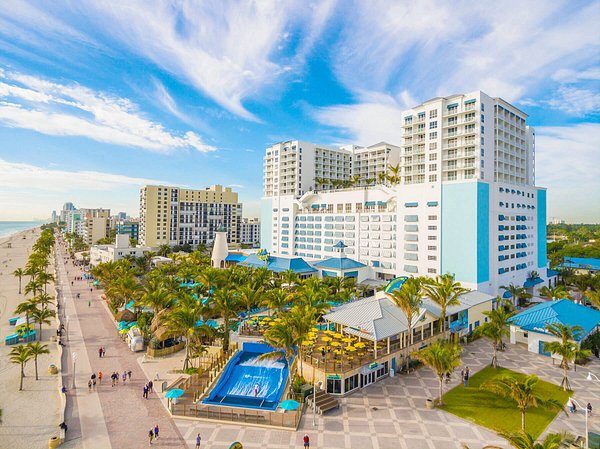
Here’s the expanded post, meeting the length and voice requirements.If you’re trying to figure out where to live in Hollywood, Florida, the honest answer is that “Hollywood” isn’t one neighborhood decision, it’s about five of them. A beachfront condo on the Broadwalk and a ranch house in Hollywood Hills are both technically “Hollywood, Florida,” but they’re different lifestyles, different price points, and honestly different buyers. This guide breaks down Hollywood, Florida neighborhoods based on what you actually want, not just what shows up first on a map search.
I get some version of this question every week from people relocating to Broward County. They’ve heard “Hollywood” is the underrated one between Fort Lauderdale and Miami (it is, and I’ve written the full relocation guide if you want the bigger picture), but nobody’s told them that Hollywood Lakes and Hollywood Hills, despite the similar names, are a 15-minute drive and a $300,000 price gap apart. Let’s fix that.
Hollywood, Florida Neighborhoods: Where to Live Based on What You Want
Before getting into each neighborhood individually, here’s the framework I actually use with clients. Ask yourself these four questions, in this order:
- Do I need to walk to the beach, or just be close to it? This alone eliminates half the city for most buyers.
- Am I optimizing for character or for value? Hollywood has both, but rarely in the same zip code.
- Do I want a car-dependent quiet street, or a walkable, restaurant-and-noise kind of block? Both exist a mile apart.
- What’s my real budget, not my Zillow-scrolling budget? Hollywood spans roughly $350,000 starter condos to $2 million-plus canal estates, and the neighborhood you pick has to match the number you can actually close with.
Once you answer those honestly, the neighborhood usually picks itself. Here’s how the major pockets of Hollywood break down against those questions.
One more thing worth knowing before you dive in: Hollywood sits inside Broward County, and right now single-family homes across the county are running about 4.6 months of supply at a median price near $615,000. That’s balanced leaning toward sellers, meaning well-priced, updated homes in Hollywood Lakes or Emerald Hills are still moving fast and you need to be pre-approved and ready to write before you tour, not after. Condos are the opposite story. Broward condo inventory is sitting closer to 8 to 9 months of supply, which is a genuine buyer’s market. That gap matters more than people realize when they’re choosing between a Broadwalk condo and a Hollywood Hills house, because it changes how much negotiating room you actually have depending on which type of property you’re chasing.
Hollywood Lakes: Historic Charm and Walk-to-Beach Access
Hollywood Lakes is the neighborhood most people picture when they imagine “old Florida” done right. It sits just west of the Intracoastal and north of Hollywood Boulevard, built out mostly in the 1920s through 1950s with Spanish Revival and Mediterranean-style homes on canal-front and interior lots, plenty of mature banyan and oak canopy, and a genuine, walk-to-everything feel.
The pitch is simple: you’re a 5 to 20 minute walk from the Broadwalk depending on which street you’re on, you’re inside the City of Hollywood’s historic overlay so teardown-and-rebuild is more regulated (which protects character but also means renovation permitting takes longer), and you’re paying for it. Canal-front lots with dock access run from roughly $900,000 up past $2 million for larger, updated homes. Interior, non-waterfront lots in Hollywood Lakes still typically start around $650,000 to $850,000 for anything that hasn’t been gutted, more if it has.
There’s no mandatory HOA in most of Hollywood Lakes. What you do get is an active civic association that lobbies the city hard on zoning, traffic calming, and preserving the historic character, so don’t buy here expecting to add a second story without pushback from neighbors. If waterfront access and dock potential matter to you, read the waterfront living guide before you shop, because canal width and fixed-bridge clearance vary block to block and it changes what boat you can actually keep.
Here’s what most people don’t factor in until it hits their closing statement: older homes in a flood-adjacent, canal-heavy neighborhood mean real insurance homework. Roof age, older electrical, older plumbing, and proximity to the water can all push homeowners insurance quotes higher than buyers coming from other states expect. I tell every client shopping Hollywood Lakes to get an actual insurance quote before they’re under contract, not during the option period when they’re already emotionally attached. A $1.2 million canal home built in 1948 with original cast iron plumbing is a completely different insurance conversation than the same house after a full re-pipe and updated panel, and that difference can be thousands of dollars a year.
Who it’s for: buyers who want walkability, architectural character, and are fine paying a real premium for both. This is also a strong fit for retirees who’ve sold a bigger house up north and want to downsize into something walkable without giving up charm. Who it’s not for: anyone who needs new construction, wants a low-maintenance turnkey home, or has a strict budget under $600,000.
Hollywood Hills: Family-Friendly Value West of US-1
Hollywood Hills sits west of Federal Highway, generally north of Hollywood Boulevard and stretching toward Sheridan Street, and it’s the neighborhood I point most families toward when the budget is real and the beach-adjacency isn’t the top priority. Built mostly in the 1950s and 60s, these are single-story ranch homes on lots that are noticeably bigger than what you’d find east of US-1, on quiet grid streets with sidewalks and mature trees.
Pricing here is meaningfully more accessible: expect $450,000 to $650,000 for a solid 3-bedroom in decent shape, with updated or expanded homes pushing toward $750,000. No mandatory HOA in most of the neighborhood, which keeps monthly carrying costs down compared to newer builds with amenity fees. Families here are zoned into Broward County Public Schools, and I’d encourage anyone shopping this pocket to check current attendance boundaries directly rather than assume, since Broward redraws lines periodically. I break down what actually matters school-wise in the Hollywood schools guide.
The tradeoff is straightforward: you’re in the car for beach trips, and you won’t get the Hollywood Lakes architectural pedigree. What you get instead is more house, more yard, and a genuinely quieter, more suburban day-to-day. Lot sizes here regularly run a quarter acre or more, which is significant in coastal Broward where a lot of newer product sits on lots a third that size. For a family that actually wants a yard the kids can use, not just a yard on paper, that’s a real, tangible difference.
I had a family relocating from Ohio last year with almost this exact decision in front of them: Hollywood Lakes charm at $900,000 for a smaller, older three-bedroom, or Hollywood Hills at $580,000 for a bigger four-bedroom with a real backyard and a two-car garage. They picked Hollywood Hills, and eighteen months later they still tell me it was the right call, because the money they didn’t spend on the house went into a renovated kitchen and a pool. That’s the kind of tradeoff worth thinking through honestly before you fall in love with a listing photo. For a lot of relocating families, that trade is worth it.
Downtown Hollywood and Young Circle: Walkable Urban Living
Downtown Hollywood, anchored by Harrison Street’s restaurant row and ArtsPark at Young Circle, is the most walkable, urban slice of the city, and it’s changed a lot over the past decade. This is where you’ll find newer mid-rise condo and loft buildings, live-music nights at the park, farmers markets, and a genuine walk-to-dinner lifestyle without needing to be on the sand.
This is condo and townhome territory more than single-family. Expect $300,000 to $550,000 for a 1 or 2-bedroom condo depending on age and building amenities, with HOA fees running $400 to $700 a month for buildings with pools, gyms, and secured parking. If you’re the type who wants restaurants and a walkable urban core more than a yard, this is genuinely the strongest option in Hollywood, and it’s underrated compared to what you’d pay for the same lifestyle in downtown Fort Lauderdale, where comparable walkable condo product routinely runs $100,000 to $150,000 more for a similar unit.
The honest downside: parking can be tight on event nights, and downtown noise (music from Harrison Street, ArtsPark events) is a real factor for light sleepers on lower floors. If that’s a dealbreaker, look one or two blocks off the main corridor rather than ruling out downtown Hollywood entirely. It’s also worth asking about building age directly, because Florida’s post-Surfside milestone inspection and structural reserve requirements mean older buildings (generally 30 years and up, 25 years in some coastal counties) are now required to fund full reserve studies. That has pushed HOA fees up in a lot of older downtown buildings over the past two years, and it’s not a one-time bump, it’s a structural shift in how condo budgets work statewide now. Ask for the building’s most recent reserve study and milestone inspection report before you write an offer, not after.
Downtown Hollywood also tends to skew younger and more transient than the rest of the city, meaning more renters in the mix in certain buildings. If you want an owner-occupied-heavy building for stability and resale, ask your agent to pull the owner-occupancy percentage before you tour, because it varies a lot building to building even within a two-block radius.
The Broadwalk Corridor: Beachfront Living and Vacation Rentals
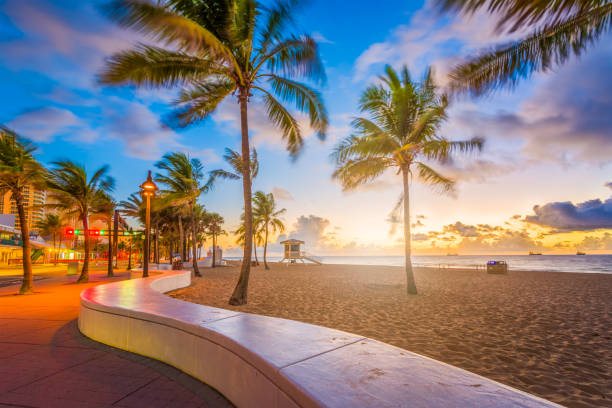
The Broadwalk is Hollywood’s 2.5-mile beachfront promenade, and the corridor along it is its own distinct market. This is almost entirely condo buildings, ranging from older 1970s-80s low-rises with no elevator and dated interiors, up through newer towers with resort-style amenities. Prices swing enormously based on age and view: a dated interior-facing unit can still be found in the $300,000s, while direct oceanfront in a newer or renovated building pushes past $800,000 and into $1 million-plus for larger units.
What makes the Broadwalk different from every other neighborhood on this list is rental flexibility. Much of this corridor is zoned and, more importantly, culturally built around short-term and vacation rental activity, which is exactly why investors like it and why full-time residents should ask pointed questions about building rules before buying. HOA fees here run high, often $600 to $1,200-plus a month, because you’re paying for beachfront maintenance, insurance, and amenities. I go deep on what day-to-day life actually looks like here, foot traffic, noise, parking, seasonal crowds, in the Broadwalk lifestyle guide, and it’s worth reading before you assume “beachfront” automatically means “peaceful.”
Flood insurance is the other conversation nobody has early enough here. Every property on the Broadwalk sits in a high-risk flood zone, which means a separate flood policy on top of standard homeowners coverage is non-negotiable, and lenders will require it. Combine that with the same milestone inspection and reserve funding requirements I mentioned for downtown, and you can end up with an older Broadwalk building where the sticker price on the unit looks like a deal but the total carrying cost, HOA plus flood plus windstorm, tells a different story. I’ve walked buyers away from a “cheap” oceanfront unit more than once after we ran the real numbers, because the monthly nut ended up higher than a nicer unit two buildings down that had already completed its structural work.
Who it’s for: buyers who want ocean access as a daily, non-negotiable part of life, and investors comfortable with vacation rental management and the underwriting that comes with it. Who it’s not for: anyone chasing quiet, a traditional homeowner community feel, or the lowest possible monthly carrying cost.
Emerald Hills: Golf Course Living West of I-95
Emerald Hills sits further west, past I-95 near Sheridan Street, built around the Emerald Hills Golf & Country Club. This is Hollywood’s answer to a country-club neighborhood: larger custom and semi-custom single-family homes, bigger lots, mature landscaping, and a noticeably quieter, more suburban feel than anything closer to the coast.
Prices here run $650,000 to $1.3 million depending on lot size, golf course frontage, and whether the home has been updated. Club membership is optional, not mandatory, which matters because some golf communities in South Florida bundle membership fees into ownership whether you golf or not. HOA structures vary by sub-section, so confirm the specific fee and any mandatory club dues before you write an offer.
This is the neighborhood I point buyers toward when they want space, privacy, and a real yard, and they’re not fixated on beach walkability. It’s also a strong option for buyers coming from up north who want something that feels more like a traditional suburban golf community than the dense coastal strip most people picture when they hear “Hollywood, Florida.” Being west of I-95 also means a faster, more direct shot to the Sawgrass Expressway and the Turnpike if your work or family pulls you toward western Broward or Palm Beach County regularly, which is worth factoring in if your commute isn’t strictly coastal.
Compared to Hollywood Lakes, Emerald Hills homes tend to sit on newer construction, generally 1970s through 1990s, which means updated electrical and plumbing are far more common out of the gate. That’s a meaningful difference for buyers who don’t want to take on a renovation project alongside a relocation.
Liberia and Boulevard Heights: Where the Value Is Right Now
Two neighborhoods worth knowing about if budget is the driving factor: Liberia and Boulevard Heights.
Liberia is Hollywood’s historic African American neighborhood, sitting west of downtown near Dixie Highway. It’s in a genuine revitalization phase, with the city investing in infrastructure and new development interest picking up. Prices remain the most accessible in Hollywood proper, often $350,000 to $500,000 for single-family homes, which makes it worth a serious look for buyers who want to be close to downtown Hollywood without downtown Hollywood pricing. This is a neighborhood in transition, so do your homework on specific blocks rather than treating it as uniform. Drive it at different times of day before you commit, the way you would with any transitioning neighborhood, and lean on someone who knows the block-by-block reality rather than a citywide average.
Boulevard Heights and the Driftwood area, further south near Hollywood Boulevard and Douglas Road, offer an established, quieter suburban feel with single-family homes in the $450,000 to $650,000 range. Less character than Hollywood Lakes, less golf-community polish than Emerald Hills, but solid, functional, and priced accordingly. If you’re a first-time buyer trying to get into coastal Broward without the coastal Broward price tag, this is the kind of neighborhood that gets overlooked and shouldn’t be.
Both of these neighborhoods share something in common that’s worth naming directly: they’re the pockets where a first-time buyer or a family stretching their budget can still land in Hollywood proper, inside good school access, without competing against cash buyers for a $900,000 canal home. That’s not a consolation prize. For a lot of my clients, it’s the actual smartest move on the board.
What Nobody Tells You: Insurance and HOA Reality Check
I mentioned this piece by piece above, but it deserves its own section because it changes people’s decisions more than any lifestyle factor does. Florida property insurance, and specifically Florida condo association finances, are not what they were five years ago, and Hollywood is not exempt from any of it.
For single-family homes, especially older ones in Hollywood Lakes or parts of Liberia, get a real insurance quote during your inspection period, not after closing. Roof age, electrical panel type, and plumbing material all move the number significantly, sometimes by thousands of dollars a year.
For condos, anywhere from downtown Hollywood to the Broadwalk, ask three questions before you get emotionally attached to a unit: How old is the building, and has it completed its state-mandated milestone inspection? What does the reserve study show, fully funded or underfunded? And has the HOA already special-assessed owners for structural work, or is that still coming? A building that’s already done the work and funded its reserves properly is worth paying a premium for. A building that hasn’t is a future special assessment wearing a low HOA fee as a disguise, and I’ve seen buyers get burned by exactly that combination more than once.
How to Choose: Matching Neighborhood to Buyer Type
Here’s the quick-reference version, because at this point you’ve got a lot of names and numbers:
- Walkable beach lifestyle, budget flexible: Hollywood Lakes.
- Family, need space and value, don’t need beach walkability: Hollywood Hills.
- Urban, walkable, restaurants and nightlife over yard space: Downtown Hollywood / Young Circle.
- Ocean is the whole point, comfortable with condo living and rental activity around you: The Broadwalk corridor.
- Space, privacy, golf course backyard, quieter suburban feel: Emerald Hills.
- Best value close to downtown, comfortable buying into a neighborhood still revitalizing: Liberia.
- Solid, functional, budget-conscious single-family: Boulevard Heights / Driftwood.
To make that more concrete, think about it through three buyers I actually work with on a regular basis. A retired couple selling a paid-off house up north, wanting to walk to dinner and not manage a yard, usually ends up choosing between Hollywood Lakes and a well-funded downtown building, and the deciding factor is almost always how they feel about condo living versus a small house. A family with two kids moving for a job relocation typically lands in Hollywood Hills or Boulevard Heights, because the math on space per dollar makes the most sense there. And a younger couple, no kids yet, both working remotely or hybrid, tends to gravitate toward downtown Hollywood or a mid-tier Broadwalk building, because walkability and lifestyle outrank square footage for them right now.
One more thing worth knowing: Hollywood doesn’t have much true new construction left in its coastal core, most of what’s building now is infill and mid-rise, not master-planned communities. If new construction specifically matters to you, I’d point you to the new construction guide before assuming it’s an option in every neighborhood above, because it isn’t evenly distributed. Most of the actual new construction activity relevant to Hollywood buyers is happening further west, and if a brand-new build is non-negotiable for you, that reality should shape your search radius from day one rather than something you discover three months in.
The Bottom Line
There’s no single “best” neighborhood in Hollywood, Florida, there’s only the one that matches what you actually want and what you can actually afford. Hollywood Lakes and the Broadwalk sell you proximity to the water at a real premium. Hollywood Hills, Emerald Hills, Boulevard Heights, and Liberia sell you more space and more value the further west and south you go. Downtown Hollywood sells you walkability without the beach price tag.
If you’re relocating and none of this feels concrete yet, that’s normal, most people need to actually walk a few of these streets before a neighborhood clicks. If you want a breakdown specific to your budget, timeline, and what you’re optimizing for, DM me and tell me what matters most: walkability, school zone, budget, or water access. I’ll tell you straight which of these Hollywood neighborhoods actually fits, and which ones to skip.
More articles you might like
Hollywood, Florida: The Complete Relocation Guide for 2026
19 min readNew Construction in Hollywood, Florida: What Is Being Built and What It Costs
13 min readHollywood, Florida Schools: What Parents Need to Know in 2026
14 min readFirst-Time Buyer in Hollywood, Florida: Coastal Broward at an Accessible Price
20 min readHollywood, Florida Investment Property: Rental Market and Returns in 2026
13 min read