Moving to Doral: Miami-Dade's Planned City for Families and Professionals
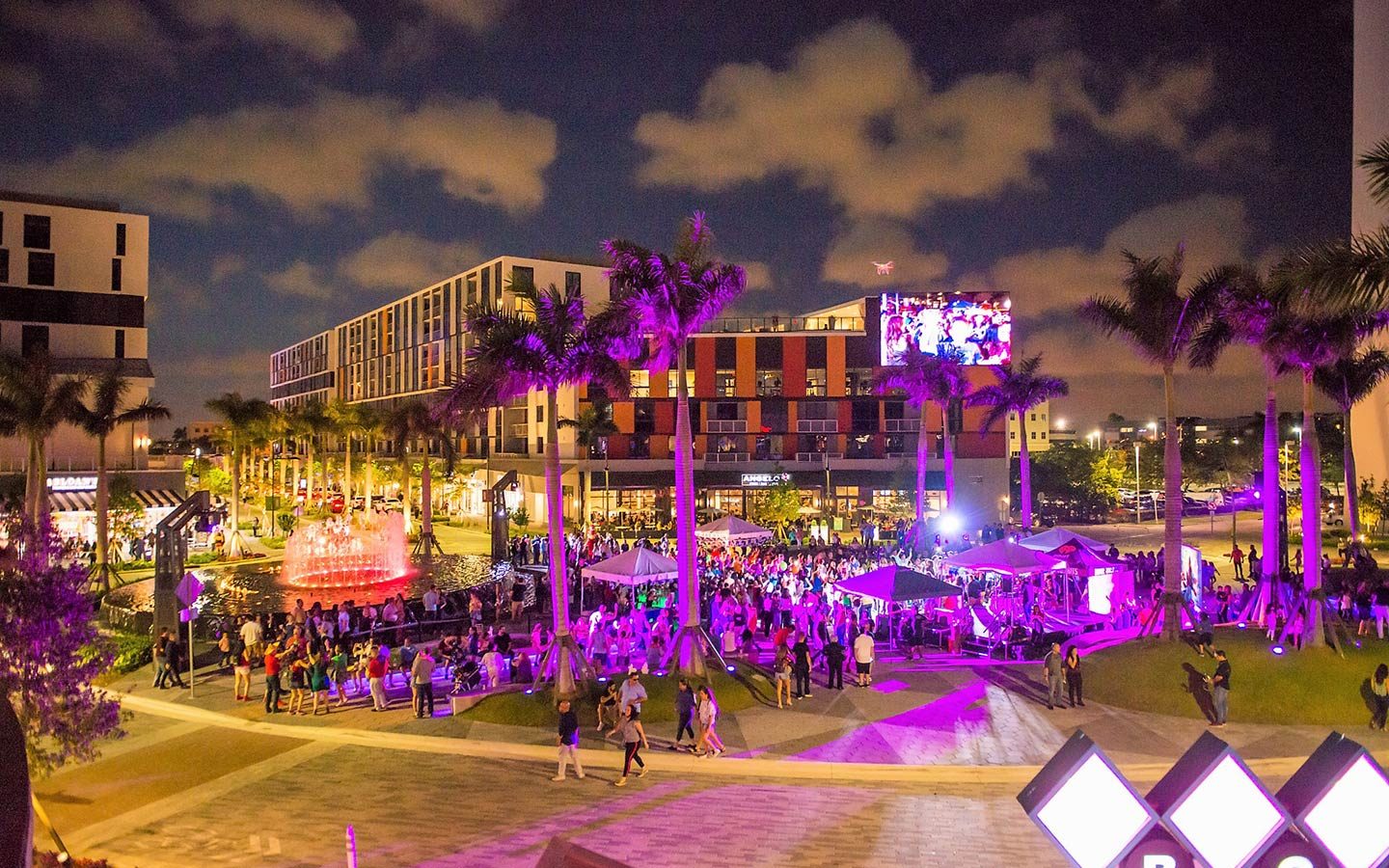
Moving to Doral means moving into one of the only cities in Miami-Dade that was actually planned before it was built. Most South Florida suburbs grew the way suburbs usually do, one subdivision at a time, roads added after the fact, retail chasing rooftops. Doral did it in reverse. The city built a downtown core first, mapped out where the schools, parks, and corporate offices would go, and then let the neighborhoods fill in around that skeleton. That’s the short answer to why Doral feels different from Kendall or Pembroke Pines, and it’s the reason families and professionals keep moving here even as prices have climbed well past what they were a decade ago.
This guide covers what actually matters if you’re considering the move: real neighborhoods, real prices, the school situation, the commute, the HOA and CDD fees nobody explains clearly enough, and who Doral is genuinely a good fit for versus who should look elsewhere.
Why People Are Moving to Doral in 2026
Three things pull people to Doral specifically, not South Florida generally.
The airport. Doral sits directly west of Miami International Airport, which sounds like a downside until you realize how many people in this market travel constantly for work, family in Latin America, or both. A 10 to 15 minute drive to MIA is a real quality-of-life feature for a huge share of Doral’s buyer pool.
The employers. Doral is a genuine job center, not just a bedroom community. Carnival Corporation’s headquarters, Univision, Telemundo, and a dense cluster of logistics, freight, and import/export companies operate along the NW 25th Street and Doral Trade District corridors, feeding off the airport’s cargo operations. A lot of people moving to Doral aren’t commuting into Miami at all, they’re commuting a mile or two within the city.
The Latin American community. Doral has one of the highest concentrations of Venezuelan and Colombian residents in Miami-Dade, to the point where locals half-jokingly call it “Doralzuela.” This isn’t a footnote, it shapes daily life: the restaurants, the churches, the business networks, the language you’ll hear at the park on a Saturday. If you’re relocating from Latin America or you want that cultural fluency built into your neighborhood, Doral delivers it in a way few other Miami-Dade suburbs do.
What Makes Doral a Planned City
Doral was incorporated in 2003, but the defining move came a few years later when the Codina family developed Downtown Doral, a walkable mixed-use district built from scratch on what had been agricultural and warehouse land near NW 53rd Street and 87th Avenue. Downtown Doral wasn’t retrofitted onto an existing street grid, it was designed with a town center, City Hall, a charter elementary school, retail, and residential towers all placed intentionally around a central park.
That master-planned approach is the throughline for everything built in Doral since. New communities go up in phases with parks, schools, and retail planned alongside the housing rather than added years later once residents start complaining about the lack of a grocery store. For a full breakdown of how the city’s growth has unfolded and what’s changed most recently, Doral, Florida: The Complete Relocation Guide for 2026 walks through the city-wide picture in more depth than this piece can.
Doral Neighborhoods: Where People Actually Live
Doral is not one neighborhood, it’s a collection of them, and picking the right one matters as much as picking the right city.
Downtown Doral is the urban core: mid-rise condos and townhomes, walkable to restaurants and a Publix, popular with young professionals and empty nesters who want to ditch the car for daily errands. It’s also home to Downtown Doral Charter Elementary, a draw for families who want walkability without giving up school quality.
Doral Isles and Doral Estates are older, single-family, gated communities on the west side of the city, popular with families who want a yard and a quieter street without leaving Doral’s school zones.
Westview at Doral is one of the newer new-construction communities on the city’s edge, a good example of how Doral keeps expanding its footprint westward as land runs out closer to the core. You can see current inventory and pricing at Westview at Doral.
The Trade District and areas near NW 25th Street skew industrial and commercial, not residential, but they matter because that’s where a lot of Doral’s job base actually works.
For a neighborhood-by-neighborhood comparison with more detail on HOA structures and which pockets fit which lifestyle, see Doral Neighborhoods: Downtown Doral, Doral Isles, and Where to Live.
New Construction and Real Prices in Doral
Doral is still one of Miami-Dade’s most active new-construction markets, which is unusual for a city this built out already. Land is tight, so most of what’s left is infill and westward expansion, but builders keep finding pockets.
Park Central Doral, built by Lennar, is a good current example of what’s available: a 400-unit master plan mixing townhomes and condos, priced roughly $380,000 to $850,000 depending on product type, with a resort-style clubhouse and tennis and basketball facilities. It’s the kind of amenity-heavy package that’s become standard for anything new in Doral.
Expect entry-level attached product (townhomes) to start in the high $300,000s to low $400,000s, with detached single-family and larger floor plans climbing well past $700,000 to $900,000+ depending on lot size and finishes. That’s a meaningfully higher price floor than you’ll find in Homestead or Florida City, and it’s part of why Doral attracts a more established buyer, dual-income professionals and move-up families rather than pure first-time buyers.
If you’re weighing new construction specifically, including which builders are delivering on schedule and what CDD structures look like across current projects, New Construction in Doral: What Is Available and What It Costs goes deeper than the summary here, and First-Time Buyer in Doral: New Construction, Schools, and What to Expect is worth reading if this would be your first home purchase.
Schools: The Real Reason Families Choose Doral
Ask most families why they picked Doral over a comparable Miami-Dade suburb and the answer is schools, specifically the charter school network. Doral Academy and International Studies Charter High School both post strong state assessment scores and college placement numbers, and Ronald W. Reagan/Doral Senior High is one of the stronger traditional public high schools in the county.
What surprises out-of-state buyers is how much school zone research matters here even within Doral itself. Charter school enrollment isn’t purely address-based the way traditional public school zoning is, and lottery and application timelines vary. If schools are your primary driver for the move, don’t assume proximity guarantees a seat, verify current enrollment rules before you commit to a specific neighborhood. The full zoning breakdown and application timelines are covered in Doral Schools: Why Families Move Here for Miami-Dade’s Best Public Education.
Life in Doral: Culture, Golf, and Daily Routine
Doral’s identity is shaped as much by its Latin American population as by its master plan. Venezuelan and Colombian bakeries, arepa spots, and family-owned restaurants are everywhere, not tucked into one strip mall but woven through the whole city. Spanish is functionally the first language in a lot of daily commerce, which is either a huge plus or something to be aware of depending on your background.
Golf is also part of the city’s identity, largely because of Trump National Doral, the resort and golf course that anchors the northern part of the city and has hosted PGA Tour events. It shapes the surrounding real estate too, with several communities built around golf course frontage.
Doral Central Park and Doral Legacy Park handle the day-to-day recreation, youth sports leagues, splash pads, walking trails, dog parks. For families with young kids, the parks system is genuinely one of the stronger ones in Miami-Dade, a direct product of the planned-city approach where green space was mapped in early rather than squeezed in later.
For the fuller picture of what a normal week actually looks like here, from dining to weekend routines, see Life in Doral: Latin Culture, Golf, Dining, and What Day-to-Day Living Is Like.
Commute, Corridors, and Getting Around
Doral’s road network is built around two main arteries: the Palmetto Expressway (826) running north-south along the city’s eastern edge, and the Dolphin Expressway (836) cutting east-west toward downtown Miami and Brickell. NW 25th Street and NW 41st Street (Doral Boulevard) handle most of the internal east-west traffic.
Commute times, realistically:
- To Miami International Airport: 10 to 15 minutes
- To Brickell/downtown Miami: 25 to 35 minutes off-peak, 45+ during rush hour on the 836
- To Miami Beach: 35 to 45 minutes
- To Coral Gables: 20 to 25 minutes
Doral traffic internally has gotten heavier as the city has filled in, particularly along NW 41st Street and around Downtown Doral during lunch and evening rush. It’s not Weston-level congestion, but it’s no longer the quiet suburb it was fifteen years ago.
HOA and CDD Fees: What to Actually Budget For
This is where a lot of buyers get surprised. Nearly every newer Doral community carries either an HOA fee, a CDD assessment, or both, and they’re not small.
HOA fees in established communities like Doral Isles typically run $200 to $450 a month depending on amenities, covering landscaping, gate security, and common area maintenance.
CDD fees (Community Development District assessments) are more common in newer master-planned communities and fund infrastructure like roads, utilities, and drainage that the developer built out. These get added to your property tax bill and can run anywhere from a few hundred to over a thousand dollars a year depending on the community and how the debt is structured. Always ask for the exact CDD payoff schedule before you buy, some are front-loaded and decrease over time, others run flat for 20+ years.
Bottom line: when you’re comparing a $420,000 townhome in one community to a $410,000 townhome in another, the HOA and CDD structure can make the cheaper one actually cost more monthly. Get the exact numbers in writing before you fall in love with a floor plan.
Doral vs. Nearby Suburbs
Doral isn’t the only planned, family-oriented suburb in this part of Miami-Dade and Broward. Weston is the most common comparison, and it’s a fair one: both are master-planned, both have strong schools, both attract a similar buyer profile of professionals and families willing to pay a premium for structure and amenities.
The differences come down to distance to the airport and downtown Miami (Doral wins), the character of the Latin American community (larger and more Venezuelan/Colombian-specific in Doral, more broadly international in Weston), and price per square foot (Weston generally runs higher for comparable single-family product, Doral often edges it out on new-construction townhomes and mid-rise condos).
If you’re actively deciding between the two, Doral vs. Weston: Which Western South Florida Suburb Makes More Sense? breaks down the tradeoffs side by side rather than treating them as interchangeable, which they’re not.
What It Costs to Own, Not Just Buy
Beyond HOA and CDD, budget realistically for Miami-Dade property taxes (roughly 2% of assessed value annually is a reasonable planning number before homestead exemption), homeowners insurance (higher than the national average given hurricane exposure, though newer construction with impact windows and current wind mitigation features typically qualifies for meaningfully better rates), and flood insurance if the property sits in a flood zone, which parts of Doral do given the flat South Florida terrain.
None of this is unique to Doral, but it’s worth stating plainly because buyers moving from lower-tax, lower-insurance states are frequently caught off guard by the total monthly number once taxes and insurance are layered on top of a mortgage payment that looked manageable on its own.
Is Doral a Rental and Investment Market Too?
Yes, and it’s worth understanding even if you’re buying to live in the home. Doral’s rental demand is strong, driven by the same forces that pull buyers here: proximity to the airport and corporate employers, a steady flow of relocating professionals, and international buyers who purchase as investment property rather than primary residence. That demand keeps resale values relatively stable even when the broader Miami-Dade market cools, which matters if you’re weighing Doral against a cheaper suburb with less rental depth. For the actual numbers on rents and cap rates by product type, Doral Investment Property: Rental Market and Returns in 2026 covers it directly.
Where Prices and Conditions Stand Right Now
Doral’s market has cooled from its peak frenzy years but hasn’t collapsed, it’s settled into a more normal pace with more inventory and more negotiating room than buyers had in 2022 and 2023. New construction pricing has held up better than resale in some pockets because builders control the pace of releases and incentives (rate buydowns, closing cost credits) more directly than individual resale sellers can. For a current read on where pricing actually sits and what’s moving fastest, see Doral Real Estate Market Update: Prices and Conditions in Mid-2026.
Who Should Move to Doral, and Who Shouldn’t
Doral makes sense if you travel frequently and want to minimize airport drive time, if you work for one of the corporate or logistics employers based in the city, if you want strong charter and public school options without paying Coral Gables or Pinecrest prices, or if you want to be embedded in a Venezuelan or Colombian community without having to search for it.
Doral makes less sense if you’re chasing the lowest possible price point in Miami-Dade, that’s Homestead or Florida City territory, not Doral. It also makes less sense if you want a beach-adjacent lifestyle or a slower, less commercial feel, Doral is dense, built-up, and increasingly traffic-heavy during peak hours. And if HOA and CDD fees are a dealbreaker for you on principle, most of what’s currently for sale in Doral will frustrate you, since very little inventory here is fee-free.
The Bottom Line
Moving to Doral means buying into Miami-Dade’s most deliberately planned city, and that planning shows up in the schools, the parks, and the way retail and residential were built together instead of bolted on after the fact. It costs more than it used to, HOA and CDD fees are real line items you need to budget for, and traffic has caught up with growth. But for professionals who need airport access, families chasing strong charter schools, and anyone who wants to live inside one of South Florida’s largest Latin American communities, Doral remains one of the clearest, most defensible choices in the county.
If you’re ready to look at specific communities, current pricing, or how Doral stacks up against Weston or another suburb on your shortlist, that’s exactly the kind of decision worth talking through before you make an offer, not after.
More articles you might like
Doral vs. Weston: Which Western South Florida Suburb Makes More Sense?
13 min readDoral, Florida: The Complete Relocation Guide for 2026
13 min readIs Westview at Doral Worth It? An Honest Look at Lennar's Doral Community
13 min readWestview at Doral in Doral: The New Construction Guide (Floor Plans, Pricing, What to Know)
14 min readWestview at Doral Review (2026): Prices, Floor Plans, HOA, CDD, and Who It's For
13 min read