First-Time Buyer in Doral: New Construction, Schools, and What to Expect
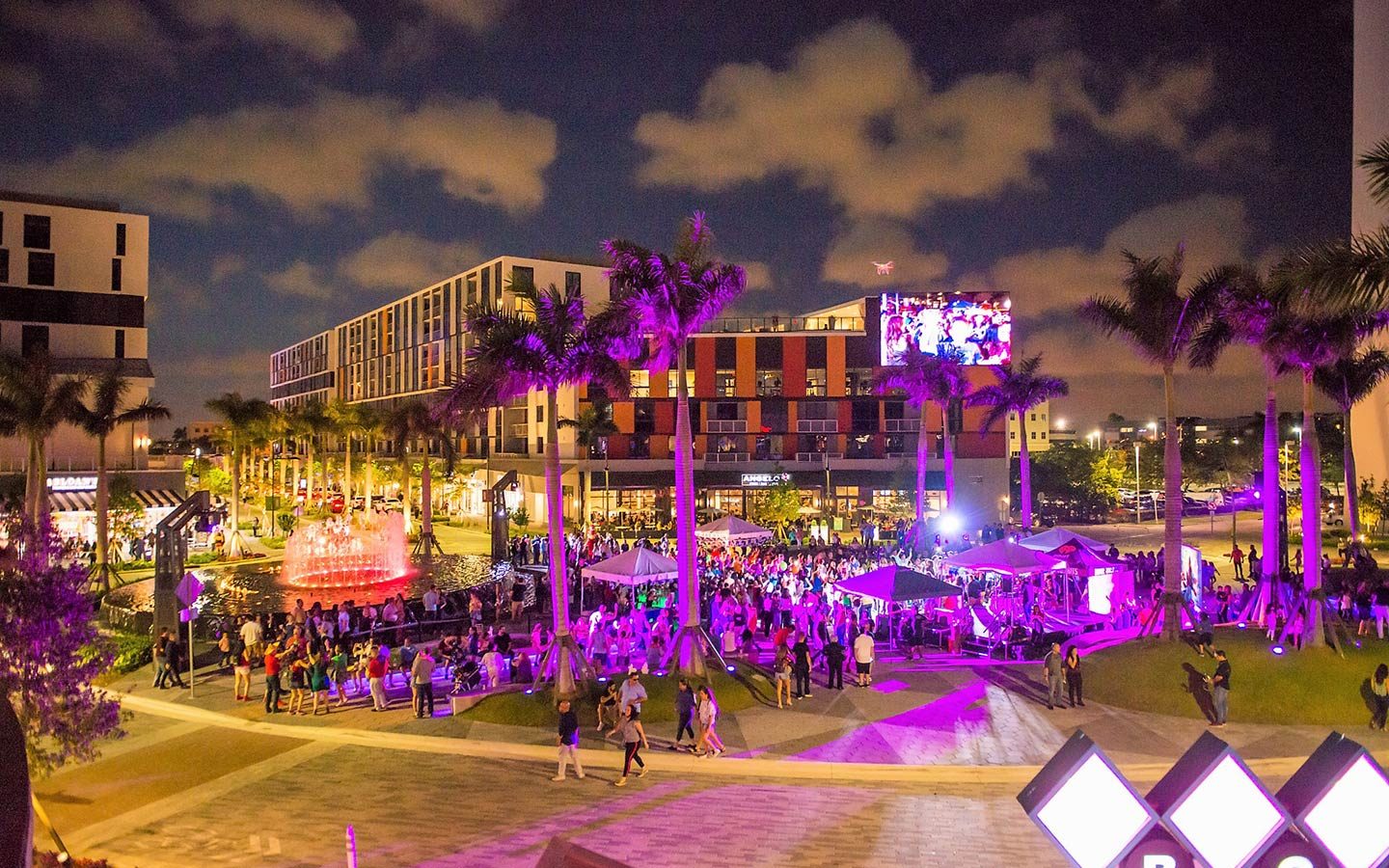
If you’re a first-time buyer weighing Doral, here’s the short version: this is one of the few places left in Miami-Dade where you can still buy brand-new construction, land your kids in a genuinely strong school, and stay inside a reasonable commute to the Miami job corridors, without needing coastal-condo money to do it. That’s the real answer to first-time buyer in Doral new construction schools and what to expect. It’s not cheap. It’s not 2019 pricing. But relative to Brickell, Coral Gables, or the beach cities, Doral is still the most rational entry point into new construction ownership for someone buying their first home in this market.
I’ve walked buyers through this exact decision more times than I can count, and the pattern is always the same. They start looking in Miami proper, get sticker shock, and end up in Doral wondering why they didn’t start there. This guide is the one I wish every first-time buyer read before they started touring model homes.
Why Doral Works for First-Time Buyers
Doral sits west of Miami International Airport, wedged between the Palmetto Expressway and the Turnpike, which means two things that matter a lot to a first-time buyer: builders still have land to work with, and you’re not paying a “walk to the water” premium baked into every unit.
That combination is rare in Miami-Dade in 2026. Most of the county’s new construction pipeline has shifted to infill high-rises or ultra-luxury product. Doral still has active, ground-up communities delivering townhomes and single-family homes in a price band a W-2 buyer with a conventional or FHA loan can actually reach. For a full breakdown of what’s on the market right now, see New Construction in Doral: What Is Available and What It Costs.
The commute math is worth spelling out, because it’s the other half of the “why Doral” argument. Off-peak, Doral to Brickell via the Dolphin Expressway (836) runs about 15 to 20 minutes. During morning rush hour, especially heading east toward Downtown or Brickell between 7:30 and 9 a.m., that stretches to 35 to 45 minutes, sometimes longer if there’s an accident on 836 near the 826 interchange. Compare that to a Weston or Pembroke Pines commute into the same job corridor, which regularly runs 50 minutes to an hour each way once you’re on I-95 during peak traffic. If your job is anchored in Brickell, Downtown Miami, Coral Gables, or the airport area itself, Doral’s location is genuinely a structural advantage, not just a marketing line.
The other reason Doral keeps coming up for first-timers is schools. Miami-Dade County Public Schools has a handful of pockets where the charter and public options are genuinely strong, and Doral is one of them. I’ll get specific on that below, because “good schools” is a phrase real estate content throws around without ever explaining what it means logistically.
What “New Construction” Actually Costs in Doral Right Now
This is where I need to be honest with you, because most Doral content glosses over the range. “New construction in Doral” spans nearly $2 million in price depending on which community you’re looking at. If you walk in without knowing that, you’ll either waste time touring product you can’t afford or assume Doral is out of reach when it isn’t.
The accessible entry point: Park Central Doral
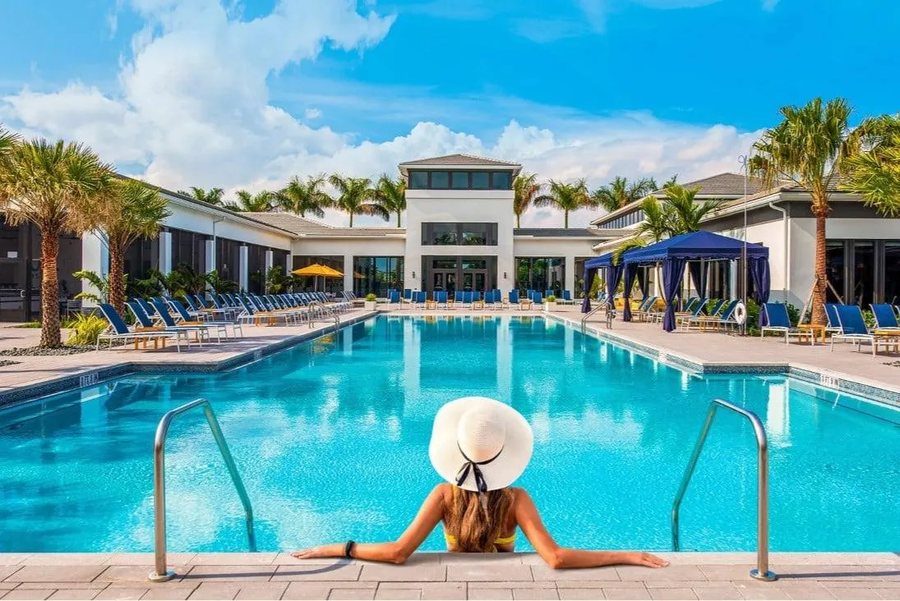
Built by Lennar, Park Central Doral is a mixed-product community of townhomes and condos priced from roughly $380,000 to $850,000, with about 400 units in the master plan. This is the community I point most true first-time buyers toward first. It’s actively selling, it includes a resort-style clubhouse with tennis and basketball courts, and the price floor is realistic for a buyer putting down 5 to 10 percent on an FHA or conventional loan.
If your budget tops out in the $400,000 to $550,000 range, this is likely your realistic ceiling for brand-new construction in Doral proper. Below that, you’re looking at resale, not new build.
To make that concrete, here’s a rough monthly payment sketch on a $420,000 Park Central townhome with 5 percent down (FHA), a 30-year fixed rate, and Florida’s current property tax and insurance environment: principal and interest run somewhere in the $2,600 to $2,800 range depending on the rate you lock, property taxes add roughly $500 to $600 a month once the homestead exemption kicks in for year two, homeowners insurance in Doral (which is inland and outside the highest wind zones, a genuine advantage over coastal Miami-Dade) typically runs $180 to $280 a month, PMI on an FHA loan adds another $250 to $300, and HOA dues layer on top of all of that. All in, you’re realistically looking at $3,800 to $4,200 a month before you’ve even priced a CDD assessment. That number matters more than the sticker price, and almost no one walks into a model home already knowing it.
Move-up territory: Landmark, Canarias, Modern Doral, and Oasis Park Square
Once you clear roughly $700,000, the field opens up considerably, but this is move-up buyer territory, not typical first-timer territory:
- Landmark Doral (Lennar): gated, three-level luxury townhomes, $700,000 to $1,200,000, some floor plans with private rooftop terraces, about 350 units.
- Canarias at Downtown Doral (CC Homes): single-family estates and townhomes, $900,000 to $2,100,000, roughly 343 units, positioned within the walkable Downtown Doral core and close to Downtown Doral Charter Elementary School.
- Modern Doral (Lennar): gated enclave of ultra-modern single-family estates starting around $1,200,000, currently in its final construction phases with about 319 total homes.
- Oasis Park Square (Shoma Group): boutique luxury townhomes starting around $1,000,000, still under construction, roughly 150 units, with private rooftop patios and summer kitchens near the major highway corridors.
I list these not to discourage you but so you know exactly where the line is. If a lender pre-approves you north of $700,000, you have real options beyond Park Central. If you’re closer to $400,000 to $500,000, don’t let a listing agent walk you into Modern Doral pricing and tell you “there’s nothing else.” There is, it’s just a smaller pool.
It’s also worth checking a specific project like Westview at Doral directly, since availability and pricing shift by the month as builders release new phases and close out old ones. What’s listed as “actively selling” today can sell out or reprice within a quarter.
Financing notes specific to first-time buyers in Doral
A few things worth knowing before you start the pre-approval conversation. FHA loan limits for Miami-Dade County are set higher than the national baseline because Miami-Dade is classified as a high-cost area, which is part of why FHA financing works on more of Doral’s new construction than people assume, especially in the Park Central price band. Florida’s Hometown Heroes program is also worth asking your lender about if you work in an eligible profession (teachers, first responders, healthcare workers, and a long list of others qualify), since it can help with down payment and closing cost assistance on top of FHA or conventional financing. Builders in Doral also routinely offer their own incentives, rate buydowns, closing cost credits, or design center credits, but those incentives are usually tied to using the builder’s preferred lender. It’s worth getting a competing quote from your own lender before you assume the builder’s incentive is actually the better deal once you account for the rate difference.
The School Reality: What You’re Actually Buying Into
Here’s what most Doral content won’t tell you plainly: the schools that make Doral famous, Doral Academy, International Studies Charter High School, and similar options, are charter schools, not your neighborhood zoned public school. That distinction matters enormously for a first-time buyer.
Charter schools in Florida generally run on an application and lottery system. Living inside Doral’s city limits does not automatically guarantee your child a seat. Siblings of current students and, in some cases, employees of the charter network get priority, but a new family moving in from out of state or out of county is entering the same lottery pool as everyone else applying.
What Doral does offer, separate from the charter lottery, is Downtown Doral Charter Elementary School, which several of the newer communities (Canarias among them) market proximity to directly, and the zoned Miami-Dade public schools that serve the area, including Ronald W. Reagan/Doral Senior High. These zoned schools carry solid ratings by Miami-Dade standards, and unlike the charters, your address determines your seat, not a lottery number.
The practical takeaway: if a specific charter school is the reason you’re buying in Doral, apply for the lottery before you close on a house, not after. I’ve seen buyers purchase a $600,000 townhome assuming their child would get into a particular charter school, only to find out months later they didn’t get a seat and are now zoned for a school they never researched. For the full picture on which schools serve which neighborhoods, read Doral Schools: Why Families Move Here for Miami-Dade’s Best Public Education.
What “top schools” actually buys you day to day
Beyond test scores, what families are really buying is consistency. Doral’s charter network schools tend to have longer waitlists precisely because turnover is lower, which means more stable classroom cohorts and, anecdotally, less disruption year over year compared to some zoned schools elsewhere in the county. That stability is worth something to a first-time buyer thinking 5 to 10 years out, but it’s not a guarantee, and it’s not free. Expect Doral Academy and similar charters to require an application window that opens well before the school year, often as early as January or February for the following fall.
If you’re relocating from out of state and timing your move around a school year, this is the single most common mistake I see. Families close on a home in June or July assuming they can enroll their child in a Doral charter that fall, not realizing the lottery window closed back in February. If school certainty is more important to your family than the specific charter brand name, ask about the zoned public school for whichever community you’re touring before you fall in love with a floor plan. A guaranteed seat at a solid zoned school often beats a lottery shot at a marquee charter.
HOA and CDD Fees: The Number First-Time Buyers Miss
This is the section that catches almost every first-time buyer off guard, and it’s the one I push hardest on. New construction in Doral almost always comes with a Homeowners Association fee, and depending on the community, a Community Development District (CDD) assessment layered on top.
Realistic ranges for the communities above:
- HOA dues typically run $250 to $600 per month depending on the amenity package. A community like Park Central Doral, with its grand clubhouse, tennis courts, and basketball facilities, will sit toward the middle to higher end of that range. A gated single-family community like Modern Doral, with less shared amenity space per household but private security and landscaping, can run comparably high.
- CDD assessments, where they apply, are a separate line item that funds the infrastructure the developer built (roads, drainage, utilities) and gets paid back over 20 to 30 years. This shows up on your property tax bill, not your HOA statement, and it’s easy to miss if you’re only looking at the HOA disclosure.
Before you write an offer on any new construction unit in Doral, ask for three documents: the HOA’s current budget, the reserve study (or confirmation there isn’t one, which is its own red flag), and, if applicable, the CDD assessment schedule showing what you’ll owe this year versus in year five. A $420,000 townhome with a $180 HOA fee and no CDD is a fundamentally different monthly payment than a $420,000 townhome with a $450 HOA fee and a $2,200 annual CDD assessment. Both exist in Doral. Don’t assume; ask.
Here’s how that plays out in real dollars over a decade of ownership. Take two identical $420,000 townhomes in different Doral communities. Unit A has a $200 monthly HOA and no CDD. Unit B has a $420 monthly HOA and a $2,400 annual CDD assessment that steps up slightly in years three and six as the district refinances its bond. Over ten years, Unit A costs roughly $24,000 in HOA fees and nothing else. Unit B costs roughly $50,000 in HOA fees plus somewhere north of $25,000 in CDD assessments, closer to $75,000 total. That’s a $50,000 gap on two homes that might list for the exact same price. First-time buyers almost never run this math before they buy, and it’s the single biggest reason a “great deal” on paper turns into a monthly budget squeeze eighteen months in.
Doral vs. the Alternatives
If you’re cross-shopping, you’re probably also looking at Weston, Pembroke Pines, or Miramar, all of which offer their own version of new construction with good schools west of I-95. The honest comparison: Doral gets you closer to the Miami job corridor and the airport, at a real price premium over Broward suburbs for comparable square footage. Weston’s zoned public schools are genuinely strong without the charter lottery complication, which is worth weighing if school certainty matters more to you than commute time. I break this comparison down in detail in Doral vs. Weston: Which Western South Florida Suburb Makes More Sense?
Pembroke Pines and Miramar tend to run 10 to 20 percent cheaper than comparable Doral product for similar square footage and finish level, and both have their own newer master-planned communities with A-rated zoned schools, no lottery required. What you give up is the short commute. A Miramar or Pembroke Pines resident working in Brickell is realistically looking at 45 minutes to an hour during peak traffic on I-95 or the Turnpike, versus Doral’s 20 to 40 minutes on 836. If your job lets you work hybrid or your commute is flexible, that Broward price gap is hard to argue with. If you’re in the office five days a week in Brickell or Downtown, the time you save living in Doral adds up fast, five extra hours a week is real, and for a lot of buyers that’s worth the premium.
Within Doral itself, where you buy matters almost as much as what you buy. Downtown Doral’s walkable core commands a premium over the more suburban pockets near the Trump National Doral golf corridor. If you haven’t settled on a specific pocket yet, Doral Neighborhoods: Downtown Doral, Doral Isles, and Where to Live in 2026 is worth reading before you tour anything.
The Buying Process: What to Expect Step by Step
For a first-time buyer, purchasing new construction is a different process than buying resale, and the timeline surprises people.
- Get pre-approved before you tour a model home. Builder sales reps work for the builder, not you. They will happily walk you through options above your budget if they don’t know your number.
- Understand you’re often buying from a plan, not a finished unit. Depending on the phase, your townhome or single-family home may not exist yet. Closing timelines of 6 to 14 months from contract are common in Doral’s active communities.
- Get your own inspector, even on new construction. Florida’s new-home warranty covers structural issues, but workmanship gaps (electrical, plumbing, finish work) are common enough that a third-party inspection before your final walkthrough is worth the few hundred dollars.
- Read the builder’s purchase contract closely, or better, have your own agent negotiate for you. Builder contracts are written to protect the builder. Buyer’s agent representation costs a first-time buyer nothing out of pocket in the vast majority of these deals, since the builder pays the commission.
- Factor in the CDD and HOA ramp-up. Some CDD assessments increase in year two or three as the district pays down more of the bond. Ask what the schedule looks like five years out, not just this year.
- Budget for the close-out phase risk. Communities like Modern Doral, in their final phases, may have fewer floor plan choices and less negotiating room than a community that just broke ground. Earlier-phase communities like Oasis Park Square may offer more flexibility but carry more construction timeline uncertainty.
- Shop your homeowners insurance early, not at the last minute. South Florida’s insurance market has stabilized somewhat compared to a few years ago, but it’s still worth getting quotes from two or three carriers before you’re under contract, not during your loan’s ten-day option period when you have no leverage. Doral’s inland location generally means lower wind mitigation costs than coastal Miami-Dade, but rates still vary meaningfully by carrier and by community.
- Ask what’s actually included versus what’s a design center upsell. Builder base pricing in Doral often excludes things buyers assume are standard, window treatments, backsplash, upgraded flooring, and even some appliances in certain communities. Walk the design center with a number in mind for upgrades, because it’s easy to add $20,000 to $40,000 to a base price without noticing until the final contract.
If you want the bigger-picture context on how Doral fits into a relocation decision, not just a new-construction decision, Doral, Florida: The Complete Relocation Guide for 2026 covers commute patterns, cost of living, and the broader lifestyle case.
Who Doral Actually Fits (and Who It Doesn’t)
Doral makes the most sense for a first-time buyer who works in or regularly commutes to the Miami job corridor (Brickell, Downtown, the airport area, or nearby office parks), wants brand-new construction over a renovated resale, and can comfortably clear a $380,000 to $550,000 budget once HOA and CDD costs are priced in. It also fits families specifically targeting the Doral charter school ecosystem, provided they understand the lottery process going in.
It fits less well for a buyer whose job is anchored in Broward or Palm Beach, where the daily commute against Doral’s airport-adjacent traffic will wear thin fast, and for buyers who need a sub-$350,000 entry point, since that price point in Doral generally means older resale product, not new construction.
A couple of real scenarios I run into often help clarify this. A young couple, both working hybrid schedules with one office day a week in Brickell, comfortably qualifies for a $450,000 FHA loan. Park Central Doral is close to a perfect fit for them, both on price and commute tolerance. Compare that to a family of four relocating from out of state, one parent working fully remote and the other commuting daily to Aventura. For them, the Doral commute works against the Aventura-bound parent, and Weston or even parts of Broward might genuinely serve them better despite Doral’s schools being the more famous name. The right answer depends on whose commute you’re optimizing for, not just which city has the best marketing.
The Bottom Line
Doral remains one of the more honest new-construction stories left in Miami-Dade for a first-time buyer, mainly because Park Central Doral still exists at a real, reachable price point while the rest of the market has moved upmarket around it. The schools are strong but not automatic, the HOA and CDD fees are real and worth pricing out before you fall in love with a floor plan, and the commute math only works if your job is on the right side of the county.
If you’re serious about buying your first new-construction home in Doral, the next step is simple: get pre-approved, figure out your real number after HOA and CDD costs, and tour Park Central Doral and one or two of the move-up communities so you can see the price gap in person. That’s usually the moment it clicks for people, one way or the other.
If you want to talk through your specific budget and which Doral community actually fits it, reach out and I’ll walk you through what’s available right now.
More articles you might like
Is Westview at Doral Worth It? An Honest Look at Lennar's Doral Community
13 min readWestview at Doral in Doral: The New Construction Guide (Floor Plans, Pricing, What to Know)
14 min readWestview at Doral Review (2026): Prices, Floor Plans, HOA, CDD, and Who It's For
13 min readDoral vs Coral Gables: Two Very Different Versions of Miami-Dade Living
17 min readDoral vs. Weston: Which Western South Florida Suburb Makes More Sense?
13 min read