Doral vs Coral Gables: Two Very Different Versions of Miami-Dade Living
Doral vs Coral Gables: Two Very Different Versions of Miami-Dade Living
Doral vs Coral Gables is one of the most common comparisons we get from buyers relocating to Miami-Dade County, and it usually comes from people who assume the two suburbs are more similar than they actually are. They are not. Doral is new construction, international business, and a suburb still being built in real time. Coral Gables is a century-old planned city with deed restrictions, mature banyan trees, and Mediterranean Revival architecture that hasn’t changed its character since George Merrick laid it out in the 1920s. Picking between them isn’t really about which one is “better.” It’s about which version of Miami-Dade living actually fits how you want to live.
We get this question from two very different types of buyers. One is a relocating professional who found both names on a map, saw similar drive times to Brickell, and assumed the decision came down to price alone. The other has already lived in Miami-Dade for years and is trying to decide whether to trade an older Gables home for a newer Doral build, or the reverse. Both buyers need the same information, they just weigh it differently.
This guide breaks down the real differences: price, architecture, schools, commute, HOA and CDD structures, and day-to-day lifestyle, so you can make an informed decision instead of guessing based on Instagram photos.
Doral vs Coral Gables: The Short Version
If you want new construction, a lower buy-in, proximity to Miami International Airport, and a community built around Latin American business and culture, Doral is your market. If you want architectural history, walkability, mature landscaping, and a name that carries generational prestige in Miami-Dade, Coral Gables is your market. Almost every other difference between the two suburbs flows from that core distinction.
We’ve written a full breakdown of this exact matchup before in Doral vs. Coral Gables: Two Very Different Versions of Miami-Dade Living, and the conclusion hasn’t changed with more data: these are two different buyer profiles, not two competing versions of the same suburb.
Doral: New Construction Energy Built Around Business
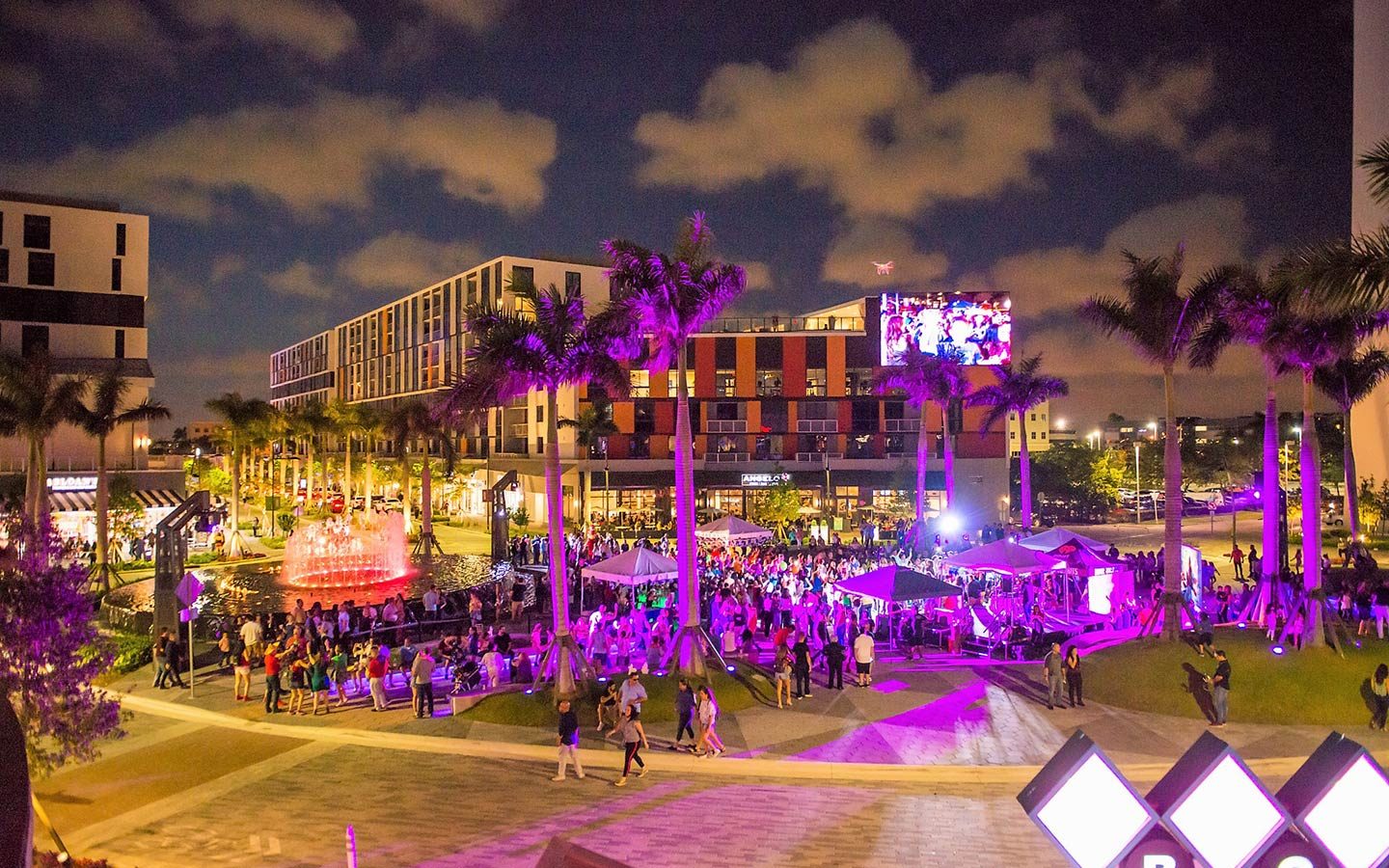
Doral did not exist as a recognizable residential suburb until the 1990s and 2000s, and most of its growth has happened in the last fifteen years. Anchored by Trump National Doral’s golf courses on one end and the Miami International Mall corridor on the other, Doral has built its identity around three things: proximity to Miami International Airport, a dense concentration of international corporate offices (Doral is home to Latin American headquarters for companies ranging from banks to logistics firms), and an ongoing wave of new construction.
What Doral Actually Costs
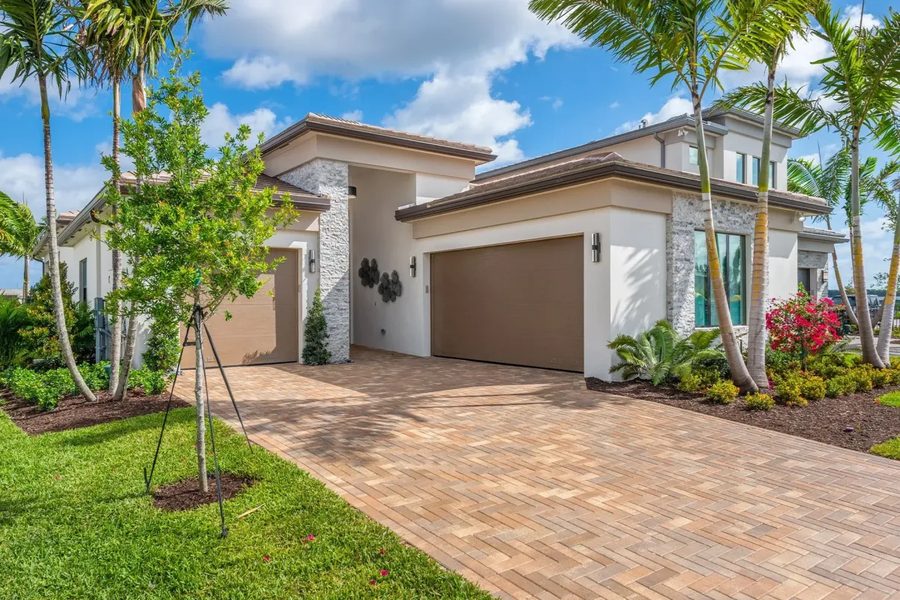
New construction townhomes in Doral typically start in the $400,000s to $500,000s depending on builder and square footage. Single-family homes in communities built over the last five to ten years generally run $700,000 to $1.3 million, with larger executive homes and newer luxury sections pushing past $1.5 million. Developments like Westview at Doral represent the kind of product that defines the current Doral market: modern floor plans, resort-style amenity centers, and pricing aimed at move-up buyers and relocating professionals rather than entry-level shoppers.
Almost every new Doral community comes with an HOA, and many of the newer ones layer a CDD (Community Development District) fee on top to fund roads, drainage, and amenities. Buyers coming from states without CDDs are often surprised to see this as a separate line item from property taxes, sometimes adding $1,500 to $3,500 or more per year depending on the community and how much infrastructure debt is still being paid down. That CDD number isn’t fixed either. It’s tied to a bond that gets paid down over time, so a five-year-old community in Doral can carry a meaningfully higher CDD payment than one that broke ground fifteen years ago and already retired most of its debt. Ask for the current CDD assessment schedule before you fall in love with the base price on a builder’s website, because the “starting at” number almost never includes it.
We cover this in more detail in New Construction in Doral: What Is Available and What It Costs in 2026.
Doral’s Neighborhood Layout
Doral isn’t one uniform product. Downtown Doral functions almost like a mixed-use town center with condos, townhomes, and retail built for walkability. Doral Isles and the communities off NW 41st Street and NW 58th Street lean more traditional suburban, with single-family homes on quiet interior streets. CityPlace Doral and the newer western sections closer to the Everglades edge are where most of the active new construction is happening right now. If you’re trying to figure out which pocket fits your budget and lifestyle, Doral Neighborhoods: Downtown Doral, Doral Isles, and Where to Live in 2026 breaks each one down individually.
The practical difference between these pockets matters more than most buyers expect going in. A townhome in Downtown Doral puts you in walking distance of restaurants and a Saturday farmers market, but you’re living closer to retail traffic and shared walls. A single-family home off NW 58th Street gets you a yard and more separation from neighbors, but you’re driving to everything. The western new-build sections trade some of that convenience for the newest floor plans and the lowest price per square foot Doral currently offers, with the tradeoff being construction equipment and unfinished roads as a neighbor for a year or two while the rest of the community builds out around you.
Doral’s Schools and Demographics
Doral Academy (multiple campuses) and other charter options have become a major draw for families relocating specifically for school choice, alongside strong zoned public options. The population skews heavily toward Venezuelan, Colombian, and other Latin American professional families, many relocating for corporate transfers or business ownership. English and Spanish are both functionally the default language of daily life, from grocery stores to real estate closings.
Because charter school demand in Doral runs high, seat availability at some Doral Academy campuses is a real planning issue, not a formality. Families relocating with school-age kids should be applying and checking lottery timelines months before closing on a home, not after. This is one of the more common mistakes we see with out-of-state buyers who assume enrollment works the same way it did back home.
Coral Gables: A Century of Mediterranean Discipline
Coral Gables is different in a way that isn’t marketing language, it’s zoning code. George Merrick planned Coral Gables in the 1920s as one of America’s first fully master-planned cities, and the architectural review board still enforces Mediterranean Revival design standards on new construction and major renovations today. That means the character you see driving down Coral Way or through the Biltmore area isn’t an accident of history, it’s an actively maintained standard.
What Coral Gables Actually Costs
Coral Gables carries a meaningfully higher price floor than Doral. Non-waterfront single-family homes in established sections typically start above $1 million, with well-located homes near Granada Golf Course, the Biltmore Hotel, or the University of Miami running $1.5 million to $2.5 million. Gables Estates and the waterfront enclaves near Old Cutler Road regularly see sales in the $3 million to $8 million-plus range for larger estate lots with deep water access. There is very little true entry-level product left in the city limits; even smaller original 1920s-1950s homes on interior streets have been pushed up by renovation and land value.
On the condo side, the story is similar. New boutique product coming out of the ground right now is priced for buyers who already have significant equity, not first-time owners. The George, a 13-unit ultra-exclusive boutique condo from MG Developer near Coral Gables’ core, is pricing units at $1.5 million and up, with delivery targeted for 2027. That single project tells you most of what you need to know about where new Coral Gables inventory sits on the price ladder: small, architecturally deliberate, and expensive.
Unlike most of Doral, the majority of Coral Gables single-family homes do not carry an HOA at all, since they’re simply part of the incorporated City of Coral Gables and subject to city code rather than a private association. CDD fees are essentially nonexistent here because there’s no new-build infrastructure being financed the way there is in Doral’s expansion zones. The main private HOA structures show up in gated developments like Gables Estates and a handful of newer condo buildings. What buyers pay instead is a higher millage rate tied to city services and, in some cases, a special assessment if a condo building needs structural work, which has become a bigger conversation across Miami-Dade since the post-Surfside reserve requirements went into effect.
Coral Gables’ Architecture and Character
This is where Coral Gables genuinely separates itself. Barrel-tile roofs, stucco facades, arched windows, and courtyard-style layouts aren’t optional design flourishes here, they’re the baseline the architectural board expects. The city’s tree canopy, largely mature live oaks and banyans planted decades ago, creates a shaded, walkable feel that a fifteen-year-old Doral community simply cannot replicate no matter how nice the landscaping package is. Merrick Park adds a genuine upscale retail and dining corridor within walking distance of several residential sections, something Doral is still building toward with its own town center concept.
That architectural review board cuts both ways for buyers. It protects resale value and keeps the neighborhood from looking like anything built anywhere else in Miami-Dade, but it also means renovation projects in Coral Gables take longer and cost more to approve than the same project would in Doral. Swapping windows, changing a roofline, or adding a second story on a historic-adjacent street can mean an extra design review cycle that a Doral HOA architectural committee simply doesn’t require. Buyers used to a fast permitting process elsewhere need to build that timeline into their expectations before they close.
Coral Gables’ Schools and Demographics
Coral Gables Senior High and the surrounding zoned schools carry long-established reputations, and the presence of the University of Miami shapes the surrounding rental and ownership market, particularly in areas closer to campus. The buyer profile here skews toward established professionals, multi-generational Miami families, and international buyers purchasing for prestige and stability rather than proximity to a specific employer.
Doral vs Coral Gables: Commute and Location
Doral’s biggest functional advantage is proximity to Miami International Airport and the Dolphin Expressway (SR 836), making it a genuinely easy commute to Downtown Miami, Brickell, and the airport itself, which matters enormously for frequent international travelers. Coral Gables sits closer to Downtown Miami and Brickell geographically but its street grid and lower speed limits mean the drive can feel slower even when the mileage is shorter. If your work involves regular flights, Doral wins outright. If your work is centered in Brickell, Downtown, or Coconut Grove, Coral Gables’ location often makes more practical sense day to day.
There’s a parking and street-design difference here too that doesn’t show up on a commute map. Coral Gables was designed before the car dominated daily life the way it does now, so many interior streets are narrow, tree-lined, and not built for heavy through traffic, which is part of the charm but also means street parking near Giralda Avenue or the Biltmore area gets tight on weekends. Doral’s newer grid, especially around Downtown Doral and the retail corridors on NW 41st Street, was built with parking garages and wider roads in mind from day one, since the whole suburb went up during the era of car-first suburban planning.
Doral vs Coral Gables: New Construction vs Renovation Reality
This is the split that matters most for buyers trying to decide. In Doral, you are almost always buying new or near-new product: modern electrical, impact windows as a baseline, open floor plans, and builder warranties. The tradeoff is HOA and CDD fees, less architectural variety, and a suburb that in some pockets is still under active construction around you.
In Coral Gables, you are usually buying into an older home, sometimes original 1920s-1950s construction, sometimes a 1980s-2000s rebuild on a historic lot. That means more renovation cost and more due diligence on roof age, plumbing, and electrical, but you’re also buying land and location value in a city that isn’t building new inventory at any real scale. There is very little true new construction left inside Coral Gables city limits, aside from occasional infill and boutique condo projects like The George near Coral Way and the Gables’ eastern edge.
For buyers weighing the actual dollars here, run the math both ways before you decide “older home for less” is the cheaper path. A 1950s Coral Gables home with an original barrel-tile roof can need $40,000 to $80,000 in roof work alone before insurance will even renew coverage at a reasonable rate, and that’s before you look at galvanized plumbing or an electrical panel that hasn’t been touched since the Ford administration. A Doral new build has none of that risk in year one, but you’re paying for it every month through the HOA and CDD line items instead of in one lump sum at closing. Neither structure is objectively cheaper, they just move the cost to a different part of the ownership timeline.
A Buyer Scenario: Two Families, Same Budget
Picture two families relocating to Miami-Dade with roughly the same $1.1 million budget. Family A wants a four-bedroom home with a home office, is not attached to a specific school zone, and travels internationally for work several times a month. Family B has lived in Miami-Dade before, wants to be near family in the Gables, and is comfortable spending weekends on renovation projects.
Family A is almost always better served in Doral. That budget buys a larger, newer executive home with modern systems, puts them minutes from the airport, and gets them into a growing community with amenity centers built for a young family. Family B is better served in Coral Gables, even if that same $1.1 million buys a smaller, older home that needs work. They’re not buying square footage, they’re buying a walk to Merrick Park, a zoned high school with a long track record, and a piece of a city that has held its value through every Miami-Dade downturn since the 1920s. Same budget, same county, completely different homes because the buyers wanted different things.
Which Buyer Fits Which Suburb
Doral makes sense if: you want new construction with modern systems and warranties, you fly frequently and want airport proximity, you’re relocating for a corporate role tied to Doral’s business corridor, or your budget tops out somewhere between $500,000 and $1.3 million. First-time buyers in particular tend to gravitate here because the new construction financing and warranty structure removes a lot of the guesswork. We wrote a dedicated breakdown for that exact buyer in First-Time Buyer in Doral: New Construction, Schools, and What to Expect.
Coral Gables makes sense if: you want architectural character and are willing to pay for it, you value walkability to Merrick Park and the Biltmore area, you’re not chasing new construction and are comfortable with renovation, or your budget realistically starts above $1 million. Buyers relocating for prestige, multi-generational family proximity, or University of Miami ties tend to end up here.
The Investment Angle
Doral has been a stronger play for rental yield and appreciation velocity over the last decade simply because of the volume of new construction and the corporate relocation demand feeding it. Investors chasing cash flow and shorter-term appreciation from a lower basis have generally done well here, and the ongoing development pipeline means demand isn’t slowing. For a full look at what returns actually look like, see Doral Investment Property: Rental Market and Returns in 2026.
Coral Gables plays a different game entirely: it’s a wealth preservation market more than a cash flow market. High buy-in, lower rental yield relative to purchase price, but historically resilient value retention because the city strictly limits how much new supply can ever enter the market. That supply constraint is the whole thesis. Merrick’s original plan and the architectural review board that still enforces it mean Coral Gables will never see the kind of construction wave that Doral is living through right now, so every home already inside the city limits benefits from genuine scarcity. If your goal is speculative growth, Doral has more room to run. If your goal is capital preservation in one of Miami-Dade’s most established addresses, Coral Gables has a longer track record of holding value through downturns, including 2008, when Gables values corrected less severely and recovered faster than most of the rest of the county.
Day-to-Day Living: What It Actually Feels Like
Doral feels like a suburb still writing its own story. New restaurants, new retail centers, and new residential phases are opening constantly, and there’s a genuine energy to that if you like being part of a growing community. The tradeoff is that construction traffic and ongoing development are part of daily life in the newer western sections. For a closer look at what a typical week looks like for a Doral resident, from the Latin food scene to the golf courses to weekend routines, check out Life in Doral: Latin Culture, Golf, Dining, and What Day-to-Day Living Is Like.
Coral Gables feels finished, in the best sense of the word. The infrastructure, tree canopy, and retail corridors have had a century to mature, and the pace of daily life reflects that. Sunday mornings on Giralda Avenue, the Biltmore’s golf course, and the walk from a residential street to Merrick Park all carry a sense of permanence that a fifteen-year-old master-planned Doral community hasn’t earned yet, and structurally can’t earn for a few more decades. Even something as simple as picking up dinner plays out differently between the two: in Doral you’re likely driving to a shopping center with a rotating mix of newer restaurants, in Coral Gables you’re more likely walking to a restaurant that has been in the same storefront for twenty years.
If You’re Still Comparing Other Suburbs
Doral and Coral Gables aren’t the only two options worth weighing if you’re relocating into western or central Miami-Dade. If your search radius includes Broward’s western suburbs, we’ve also put together Doral vs. Weston: Which Western South Florida Suburb Makes More Sense?, which handles a comparison with a very different price point and commute profile. And if you’re still early in deciding whether Doral is even the right metro-area suburb for you at all, start with Doral, Florida: The Complete Relocation Guide for 2026 before narrowing down to a specific community.
For buyers tracking where prices actually sit right now rather than working off national headlines, Doral Real Estate Market Update: Prices and Conditions in Mid-2026 has the current on-the-ground numbers.
The Bottom Line
Doral vs Coral Gables isn’t a close call once you’re honest about what you actually want. Doral is the right answer if new construction, airport proximity, and a lower entry price matter more to you than history and walkability. Coral Gables is the right answer if you’re buying into a century of established character and can afford the price that comes with it. Both are legitimate, strong Miami-Dade markets. They just serve completely different versions of what “living well in Miami-Dade” means.
If you’re weighing this decision for your own relocation or purchase, send a message with “DORAL” or “GABLES” and we’ll walk through current inventory, HOA and CDD specifics for the communities you’re considering, and realistic numbers for your budget.

More articles you might like
Is Westview at Doral Worth It? An Honest Look at Lennar's Doral Community
13 min readWestview at Doral in Doral: The New Construction Guide (Floor Plans, Pricing, What to Know)
14 min readWestview at Doral Review (2026): Prices, Floor Plans, HOA, CDD, and Who It's For
13 min readDoral vs. Weston: Which Western South Florida Suburb Makes More Sense?
13 min readDoral, Florida: The Complete Relocation Guide for 2026
13 min read