Gulf Stream, FL Real Estate Market 2026: Prices, Trends & What Buyers Should Expect
Gulf Stream, FL real estate in 2026 comes down to one word: scarcity. This is not a market with dozens of active listings to compare or a builder pumping out new inventory every quarter. It’s an incorporated town of roughly 800 to 900 year-round residents wedged between Delray Beach and Ocean Ridge, and in a typical month you might find a dozen homes for sale across the entire town. If you’re researching gulf stream fl real estate market 2026 prices trends and what buyers should expect, here’s the honest version: prices start around $2.5 million for an interior lot and climb past $10 million on the water, inventory is thin by design, and the town’s own building code controls what gets built more than any developer does.
This guide replaces the old, thinner version of this post with a deeper, more current look at pricing, inventory, the town’s architectural rules, who actually buys here, and what to expect if Gulf Stream is on your list. If you’re comparing it against other Palm Beach County towns, this pairs well with our Buyer’s Guide to Gulf Stream, FL and our honest 2026 review of what it’s actually like to live here.
Where Gulf Stream Sits and Why That Matters
Gulf Stream is a narrow, incorporated town running along both sides of A1A between Delray Beach to the north and Ocean Ridge/Gulf Stream (unincorporated Briny Breezes pocket) to the south, in southeast Palm Beach County. It’s about 1.6 square miles total, split by the Intracoastal Waterway, with a barrier island strip on the ocean side and a mainland side that includes the Place Au Soleil neighborhood and the area around Gulf Stream Golf Club.
That geography drives the market in a few specific ways:
- No commercial corridor to speak of. There’s no Gulf Stream “downtown.” Residents drive into Delray Beach’s Atlantic Avenue or east Boca Raton for restaurants, groceries, and nightlife. Gulf Stream itself is Town Hall, the Gulf Stream School, a handful of private clubs, and residential streets.
- Old Florida Bermuda-style architecture is mandated, not optional. The town’s Architectural Review and Planning Board (ARPB) enforces a design code rooted in the Bermuda/Colonial vernacular popularized here in the 1920s and 1930s: white or pastel stucco, hip roofs, shutters, and low massing. You cannot build a glass-box modern estate in Gulf Stream the way you can two miles north in parts of Delray. This keeps the town visually consistent and, frankly, keeps a certain buyer profile self-selecting in.
- Lot sizes are large by South Florida standards. Half-acre to full-acre lots are common on the mainland side; oceanfront and Intracoastal parcels can run larger. This is not a townhome-and-condo town.
- Commute reality matters here more than it does in a typical relocation search. Gulf Stream sits close to I-95 and the Florida Turnpike via Delray’s exits, and Palm Beach International Airport is roughly a 25 to 30 minute drive north. That’s a real factor for buyers still working remotely for a New York or Chicago-based company, or flying out for business regularly. You get privacy without giving up airport access, which is part of why this town holds its own against Palm Beach proper for certain buyers.
- The town runs its own police department and keeps a genuinely low-key public profile. There’s no tourism infrastructure, no short-term rental culture to speak of, and very little through-traffic beyond A1A itself. If you’re coming from a dense condo building or a heavily trafficked coastal town, the quiet here is not marketing language. It’s the actual product.
Gulf Stream, FL Real Estate Market 2026: Prices, Trends, and What Buyers Should Expect
Here’s the pricing picture broken into the three sub-markets that actually exist inside Gulf Stream, because lumping them into one “median price” misleads more than it informs.
Place Au Soleil and the Interior Mainland
Place Au Soleil is the closest thing Gulf Stream has to an entry point. It’s a well-established, tree-canopied neighborhood of mid-century and updated homes on generous lots west of A1A. In 2026, expect:
- Renovated 3 to 4 bedroom homes in the $2.5 million to $3.8 million range
- Original 1960s to 1970s construction in need of updating, when it surfaces, priced from roughly $1.9 million to $2.5 million (and often bought for the land value)
- Lot sizes typically a quarter-acre to half-acre
This is where most first-time Gulf Stream buyers land, and it’s also where the ARPB’s rebuild rules matter most, because a large share of “renovation” projects here end up as near-total teardowns once buyers see what a full modernization actually requires under the design code.
A realistic scenario: a buyer relocating from Westchester County, New York, sells a $1.8 million colonial and comes to Gulf Stream expecting a similar footprint for a similar number. What they find in Place Au Soleil is a 1968 concrete block home on a half-acre lot, dated but structurally sound, listed at $2.1 million. The house itself isn’t worth much of that number. The lot, the address, and the school proximity are. Buyers who understand that going in negotiate and renovate with a clear head. Buyers who don’t tend to overspend on cosmetic work before realizing the kitchen and bathrooms will need to come out anyway to meet current code and current buyer expectations if they ever resell.
Intracoastal and Golf Course-Adjacent Estates
Homes with Intracoastal frontage, direct golf course views along Gulf Stream Golf Club, or larger interior estate lots typically run $4.5 million to $8 million, with standout properties on deep-water Intracoastal lots pushing higher when they include dockage rated for larger yachts.
This tier is where you start seeing genuinely custom homes built in the last ten to fifteen years, already compliant with the Bermuda-style code, with hurricane-rated construction and modern systems already in place. For a buyer who wants the Gulf Stream address and the privacy without taking on a renovation or rebuild project, this is usually the realistic entry point, not Place Au Soleil. You’re paying a premium for move-in-ready condition and for water access, but you’re skipping a 12 to 18 month ARPB and construction process. Dockage is worth pricing separately from the home itself. A property with a deep-water dock rated for a 60-plus foot vessel commands a meaningfully different number than an otherwise comparable home with a shallow-draft dock suited only to a small center console.
Oceanfront (Barrier Island)
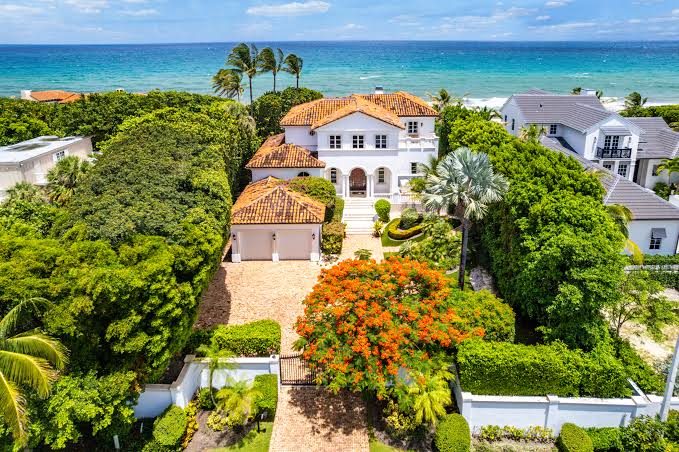
The A1A oceanfront strip is where Gulf Stream pricing becomes genuinely rarefied. Direct oceanfront estates in 2026 are trading from roughly $8 million to $10 million on the modest end up to $18 million to $25 million-plus for larger, recently built or fully renovated compounds. These sales are infrequent, often quiet or off-market, and buyers here are typically working with a broker who has direct relationships rather than scrolling public listings.
It’s worth being direct about what “modest” means at this tier. An $8 to $10 million oceanfront home in Gulf Stream is often an older structure on a valuable lot, not a finished trophy property. Buyers at this level frequently plan to demolish and rebuild from day one, treating the purchase price as land cost and budgeting a separate eight-figure construction budget on top. That’s a very different transaction than buying a finished $18 million compound that was completed in the last five years. Know which type of buyer you are before you start touring, because the diligence process is completely different: one is largely a land and zoning conversation with your architect, the other is a home inspection and systems conversation.
What “Trends” Actually Looks Like Here
Because so few homes sell in a given year, typical “market trend” language (year-over-year median price change, days on market averages) is statistically noisy in Gulf Stream. A single $20 million oceanfront closing can swing the town’s median more than an entire quarter of activity in a normal-sized market. What’s more reliable to track:
- Land value is doing most of the appreciating. Older homes on well-located lots are increasingly bought to be rebuilt, not lived in as-is. If you’re buying an “affordable” $2 million Place Au Soleil home, budget and plan as if the land is the asset.
- Inventory has stayed structurally low for years, not just in 2026. This isn’t a temporary post-rate-hike squeeze. Gulf Stream’s zoning, lot sizes, and lack of any multifamily or condo stock mean the ceiling on inventory is low permanently.
- Buyers are increasingly relocating from the Northeast and from other parts of Florida seeking more privacy than Palm Beach or Manalapan offer at a similar budget. Gulf Stream trades some cachet for genuine quiet, and that trade is exactly what a specific buyer is looking for.
- Days on market is close to meaningless as a standalone number here. A well-priced Place Au Soleil home can go under contract in under two weeks because the buyer pool watching that price point is small and attentive. A generational oceanfront estate can sit, technically active or quietly shopped off-market, for a year or more waiting for the right buyer, because there may only be a handful of people on the planet who both want that specific property and can write that check without financing contingencies.
- Cash is common at the top of the market, financing is common in the middle. Place Au Soleil buyers frequently use conventional or jumbo financing. Oceanfront and large Intracoastal transactions skew heavily toward cash or bridge financing, which shortens closing timelines but also means sellers at that tier have less patience for financed offers with long contingency periods.
Who Actually Buys in Gulf Stream
This isn’t a town that markets itself to first-time relocators, and it shouldn’t be sold that way. The realistic buyer profile:
- Move-up buyers from Delray Beach or Boca Raton who want more land and more privacy without leaving the corridor they already know.
- Northeast relocators (New York, New Jersey, Connecticut) who are comparing Gulf Stream against Manalapan, Ocean Ridge, and parts of Palm Beach, and want small-town governance with genuine oceanfront or Intracoastal access.
- Golf-focused buyers drawn to the privacy of Gulf Stream Golf Club, a historic private club with a different, quieter culture than the larger clubs in Boca or northern Palm Beach County.
- Land buyers and custom builders purchasing specifically to work with the ARPB on a ground-up or near-ground-up project, which is common enough here that you should assume any older home you tour could realistically become a teardown decision.
- Multi-generational or legacy-minded families who plan to hold a property for decades and pass it down, rather than buyers thinking in a five-year resale window. The ARPB process, the lack of turnover, and the quiet nature of the town all reward buyers who think in decades, not flip cycles.
If your budget or your goals don’t match one of those profiles, Gulf Stream likely isn’t the right target and that’s worth knowing before you spend months watching a market with almost nothing in it. For families weighing the broader county, our roundup of best Palm Beach County suburbs for families relocating in 2026 covers towns with more inventory and a wider price ladder.
One more honest note on buyer fit: Gulf Stream is not the right search for someone who wants an active social calendar of restaurants, events, and walkability at their doorstep. Those buyers are better served by Delray Beach proper or downtown Boca Raton. Gulf Stream buyers are choosing quiet and privacy on purpose, and they’re generally already comfortable driving five to ten minutes for dinner. If that tradeoff sounds like a downgrade rather than a feature, that’s useful self-knowledge before you start touring.
Schools, HOA, and the Town’s Design Code (What Buyers Underestimate)
Schools
Gulf Stream School is a well-regarded private K-8 school physically located in town, and it’s a draw for many buyers with young children. For public school zoning, Gulf Stream residents generally fall into the Delray Beach zone (schools such as Banyan Creek Elementary, Carver Middle, and Atlantic High, subject to School District of Palm Beach County boundary confirmation for your specific address). Always verify your exact address against the district’s current boundary maps before assuming a zone, since boundaries do shift.
For families weighing private versus public, it’s worth noting that a meaningful share of Gulf Stream buyers with school-age kids choose the town specifically because Gulf Stream School exists here. Once children age out at the end of 8th grade, most families look at private high schools in Delray Beach, Boca Raton, or Palm Beach rather than the zoned public high school, so factor that into your longer-term education plan rather than assuming Gulf Stream School solves the whole K-12 question.
HOA vs. Town Code
Here’s a distinction buyers consistently get wrong: most of Gulf Stream does not have a traditional HOA charging monthly dues and enforcing a private covenant. Instead, the Town of Gulf Stream itself functions as the governing body through its Architectural Review and Planning Board. That means:
- No HOA fee in the traditional sense for most properties (Place Au Soleil and the core town), but no shortcut around design approval either.
- Any exterior renovation, addition, new construction, or even significant landscaping change typically requires ARPB review against the Bermuda-style code.
- This process can add real time to a renovation or rebuild timeline. Buyers planning to update a home immediately after closing should budget months, not weeks, for design approval before permits.
- A handful of specific enclaves or associations within town may carry their own additional covenants, so this should be confirmed property by property, not assumed town-wide.
This code is exactly what keeps Gulf Stream looking the way it does, and it’s also exactly what slows projects down and narrows your contractor pool to builders who already know how the ARPB operates.
Practically speaking, this means your choice of architect and contractor matters more in Gulf Stream than almost anywhere else in Palm Beach County. A builder with no ARPB experience will underestimate both the timeline and the design constraints, and you’ll pay for that education in change orders and delays. Ask any contractor bidding on Gulf Stream work how many ARPB-approved projects they’ve completed in town specifically, not just “Bermuda-style” projects elsewhere. The board knows the local firms, and that familiarity genuinely speeds up review on both sides.
Flood Zones and Insurance
Given the barrier island and Intracoastal geography, flood insurance is a real, non-negotiable cost for a large share of Gulf Stream properties, particularly oceanfront and low-lying Intracoastal parcels. Get a flood zone determination and an insurance quote before you fall in love with a specific address, not after.
Windstorm coverage is a separate line item from standard homeowners insurance in this part of Palm Beach County, and on an oceanfront estate the combined annual premium (flood, windstorm, and standard hazard) can run into the tens of thousands of dollars. That’s not a reason to avoid the town, but it is a number that needs to sit next to your mortgage payment when you’re building a realistic monthly cost picture, especially for buyers coming from inland markets where flood and windstorm simply aren’t a line item at all.
Comparing Gulf Stream to Nearby Towns
Buyers researching Gulf Stream are almost always cross-shopping it against a short list of similar small, exclusive Palm Beach County towns. A few honest comparisons:
- Gulf Stream vs. Manalapan: Manalapan skews even higher on the ultra-luxury oceanfront end and has its own private club culture (The Eau Palm Beach area). Gulf Stream offers a comparable level of privacy with a somewhat wider entry point through Place Au Soleil.
- Gulf Stream vs. Ocean Ridge: Ocean Ridge, just south, tends to run a notch more attainable on non-oceanfront properties while sharing a similar low-density, low-commercial feel.
- Gulf Stream vs. Delray Beach proper: Delray offers vastly more inventory, walkability to Atlantic Avenue, and a wider price range, but you’re trading Gulf Stream’s privacy and design consistency for density and activity.
- Gulf Stream vs. Palm Beach: Palm Beach has far more history, far more amenities, and a much deeper bench of oceanfront inventory, but it also comes with more visibility, more traffic during season, and a design code that, while strict, allows more architectural variety than Gulf Stream’s Bermuda-only standard. Buyers who want privacy above prestige usually end up choosing Gulf Stream over Palm Beach once they’ve toured both.
The honest takeaway from all four comparisons: Gulf Stream wins on privacy and design consistency, and loses on inventory and amenities, every time. If privacy is your top priority, that trade works in your favor. If it isn’t, you’ll be frustrated by how little there is to choose from here.
If your search radius includes northern Palm Beach County towns for comparison, see our breakdowns of West Palm Beach vs. Palm Beach Gardens and Jupiter vs. Palm Beach Gardens, both useful if privacy matters less to you than amenities and inventory.
New Construction: Why There Isn’t Much
Unlike planned communities in western Palm Beach County or Boca Raton, Gulf Stream has essentially no ground-up spec new construction from national or regional builders. There’s no equivalent here to a masterplan like Westlake or a builder community like Agave Boca in Boca Raton. What exists instead:
- Custom, one-off rebuilds on purchased teardown lots, each individually approved by the ARPB
- Renovations that expand into near-full rebuilds once a buyer sees the scope required to bring an older home up to current standards while keeping it within code
- No condo or townhome product at all, which means buyers looking for lower-maintenance new construction should look elsewhere in the county
For buyers who do want a true custom build in Gulf Stream, the realistic timeline runs longer than most people expect coming from a national builder mindset. Land acquisition, architect selection, ARPB pre-application meetings, formal ARPB review, permitting through Palm Beach County, and construction itself can realistically stretch 24 to 36 months from closing on the lot to move-in, longer on oceanfront parcels with additional coastal construction control line review. Buyers who need to be in a home within a year should be looking at the Intracoastal and golf-adjacent tier of existing, already-built homes described above, not planning a ground-up project on a tight timeline.
If new construction with amenities, HOA structure, and a builder warranty is actually what you want, Westlake is a genuinely useful comparison precisely because it’s Gulf Stream’s opposite: high inventory, planned infrastructure, and a much lower entry price. Our Westlake buyer’s guide and honest Westlake review lay out that side of the county clearly.
What Buyers Should Realistically Expect in 2026
Set expectations before you start touring:
- Expect very few active listings at any given time, often under 15 townwide across every price point. Plan your search around alerts and a broker who knows the town, not endless MLS scrolling.
- Expect off-market activity to matter. A meaningful share of Gulf Stream sales, especially oceanfront, happen quietly among brokers before a property is broadly marketed.
- Expect land value, not just structure, to drive price. Many purchases here are effectively lot purchases with a house attached.
- Expect the ARPB process to shape your renovation or new-build timeline. Budget extra months for design review if you’re planning anything beyond cosmetic updates.
- Expect flood insurance and windstorm coverage to be a real line item, particularly near the water.
- Expect a narrow, specific buyer competition set. You’re not competing against a broad first-time buyer pool. You’re competing against other move-up and relocation buyers with similar budgets and similar goals, which changes negotiation dynamics.
- Expect to move quickly when the right property does surface. Because so little inventory exists, well-priced homes in any of the three tiers above don’t sit long once they’re properly marketed. Have financing, or proof of funds for cash offers, in order before you start touring, not after you find the house.
- Expect your agent relationship to matter more here than in a high-inventory market. With so much of Gulf Stream’s real activity happening off-market or quietly among a small group of brokers, working with someone who’s actually transacted in this specific town, not just Palm Beach County broadly, is the difference between seeing what’s really available and only seeing what’s public.
The Bottom Line
Gulf Stream in 2026 is not a market you shop the way you’d shop Delray Beach or Boynton Beach. It’s a small, tightly governed town where inventory is naturally scarce, prices start around $2.5 million and climb well past $10 million on the water, and the town’s own architectural code does as much to shape what you can buy as any builder or HOA would elsewhere. That’s exactly the appeal for the right buyer, and exactly the reason it’s the wrong search for someone who needs a wide range of options on a tight timeline.
If Gulf Stream is genuinely on your list, start with our full Buyer’s Guide to Gulf Stream, FL for the process specifics, and read our honest 2026 review of living here before you commit a season of house hunting to a town with this little inventory. And if the more you learn, the more you realize you want options Gulf Stream simply doesn’t have, that’s useful information too. It just means your search belongs somewhere else in Palm Beach County, and we can point you there.
More articles you might like
Buyer's Guide to Gulf Stream, FL: What to Know Before You Purchase
20 min readIs Gulf Stream a Good Place to Live? Honest 2026 Review
16 min read
Coconut Creek Real Estate Market (2026): Prices, Trends, and What It Means for Buyers
18 min read
Weston Real Estate Market Update: Prices and Conditions in Mid-2026
13 min read
Westlake, FL Real Estate Market 2026: Prices, Trends & What Buyers Should Expect
13 min read