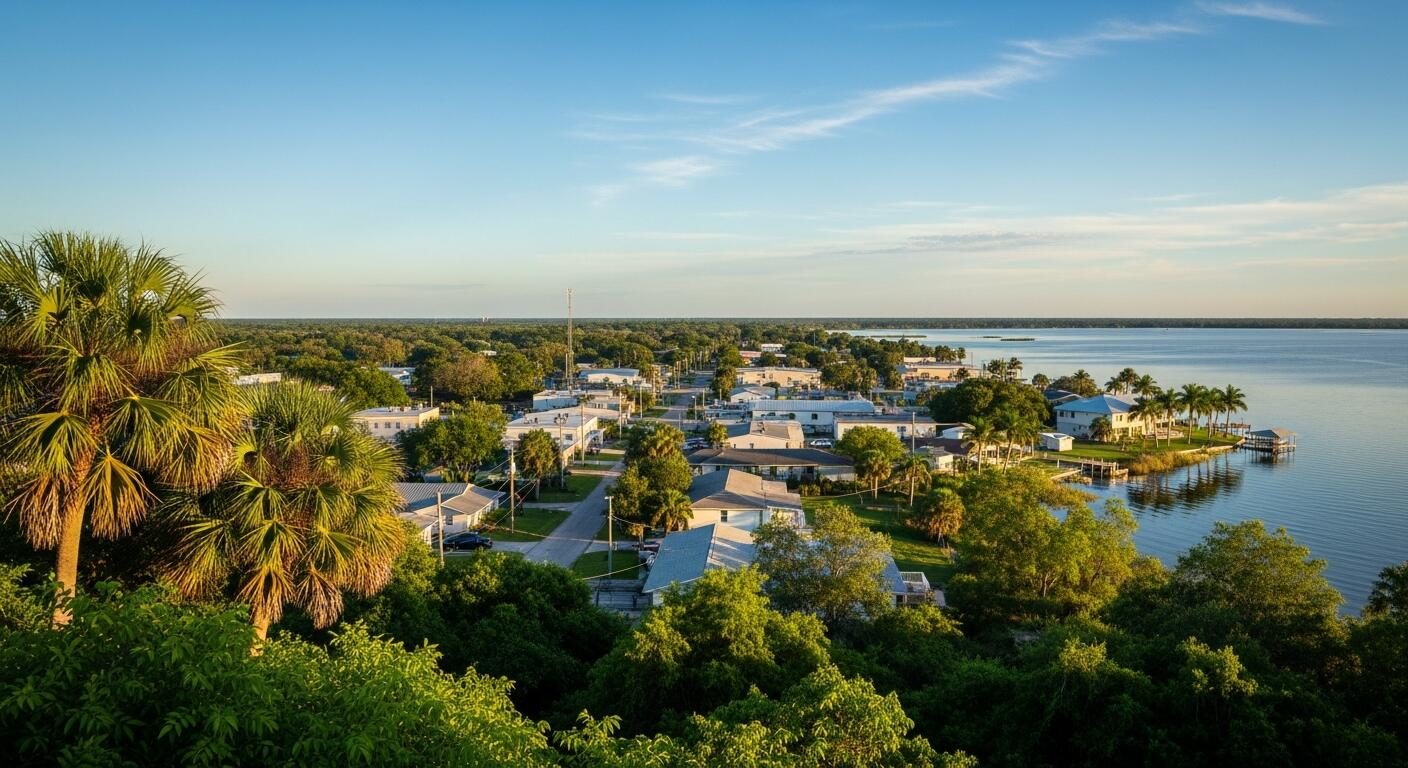
Buyer's Guide to Gulf Stream, FL: What to Know Before You Purchase
Here is the revised post.
If you are putting together a buyer’s guide to Gulf Stream, FL, what to know before you purchase comes down to three things: this is one of the smallest and most tightly controlled towns in Palm Beach County, almost nothing here is cheap, and the rules around what you can build or change on a property are stricter than anywhere else nearby. Gulf Stream is roughly 800 residents spread across a sliver of land between Delray Beach and Ocean Ridge, and it has stayed that way on purpose. There is no downtown, no strip retail, and no path to more density. That scarcity is the entire value proposition, and it is also what trips up buyers who show up expecting Delray Beach flexibility with a Gulf Stream address.
This is the kind of town where the listing photos never tell the whole story. Two homes can sit half a mile apart, both priced in the low seven figures, and be functionally different products because one is a canal lot with light HOA oversight and the other is a core estate parcel where the Town itself will weigh in on your paint color. Buyers who do not separate those two markets before they start touring end up confused about pricing, confused about renovation flexibility, and sometimes confused about why an agent keeps steering them toward Delray Beach instead.
This guide walks through what your money actually buys, how the Architectural Review Board works, what new construction really looks like here, the flood and insurance reality, governance and taxes, schools, how Gulf Stream stacks up against its closest neighbors, and a due diligence checklist you should run before you write an offer.
The Two Gulf Streams: Place Au Soleil vs. the Core Estate Section
Most buyers researching Gulf Stream do not realize the town is really two different markets wearing the same zip code.
Place Au Soleil sits on the west side of town, between Federal Highway and the Intracoastal, developed mostly in the 1950s and 1960s as a canal-front neighborhood of low, ranch-style homes on generous lots. It is the closest thing Gulf Stream has to an entry point. Homes here are older, many original, some already renovated or rebuilt, and lot sizes and canal access give it a value that does not exist anywhere else this close to the ocean in Palm Beach County. It has a voluntary property owners association, not a mandatory HOA, so dues are modest and enforcement is light compared to what you will find in the core section. Streets here are quiet and grid-like, most lots run a quarter acre or more, and a good number of homes still have their original terrazzo floors and jalousie windows under decades of updates. It is a neighborhood you can genuinely walk or bike, which is not something you can say about most of Gulf Stream.
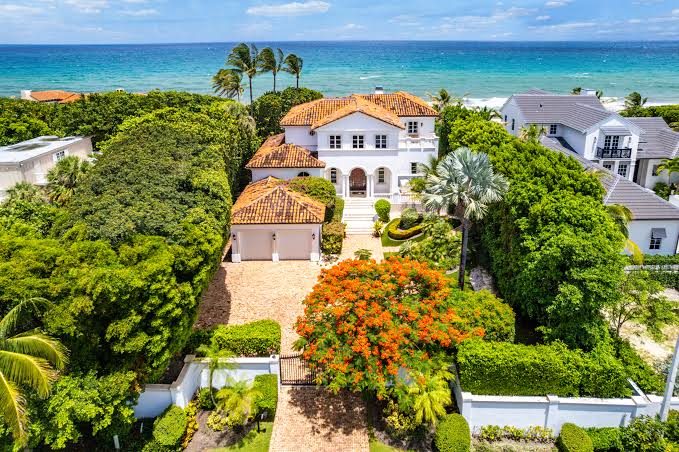
Core Gulf Stream, the section east of A1A and along North Ocean Boulevard, is the estate section: large lots, oceanfront and deep Intracoastal parcels, homes that skew Bermuda and British West Indies in style because the Town’s design code effectively requires it. This is where the Gulf Stream Golf Club and The Little Club, both private and both old-money institutions, anchor the neighborhood. There is no formal HOA structure here either, but the Architectural Review and Planning Board (ARPB) does more work than most HOAs ever would. Lots in the core section commonly run half an acre to well over an acre on the oceanfront parcels, and the streetscape has a uniformity you notice immediately when you drive in from Delray Beach. White or pastel stucco, hip roofs, shutters, low walls, mature landscaping. It reads more like Harbour Island or old Palm Beach than anything in central Delray Beach.
Knowing which side of town you are shopping in changes the entire conversation about price, renovation flexibility, and what kind of buyer you will be dealing with when you eventually sell. A Place Au Soleil buyer is usually thinking about land value and canal access on a budget that is real money but not estate money. A core section buyer is usually thinking about privacy, prestige, and a design aesthetic they are buying into, not fighting against. For a deeper look at how these two pockets have performed lately, see our full breakdown in Gulf Stream, FL Real Estate Market 2026: Prices, Trends & What Buyers Should Expect.
What Your Money Actually Buys in Gulf Stream Right Now
Numbers move, but the bands have held fairly consistent through 2025 and into 2026.
- Place Au Soleil interior lots: roughly 1.3 million to 2 million dollars for a renovated ranch or a smaller rebuild on a standard lot.
- Place Au Soleil canal-front: roughly 1.8 million to 2.8 million dollars, with boat access to the Intracoastal being the main price driver.
- Core Gulf Stream, non-waterfront estate lots: roughly 2.5 million to 6 million dollars, with the spread driven almost entirely by lot size, age of the home, and how much rebuild work has already been done.
- Deep Intracoastal and oceanfront estates: 8 million dollars on the low end, with the largest oceanfront parcels regularly clearing 15 to 30 million dollars.
There is essentially no meaningful condo or townhome inventory inside Gulf Stream town limits. If you want a maintained, lock-and-leave lifestyle at a lower price point, you are shopping Delray Beach or Boynton Beach and using Gulf Stream as a drive-by, not a purchase target. That distinction matters, because a lot of buyers say “Gulf Stream” when what they actually want is the beach lifestyle and the Delray Beach zip code prestige without the acreage and the price tag that come with an actual Gulf Stream address.
Here is a scenario that plays out often. A buyer relocating from up north with 2 million dollars to spend calls asking about Gulf Stream because they saw the name on a national “best small towns” list. At that budget, they are looking at a Place Au Soleil canal lot with an older home that likely needs updating, or they are priced out of the core section entirely. That same buyer, with the same 2 million dollars, could land a newer, larger, fully finished home a few minutes south in Delray Beach or in a gated community further west. Neither answer is wrong. It just depends on whether the buyer is paying for the address and the land, or for square footage and finishes. Gulf Stream rewards the first kind of buyer and frustrates the second.
Buyer’s Guide to Gulf Stream, FL: What to Know Before You Purchase About the Architectural Review Board
This is the single most important thing in any honest buyer’s guide to Gulf Stream, FL, and what to know before you purchase starts here: the Town’s Architectural Review and Planning Board has final say over exterior design, and it takes that authority seriously.
A few things every buyer should understand before falling in love with a lot:
- Design style is not optional. The Town’s code leans heavily toward Bermuda, British West Indies, and Colonial-Caribbean styles. Roof pitch, color palette, window proportions, and massing all get reviewed. If you are picturing a glass-and-concrete modern build, Gulf Stream is not your town. Boca Raton and Delray Beach give you far more design freedom.
- Approval takes longer than a standard permit. Plan on months, not weeks, for ARPB review and approval on any new construction or significant renovation, on top of normal county and town permitting timelines. Multiple rounds of revisions are common, especially for anything on North Ocean Boulevard where the board is most protective of the streetscape.
- Even landscaping and fencing get scrutinized. Hedge heights, wall materials, and driveway finishes are all part of the review in the core estate section. This is by design, and it is exactly why the streetscape looks the way it does, but it surprises buyers coming from HOA-free markets who assume no HOA means no rules.
- The rules protect resale value. The upside of all this friction is consistency. Gulf Stream does not have the mismatched infill you see in some rebuilding neighborhoods elsewhere in the county, and that consistency is part of what buyers are paying for.
Put a number on what this means practically. A buyer who purchases a core section lot expecting a straightforward six-month renovation is often looking at closer to nine or ten months once ARPB submissions, revisions, and re-submittals are factored in. That is not a knock on the process, it is just a planning reality. If you are financing the purchase and the renovation together, or you are trying to time a move around a school year, build that timeline in from day one rather than discovering it after you own the property.
If strict design control sounds like a dealbreaker, it is worth cross-shopping Agave Boca in Boca Raton: The New Construction Guide (Floor Plans, Pricing, What to Know) or a planned community like Westlake, FL, where the builder sets the standard once and buyers do not go through individual town review.
New Construction and Teardown-Rebuilds: How It Really Works Here
There is no builder-run new construction community inside Gulf Stream. There never will be, because there is no undeveloped land left to subdivide and the town has no interest in adding density. What passes for “new construction” here is almost entirely custom, lot-by-lot teardown-rebuild work.
The typical path looks like this:
- A buyer purchases an older Place Au Soleil ranch or a dated core-section estate primarily for the land.
- The existing structure is demolished or gutted to the studs, depending on flood elevation requirements.
- A custom architect and local builder design and construct a new home to ARPB standards, which usually means Bermuda or West Indies styling with impact windows, metal or tile roofing, and elevated first-floor construction to meet current FEMA base flood elevation requirements.
- Total project timelines, from purchase to certificate of occupancy, commonly run 18 to 30 months once you factor in design, ARPB approval, permitting, and construction.
If you are buying with the intent to rebuild, budget for the land price, the demolition, the design fees, and a construction cost that in this town regularly runs 500 to 700 dollars per square foot or higher for the finish level the ARPB and the neighborhood expect. This is not a market where you save money cutting corners on materials, because the review process will not let you.
Walk through what this actually costs on a mid-range core section project. Say a buyer pays 3.2 million dollars for a dated estate lot with a 1970s home on it. Demolition and site work run somewhere in the 150,000 to 250,000 dollar range depending on what utilities and hardscape need to be replaced. A 6,000 square foot new build at 600 dollars per square foot lands around 3.6 million dollars in hard construction costs, before architect and engineering fees, ARPB and permitting costs, landscaping, pool, and dock work if the lot is waterfront. All in, that buyer is realistically all-in somewhere north of 7 million dollars once the home is finished, on a project that started as a 3.2 million dollar land purchase. That math is not unusual in Gulf Stream, and it is exactly why so much of the buyer pool here is either building generational wealth into a forever home or has the liquidity to treat the home as a long-term asset rather than a flip.
Place Au Soleil rebuilds run a smaller version of the same math, usually on lots that cost less to begin with and homes that are typically 3,000 to 4,500 square feet rather than 6,000-plus, but the per-square-foot construction cost does not drop much, because the same ARPB expectations and coastal building code requirements apply regardless of which side of town you are on.
Flood Zones, Insurance, and the Coastal Reality
Gulf Stream sits directly on the coast, and a meaningful share of the town, particularly core-section properties east of A1A and canal-front lots in Place Au Soleil, falls in AE or VE flood zones. This is not a minor line item.
What buyers need to actually check before closing:
- Flood zone designation and base flood elevation for the specific parcel, not just the neighborhood in general. Elevation can vary lot to lot even on the same street.
- Flood insurance premiums, which on coastal or canal-front Gulf Stream property can run several thousand dollars a year and sometimes into five figures for older, non-elevated homes near the water.
- Wind and named-storm coverage, which in Palm Beach County’s coastal band is priced separately from flood insurance and has gotten materially more expensive over the past few years.
- Whether the existing structure meets current elevation requirements. Homes built decades ago at grade often do not, which is one more reason so much of the activity here is rebuild rather than renovation.
To make this concrete, an older non-elevated oceanfront home in the VE zone can see combined flood and wind premiums that run 15,000 to 30,000 dollars a year or more, depending on coverage limits and the carrier. A newly built home on the same lot, elevated to current base flood elevation with impact glazing and a modern roof system, can cut that number substantially, sometimes by half or more, because insurers price the structure’s actual risk, not just its zip code. That gap alone explains why so many buyers who can afford to rebuild choose to, even when the existing home is structurally sound. The insurance savings over a 10 or 20 year hold can offset a real chunk of the construction premium.
None of this should scare a serious buyer off. It should just be priced into the offer, not discovered after closing. Get quotes from at least two carriers before you go hard on a contract, and if you are buying an older home you intend to keep as-is rather than rebuild, ask your insurance agent directly whether elevation certificates exist for the property and what they show.
HOA, CDD, and Town Governance
There is no Community Development District in Gulf Stream, so you will not see CDD debt or CDD assessments on any property tax bill here, unlike newer master-planned communities such as Westlake further west in Palm Beach County.
HOA structure is minimal by design. Place Au Soleil has a voluntary property owners association with modest annual dues that mostly fund neighborhood upkeep and community events, not strict enforcement. The core estate section has no HOA at all in the traditional sense. Instead, the Town itself, through the ARPB and its municipal code, functions as the de facto design authority.
Two governance quirks worth knowing before you buy:
- Contract police enforcement. Gulf Stream contracts its police services and has a long-standing reputation, including local and national news coverage over the years, for aggressive traffic enforcement along A1A. It is a small-town, low-tolerance environment, and residents generally see it as part of what keeps the town quiet and safe.
- Property taxes reflect the Town’s small size and lack of commercial tax base, meaning municipal millage is layered on top of Palm Beach County, school, and special district rates like everywhere else in the county, but with no CDD line to offset.
Worth adding here, because buyers ask: Gulf Stream’s total government is genuinely small. Town Hall operates with a skeleton staff, commission meetings are lightly attended because there is rarely anything contentious on the agenda, and most residents interact with the Town only through the ARPB or the police department. If you are coming from a large HOA community with a management company, a resident portal, and monthly newsletters, Gulf Stream will feel almost quaint by comparison. There is no amenity center, no community events calendar, no clubhouse. The Town governs land use and little else, and most residents prefer it that way.
Schools and Daily Life
Gulf Stream itself has no public schools and very little in the way of daily commercial life, and that is intentional. The Gulf Stream School, a private K-8 school founded in the 1940s, sits inside town limits and is one of the more established private options on this stretch of coast. Families using Palm Beach County public schools are zoned based on address, typically feeding into Delray Beach or Boynton Beach area schools depending on the specific parcel, which is worth confirming directly with the district before you assume anything based on the town name.
For groceries, restaurants, healthcare, and everything else, residents drive a few minutes south into Delray Beach’s Atlantic Avenue corridor or north into Ocean Ridge and Boynton Beach. This is a real trade-off buyers should sit with honestly: you are paying an enormous premium for privacy, lot size, and exclusivity, not for walkability or amenities inside the town itself. A family relocating from a walkable suburb up north, where you can bike to a coffee shop or a pharmacy, needs to understand that Gulf Stream is a driving town, full stop. Even Place Au Soleil, which feels more residential and neighborhood-scaled, still requires a short drive for anything beyond a walk around the block.
If daily walkable energy matters more to you than privacy, it is worth reading our honest take in Is Gulf Stream a Good Place to Live? Honest 2026 Review before you commit to a search here, and comparing it against nearby options in Best Palm Beach County Suburbs for Families Relocating in 2026.
How Gulf Stream Compares to Its Closest Neighbors
Buyers rarely shop Gulf Stream in isolation. It almost always gets cross-shopped against Ocean Ridge, Manalapan, and Delray Beach’s beachside pockets, so it is worth being direct about how they differ.
Ocean Ridge, immediately north across the Boynton Inlet area, has a similar small-town, low-density feel and similarly strict environmental and setback rules, but it does not carry the same ARPB-driven architectural uniformity. You will see more style variety in Ocean Ridge, and entry prices can run somewhat lower on the non-oceanfront side, though oceanfront pricing converges with Gulf Stream at the top end.
Manalapan, further north past Ocean Ridge and Hypoluxo, is the closest true peer to Gulf Stream in terms of exclusivity and price, and in some pockets exceeds it, particularly on the oceanfront where estate compounds can run well into eight figures. Manalapan has even less commercial infrastructure than Gulf Stream, if that is possible, and functions similarly as a pure residential enclave.
Delray Beach’s beachside neighborhoods, just south, give you walkability, restaurants, and a real town center, but none of the privacy, lot size, or design consistency Gulf Stream offers. You will pay a premium for beachside Delray Beach too, but you are buying into energy and amenities rather than seclusion.
The honest read: if what you actually want is quiet, privacy, and long-term design consistency, and you are not price sensitive, Gulf Stream and Manalapan are your two real options, with Gulf Stream being the more established and slightly more accessible of the two. If you want any daily walkability at all, look at Delray Beach or Ocean Ridge instead and treat Gulf Stream as a drive-through, not a destination.
Due Diligence Checklist Before You Write an Offer
Run through this before you get emotionally attached to a Gulf Stream property:
- Confirm flood zone and base flood elevation for the exact parcel through FEMA maps and a licensed surveyor, not just the listing sheet. Elevation certificates, if they exist, should be requested from the seller directly.
- Get real flood and wind insurance quotes before you finalize your offer price, not after. A five figure annual premium difference between two similar-looking homes changes the real cost of ownership significantly.
- Ask the Town directly about ARPB requirements if you plan any exterior work, a rebuild, or even significant landscaping changes. Do this before closing, not after, and ask for examples of recent approvals and denials if the Town will share them.
- Verify school zoning with Palm Beach County Public Schools directly if you are not using the Gulf Stream School, since addresses near town borders can zone differently than buyers expect.
- Order a full survey and title search on core estate lots, since older parcels sometimes carry easement or setback quirks that matter more here than in newer subdivisions.
- Confirm septic versus sewer on older Place Au Soleil properties, since some of the neighborhood’s original 1950s and 1960s construction predates full municipal sewer service, and septic-to-sewer conversion costs can be significant.
- Get a structural and elevation assessment on any home you are considering keeping rather than rebuilding, especially anything built before the 1990s.
- Understand your realistic rebuild timeline if buying for land value, and price 18 to 30 months of carrying costs, insurance, and design fees into your decision.
- Talk to a local contractor who has actually built through the ARPB process, not just any Palm Beach County builder. Experience with this specific board matters more here than almost anywhere else in the county, and the right builder can save you multiple rounds of costly revisions.
Who Gulf Stream Actually Fits
Gulf Stream makes sense for buyers who want maximum privacy, are not price sensitive, and actually want the design discipline the ARPB enforces rather than seeing it as a burden. It fits people who already know they want Delray Beach’s restaurants and beaches nearby without living inside a busier city, and who are fine trading walkable amenities for acreage and quiet. It also fits buyers thinking multi-generationally, people who intend to build a home their family will hold for decades rather than resell in five years, since the carrying costs of a Gulf Stream purchase and rebuild make the most sense when spread over a long hold.
It does not fit buyers who want flexibility to build a modern home, buyers who want a fast close and a simple renovation, or buyers who are stretching to afford the entry price and have no cushion for flood insurance and ARPB-driven construction costs. If any of that describes you, you will likely be better served, and better matched, in a planned community like Westlake, where Buyer’s Guide to Westlake, FL: What to Know Before You Purchase lays out a very different, more predictable buying process, or in a more urban Palm Beach County setting covered in West Palm Beach vs Palm Beach Gardens: City Energy or Suburban Comfort? and Jupiter vs Palm Beach Gardens: A Relocator’s Real Comparison for 2026.
The Bottom Line
Gulf Stream is not a market you shop casually. It is a small, expensive, design-controlled town where the scarcity is the point, Place Au Soleil is the only real entry-level pocket, and the Architectural Review Board will shape nearly every renovation or rebuild decision you make after closing. If that trade-off appeals to you, and your budget genuinely supports it, Gulf Stream delivers a level of privacy and consistency you will not find anywhere else in Palm Beach County. If it does not, there is no shame in looking a few minutes north or west, where you will get more flexibility for the same money. The buyers who end up happiest here are the ones who understood, going in, exactly what they were trading walkability and speed for, and decided that trade was worth it.
Watch: learn more
Go deeper with my South Florida Insider videos.
Solterra: Everything You Need to Know Before You Visit
Solterra: Everything You Need to Know Before You Visit
More articles you might like
Gulf Stream, FL Real Estate Market 2026: Prices, Trends & What Buyers Should Expect
19 min readIs Gulf Stream a Good Place to Live? Honest 2026 Review
16 min read
Buyer's Guide to Westlake, FL: What to Know Before You Purchase
13 min read
Buyer's Guide to Tequesta, FL: What to Know Before You Purchase
18 min read
Buyer's Guide to South Palm Beach, FL: What to Know Before You Purchase
19 min read