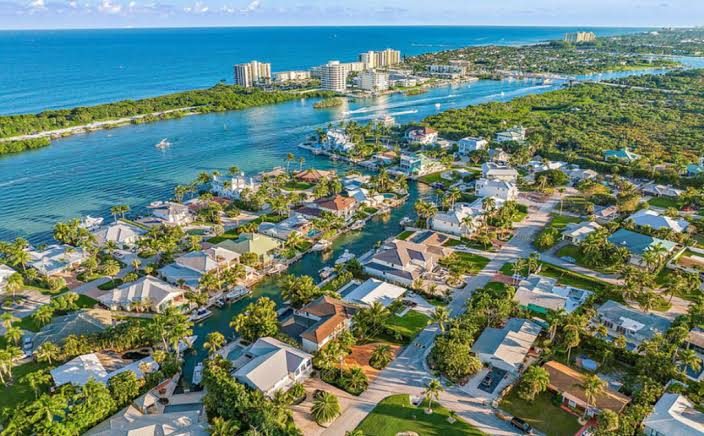
Is golf a Good Place to Live? Honest 2026 Review
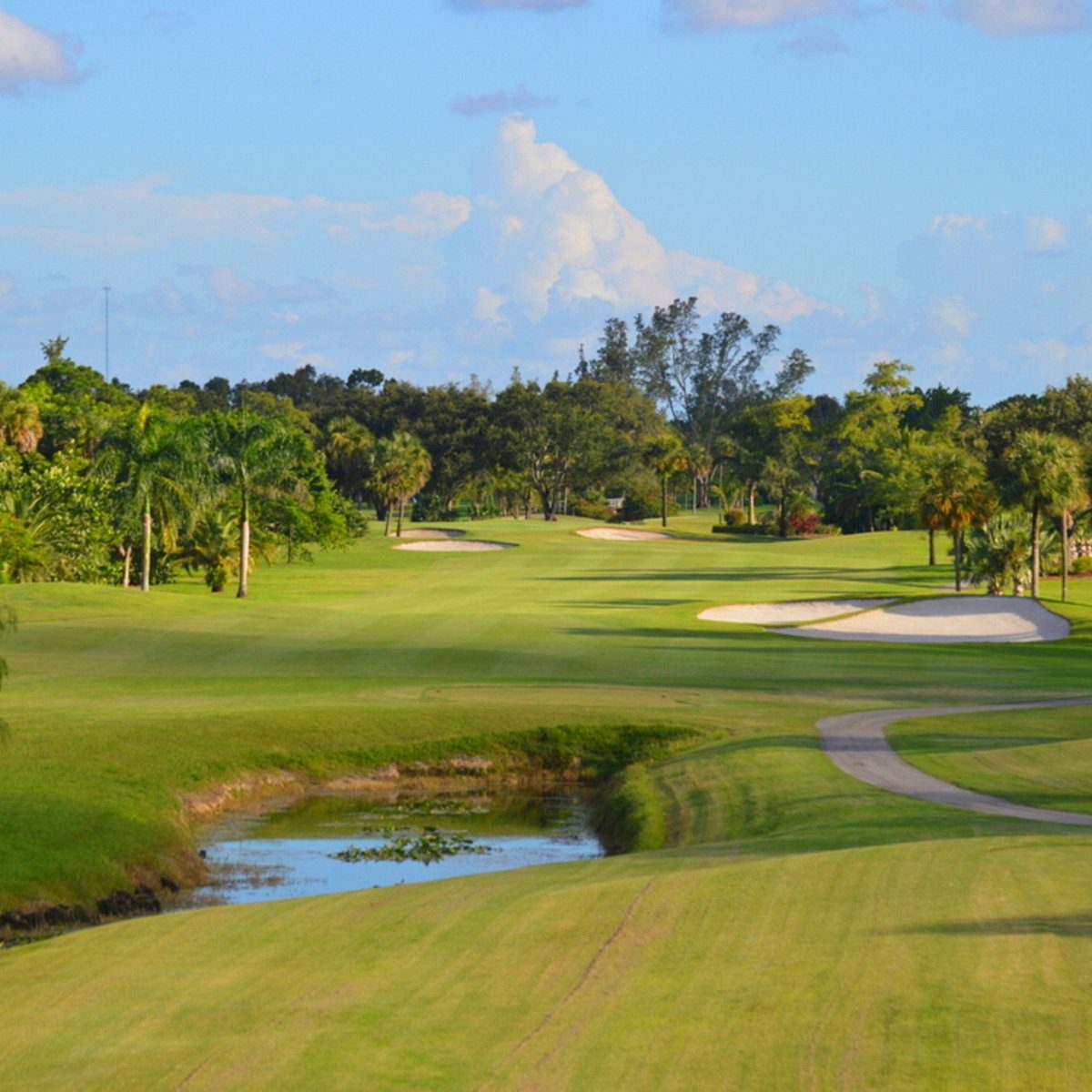
Is Golf, FL a good place to live? Honest 2026 review: yes, if what you’re after is one of the smallest, quietest, most private municipalities in Palm Beach County, tucked between Boynton Beach and Delray Beach on large estate lots behind a single guarded gate. No, if you want walkable retail, a range of price points, or new construction variety. Golf, formally the Village of Golf, is not a subdivision or a builder community. It’s an actual incorporated town, about half a square mile, with its own government, its own tiny police department, and a population that has hovered around 200 to 260 people for decades. That distinction matters more than almost anything else in this review, and it’s the first thing most buyers get wrong before they start looking.
This guide covers what Golf actually is, who genuinely fits here, what it costs to buy and to stay, and the tradeoffs nobody puts in the listing photos.
What Golf, FL Actually Is
The Village of Golf sits in central Palm Beach County, wedged between the city limits of Boynton Beach to the north and west and Delray Beach to the south, generally in the corridor between Woolbright Road and the Delray Beach line, west of Federal Highway (US-1) and east of the Florida Turnpike. It was incorporated in 1957 around a single private club, The Village Golf Club, and the entire town was built to protect that setting: large lots, low density, one main entrance, and almost no commercial development inside the village limits.
That’s the core identity. Golf isn’t a “new construction community” the way most of the towns we cover on South Florida Insider are (think Lennar or D.R. Horton building out phased sections with a builder-run HOA). Golf is a legacy town of custom and semi-custom estate homes, most built from the 1960s through the 2000s, on lots that run noticeably larger than what you’ll find in a standard Palm Beach County subdivision. If you’re used to shopping new construction communities with published floor plans and builder incentives, Golf will feel like a completely different category of purchase, because it is one.
For the market mechanics (recent sale prices, inventory levels, days on market) see our companion piece, the Golf, FL Real Estate Market 2026 report. This article is about the lifestyle question: should you actually live here.
Is Golf, FL a Good Place to Live? The Honest 2026 Answer
Here’s the direct answer. Golf is an excellent place to live if your priorities are privacy, low density, large lots, and proximity to both Boynton Beach and Delray Beach without living inside either city’s traffic and noise. It is a poor fit if you want to walk to restaurants, want a variety of price points and home styles to choose from, or need a large inventory of available homes at any given time.
The reality is that Golf works because it does one thing extremely well: it stays small. There is no plan to add density, no pipeline of new phases, no builder actively selling here. What you see today, roughly 250 to 260 homes total, is close to what will exist in ten years. That scarcity is the entire value proposition. It’s also the entire limitation. You are not buying into growth potential or an expanding amenity package. You are buying into permanence.
Compare that to a growth-oriented master plan like Westlake further west, where Westlake’s real estate market is still actively building out new phases and price points, or where a Westlake buyer’s guide walks through builder incentives on inventory homes. Golf is the opposite model. There’s no comparison to make on “which phase should I buy in,” because there are no phases. What most people don’t tell you is that this cuts both ways: it protects your investment from oversupply, but it also means you’re not going to find a deal on a builder closeout or an incentive-heavy inventory home. You’re buying resale, full stop, and you’re paying for scarcity.
Who Golf Is Actually Right For
Golf fits a narrow, specific buyer profile, and being honest about that upfront saves everyone time.
It fits you if:
- You want a large lot (often a half acre or more) close to the coast without paying oceanfront prices.
- You value a guarded, single-entrance town over a resort-style amenity package. Golf’s amenities are the golf club itself and quiet streets, not a lazy river or a 40,000 square foot clubhouse.
- You’re relocating from a similarly low-density, high-privacy market and don’t want the adjustment of a dense HOA community with hundreds of neighbors.
- You golf, or you want the option to join The Village Golf Club without a long waitlist typical of some of the more famous private clubs further south in Boca Raton or Delray Beach.
- You want quick access to both Boynton Beach and Delray Beach commercial corridors, I-95, and the Turnpike, without living directly on a busy arterial.
It’s the wrong fit if:
- You want to walk or bike to a downtown, a beach, or retail. Golf has none of that inside its borders, you’re driving to Atlantic Avenue in Delray Beach or Ocean Avenue in Boynton Beach for that.
- You’re working with a tighter budget and need more price points to shop. Golf’s inventory sits at the higher end of the Palm Beach County single-family market, and there isn’t a “starter home” tier here.
- You want an active homeowners’ pipeline of new listings to choose from. With roughly 250 to 260 total homes, active inventory at any given moment is thin, sometimes in the single digits.
- You need a large public or charter school directly in-community. There isn’t one, families are zoned out to nearby Boynton Beach and Delray Beach area schools in the School District of Palm Beach County.
If any of those wrong-fit points describe your search, you’re better served looking at nearby options with more variety and price flexibility, which is exactly what we break down in Best Palm Beach County Suburbs for Families Relocating in 2026.
The Real Estate Picture: Prices, Lots, and What You’re Actually Buying
Golf’s housing stock is almost entirely custom and semi-custom single-family estates. Lot sizes commonly run larger than a standard Palm Beach County half-acre subdivision lot, and many homes were built with generous setbacks specifically because the town’s founding purpose was low density around the golf course.
Because total inventory is so small, pricing moves in a narrower, higher band than most of the towns we cover. You should expect Golf home prices to sit well above the Palm Beach County single-family median, reflecting the combination of large lots, an established (not speculative) location, and genuine scarcity. Exact current pricing, recent comps, and how many homes are actively on the market change month to month with such a small inventory pool, so lean on the live numbers in our Golf, FL Real Estate Market 2026 report rather than a number printed here that could be stale by the time you read it.
One thing worth being direct about: because almost nothing here is new construction, you should budget for an inspection-heavy purchase. Homes built in the 1960s through 1990s in this part of Palm Beach County often carry original or once-replaced roofs, older electrical panels, and plumbing that may or may not have been repiped. None of that makes Golf a bad buy, but it does mean your due diligence period needs a full four-point inspection, a wind mitigation inspection for insurance purposes, and, if the age of the home warrants it, a sewer scope. Insurance costs in coastal Palm Beach County have moved meaningfully in the last several years, and an older roof can be the single biggest line item swing in your quote.
HOA, Village Taxes, and Country Club Membership: The Part Nobody Explains Clearly
This is where Golf gets confusing for buyers coming from a typical HOA or CDD community, and it’s worth slowing down on.
Golf is an incorporated municipality. That means residents pay a municipal property tax to the Village of Golf itself, layered on top of the standard Palm Beach County and school district millage every property owner pays. This is structurally different from a CDD (Community Development District), which is a bond mechanism developers use to fund infrastructure in new build communities, and different again from a private HOA that a builder sets up to run a subdivision. Golf has essentially been running as its own small town government for close to 70 years, funding its own roads, gate, and police presence through that municipal tax base rather than through developer bond debt.
Separately, and this trips people up constantly, living inside the Village of Golf does not automatically make you a member of The Village Golf Club. The club is a private entity with its own membership structure and dues, and depending on the property and the era it was built, membership may or may not be bundled with certain homes. Do not assume golf access comes with the address. Confirm, in writing, during your contract period, whether the specific home you’re buying carries a club membership obligation, an option, or nothing at all. This single detail has caught more than one relocating buyer off guard after closing, and it’s exactly the kind of thing our Buyer’s Guide to Golf, FL walks through step by step before you’re under contract.
The honest summary: you’re not comparing an HOA fee against a CDD assessment here the way you would in a newer Boynton Beach or Delray Beach community. You’re evaluating a municipal tax rate plus an optional, separate country club cost structure. Get both numbers in writing before you fall in love with a house.
Location, Commute, and What’s Actually Around You
Golf’s location is genuinely one of its strongest selling points, and it’s not hype to say so. You’re positioned almost equidistant between two of Palm Beach County’s most walkable, amenity-rich downtowns: Boynton Beach’s Ocean Avenue and Renaissance Commons corridor to the north, and Delray Beach’s Atlantic Avenue to the south. Both are roughly a ten-minute drive from most points inside the village. I-95 access sits close by via Woolbright Road or Gulfstream Boulevard, and the Florida Turnpike entrance isn’t far to the west, which matters if you’re commuting north toward West Palm Gardens or south toward Boca Raton and beyond.
The beach itself isn’t inside Golf, you’re looking at a roughly ten to fifteen minute drive to public beach access in Delray Beach or Boynton Beach depending on which direction you head. That’s a very different proposition than a barrier island address, but it’s also a fraction of the price you’d pay to be directly oceanfront, and for most residents the tradeoff is worth it.
If you’re cross-shopping Golf against other Palm Beach County suburbs during a relocation search, it’s worth reading how nearby towns stack up on the same axes of commute, walkability, and lifestyle. Our comparison of West Palm Beach vs Palm Beach Gardens and Jupiter vs Palm Beach Gardens cover the northern end of the county, which runs a genuinely different lifestyle than the Boynton Beach and Delray Beach corridor Golf sits inside. Golf is a southern and central Palm Beach County town through and through, and that geography, not just the gate, shapes daily life here.
Schools and Family Fit
Golf has no schools inside its borders. Families are zoned into the School District of Palm Beach County based on the specific address, typically pulling from schools serving the Boynton Beach and Delray Beach area. Because Golf sits right on that municipal boundary line, zoning can differ meaningfully from one street to the next, so this is a detail to confirm with the district’s official locator tool for the exact parcel you’re considering, not something to assume based on the general neighborhood.
For families prioritizing school assignment as a top decision factor, Golf’s appeal tends to be more about the home and the setting than the school zone itself. If schools are your primary driver, it’s worth widening the search to the suburb-level comparison in Best Palm Beach County Suburbs for Families Relocating in 2026, where zoned school quality is weighed directly against community type.
What Buyers Need to Know Before Purchasing
A few practical steps matter more here than in a typical new construction purchase:
- Confirm club status in writing. Ask the listing agent directly whether the home carries a Village Golf Club membership obligation, an available option, or neither, and get the actual dues structure before you write an offer.
- Budget for an older-home inspection cycle. Roof age, electrical panel type (avoid unpermitted Federal Pacific or Zinsco panels, which insurers flag), and plumbing material all affect both your offer price and your insurance quote.
- Get a real insurance quote before you’re under contract. Coastal Palm Beach County insurance costs vary widely by roof age and wind mitigation features. Don’t assume your last home’s premium will transfer.
- Understand the municipal tax line separately from county and school taxes. Ask your lender or title company to break out the Village of Golf millage specifically so there are no surprises at closing.
- Verify the school zone by exact parcel address, not by neighborhood reputation, given the boundary location.
- Move fast when something you want comes up. With such thin inventory, well-priced, updated homes in Golf don’t sit. If you’re pre-approved and ready, be ready to act inside days, not weeks.
Every one of these gets expanded with specific documentation checklists in the Buyer’s Guide to Golf, FL, which is worth reading in full before you make an offer here.
The Bottom Line
Is Golf, FL a good place to live? For the right buyer, yes, and it’s a genuinely honest yes, not a sales pitch. You’re paying for scarcity, privacy, large lots, and a real municipal government protecting the character of a half-square-mile town, positioned between two of Palm Beach County’s best downtown corridors. What you give up is walkability, price flexibility, housing variety, and the convenience of shopping a builder’s published floor plans and incentives.
If that tradeoff matches what you’re actually looking for, Golf delivers on it better than almost anywhere else in the county. If you’re still deciding whether that tradeoff is right for you, or you want to see how Golf stacks up against nearby options in raw numbers, start with the Golf, FL Real Estate Market 2026 report for current pricing and inventory, then work through the Buyer’s Guide to Golf, FL before you get emotionally attached to a specific address.
Have questions about a specific home in Golf, or want to know if a property carries club membership before you tour it. DM me “GOLF” and I’ll walk you through what to check first.

More articles you might like
Golf, FL Real Estate Market 2026: Prices, Trends & What Buyers Should Expect
14 min readBuyer's Guide to Golf, FL: What to Know Before You Purchase
16 min read
Is Westlake a Good Place to Live? Honest 2026 Review
13 min read
Is West Palm Beach a Good Place to Live? An Honest 2026 Review
18 min read
Is Wellington, Florida a Good Place to Live? Honest 2026 Review
18 min read