Buyer's Guide to Golf, FL: What to Know Before You Purchase
Buyer’s Guide to Golf, FL: What to Know Before You Purchase
If you’re searching for a buyer’s guide to Golf, FL, what to know before you purchase, here’s the answer up front: you’re not buying new construction, and you’re not buying into a big-name subdivision. You’re buying into one of the smallest, quietest, most tightly held municipalities in Palm Beach County, a place most South Floridians drive past every day without realizing it’s its own town. That changes how you should shop, what you should budget for, and what due diligence actually matters here.
This guide replaces the generic version most sites publish. It’s grounded in how the Village of Golf actually functions as a real estate market: limited inventory, mostly older homes on unusually large lots, no new construction pipeline to speak of, and a buyer pool that’s paying for land and privacy more than square footage or finishes. If you’ve spent any time searching new construction communities in Palm Beach County, you already know how those transactions work: a sales center, a price sheet, a builder rep, and a predictable process. None of that applies here, and buyers who walk in expecting it waste weeks figuring out why nothing lines up with what they’re used to.
What Golf, FL Actually Is (and Isn’t)
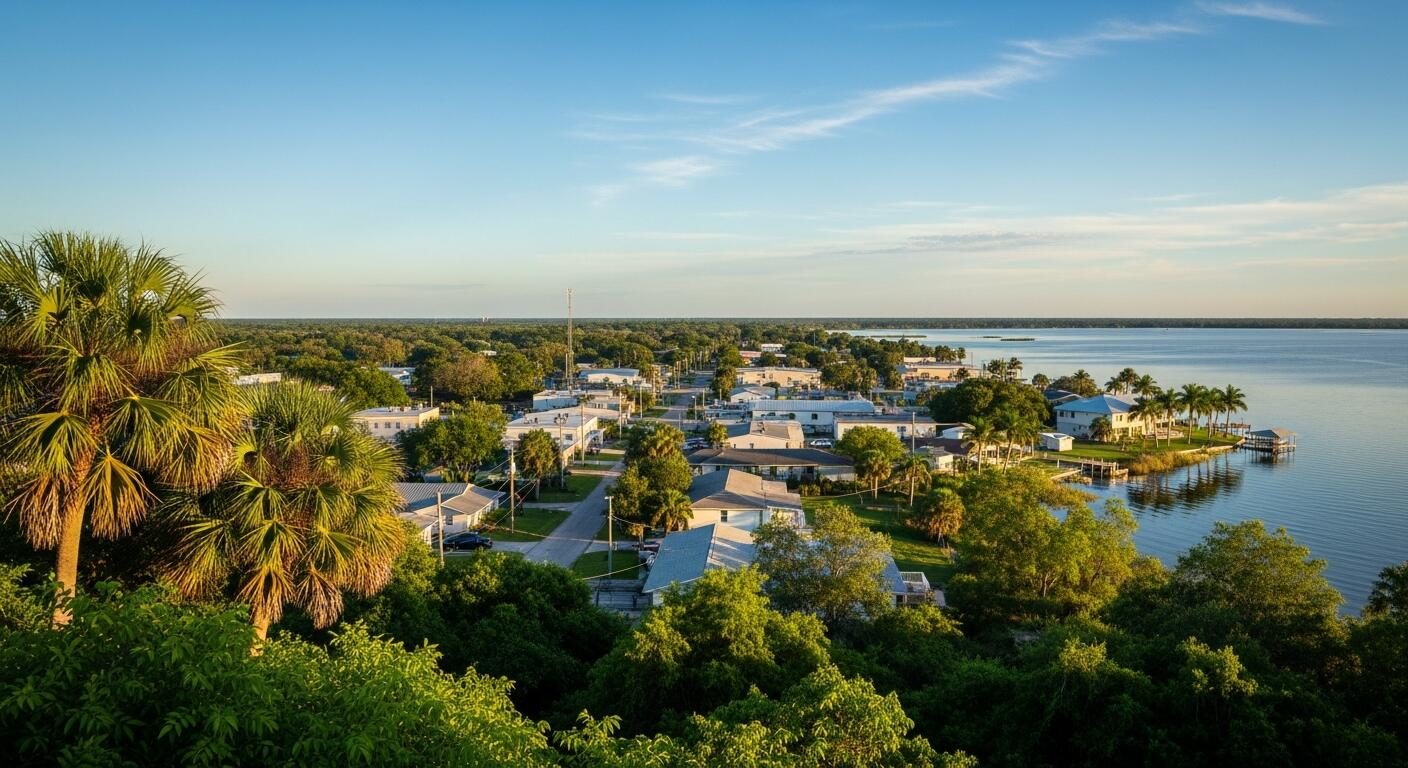
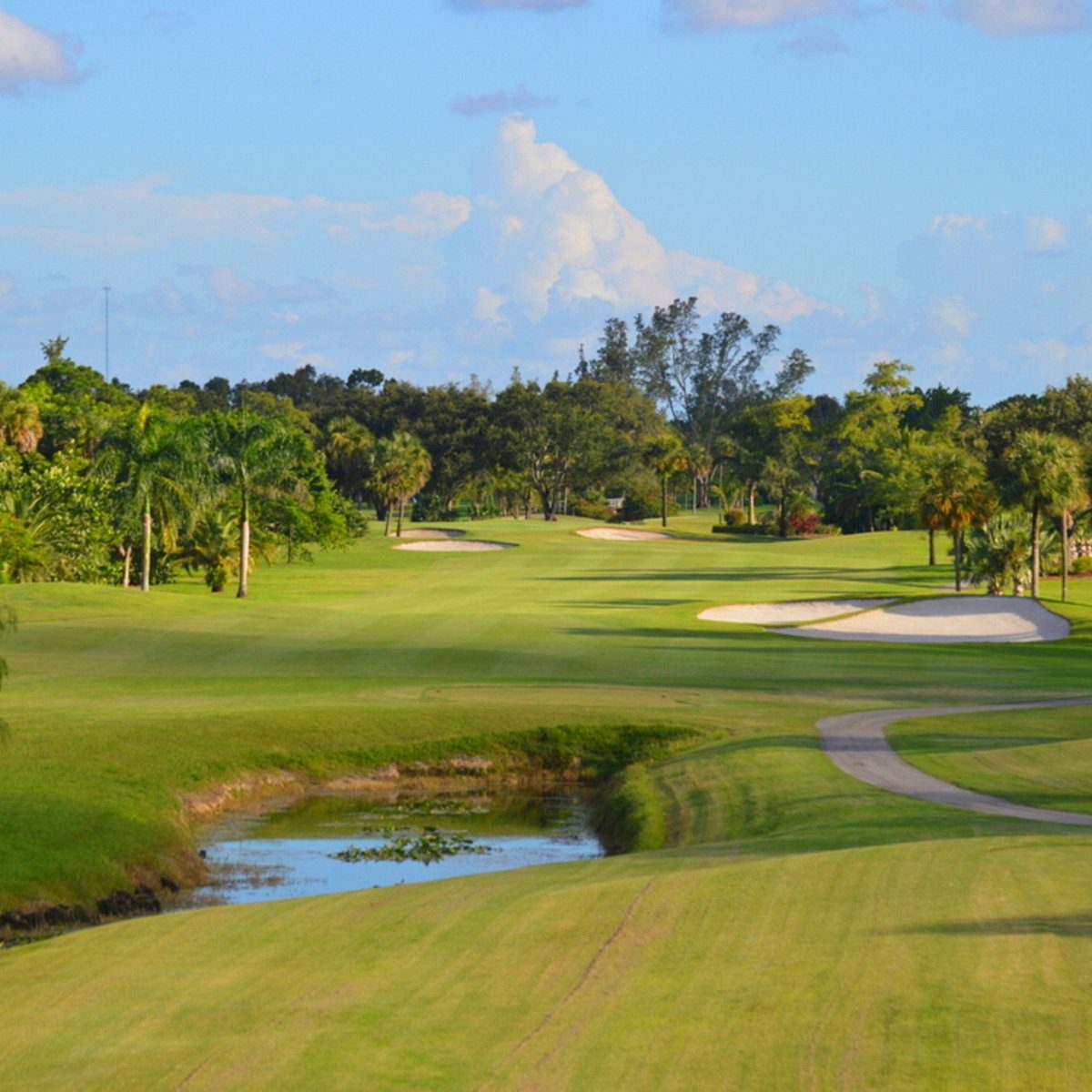
The Village of Golf is an incorporated municipality, not a subdivision or a golf course community name you’ll find on a builder’s website. It sits in central Palm Beach County, tucked between Boynton Beach and Lantana, just west of Federal Highway (US-1) and a short hop from I-95. It’s small, well under two square miles, with a population in the low thousands. That size is the whole story: there isn’t a large enough footprint of vacant land for a builder to come in and deliver a 300-home master plan. What you see today, mostly single-family homes on generous lots wrapped around a private golf course, is close to what you’ll see for the next decade.
Because it’s its own incorporated village and not an HOA-governed section of Boynton Beach or Lantana, Golf, FL runs its own municipal government, sets its own budget, and controls its own zoning and building code enforcement. That’s a meaningful distinction buyers often miss. In a typical new construction community, the HOA board handles landscaping standards and architectural review, but the surrounding city still runs police, permitting, and code enforcement. In Golf, FL, the village itself does all of that at a much smaller scale. It’s a structure closer to what you’d find in a handful of other tiny incorporated Palm Beach County towns, and it explains why zoning and lot standards here have stayed so consistent for decades while the county around it kept building.
That matters for buyers who arrive expecting the kind of new construction pipeline you’d find in places like Westlake or fast-growing pockets of western Boynton Beach. Golf, FL isn’t that market, and pretending otherwise wastes your search time. If you’re the kind of buyer who wants a builder warranty, a choice of elevations, and a move-in date on a calendar, you should be looking at those markets instead, not trying to force Golf, FL into that mold.
If you want the broader pricing and trend picture before you dig into the buying process, read the companion piece on the Golf, FL real estate market, which breaks down where values have moved over the past few years and why inventory stays so thin.
Price Ranges and What the Money Actually Buys
Because Golf, FL is a resale-dominant market with a small number of transactions in any given year, price ranges swing more than they would in a high-volume new construction community. As a general framework for 2026:
- High $700s to low $900s: Older, original-condition homes, typically 3 to 4 bedrooms, on standard-to-large lots. These are the entry point into the village and often need updated kitchens, baths, roofs, or AC systems. Buyers here are paying primarily for the address and the lot, not the house.
- $1 million to $1.5 million: Renovated or partially updated homes, often 4+ bedrooms, on larger lots with more direct golf course frontage or better privacy from neighboring homes. This is the range where you start seeing meaningfully updated kitchens and primary suites.
- $1.5 million and up: Fully renovated or rebuilt homes, oversized lots (many well north of a third of an acre, some approaching or exceeding half an acre), and the best golf course sightlines. At this level you’re also paying for scarcity: there simply aren’t many of these transactions in a normal year.
The pattern to understand: in Golf, FL, lot size and privacy drive price more than square footage. A smaller, dated home on a premium lot can outprice a larger, newer-feeling home on a tighter parcel. That’s the opposite of how pricing works in a production-built new construction community, where square footage and options packages set the price ladder.
Here’s how that plays out in practice. Two buyers each shopping around $1.2 million might end up in very different homes. One buyer takes a partially updated 3-bedroom on a quarter-acre lot with a clean golf course view. Another buyer, at the same price, ends up in a larger 4-bedroom that’s mostly original inside but sits on a nearly half-acre parcel with no rear neighbors at all. Neither buyer is wrong, but they’re buying two different things: one is buying finishes, the other is buying land and separation. If you don’t decide ahead of time which one matters more to you, you’ll waste showings on homes that don’t fit your actual priority.
What You’re Actually Paying For
Buyers coming from planned communities elsewhere in Palm Beach County need to reset expectations. You are not paying for:
- A builder warranty
- Impact-glass-everywhere, code-current construction
- A resort-style amenity center
- A CDD-funded infrastructure package
You are paying for:
- Land. Lots here run noticeably larger than what’s being platted in new subdivisions today.
- Privacy and low density. Traffic, noise, and neighbor proximity are all lower than in a typical HOA community.
- A stable, small-town municipal identity inside a metro area that’s otherwise growing fast around it.
- Proximity to the Federal Highway corridor, I-95, and the Boynton Beach/Lantana beach access points, without living directly on a commercial strip.
Put another way: if you priced out a comparable lot size in a new construction community closer to the coast, on the rare occasion you could even find one, you’d likely be paying a steep lot premium on top of the base house price. In Golf, FL, that lot size is closer to the norm rather than the upgrade, which is a big part of why buyers who understand land value gravitate here even with an older home attached to it.
New Construction Options (Since Golf, FL Itself Has Almost None)
This is the section most guides skip, and it’s the one that actually saves buyers time. If new construction is a hard requirement, Golf, FL is the wrong search term. Here’s what buyers who love the location but need a brand-new build typically do instead:
Teardown and rebuild. Because lots in the village are larger than what’s platted today, some buyers purchase an outdated home specifically to demolish and rebuild, or to do a full gut renovation that effectively delivers new-construction systems (impact windows, new roof, new electrical and plumbing, modern floor plan) inside the existing footprint. This is a real strategy here, but budget for permitting timelines and know that Village of Golf’s small size means a smaller, more hands-on building department, which can be a plus (more responsive) or a slower process depending on staffing at the time. Budget for the full cost stack too: acquisition of the older home, demolition, a builder or architect for the rebuild, and carrying costs (insurance, taxes, and if you’re financing, the loan) for however long the project runs. This is not a fast or cheap path, and it only makes financial sense if the lot itself justifies the investment.
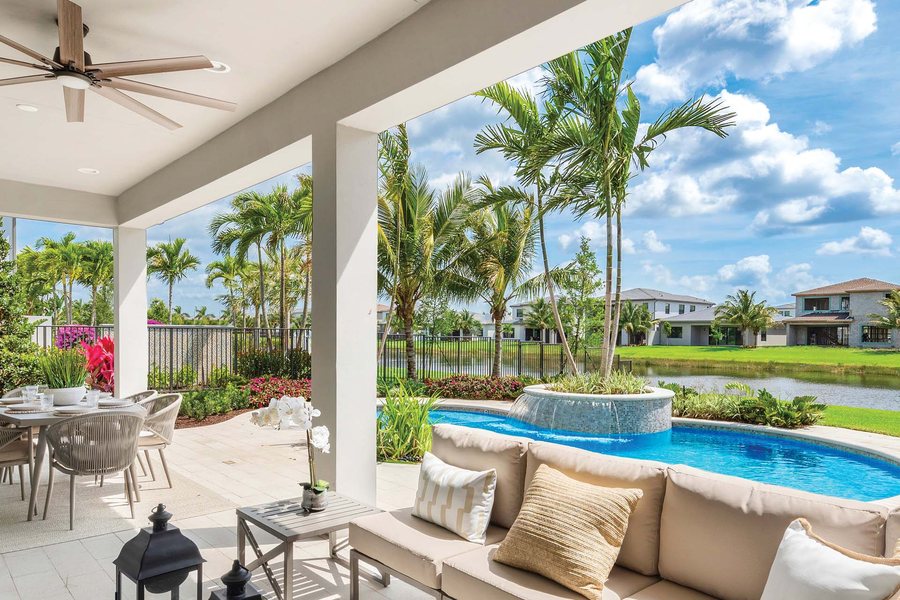
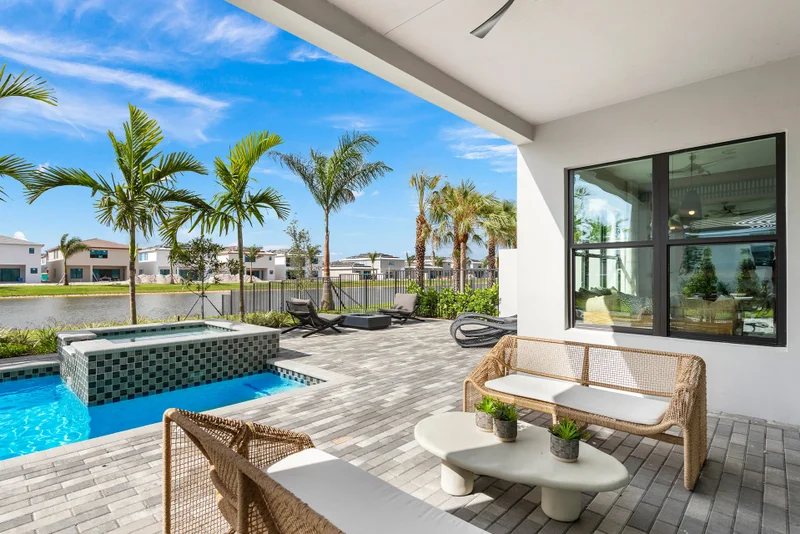
Look at nearby new construction and compare trade-offs. If a brand-new builder-warrantied home matters more than the Golf, FL address itself, buyers typically expand the search toward Boynton Beach, Lantana’s western edge, or further south into Boca Raton. For a concrete comparison of what new construction money buys elsewhere in Palm Beach County right now, look at Agave Boca in Boca Raton, which lays out floor plans and current pricing for a true ground-up new construction community. It’s a useful side-by-side: same county, completely different value proposition. In a true new construction community you’re paying for warranty coverage, modern layouts, and a known delivery date. In Golf, FL you’re paying for land and privacy on a timeline you largely control yourself. Neither is better across the board, they’re solving different problems.
Consider whether you actually need Golf, FL specifically, or just its lifestyle. A lot of buyers are drawn to the low density and golf course setting more than the exact municipal boundary. If that’s you, it’s worth reading Best Palm Beach County Suburbs for Families Relocating in 2026 before you lock in on one small village, because there are other low-density, golf-adjacent options in the county with more active building activity. Ask yourself honestly what’s actually driving the interest. If it’s the quiet and the lot size, there are other paths to that same feeling with far more inventory to choose from. If it’s specifically the Golf, FL address and the tight-knit, low-turnover community itself, then the limited inventory and older housing stock are simply the cost of getting what you actually want.
Due Diligence Checklist Before You Purchase
Because most homes here are older and the market is thin, due diligence looks different than it would for a new construction purchase where the builder handles most of it for you.
1. Get a full 4-point and wind mitigation inspection, not just a general home inspection. Given the age profile of homes in the village, insurers will want to see roof age, electrical panel type, plumbing material, and HVAC condition. This directly affects what your homeowners insurance premium looks like, and in this price range, insurance cost swings can be significant.
2. Pull the flood zone designation for the specific parcel, not just the general area. Flood zones can vary block to block in Palm Beach County. Know the zone before you make an offer, because it affects both insurance cost and whether flood coverage is required by your lender.
3. Review the golf course/HOA relationship in writing. “On the golf course” can mean different things depending on the parcel: direct frontage with an unobstructed view, a side lot with partial visibility, or simply proximity without a real sightline. Ask for the plat map and confirm what you’re actually buying, not what a listing photo implies. Also confirm whether golf club membership is mandatory, optional, or unrelated to homeownership, since this varies by community structure and materially affects your real carrying cost.
4. Check the roof and permit history through the county property appraiser and building department. For older homes, an unpermitted addition or an aging roof past its insurable life is one of the most common deal-breakers that surfaces late in a transaction. Pull this before you’re deep into a contract, not after.
5. Confirm lot lines and easements with a survey. Larger, older lots sometimes have easements for drainage, utilities, or shared access that aren’t obvious from a listing. This matters more here than in a newer platted subdivision where everything is already cleanly recorded.
6. Understand the municipal tax and service structure. A small, standalone village runs its own budget for services like police and public works. Ask your agent or the village clerk’s office for current millage rates and what’s included, so you’re comparing true carrying costs against a larger neighboring municipality like Boynton Beach or Lantana, not just comparing sticker price.
7. Get a real insurance quote before you go hard on the contract, not after. Given the age of most homes here, insurance can be the single biggest surprise in the transaction. A quote in hand before your inspection contingency expires gives you real leverage to negotiate repairs or price if the number comes back high.
8. Ask about well and irrigation systems separately from the main water supply. Some older Palm Beach County properties on larger lots use separate irrigation wells for landscaping rather than running everything off the municipal line. If a home has one, get it inspected and understand the maintenance cost, since it’s an added system most buyers coming from newer HOA communities have never had to think about.
Financing an Older Home in the Village
Financing here deserves its own conversation, because it’s another place buyers get surprised. Lenders underwrite older homes differently than new construction. Expect a closer look at roof age and remaining useful life, since many conventional and FHA loans have specific age or condition thresholds that can trigger a repair escrow or, in worse cases, a denial until issues are fixed. If you’re planning a teardown and rebuild, standard mortgage financing usually isn’t the right tool at all. Buyers in that scenario typically use either a cash purchase followed by a construction loan, or a specialized renovation/construction-to-permanent loan product, and both come with more paperwork and a longer approval runway than a typical resale purchase. Talk to your lender about the specific property, not a hypothetical one, before you write an offer. The appraisal and underwriting conversation for a 1970s or 1980s home on a large lot is a different process than what most buyers experienced on their last purchase in a newer community.
Schools, Commute, and Daily Life
Golf, FL sits close enough to both Boynton Beach and Lantana that daily life runs through those two towns for almost everything: groceries, restaurants, healthcare, and the beach. Federal Highway (US-1) runs along the eastern edge of the area, giving quick access south toward Delray Beach and Boca Raton, or north toward Lake Worth Beach and West Palm Beach. I-95 access is close by, and the Boynton Beach Turnpike interchange is a reasonable drive for anyone commuting west or working from home with occasional trips north to Palm Beach Gardens or south to Broward County.
Public school assignment follows Palm Beach County School District boundaries based on the specific address, so confirm zoned elementary, middle, and high schools for the exact parcel before you buy rather than assuming based on a neighboring ZIP code. Because the village is so small, most residents’ day-to-day school, shopping, and social life plugs directly into Boynton Beach and Lantana rather than a dedicated town center of its own, since the village itself doesn’t have that kind of commercial footprint. That means your actual quality of life here depends heavily on the surrounding corridor, not just the village boundary. Grocery runs, dining out, and everyday errands happen on Federal Highway and Congress Avenue, both a short drive from anywhere in the village, so don’t underweight how much your daily routine will actually take place outside the village line even though your address is inside it.
For buyers weighing this general area against other Palm Beach County options with more built-out downtowns and amenity bases, it’s worth reading how nearby markets stack up, like the comparison in West Palm Beach vs Palm Beach Gardens or Jupiter vs Palm Beach Gardens, even though those are further north. They’re useful for understanding the trade-off between a quiet, small-footprint town like Golf, FL and a larger suburb with its own retail, dining, and amenity infrastructure.
Working with an Agent Who Actually Knows This Market
Because so few homes trade here in a given year, generic MLS searches and portal alerts don’t work the way they do in a high-volume community. You need an agent who tracks the village specifically, watches for off-market conversations among longtime owners, and understands which lots have real golf course frontage versus which ones just border a cart path. A lot of what moves in Golf, FL never makes it to a wide public search in a meaningful window, because the buyer pool is small and word travels fast among people already familiar with the area. If your agent’s plan is to set up a standard portal alert and wait, you’ll lose the best lots to buyers who heard first.
Who Golf, FL Actually Fits
This is the part most listings won’t tell you honestly.
Golf, FL fits you if: you want a large, private lot, you’re not dependent on a builder warranty or move-in-ready finishes, you’re comfortable managing a renovation or rebuild project, you value low density and quiet over walkable retail, and you’re not trying to time a purchase around new construction incentives or a builder’s sales calendar.
Golf, FL is the wrong fit if: you need move-in-ready with modern systems and don’t want a renovation project, you’re relying on new construction financing incentives or a builder warranty for peace of mind, you want walkable amenities or a town center feel, or you’re working with a tight timeline and can’t wait out a thin resale market for the right lot to come up.
For an unfiltered look at day-to-day life here, including the trade-offs longtime residents actually mention, the honest 2026 review of Golf, FL covers the lived-experience side of this decision in more depth than pricing and inventory alone can.
The Real Bottom Line
Golf, FL isn’t a market you shop the way you’d shop a new construction community with a sales center and a price sheet. It’s a small, tightly held village where the land and the privacy are the product, inventory moves slowly, and due diligence has to work harder because the homes are older and the transactions are less standardized than a builder contract.
If that trade-off, land and quiet over new-build convenience, is what you actually want, Golf, FL delivers something increasingly hard to find in Palm Beach County: large lots, low density, and a real sense of separation from the growth happening all around it. If what you actually want is a warrantied, code-current new build, it’s worth comparing what your budget buys in a true new construction community before you commit to a renovation project here.
Either way, don’t guess on the numbers. Comment or message “GOLF” and I’ll send you current active and recently sold listings in the Village of Golf, along with a short list of comparable new construction options nearby if you want to see both sides before you decide.

Watch: learn more
Go deeper with my South Florida Insider videos.
Solterra: Everything You Need to Know Before You Visit
Solterra: Everything You Need to Know Before You Visit
More articles you might like
Golf, FL Real Estate Market 2026: Prices, Trends & What Buyers Should Expect
14 min readIs golf a Good Place to Live? Honest 2026 Review
13 min read
Buyer's Guide to Westlake, FL: What to Know Before You Purchase
13 min read
Buyer's Guide to Tequesta, FL: What to Know Before You Purchase
18 min read
Buyer's Guide to South Palm Beach, FL: What to Know Before You Purchase
19 min read