Aventura Condo Guide: Which Buildings Are Worth Buying and Why (2026)
Here is the revised post.
If you are trying to figure out which Aventura condo buildings are actually worth buying and why, the honest answer is that the building matters more than the view, the lobby, or the listing photos. Aventura has roughly three decades of condo construction sitting side by side, from 1970s-era towers around Turnberry to brand new construction still being marketed today. Some of those buildings have funded reserves, passed their structural inspections, and will hold value for the next 20 years. Others are one special assessment away from a very expensive surprise. This guide breaks down the market by tier, tells you what actually separates a good building from one to avoid, and gives you a checklist to run before you sign a contract.
This is not a “top 10 buildings” list dressed up with marketing language. It is the same due diligence framework I walk buyers through when they call me about a specific address in Aventura. I have had this exact conversation with a retired couple looking at a $1.2 million unit at Porto Vita, and with a first-time investor eyeing a $310,000 one-bedroom at Mystic Pointe. The questions do not change. Only the answers do.
Aventura Condo Guide: Which Buildings Are Worth Buying and Why
Aventura’s condo stock breaks into four rough categories, and knowing which category a building falls into tells you 80% of what you need to know before you even schedule a showing.
- Ultra-luxury, guard-gated, full-service (Porto Vita, the newer Williams Island towers), highest price per square foot, highest HOA, strongest resale demand from cash buyers and relocators.
- Resort and golf-adjacent (Turnberry Isle area, The Point at Turnberry), older bones, resort amenities, HOA fees that reflect decades of deferred maintenance catching up in some buildings.
- Value and rental-friendly (Mystic Pointe towers, Hamptons South), built mostly in the 1990s, lower entry price, the segment where reserve funding needs the closest look.
- New construction and near-new, fewer buildings, higher price per square foot up front, but you are buying ahead of the special assessment cycle that hits older buildings.
The mistake most buyers make is shopping by price per square foot alone. Two units can be priced identically and be completely different risks depending on where that building sits on its 30-year structural inspection timeline. A $600,000 unit in a building that just finished a milestone inspection with a clean report is a fundamentally different purchase than a $600,000 unit in a building that has never had one. The number on the listing does not tell you which one you are looking at. The paperwork does.
For the newest supply actually breaking ground right now, see New Construction Condos in Aventura: What Is Coming and What It Costs.
The Ultra-Luxury Tier: Porto Vita and Williams Island
Porto Vita
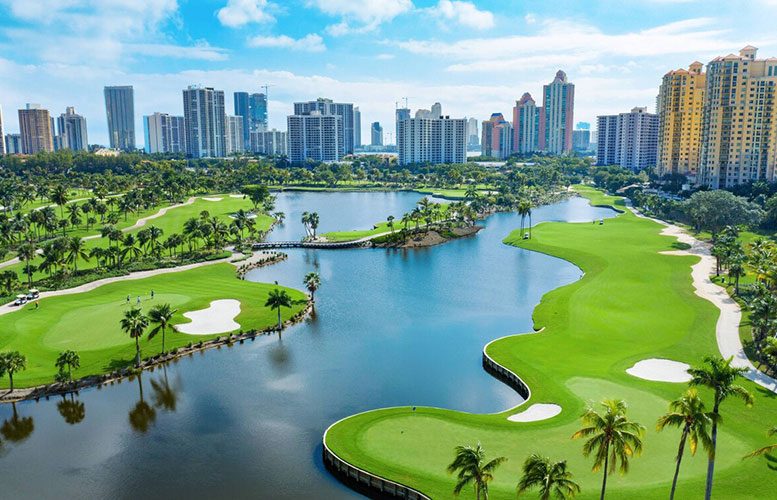
Porto Vita’s two towers (North and South) sit on 26 gated, waterfront acres near Turnberry, and it remains one of the most consistent performers in the Aventura market. Built in the early 2000s, the buildings have full-time staff, a private beach club shuttle, tennis, spa, and 24-hour valet and security. Resale units regularly run from the high $900,000s for smaller layouts into the $4 million-plus range for the largest waterfront residences. Most of the two- and three-bedroom units run somewhere between 2,200 and 3,800 square feet, which is considerably larger than what you find at that price point in comparable buildings closer to the beach.
What makes Porto Vita worth the premium is consistency: the association has historically kept reserves well funded, which matters enormously now that Florida requires Structural Integrity Reserve Studies (SIRS) on any condo building three stories or taller. Buyers should still ask for the most recent SIRS report and reserve study before writing an offer, not after. I tell every buyer the same thing here: a good reputation is not a substitute for the actual document. Ask for it in writing, read the funded percentage, and compare it to what the study recommends.
Williams Island
Williams Island is a private, guard-gated island connected to the mainland by a single bridge, with seven towers built in phases from the early 1990s (Uno, Dué, Tre) through the mid-2000s (Six, Seven). This is the single biggest variable in Aventura condo shopping: two buildings on the same island, ten years apart in construction, carry very different maintenance profiles.
The newer towers (Six and Seven) generally command the highest resale prices and the least reserve-funding risk. The earlier towers can still be excellent buys, especially for buyers who want the Williams Island lifestyle (marina, tennis, spa, private island club) at a lower entry point, but they deserve a harder look at HOA financials and any pending or recently completed structural work. HOA fees across the island typically run from roughly $1,200 to over $2,800 a month depending on tower, unit size, and amenity package. Get the exact number from the association in writing before you get attached to a unit.
A practical way to think about Williams Island: treat each tower as its own building, not as one community. I have seen buyers assume that because they liked the financials on one tower, the building next door is roughly the same. It is not. Uno and Dué are older construction with a different maintenance history than Six and Seven, and the reserve study, insurance quotes, and even the flood zone classification can vary tower to tower on the same 80 acres.
The Resort and Golf Tier: Turnberry Isle and The Point
Turnberry was Aventura before Aventura existed. Don Soffer’s Turnberry Associates developed the golf courses and resort in the 1970s, and several of the residential towers connected to that original footprint date back nearly as far. That history is part of the appeal (mature landscaping, an established country club culture, proximity to the Fairmont Turnberry Isle Resort) and part of the risk.
Buildings in this tier are more likely to be approaching, or past, the 30-year mark that triggers Florida’s mandatory milestone inspection under SB 4-D, the law passed after the Surfside collapse. That is not automatically disqualifying. A 40-year-old building with a passed milestone inspection and a fully funded reserve is a safer buy than a 15-year-old building that has been under-reserving. But it does mean these are the buildings where you ask for the inspection report first, before you fall in love with the golf course view.
Buyers who are drawn to this tier tend to be repeat South Florida owners, people who have owned a condo before and know what mature landscaping and an established social calendar are worth. That is a real value, and it is fair to pay for it. Just do not let the country club membership vibe substitute for reading the association’s most recent budget. Ask specifically whether the golf course and resort amenities are owned and maintained by the residential association or by a separate resort entity, because that changes who is responsible for what, and it changes what your HOA dues are actually funding versus what a resort membership fee covers separately.
The Point at Williams Island and comparable resort-adjacent towers sit in a similar category: strong amenities, established communities, and financials that need a closer read than a five-year-old building would.
The Value Tier: Mystic Pointe and Hamptons South
If you are a first-time buyer or an investor looking for rental yield, this is where most of the realistic activity happens. Mystic Pointe is a cluster of towers built mostly through the 1990s along the Intracoastal, with units that can still be found in the $250,000s to $500,000s depending on tower, floor, and view. Hamptons South, built in the mid-1990s, sits in a similar price band with resort-style amenities on a smaller scale than Porto Vita or Williams Island.
This is genuinely the segment where I tell buyers to slow down on the financials. Lower HOA dues can be a good thing, or it can mean an association that has been keeping fees artificially low by under-funding reserves, which eventually gets corrected with a large special assessment. Florida’s post-Surfside reserve laws are forcing many of these older, smaller associations to catch up all at once. Ask for:
- The most recent SIRS (Structural Integrity Reserve Study)
- Milestone inspection status if the building is 30+ years old (25+ years if it’s within three miles of the coast, which most of Aventura is)
- Two years of association meeting minutes
- Current reserve balance versus the study’s recommended balance
If a seller or listing agent cannot produce these documents quickly, treat that as information. For a full picture of what entry-level buying looks like right now across price points, see First-Time Buyer in Aventura: What the Entry Level Looks Like.
Why lower HOA fees are not automatically a win
A unit with a $500 monthly HOA and one with a $1,100 monthly HOA are not comparable unless you know what each fee actually funds. A well-run association with $1,100 dues that is fully reserved for roof, elevators, and concrete restoration is a better long-term hold than a $500-a-month building that is one special assessment letter away from becoming a $1,500-a-month building with an unbudgeted $30,000 bill attached.
A real example of how this plays out
I worked with a buyer in 2025 who was choosing between two nearly identical one-bedroom units in the value tier, both around 950 square feet, both listed within $15,000 of each other. Building A had a $580 monthly HOA. Building B had a $940 monthly HOA. On paper, Building A looked like the better deal. The SIRS told a different story: Building A’s reserves were funded at roughly 40% of what the study recommended for roof and plumbing work due within five years, with no special assessment plan yet approved by the board. Building B was funded at 95% and had already completed its concrete restoration two years earlier. The buyer went with Building B. Eight months later, Building A’s association approved a special assessment averaging just under $22,000 per unit. That is the entire argument for reading the documents before you fall for the monthly number on the listing sheet.
Waterfront and Marina Buildings
A meaningful share of Aventura’s condo inventory sits directly on the Intracoastal or has marina access, which is a different buying decision than a mall-adjacent tower. Waterfront buildings carry a price premium, but they also carry higher insurance costs and, in many cases, more aggressive reserve requirements because of direct exposure to the water. Marina-adjacent buildings like sections of Williams Island and the Aventura Marina area let owners lease or, in some buildings, own a boat slip, which is a real differentiator if that is part of the lifestyle you are buying into.
Boat slip access is worth pricing out separately from the unit itself. Leased slips in the Williams Island marina and nearby facilities have run anywhere from a few hundred dollars a month for a smaller slip to well over $1,000 a month for something that can handle a larger vessel, and availability is not guaranteed just because you own in the building. If a boat is the reason you are buying waterfront, confirm slip availability and cost with the marina operator directly, not with the listing agent, before you assume it comes with the unit.
Insurance is the other piece buyers underestimate on true waterfront property. Flood zone designation, wind mitigation, and the building’s own master policy all factor into what you will pay for an individual HO-6 policy, and waterfront buildings in flood-prone zones have seen some of the steepest premium increases in the last three years. Get an actual insurance quote before you close, not an estimate based on what a friend pays somewhere else in Aventura.
For a deeper look at what waterfront ownership actually costs and delivers day to day, see Waterfront Living in Aventura: Intracoastal Views and Marina Access.
What to Check Before You Buy: The Real Due Diligence List
This is the part most buyers skip, and it is the part that actually determines whether a building is “worth buying.” Here is the framework, in order:
- Reserve study and SIRS status. Florida law now requires condo associations for buildings three stories or taller to complete a Structural Integrity Reserve Study and fully fund reserves for the items it covers (roof, load-bearing walls, waterproofing, electrical, plumbing, and more). Ask when the last SIRS was completed and whether the association is funding at 100%.
- Milestone inspection status. Buildings within three miles of the coast (essentially all of Aventura) must complete a Phase One milestone inspection at 25 years, and every building must complete one at 30 years, with recertification every 10 years after. If a building is approaching that window, ask directly whether the inspection has been scheduled or completed, and ask for the report.
- Recent or pending special assessments. Ask the listing agent and, ideally, the association directly (through the estoppel and financial documents) whether any special assessment has been levied in the last three years or is under discussion.
- Insurance costs and coverage gaps. South Florida condo insurance has climbed sharply since 2022 to 2023. Ask what the master policy covers and what your individual unit policy (HO-6) will need to cover on top of it.
- Rental restrictions. If you are buying as an investor, confirm minimum lease terms and annual rental caps before you assume a rental income number. Some Aventura buildings limit leasing to once a year with a 6- or 12-month minimum; others are more flexible.
- Building age relative to construction quality. A 2005-built tower with hurricane-rated glass and concrete construction is a different risk profile than a 1970s tower that has been retrofitted over time. Ask about the original construction spec, not just the renovation history.
- Litigation and open permits. Ask whether the association is currently involved in any lawsuits, and check for open or unfinished building permits with the city. An open permit on structural or life-safety work is a sign that a project may be incomplete, which can complicate financing and insurance until it is closed out.
None of this is exotic. It is the same paperwork every serious buyer’s agent should be pulling before a contract goes hard, and it is the single biggest factor separating a “good building” from one to avoid, regardless of how the lobby looks on your first walkthrough.
Financing and Insurance Realities for Condo Buyers in Aventura
Two things have changed the Aventura condo market more than anything else in the last three years, and neither one is about location. The first is lender underwriting. Fannie Mae and Freddie Mac maintain “ineligible” lists for condo buildings with unresolved structural issues, significant deferred maintenance, or reserve funding below required thresholds. If a building lands on that list, conventional financing becomes difficult or impossible, and buyers are pushed toward cash or portfolio lending with higher rates. This is a real risk in the resort and value tiers where older buildings sometimes have not caught up on SIRS compliance.
The second is insurance. Master policy premiums for older Aventura towers have, in some buildings, more than doubled since 2021, and that cost gets passed to owners through HOA dues. When you are comparing two buildings with similar unit pricing, ask for the master policy premium history, not just the current number. A building whose insurance costs jumped 60% in the last renewal is telling you something about how insurers view its risk profile, and that trend tends to continue rather than reverse.
Practically, this means your pre-approval conversation with a lender should happen with the specific building in mind, not just your income and credit. Ask your lender directly whether the building you are considering is currently warrantable, and get that answer before you write an offer, not during your loan process when you are already under contract with a deadline.
Buildings and Situations That Deserve Extra Caution
I am not going to name a “blacklist,” because association financials change year to year and a building that under-funded reserves in 2022 may have corrected course by 2026. But the pattern that should slow you down is consistent:
- A building 25+ years old with no recent reserve study on file
- HOA dues that are noticeably below comparable buildings nearby with similar amenities
- A listing agent who cannot produce a SIRS, milestone inspection status, or recent meeting minutes within a day or two
- Multiple units sitting on the market for 120+ days in a building where comparable towers are moving faster, which often signals buyers are running into financing or insurance issues tied to the association’s financial health
If you run into any of these, it does not mean walk away automatically. It means order the documents, read them, and price the risk into your offer. In practice, that can mean negotiating a lower price to cover a projected special assessment, asking the seller to disclose in writing what they know about upcoming board decisions, or simply walking if the numbers do not work once you account for the real cost of ownership rather than the advertised HOA fee.
New Construction vs. Resale: A Different Kind of Trade-Off
New construction condos in Aventura carry a real advantage on this exact issue: you are buying ahead of the reserve and inspection cycle entirely, and the developer is required to fund reserves properly from day one under current Florida law. The trade-off is price per square foot, which typically runs meaningfully higher than a comparable resale unit in an established building.
Run the math both ways before deciding. A resale unit at $650 per square foot in a well-reserved building with a $950 monthly HOA and no assessment risk on the horizon can be a better long-term hold than a new construction unit at $900 per square foot with a lower HOA today that will still need its first major reserve contributions to ramp up over the next decade. Neither choice is automatically right. It depends on how long you plan to hold, how much certainty you want on maintenance costs, and whether you are buying to live in it or to rent it out.
For buyers weighing that trade-off directly, New Construction Condos in Aventura: What Is Coming and What It Costs breaks down current pricing against what is delivering and when.
Who Should Buy Where
Relocating families who want space, a real yard-adjacent feel, and top school access should look closely at whether a condo lifestyle fits at all before narrowing by building. Aventura’s school zoning and the private school options nearby matter more than which tower you pick. Start with Aventura Schools: What Families Need to Know.
First-time buyers should lean toward the value tier (Mystic Pointe, Hamptons South) with reserve documentation in hand, or look one tier up if budget allows for a newer Williams Island tower. See First-Time Buyer in Aventura: What the Entry Level Looks Like for real entry-point numbers.
Investors need to run the numbers on rental restrictions, HOA trajectory, and insurance before assuming a cap rate. A building with a one-year minimum lease and a fully funded reserve is a more predictable hold than a building with flexible leasing and a reserve study that has not been updated since before the current SIRS requirements existed. The math is covered in Aventura Condo Investment: What the Numbers Look Like in 2026.
Downsizers and retirees chasing full-service, low-maintenance living are the natural buyers for Porto Vita and the newer Williams Island towers, where the premium buys genuine peace of mind on the building’s financial health. For this buyer, the monthly HOA is not the number to minimize. It is the number to scrutinize for what it is actually funding.
Anyone relocating from out of state who is still deciding on Aventura versus a nearby suburb should back up one step first and read Aventura, Florida: The Complete Guide for 2026 and Moving to Aventura: Miami-Dade’s Upscale Condo City on the Water before narrowing down to specific buildings.
The Bottom Line
The building matters more than the unit. A gorgeous renovated unit inside a building with under-funded reserves is a worse buy than a dated unit inside a building that is financially sound and has passed its milestone inspection. Before you fall for a view in Aventura, ask for the SIRS, ask for the milestone inspection status, and ask about recent special assessments. That paperwork tells you more about whether a building is worth buying than any photo ever will.
If you are actively comparing specific buildings and want a straight read on the financials before you write an offer, send me the addresses you are considering and I will walk you through what to check. For where prices and inventory currently stand across the city, see the Aventura Real Estate Market Update: Condo Prices and Trends in Mid-2026.
More articles you might like
Aventura vs. Boca Raton: Condo Life vs. Suburban House, Which Fits Your Budget?
20 min readAventura, Florida: The Complete Guide for 2026
19 min readFirst-Time Buyer in Aventura: What the Entry Level Looks Like
13 min readAventura Schools: What Families Need to Know (2026 Guide)
13 min readNew Construction Condos in Aventura: What Is Coming and What It Costs
14 min read