The Oaks of Davie Review (2026): Prices, Floor Plans, HOA, CDD, and Who It's For
The Oaks of Davie: A Straight-Talk Buyer’s Guide to Broward’s Smallest New-Construction Gated Community
If you’re searching for an honest The Oaks of Davie review, here’s the answer up front: this is a 12-home, gated, custom estate community built by Rhino Homes at 1275 SW 130th Ave in Davie, with prices starting at $1,550,000 and floor plans ranging from about 3,094 to 4,866 air-conditioned square feet. It’s not a mass-production builder community. It’s a small, boutique infill project, and that changes everything about who should (and shouldn’t) buy here.
I’ve spent a lot of time on this site breaking down Marigold and Estates by Turnberry, the two other big new-construction stories in Davie right now. The Oaks of Davie is the third piece of that puzzle, and it’s the one buyers ask me about the least, mostly because it’s small and quiet compared to a national builder’s marketing budget. That doesn’t mean it’s not worth a serious look. It means you need someone to actually break down the numbers instead of repeating whatever’s on the sales brochure.
Small communities like this one get overlooked for a predictable reason. A production builder with 300 homesites can afford billboards, paid search, and a full-time sales team running open houses every weekend. A 12-home boutique builder can’t compete with that noise, even when the product itself is competitive or better in certain respects. That’s exactly why relocation buyers need someone digging into the actual numbers instead of assuming quiet means inferior. Sometimes quiet just means small.
The Oaks of Davie: The Basics
Rhino Homes says it’s been building in South Florida for 30-plus years, and here it’s working with a genuinely small footprint: 12 custom estate residences on a gated site off SW 130th Ave in Davie, FL 33325. As of this writing, the community is marketed as “nearly sold out,” meaning if you’re seriously considering it, you need to verify remaining inventory with the builder directly rather than assuming a plan or lot is still available. Twelve homes goes fast, especially when a builder is actively marketing “final homes remaining.”
The sales contact on record is agent Yaneth Jara through the builder’s office, and pricing on the community’s own materials starts at $1,550,000, with one plan (Lugano) shown as low as $1,499,000 depending on lot placement and selections. This is a two-story product across the board, no single-story option, which matters if you’re planning for aging in place or have a strong preference against stairs.
It’s also worth understanding what “custom” means in this context, because the word gets used loosely in new construction marketing. With a national production builder, “custom” usually means picking from three or four pre-set design packages, maybe swapping a countertop tier or a cabinet finish. With a 12-home builder like Rhino Homes, you’re closer to genuine structural and finish flexibility, within reason. That doesn’t mean you can redesign the floor plan from scratch, but it does mean the conversation with your builder rep looks different than it would at a 300-home Pulte or Lennar community. Ask specifically what’s changeable (finishes, some layout tweaks, exterior selections) versus what’s fixed (structural walls, roof lines, lot placement), because “custom” can mean very different things depending on how far along construction is on your specific lot.
Floor Plans and Real Prices
There are five floor plans in the collection, and the size range is wide enough that “The Oaks of Davie” isn’t really one product, it’s five different homes at different price points within a shared gated footprint.
Siena. Four bedrooms, three bathrooms, 3,094 air-conditioned square feet (about 3,533 total including garage and porch space). This is the entry point into the community. Two stories, flexible secondary spaces you can turn into a home office or playroom, and a primary bath the builder describes as spa-like. This is the plan I’d point a growing family toward if the priority is getting into the community at the lowest possible price without sacrificing the flexible-space option most young families end up needing within a year or two of moving in.
Lugano. Four bedrooms, four bathrooms, 3,079 air-conditioned square feet (about 4,004 total). This is the plan shown at the $1,499,000 price point in some marketing. The owner’s suite sits upstairs with a spa-style bath and dual walk-in closets, which is a meaningful upgrade over a standard single-closet primary suite. Notice that Lugano and Siena have almost identical air-conditioned square footage, but Lugano’s total is nearly 500 square feet larger. That gap is covered outdoor and garage space, and it’s a good example of why you shouldn’t compare plans on air-conditioned footage alone if outdoor living matters to your household.
Norkita. Four bedrooms, four and a half bathrooms, 3,356 air-conditioned square feet (about 3,852 total). What sets this plan apart is that secondary bedrooms get their own en-suite baths, plus terraces and porches. If you’re buying with adult children, in-laws, or frequent long-term guests, this is the plan built for that reality. I’d also point multi-generational households here over Turin or White Oak, because the en-suite structure matters more for daily privacy than raw square footage does.
Turin. Five bedrooms, five bathrooms, 3,628 air-conditioned square feet (about 4,486 total). Adds a versatile loft space and an owner’s suite with dual walk-in closets. This is where the collection starts feeling like a genuine estate home rather than a large single-family house. A buyer relocating from a Northeast or Midwest metro who’s used to a finished basement will likely gravitate toward Turin, since the loft functions as that flexible bonus space without needing to dig one out of the ground, which Florida construction doesn’t do anyway.
White Oak. Five bedrooms, five and a half bathrooms, 3,446 air-conditioned square feet (about 4,708 total). Marketed as the flagship of the collection, with a soaring main floor, a loft, and covered terraces throughout. This is the top of the range in both size and finish expectations, and it’s the plan I’d expect to command the highest resale premium if the remaining inventory allows you to still select it.
A quick note on the square footage numbers: the brochure breaks totals into first floor, second floor, and garage or terrace space separately, so the “total sq ft” figures include covered outdoor space and garage, not just conditioned living area. Ask for the exact conditioned-versus-total breakdown on whichever plan you’re evaluating, because that distinction affects appraisal and resale comparisons more than people realize. An appraiser values air-conditioned square footage very differently than covered porch space, and if you’re financing near the top of your comfort range, that distinction can affect how the appraisal supports your contract price.
What You Actually Get: Features and Finishes
Across all five plans, Rhino Homes is building to a consistent base spec: open-concept layouts with volume ceilings, gourmet kitchens with oversized islands, soft-close cabinetry, designer stone counters with full backsplashes, spa-style primary bathrooms with dual closets, impact-resistant windows and doors, smart-home technology, energy-efficient systems, and premium porcelain tile flooring throughout.
That’s a legitimate luxury base package for this price range in Broward County. Impact windows and doors as a standard inclusion, not an upgrade, matters more than most out-of-state buyers realize when they first start touring here. In a lot of production communities, impact glass is a line item you pay extra for, or worse, you’re stuck with impact-rated shutters instead of true impact glass. Having it built in standard is worth factoring into your price comparison against communities where it’s an add-on.
The bigger value proposition Rhino Homes is selling isn’t the base spec, though, it’s customization. Because you’re one of 12 buyers instead of one of hundreds in a production community, you have real room to personalize finishes in a way you generally don’t get with a national production builder. That’s worth something if you have a specific vision for your kitchen, your primary bath, or your outdoor living space and don’t want to be boxed into three pre-set design packages. It’s also worth something at resale, since a well-personalized home in a small, tightly held community tends to stand out rather than blend into a sea of near-identical floor plans, which is common in larger production neighborhoods where five houses on the same street share the same elevation.
What Buying From a Boutique Builder Actually Means Day to Day
This part rarely makes it into the marketing materials, but it matters for how you plan your move. A 12-home builder operates differently from a 300-home production company in ways that affect your timeline and your leverage.
On timeline, expect less rigidity and less predictability at the same time. A production builder has a repeatable construction schedule they run dozens of times a year, so they can usually tell you within a week or two when your home will close. A boutique builder working through a final handful of homes may have more flexibility to accommodate a specific closing date you need for a job relocation or a lease expiration, but they also don’t have the same volume-driven momentum, so ask directly about current build status on any remaining lot and get it in writing rather than assuming a verbal estimate holds.
On negotiating room, smaller builders finishing out a community sometimes have more incentive to move remaining inventory than a production builder does mid-community, especially if “nearly sold out” is accurate. That can mean movement on closing cost credits or selection allowances that a bigger builder with a longer runway wouldn’t offer. It’s worth asking directly, politely, and specifically, rather than assuming list price is fixed.
On warranty and post-closing service, a smaller company means fewer layers between you and the person actually fixing a problem, which can be a real advantage, but it also means less institutional redundancy if key staff turn over. Ask who handles warranty claims after closing and how that’s structured, since it’s a fair question for any builder regardless of size, but it carries more weight with a 12-home company than a national brand with a dedicated warranty department in every region.
HOA, CDD, and the Real Monthly Cost
This is where I have to be straight with you instead of repeating marketing copy: Rhino Homes has not published a specific HOA dollar figure for The Oaks of Davie in its public materials, and there’s no CDD (Community Development District) fee associated with this community that I can verify.
That second part actually makes sense structurally. A CDD is a special taxing district municipalities use to fund infrastructure, roads, water and sewer lines, drainage, sometimes amenities, for large master-planned developments, and the developer recoups that upfront infrastructure cost through a bond that gets passed to homeowners as a CDD assessment over 20 to 30 years. That mechanism exists because building infrastructure for hundreds of homes is expensive and municipalities want it funded without touching general tax revenue. A 12-home infill project on an existing parcel off SW 130th Ave doesn’t carry that same infrastructure burden, so it’s reasonable that there’s no CDD here. But “reasonable” isn’t the same as “confirmed,” so get it in writing before you assume it.
The HOA is a different story, and here’s the honest framing: with a gated 12-home community, you’re still paying for private road maintenance, the gate itself, common landscaping, and likely a reserve fund for long-term capital repairs. With only 12 homes splitting those fixed costs instead of 200 or 300, the per-household HOA number can actually run higher than what you’d see in a larger community, even though there’s less common area to maintain overall. That’s simple math: a private gate and a shared road cost roughly the same to maintain whether 12 households or 250 households are splitting the bill, so smaller communities often carry a higher per-door HOA figure. Don’t assume small automatically means cheap on the monthly side.
That HOA fee needs to be requested directly from the sales office and reviewed in the actual HOA documents (the CC&Rs and the budget) before you sign anything, not estimated from a brochure. If you want a real-world example of how much detail matters here, I wrote a full breakdown of Marigold HOA & CDD Fees showing exactly what buyers pay monthly there, and it’s a useful comparison point precisely because Marigold’s numbers are published and Oaks of Davie’s aren’t (yet). Ask for it in writing, ask what’s included, ask whether there’s a separate master association on top of any community-level HOA, and ask how the reserve fund is currently funded relative to the state’s reserve study requirements. That last question matters more since Florida tightened structural reserve rules in recent years, and buyers who skip it sometimes get surprised by a special assessment down the road.
Location, Commute, and Schools
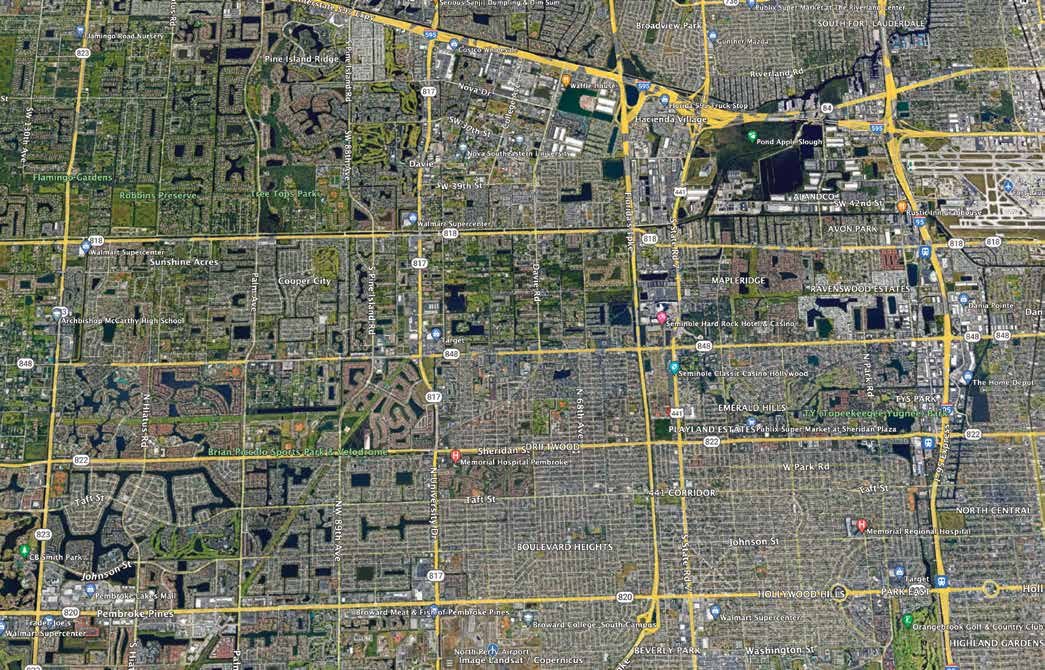
The Oaks of Davie sits at 1275 SW 130th Ave, which puts it in the corridor west of Flamingo Road and reasonably close to I-595, giving you access east toward Fort Lauderdale and west toward the Sawgrass Expressway. It’s also within a reasonable drive of Nova Southeastern University and the broader Davie/Cooper City medical and education corridor, which matters if your household includes anyone working in healthcare, education, or at NSU itself. For a household commuting into downtown Fort Lauderdale or the Cypress Creek office corridor, I-595 access from this location is a genuine advantage over communities further west that add real minutes to a rush-hour commute.
Here’s the part that trips people up, and it’s important enough that I’m putting it in its own section: the community’s own brochure lists Plantation Elementary, Plantation Middle, and Plantation High as the associated schools, despite the Davie mailing address. That’s not unusual in this part of Broward, school zoning boundaries don’t always match municipal or mailing address lines, but it means you cannot assume “Davie address equals Davie schools” here. If school zoning is a decision-driving factor for your family (and for most buyers at this price point, it is), confirm the exact zoned schools for the specific lot you’re considering directly through Broward County Public Schools’ boundary tool, not through the builder’s marketing packet. Zoning can also shift between when you go under contract and when the home is delivered, so re-verify close to closing if that timeline stretches. I’ve seen relocation buyers assume a school assignment based on a sales rep’s answer, only to find the actual zoning changed by the time they closed. It’s a five-minute check that prevents a genuinely painful surprise.
The Oaks of Davie Review: How It Stacks Up Against Marigold, Estates by Turnberry, and Vineyards
This is the section that actually helps you make a decision, because The Oaks of Davie doesn’t exist in a vacuum. There are at least three other serious new-construction conversations happening in Davie right now, and where you land depends on what you’re actually optimizing for.
Against Marigold. Marigold, built by Pulte Homes, starts from $1,335,990, meaningfully below The Oaks of Davie’s $1,550,000 entry point. Pulte is also a production builder with far more homes, more standardized processes, and a track record you can research at scale. If price matters more to you than boutique customization, Marigold is the more defensible choice, and I’ve written extensively about whether it holds up: Is Marigold Worth It?, Marigold Floor Plans Explained, and the full Marigold Review if you want the same numbers-first breakdown for that community. What you give up moving from The Oaks of Davie to Marigold is the small-community feel and the customization latitude that comes with only 12 total homes.
Against Estates by Turnberry. On the other end, Estates by Turnberry runs from roughly $1.7 million into the $2.2 million range, and the entire value proposition there is lot size, homesites in the 20,000 to 25,000-plus square foot range, plus a guest casita option. The Oaks of Davie is not competing on lot size. If sprawling acreage-adjacent lots matter to you more than anything else, Estates by Turnberry is the right conversation, and I broke that down fully in the Estates by Turnberry Review. The Oaks of Davie sits in the middle: more expensive and more exclusive than Marigold, but without the massive lot sizes that justify Estates by Turnberry’s top-end pricing.
Against Vineyards. Vineyards is the fourth Davie new-construction option worth cross-checking before you commit anywhere. I’d treat it the same way I’m treating this whole comparison: pull the current floor plans and pricing directly before you rule it in or out, because inventory and pricing in this corridor move fast enough that anything I’d tell you today could be stale by the time you tour.
The pattern across all four communities is the same lesson I give every relocation buyer looking at new construction in Davie: the number on the sign is never the whole story. Lot size, HOA structure, CDD presence, and how many total homes are in the community all change what you’re actually paying for, even when the base square footage looks similar on paper. A $1,550,000 home in a 12-home gated community and a $1,550,000 home in a 250-home production community are not the same purchase, even if the square footage on the spec sheet matches almost exactly.
Three Buyer Scenarios: Where Each One Actually Lands
I get versions of the same three conversations from relocation buyers looking at Davie, so let me walk through how each one plays out against these four communities.
Scenario one: the relocating family prioritizing budget. A family moving from a higher-cost metro, comfortable up to about $1.4 million, who wants new construction and good schools without stretching. This buyer belongs at Marigold, not The Oaks of Davie. The $200,000-plus gap between Marigold’s entry price and The Oaks of Davie’s is real money, and Marigold’s published HOA and CDD numbers give this buyer the budget certainty a first relocation purchase usually calls for.
Scenario two: the move-up buyer who wants exclusivity and finish control. A buyer who’s owned before, has equity to deploy, and specifically wants fewer neighbors and more say over finishes than a production builder allows. This is the Oaks of Davie buyer, assuming the remaining inventory still includes a plan and lot that fits, and assuming they’re comfortable with a two-story layout and an unpublished HOA figure they’re willing to chase down before contract.
Scenario three: the buyer chasing acreage-adjacent space. A buyer whose top priority is a large, private lot, room for a pool, a yard that doesn’t back directly onto a neighbor’s fence, maybe future space for a casita. This buyer should be touring Estates by Turnberry first, not The Oaks of Davie, because lot size is the entire premium proposition over there, and no amount of finish customization at The Oaks of Davie substitutes for square footage of dirt.
If none of those three scenarios describe you cleanly, that’s normal, and it’s exactly the kind of situation where a direct conversation beats guessing from four different brochures.
Who The Oaks of Davie Is Actually For
Buy here if you want a genuinely small, gated community, 12 total homes total, where you’re not going to be one of 400 driveways on a single HOA roster. Buy here if customization matters to you and you want more say in your finishes than a national production builder typically allows. Buy here if you’re comfortable with a two-story layout (there’s no single-story plan in this collection) and you’re targeting the $1.5 million to $2 million-plus range regardless of exact lot size.
Buy here if the Davie/Plantation corridor, with proximity to NSU, I-595, and the Flamingo Road corridor, fits your commute and lifestyle needs, and if you’re not locking your decision to a specific elementary school without first confirming zoning yourself.
Who Should Skip It
Skip The Oaks of Davie if your budget realistically caps below $1.5 million, since Marigold gets you new construction in the same city for over $200,000 less. Skip it if a large lot, a quarter acre or more, is non-negotiable for you, since Estates by Turnberry is built specifically around that need and The Oaks of Davie isn’t. Skip it if you need a single-story home; every plan here is two stories. And skip it, or at least pump the brakes, if you can’t get firm HOA numbers and school zoning confirmation before you go under contract. A boutique community with unpublished HOA figures is not a reason to walk away, but it is a reason to slow down and get everything in writing.
The Real Next Step
Here’s what you actually need to do if The Oaks of Davie is on your shortlist: get the current remaining inventory count, request the written HOA budget and any master association details, confirm your specific lot’s school zoning through the county’s official tool (not the brochure), and walk the Siena or Lugano in person if budget is a factor, since those are the two most accessible entry points into the collection.
If you want a second opinion on how The Oaks of Davie compares to what else is available in Davie right now, that’s a five-minute conversation, not a sales pitch. DM me “OAKS” and I’ll send you the current floor plan pricing sheet along with a side-by-side against Marigold and Estates by Turnberry so you can make an educated decision instead of guessing off a brochure.
More articles you might like
Vineyards Review (2026): Prices, Floor Plans, HOA, CDD, and Who It's For
15 min readMarigold Review (2026): Prices, Floor Plans, HOA, CDD, and Who It's For
17 min readEstates by Turnberry Review (2026): Prices, Floor Plans, HOA, CDD, and Who It's For
13 min readIs Vineyards Worth It? An Honest Look at D.R. Horton's Davie Community
13 min readVineyards in Davie: The New Construction Guide (Floor Plans, Pricing, What to Know)
15 min read