Is Palm Springs a Good Place to Live? Honest 2026 Review
Is Palm Springs a good place to live? Honest 2026 review: yes, for the right buyer. Palm Springs, Florida is one of the most affordable, centrally located villages in Palm Beach County, and if your priority is a short commute to I-95, the Turnpike, and Palm Beach International Airport without paying West Palm Beach or Palm Beach Gardens prices, it’s a legitimate option. But it is not a resort suburb, it is not a new construction market, and it is not the pick for buyers who want top-to-bottom A-rated schools or a quiet, low-density feel. This guide breaks down exactly who Palm Springs works for, what it actually costs, and what most agents won’t tell you before you buy.
I’ve worked enough Palm Beach County buyers to know Palm Springs gets overlooked or misunderstood constantly. People confuse it with Palm Springs, California (it has nothing to do with that market). Others assume it’s part of Lake Worth Beach or Greenacres because the borders blend together so seamlessly, and a fair number of buyers only discover the village exists because their lender pre-approval pushed them out of Lake Worth Beach and their agent pulled up a map. So let’s start with the basics, then get into the real tradeoffs, because the tradeoffs are where most people either save themselves a headache or walk into one.
Where Palm Springs Actually Is
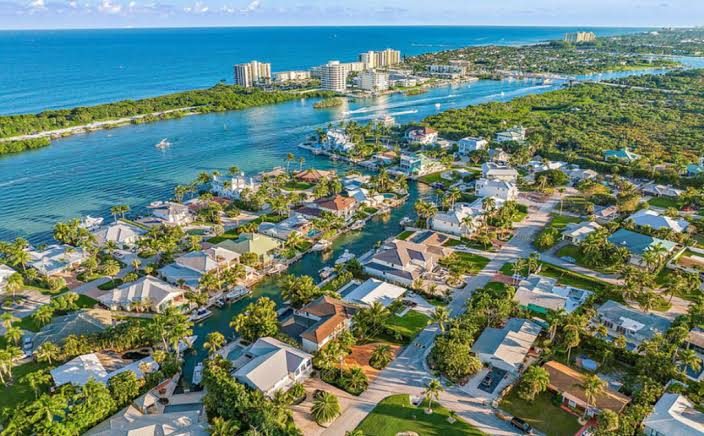
Palm Springs is a village of roughly 5 square miles sitting almost dead center in Palm Beach County, wedged between Lake Worth Beach to the south, Greenacres to the west, and unincorporated West Palm Beach to the north and east. The main corridors are Congress Avenue, Forest Hill Boulevard, 10th Avenue North, and Haverhill Road. If you know those four streets, you know Palm Springs. The village packs a population in the range of 20,000 residents into that small footprint, which tells you most of what you need to know about the density before you even look at a single listing.
The location is genuinely one of the strongest arguments for living there. You’re about 10 minutes from I-95, 10 to 15 minutes from the Florida Turnpike, roughly 15 minutes from Palm Beach International Airport, and 15 to 20 minutes from downtown West Palm Beach. The beach at Lake Worth is a straight shot down 10th Avenue North, usually 10 to 12 minutes depending on the light at Dixie Highway. For anyone who works a normal commuter job in West Palm Beach, Boca Raton, or even Fort Lauderdale on a bad traffic day, that centrality is worth real money, even if the house itself is modest. I’ve had clients run the math and realize the time they save on a daily commute from Palm Springs versus a similar-priced home further west in Royal Palm Beach adds up to hours a week, and hours a week is not a small thing when you’re also raising kids or working a second job.
The village also sits right next to John Prince Park, a 726-acre Palm Beach County park with a lake, a public golf course, a dog park, biking and walking trails, and a campground. It’s an underrated amenity that a lot of buyers never factor in until they’ve lived there a few months and realize they have a free, massive recreational space five minutes from home instead of paying HOA dues for a private clubhouse pool that gets used twice a summer.
So, Is Palm Springs a Good Place to Live in 2026? Who It Actually Fits
Here’s what you really need to know before you decide: Palm Springs works best for a specific type of buyer, and it’s a bad fit for a different type. Don’t force it either way.
Palm Springs fits well if you are:
- A first-time buyer priced out of Lake Worth Beach, Greenacres, or Palm Beach Gardens who needs a lower entry point without leaving central Palm Beach County
- A commuter who values drive time to I-95, the Turnpike, or PBI more than a big lot or a new kitchen
- A retiree or downsizer looking at 55+ manufactured home and co-op communities, where Palm Springs has one of the largest concentrations in the county
- An investor looking for cash-flowing rentals in a dense, working-class market with steady demand
- Someone who wants to be five minutes from a huge free county park (John Prince) rather than paying HOA dues for a private clubhouse
Palm Springs is probably the wrong fit if you are:
- A buyer who wants brand new construction. There is essentially none being built in the village at this point, it’s built out
- A family set on getting into the highest-rated elementary and middle schools in the county without paying for a magnet or charter seat
- Someone who wants a quiet, low-density, big-lot feel. Palm Springs is one of the more densely populated municipalities in Palm Beach County for its size
- A buyer who wants resort-style amenities (multiple pools, tennis, fitness centers, gated golf) as part of the HOA package
If you fall into that second list, it’s worth comparing Palm Springs directly against the best Palm Beach County suburbs for families relocating in 2026 before you commit, because there are suburbs 15 to 20 minutes away that solve for schools and space in a way Palm Springs simply doesn’t try to.
Two Real Buyer Scenarios
I’ll make this concrete, because “who it fits” is easier to picture with actual people.
Scenario one: the young couple priced out of Lake Worth Beach. A couple in their late twenties, both working in West Palm Beach, gets outbid twice on 3 bedroom homes in Lake Worth Beach in the low $400ks. Their lender tells them their real ceiling is closer to $370,000. Palm Springs puts them in a similar-sized older ranch home, five minutes from where they were already looking, with a shorter commute than half the alternatives further west. They accept an older roof and no HOA in exchange for staying close to work and the beach. That’s the trade, and for this buyer it’s a good one.
Scenario two: the retiree from the Northeast looking to downsize. A retired couple selling a paid-off home up north wants to be mortgage-free in Florida without buying into a $500,000 55+ community in Boynton Beach. They look at a 55+ manufactured home community in Palm Springs where the home itself is a fraction of that price. What trips them up is assuming “no mortgage” means “no monthly cost.” Once they see the lot rent or co-op fee, plus the master HOA charges, the math looks different than they expected. This is the buyer who needs the checklist further down in this guide more than anyone else.
Home Prices in Palm Springs: What You Actually Get
Palm Springs is a value play, and the housing stock reflects that. Most of the village was built out between the 1960s and 1980s, with pockets of newer infill townhomes and a handful of more recent builds scattered in. That means older bones, but also lower prices than almost anywhere else inside the I-95 corridor in central Palm Beach County.
Single-family homes
Older ranch-style single-family homes, typically 3 bedroom, 2 bath, 1,200 to 1,800 square feet, are the backbone of the market. Expect a wide range depending on condition, updates, and whether the roof and AC have been replaced. Move-in-ready, updated homes will run meaningfully more than a home that still has the original 1975 kitchen and a roof nearing the end of its life. Most of these neighborhoods have no HOA at all, which keeps monthly costs down but also means there’s no enforcement mechanism if a neighbor lets their property go. I tell buyers to walk the immediate block, not just the listing photos, because in a no-HOA pocket, one neglected yard two doors down tells you more about the street than the listing description ever will.
Townhomes and condos
There’s a decent supply of townhomes and small condo communities, which tend to run below single-family pricing and usually carry an HOA fee that covers exterior maintenance, roof, and sometimes water or landscaping. These are worth a close look for buyers who want lower maintenance without the price jump into Lake Worth Beach’s condo market. If you’re weighing a townhome here against a condo closer to the water, ask directly what the HOA covers on the roof and structure, because in older buildings that line item is often the difference between a manageable monthly fee and a special assessment down the road.
55+ manufactured home and co-op communities
This is where Palm Springs really stands apart. The village has one of the largest concentrations of age-restricted manufactured home and co-op communities in Palm Beach County. Entry prices in these communities can be dramatically lower than a traditional single-family home, but you’re either buying the home and leasing the land (lot rent) or buying into a co-op share, and monthly fees can add up. Always get the exact HOA or co-op fee, what it covers, and whether there’s a land lease or a share purchase before you fall in love with the sticker price. This structure trips up a lot of out-of-state retirees who assume “no mortgage” means “no monthly housing cost,” and it’s the single most common misunderstanding I run into with buyers relocating from up north who’ve never dealt with a land-lease community before.
It’s also worth knowing that financing on land-lease manufactured homes works differently than a traditional mortgage. Some lenders won’t touch it at all, others require a specific chattel loan product with a shorter term and a higher rate than a conventional 30-year mortgage. If you’re planning to finance rather than pay cash, confirm your lender actually has a product for this property type before you write an offer, not after your loan officer calls you back with bad news.
For a deeper breakdown of actual price bands, absorption, and how Palm Springs is trending against the rest of the county, read the full Palm Springs, FL real estate market 2026 report. It goes further into pricing trends than a single review post can.
Schools in Palm Springs
Palm Springs is served by the School District of Palm Beach County, and like most of the older central corridor, school assignment depends heavily on your exact address. You’ll generally be zoned into elementary schools serving the Palm Springs and Lake Worth Beach area, with middle school options like Tradewinds Middle, and high school zoning that typically lands at John I. Leonard High School or Santaluces Community High School depending on which side of the village you’re on.
The honest read: schools in this pocket are a mixed bag, not uniformly A-rated the way you’ll find in parts of Wellington or western Boynton Beach. Families who make school ratings the number one priority should cross-reference the exact address against the district’s current boundary maps before writing an offer, not after. This is one of the biggest tradeoffs of the location, and it’s the main reason Palm Springs skews more toward first-time buyers, retirees, and investors than toward families chasing top-tier public schools.
That said, don’t write off the village entirely if you have school-age kids. Some families make it work by pairing a Palm Springs home purchase with a charter school application or a magnet program elsewhere in the district, since the central location actually makes commuting to a magnet school in West Palm Beach or Lake Worth Beach more realistic than it would be from a suburb further west. It’s not the path for every family, but I’ve seen it work for buyers who wanted the location and were willing to put in the extra effort on the school side.
The Tradeoffs Nobody Tells You About
This is the part most listing descriptions skip.
Density and traffic. Palm Springs packs a lot of housing into about 5 square miles. Forest Hill Boulevard and Congress Avenue both carry heavy traffic, especially during school drop-off and evening commute windows. If you’re coming from a suburban, wide-open market, the adjustment takes time. Street parking in some of the older single-family pockets and townhome communities is tighter than what buyers coming from newer suburbs are used to, so if you own more than two vehicles, ask about parking specifically before you assume the driveway and street will absorb everything.
Aging housing stock. A large share of homes are 40 to 60 years old. That means roofs, AC systems, and electrical panels are at or past their expected lifespan in a meaningful chunk of the inventory. This isn’t a dealbreaker, but it changes your inspection strategy completely. Budget for a full four-point inspection and wind mitigation report before you even think about insurance quotes.
Insurance costs. Older roofs in South Florida directly drive up homeowners insurance premiums, sometimes dramatically. A 1978 roof versus a 2015 roof can be the difference between an insurable home and one that requires a roof replacement before closing just to bind a policy. Get a quote during your inspection period, not after closing. I’ve had deals where the buyer loved the house, the inspection came back fine structurally, and the insurance quote alone changed the entire offer strategy because the premium was double what they’d budgeted.
Limited new construction. If your dream is a brand new home with a builder warranty, modern floor plan, and impact windows as standard, Palm Springs is not that market. Compare it honestly against a community like Westlake, which was built specifically as a new construction master plan and still has active building happening. Two very different products, two very different price points, and two very different buyer profiles.
HOA variability. Many single-family pockets have zero HOA, which some buyers love for the freedom and others hate for the lack of enforcement. The 55+ communities sit at the opposite end, with co-op or HOA structures that come with real monthly costs and rules. Know which category you’re buying into before you get attached to a specific house.
Noise and flight patterns. Because of how central and close to PBI the village sits, some pockets of Palm Springs get more air traffic noise than buyers expect, especially depending on runway usage that day. It’s not a dealbreaker for most people, but if you’re sensitive to it, visit at different times of day before you commit, the same way you’d check traffic patterns.
Things to Know Before You Buy in Palm Springs
Here’s a practical checklist, the kind of thing I walk every buyer through before they write an offer in this village:
- Confirm the flood zone. Parts of central Palm Beach County sit in different FEMA flood designations block by block. Pull the flood zone for the exact parcel, not the general area, and get a flood insurance quote before you’re under contract.
- Get the age of the roof and AC in writing. In a market this old, this single data point moves your insurance premium more than almost anything else.
- Ask if there’s an HOA, and if so, get the full budget. If it’s a 55+ community, find out whether you’re buying real property, a share, or a leased-land manufactured home. These are legally and financially very different situations.
- Check the exact school zoning for the address, not the general village, since boundaries can split within a few blocks.
- Drive the block at different times. Morning commute, evening, and weekend. Density changes the character of a street more than almost any other factor.
- Compare against Lake Worth Beach and Greenacres before you decide. Palm Springs sits between both, and depending on the specific street, you may find a comparable price with a different feel just a few minutes away.
- Confirm financing early if you’re looking at a manufactured home or co-op. Not every lender offers a product for land-lease or co-op share purchases, and finding this out after you’ve written an offer wastes everyone’s time.
- Ask about permits on any additions or updates. Older housing stock in this corridor sometimes has unpermitted additions or enclosed patios. Pull the permit history through the village before closing, not after you try to sell it yourself in ten years.
If you want the full step-by-step process for purchasing here, including financing, inspection order of operations, and negotiation strategy specific to this market, read the buyer’s guide to Palm Springs, FL.
Palm Springs vs Nearby Suburbs
The reality is Palm Springs doesn’t exist in a vacuum. Buyers cross-shopping this village are almost always also looking at Lake Worth Beach, Greenacres, and sometimes further out to Palm Beach Gardens or Westlake. Here’s how it stacks up:
- Palm Springs vs Lake Worth Beach: Lake Worth Beach gives you closer beach access and more walkable, artsy downtown energy, generally at a higher price point. Palm Springs is more residential and central, with easier highway access.
- Palm Springs vs Greenacres: Greenacres tends to feel slightly less dense in pockets, with a mix of older and newer housing, and is worth a direct look if density is your main concern about Palm Springs.
- Palm Springs vs Westlake: No comparison on age of housing stock. Westlake is a true new construction master plan with modern amenities and a higher price floor. If budget allows and new construction matters to you, Westlake wins. If budget and central location matter more, Palm Springs wins.
- Palm Springs vs Palm Beach Gardens or Jupiter: These are a different tier entirely, both in price and in amenity level. If you’re comparing Palm Springs against PBG or Jupiter, you’re really asking a budget question first. Read the West Palm Beach vs Palm Beach Gardens breakdown to understand what that price jump actually buys you.
The Investment and Rental Angle
Palm Springs also comes up a lot with investors, and it’s worth addressing directly since I get the question often. The village’s density and working-class rental base make it a steadier cash-flow market than a lot of the more amenity-heavy suburbs, where rents are higher but so is the purchase price relative to what the market will pay in rent. Single-family homes here tend to rent quickly given the location, and townhomes with an HOA that covers exterior maintenance are attractive to investors who don’t want to manage roof and landscaping issues remotely. The tradeoff is the same one owner-occupants face: older systems mean more maintenance calls, and you need to underwrite a realistic capital expenditure reserve for roof and AC replacement rather than assuming years of trouble-free ownership. If you’re running numbers on Palm Springs as a rental purchase, get a contractor’s honest estimate on remaining roof and AC life before you finalize your cash flow projections, not after you own it.
Final Verdict
Is Palm Springs a good place to live? For the buyer who values location over square footage, affordability over amenities, and is willing to do real diligence on roof age, insurance, and HOA structure, yes, it’s a smart, underrated pick in central Palm Beach County. For the buyer chasing new construction, top-rated schools across the board, or a low-density feel, look elsewhere first and use Palm Springs as your fallback comparison, not your starting point.
Make wise decisions here. Get the roof age, get the flood zone, get the HOA or co-op documents, and drive the block more than once before you write an offer.
Thinking about Palm Springs or want it compared directly against Lake Worth Beach, Greenacres, or Westlake for your specific budget? DM me “PALM SPRINGS” and I’ll send you current listings and the honest breakdown for your situation.
Watch: learn more
Go deeper with my South Florida Insider videos.

The Best Flex-Space Townhome in West Palm Beach: Pulte's Nautical Plan
Inside Everton's Latitude II Model: $458k New Homes In Palm Beach
The Best Flex-Space Townhome in West Palm Beach: Pulte's Nautical Plan
More articles you might like
Palm Springs, FL Real Estate Market 2026: Prices, Trends & What Buyers Should Expect
14 min readBuyer's Guide to Palm Springs, FL: What to Know Before You Purchase
13 min read
Is Westlake a Good Place to Live? Honest 2026 Review
13 min read
Is West Palm Beach a Good Place to Live? An Honest 2026 Review
18 min read
Is Wellington, Florida a Good Place to Live? Honest 2026 Review
18 min read