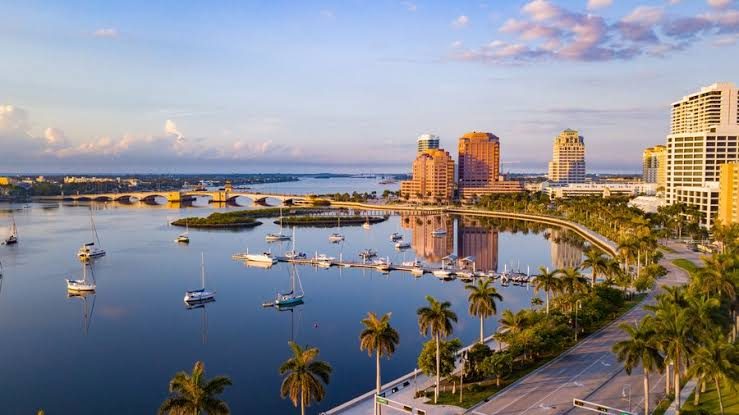
Buyer's Guide to Palm Beach Shores, FL: What to Know Before You Purchase
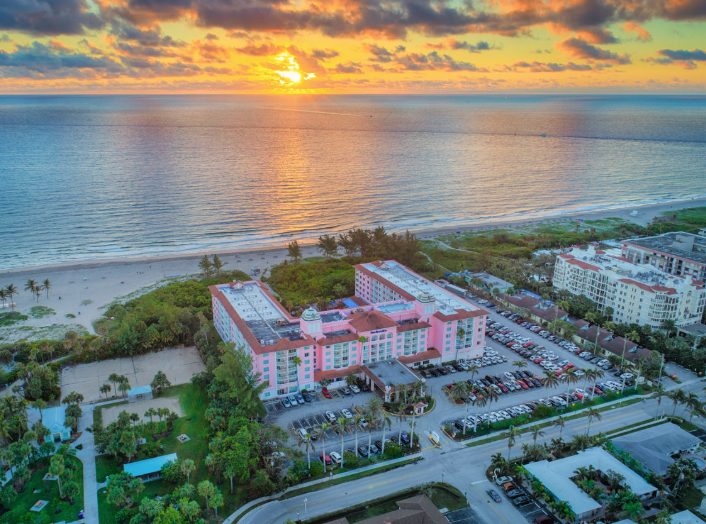
If you’re searching for a buyer’s guide to Palm Beach Shores, FL, what to know before you purchase comes down to three things: this is a condo town first and a house town second, your real monthly cost is HOA plus flood insurance, and there is almost no new construction left to buy. Everything else in this guide builds on those three facts.
Palm Beach Shores is a tiny, incorporated town on the southern tip of Singer Island in Palm Beach County. It’s about half a square mile, wedged between the Atlantic Ocean and the Lake Worth Inlet, with Peanut Island and the Intracoastal Waterway on its western edge. It has its own police department, its own town hall, and a year round population of around 1,100 people that swells noticeably in season. If you’ve driven north from Palm Beach across the Blue Heron Bridge, you’ve been through it, whether you realized it or not. Blue Heron Boulevard is the only road in and out, which tells you something important about this town before you even look at a single listing: it’s a destination, not a pass through, and that shapes everything from traffic patterns to who ends up buying here.
This guide is the deep version. If you want the market data side (median prices, days on market, inventory trends), read our Palm Beach Shores, FL Real Estate Market 2026 breakdown alongside this one. And if you’re still deciding whether this town fits your life at all, our honest review of what it’s actually like to live in Palm Beach Shores is worth reading before you tour a single unit.
What Palm Beach Shores Actually Is
Palm Beach Shores is not Palm Beach. It shares a name and a barrier island geography with its famous neighbor, but the character is completely different. Palm Beach is old money, hedges, and mega mansions. Palm Beach Shores is low key, mostly older condo buildings, a handful of small single family cottages on interior streets, a municipal beach, and a marina district on the Intracoastal side.
The town sits at the northern gateway to the Palm Beach barrier island chain, just south of Riviera Beach and Singer Island’s taller condo towers, and just across the inlet from Palm Beach itself. Locals use Peanut Island (accessible only by boat) for sandbar days, and Phil Foster Park, right at the base of the Blue Heron Bridge, is one of the most popular shore diving and snorkeling spots in the entire state. That single feature draws a specific kind of buyer: people who want water access and marine life without needing a boat.
Sailfish Marina and the Boating Culture
If you spend any time in Palm Beach Shores, you’ll notice the boating culture runs deeper than a few docked boats. Sailfish Marina, on the Intracoastal side of town, has been operating since the 1940s and still functions as a working marina with charter fishing boats, a dockside restaurant, and slips that get used, not just admired. This matters for buyers because it tells you the marina district isn’t cosmetic. People who buy on the Intracoastal side of Palm Beach Shores are often buying into a lifestyle built around the Lake Worth Inlet, which puts them in open ocean water in minutes without navigating miles of no wake zones. If boating access is part of your decision, ask specifically whether a building offers slip leases or ownership, because not all of them do, and the ones that don’t will send you to Sailfish Marina’s waitlist instead.
The Geography Shapes the Inventory
Because the town is so small and fully built out, the housing stock breaks into three real categories:
- Older low rise and mid rise condo buildings, mostly built in the 1960s through the 1980s, on both the ocean side and the Intracoastal side.
- A small number of single family homes, maybe 150 to 200 total, on the interior residential streets away from the water.
- A few newer or renovated condo buildings, generally taller, with more amenities and higher HOA fees.
There is no fourth category. Palm Beach Shores does not have new construction subdivisions, townhome communities, or master planned developments, because there is no vacant land left to build them on. If new construction is a priority for you, you need to look elsewhere in the county, which we cover further down.
The interior streets, the ones a block or two off the water, are where the single family cottages sit. Lots here are small by South Florida standards, often a quarter acre or less, and many of the homes date to the same 1950s and 1960s wave of construction as the condo buildings around them. Some have been renovated top to bottom. Others are original, right down to the terrazzo floors and jalousie windows, and are priced accordingly. If you’re comparing a dated single family home here to a renovated condo two blocks away, remember you’re not just comparing square footage, you’re comparing a no HOA lifestyle against a managed building, and both have real costs attached that don’t show up in the list price.
Buyer’s Guide to Palm Beach Shores, FL: What to Know Before You Purchase, Price by Price
Here’s what your money actually buys as of 2026. These are realistic ranges based on current inventory, not aspirational numbers, and they’ll shift with the market, so cross reference with our market update post for the latest.
Under $450,000: Entry Level Condos
At this price point you’re typically looking at a one bedroom, one bathroom unit in one of the older low rise buildings, usually on the Intracoastal side or a block or two back from direct oceanfront. These buildings were built well before modern hurricane codes, so expect dated finishes, smaller floor plans (600 to 800 square feet is common), and HOA fees that can run higher than the unit’s age would suggest, because older buildings need more reserve funding to meet Florida’s post 2022 structural requirements.
This tier tends to attract two kinds of buyers: retirees on a fixed income who want a genuinely small, low-maintenance footprint, and investors looking for a rental unit near the water. Both groups need to slow down here more than at any other price point, because the entry price is what makes these units look affordable, and the HOA fee plus a possible special assessment is what determines whether they actually are. A unit that lists for $380,000 with a $750 monthly HOA fee and a fully funded reserve account is a very different purchase than the same price and fee with a reserve account that’s 40 percent funded. The listing photos will look identical. The financial reality won’t be.
$450,000 to $750,000: The Mid-Tier Two Bedroom
This is the range where most buyers who actually live in Palm Beach Shores year round, or spend a full season here, end up shopping. You’re looking at two bedroom, two bathroom units, often 1,000 to 1,400 square feet, sometimes with a partial water view or a short walk to the beach. Some buildings in this tier have been through recent reserve funding upgrades and milestone inspections already, which matters more than the finishes inside the unit. Ask about it before you fall in love with the granite counters.
This is also the price band where you’ll see the widest spread in building quality for a similar dollar amount. A $600,000 two bedroom in a building that completed its milestone inspection with no punch list, and has three years of healthy reserve contributions behind it, is the safer buy over a $600,000 two bedroom in a building still working through deferred maintenance, even if the second unit has a nicer kitchen. Buyers relocating from out of state, people coming down from the Northeast or the Midwest looking for a seasonal or full time coastal base, land here most often, because it’s the point where the numbers still make sense against a comparable condo in Palm Beach proper or on Singer Island, without the premium those addresses carry.
$750,000 to $1.3 Million: Direct Water Views
Here you start seeing direct oceanfront or direct Intracoastal units, updated interiors, and buildings with real amenities: pools, fitness rooms, secured parking, sometimes a marina slip available for lease or purchase separately. Single family cottages on the interior streets, especially updated ones, also land in this range even without a water view, simply because there are so few of them.
At this level, buyers are usually trading up from the mid-tier because they’ve decided the view or the slip is worth the extra cost, or they’re empty nesters selling a larger home elsewhere in the county and downsizing into something with less maintenance and more amenity. It’s also where you start seeing serious competition for the small handful of renovated single family homes, because a buyer who wants a yard, no HOA, and walkability to the beach has almost nowhere else to look inside town limits. When one of those homes comes on the market in good condition, it tends to move fast.
$1.3 Million and Up: Luxury Towers and Waterfront Homes
At the top of the market you’re in newer or fully renovated oceanfront towers, larger three bedroom units with wraparound balconies, or the rare waterfront single family home on a canal or directly on the Intracoastal. These properties come with the highest HOA fees in town, sometimes $2,000 to $3,000 a month or more, but also the strongest reserve funding and lowest special assessment risk, because newer buildings were built to current code from day one.
Buyers at this level are often coming from Palm Beach itself, or from Manhattan, Boston, or Chicago, and are specifically choosing Palm Beach Shores over the bigger name addresses nearby because they want water access and privacy without the formality that comes with Palm Beach proper. It’s a smaller, quieter version of the same lifestyle, and the buyers who end up here usually know exactly what they’re trading off: fewer restaurants and less foot traffic in exchange for a shorter walk to the water and a lower profile.
The New Construction Reality
Let’s be direct about this: if you searched for new construction in Palm Beach Shores, you’re not going to find any meaningful inventory. The town has been fully built out for decades. There’s no vacant land for a builder to develop, and the zoning and lot sizes don’t support teardown-and-rebuild at scale.
What you will find occasionally is a single custom home rebuild on one of the interior lots, or a full gut renovation marketed as “like new.” Those are real options, but they’re one-off, not a community, and pricing runs well above the neighborhood median because of land scarcity. If you’re watching for this kind of opportunity, expect to compete with other buyers who’ve done the same math you have, since everyone searching this town eventually runs into the same wall.
It’s worth being clear about what “new construction” even means for a coastal building here, too. Even the newest towers in Palm Beach Shores are renovations or reconstructions of buildings that have existed since the 1970s or 1980s, not ground-up new builds on virgin land. That’s a meaningfully different product than what you’d get in a true new construction community, where every system, from the roof to the plumbing to the elevators, is genuinely first generation. If the builder warranty and the blank slate of a brand new floor plan matter to you as much as the water, that’s the strongest signal that this town isn’t your match.
If new construction is genuinely important to you, whether that’s for the builder warranty, the modern floor plan, or just not wanting to inherit someone else’s HOA history, look south to communities like Agave Boca in Boca Raton, or north toward newer product in Palm Beach Gardens and Jupiter. Our comparison of Jupiter vs Palm Beach Gardens is a good next read if that’s the direction you’re leaning.
HOA, Condo Fees, and the Cost Nobody Puts in the Listing Photos
This is the section that saves buyers real money and real regret, and it’s the one most out of town buyers skip.
Why HOA Fees in Palm Beach Shores Run High
Florida passed structural reserve requirements after the Surfside collapse, commonly referenced as the condo reserve law, and it changed everything for buildings three stories and taller that are more than 25 to 30 years old. Those buildings are now required to complete a Structural Integrity Reserve Study (SIRS) and a milestone inspection, and to fund reserves for roof, structure, plumbing, and electrical based on what those studies find. Palm Beach Shores is almost entirely made up of buildings in that exact age bracket, since it was largely built out by the 1980s.
What that means practically: HOA fees here are not optional add-ons, they are your second mortgage payment. A $500,000 condo with a $900 monthly HOA fee costs you meaningfully more per year than a $500,000 single family home with no HOA at all, and that math changes which property is actually the better buy.
Run the actual numbers before you compare two properties on price alone. A $500,000 condo at $900 a month in HOA fees costs you $10,800 a year on top of your mortgage, taxes, and insurance, before you’ve paid a dollar toward the unit itself. Over a 10 year hold, that’s $108,000, without accounting for HOA increases, which are common as buildings catch up on reserve funding. Compare that to a $550,000 single family home with property taxes and homeowner’s insurance but no HOA fee, and the “more expensive” house on paper can easily be the cheaper property to actually live in. This is the calculation most out of state buyers skip, and it’s the one that matters most.
Special Assessments: Ask Before You Fall in Love
If a building hasn’t fully funded its reserves, or its milestone inspection turned up deferred maintenance, owners get hit with a special assessment, sometimes tens of thousands of dollars per unit, due in a lump sum or over a short payment plan. This is the single biggest financial risk in buying an older Florida condo, and it’s completely avoidable if you ask the right questions before you make an offer.
Special assessments in older coastal buildings in this part of Palm Beach County have run anywhere from a few thousand dollars per unit for routine repairs, to well over $50,000 per unit for major structural or roofing work in buildings that deferred maintenance for years. The number itself matters less than the pattern: a board that’s proactively funding reserves year over year rarely needs a large surprise assessment, while a board that’s kept fees artificially low to avoid upsetting owners is often setting up the next buyer, meaning you, for a large bill down the road.
Before you write an offer on any condo in Palm Beach Shores, request:
- The most recent SIRS (Structural Integrity Reserve Study) report
- The most recent milestone inspection report, if the building is required to have one
- The last two years of HOA board meeting minutes
- Current reserve fund balance versus the study’s recommended funding level
- Any pending or recently completed special assessments
- The building’s insurance policy and premium history
A building with fully funded reserves and a clean milestone inspection is worth paying more for. A building that’s behind on reserves is a discount today and a bill tomorrow.
Due Diligence Checklist Before You Purchase
This is the punch list. Work through it in order before you go under contract, not after.
1. Confirm the Flood Zone
Palm Beach Shores sits on a barrier island, and most of the town falls in an AE or VE flood zone under FEMA maps. If you’re financing, your lender will require flood insurance regardless of what zone you’re in near the coast. Get a flood insurance quote before you make an offer, not after, because it can add $1,500 to $4,000 or more a year to your real cost of ownership, and that number varies enormously by building elevation and construction type. A ground floor unit in an older building on a lower elevation will price very differently than a fourth floor unit in the same building, so don’t assume the quote you got for one unit applies to the next one you tour, even in the same complex.
2. Get the Condo Docs Early
Florida gives buyers a rescission period after receiving condo documents, but the smarter move is requesting the docs, the SIRS, the milestone report, and the budget before you write the offer. Read the rental restriction section closely. Some buildings in town restrict rentals entirely or require a minimum one-year lease, which matters a lot if part of your plan is renting the unit out seasonally. If short term or seasonal rental income is part of your financial plan for the property, confirm the rules in writing before you get emotionally attached, because a building with a one-year minimum lease requirement can quietly take that entire strategy off the table.
3. Check the Building’s Age and Inspection Status
Ask directly: has this building completed its milestone inspection, and did it pass without required repairs, or with a punch list attached? A building that’s three or more stories and over 30 years old that hasn’t been inspected yet is a building where you genuinely don’t know what you’re walking into. Given that most of Palm Beach Shores was built between the 1960s and 1980s, this question applies to nearly every condo building in town, not just a handful of older outliers. Treat it as a default question on every showing, not a special one you only ask about the obviously dated buildings.
4. Understand Parking and Storage
Older buildings in Palm Beach Shores often have limited, assigned, or first-come parking, and some don’t guarantee a second spot for a second vehicle. If you’re relocating with two cars or a boat trailer, confirm this before you buy, not during move-in week. Also ask about storage. Many of the older buildings were built before residents needed space for kayaks, paddleboards, and dive gear, which is common equipment for people drawn to this town in the first place, so a unit without a storage locker or a place to rinse and stow gear can be a bigger daily annoyance than it sounds like on paper.
5. Verify Insurance Costs Independently
Florida property insurance has climbed sharply, and coastal condo buildings are among the hardest hit. Get your own homeowner’s insurance quote for the specific unit and building, in addition to reviewing the building’s master policy. The HOA’s insurance covers the structure, not your unit’s interior or your liability, so you’ll need an HO-6 policy on top of the HOA fee. Ask your lender or agent to pull quotes from at least two carriers, because pricing on coastal HO-6 policies in Palm Beach County can vary by hundreds of dollars a year between insurers for the exact same unit.
6. Walk the Building at Different Times
Visit once during the day and once in the evening if you can. Note elevator wait times, hallway maintenance, pool condition, and how full the parking lot is. These small signals tell you more about how well a building is actually run than the listing photos ever will. If you can, strike up a conversation with an owner in the elevator or by the mailboxes. Residents will tell you things a listing agent won’t, including how responsive the board actually is and whether an assessment is being discussed before it ever shows up in the official minutes.
Getting Around: Commute and Access
Because Palm Beach Shores has exactly one road in and out, Blue Heron Boulevard, it’s worth understanding what daily life actually looks like before you buy. Downtown West Palm Beach is about a 15 minute drive south, depending on the Blue Heron Bridge traffic, and Palm Beach International Airport is roughly 20 minutes away, which matters if you’re a snowbird flying in and out a few times a season or a full time resident who travels for work. Riviera Beach and its marina district sit just north, and Palm Beach proper is a short drive across the inlet bridge to the south.
There’s no heavy retail or grocery presence inside town limits, since the footprint is too small to support it. Residents drive a few minutes into Riviera Beach or West Palm Beach for groceries, pharmacies, and most everyday errands. That tradeoff is part of the small-town character buyers are choosing, but it’s worth test driving before you commit, especially if you’re used to walkable retail in your current neighborhood. Take the drive at rush hour once, not just on a quiet Sunday tour, so you know what the bridge traffic actually looks like when you need to be somewhere on time.
Who Palm Beach Shores Actually Fits
Palm Beach Shores works well for retirees and empty nesters who want low-key coastal living without Palm Beach prices, snowbirds who want a lock-and-leave second home near great snorkeling and boating, and buyers who genuinely want small-town quiet over nightlife and walkable downtown energy. If Phil Foster Park, Peanut Island sandbar days, and knowing your neighbors sound appealing, this town delivers.
It’s a tougher fit for buyers who want a large single family home with a yard for kids, buyers prioritizing new construction, and buyers who want walkable restaurants and shopping outside their front door. For that lifestyle, downtown West Palm Beach or Palm Beach Gardens will serve you better, and our comparison of West Palm Beach vs Palm Beach Gardens walks through that tradeoff in detail.
It’s also worth a direct word for investors. Palm Beach Shores can work as a rental market, but only if you confirm the specific building’s rental restrictions first, since policies range from unrestricted to a strict one-year minimum lease, and some buildings cap the number of units that can be leased out at any given time. Don’t assume a building allows the rental strategy you have in mind just because a similar building two streets over does. Every association sets its own rules, and they change over time as boards vote on new restrictions.
Schools and Family Considerations
Families are a smaller share of the Palm Beach Shores buyer pool, largely because the housing stock skews condo and the town skews retiree and second-home. That said, the zoned public schools serving this part of Palm Beach County include options that feed into Suncoast Community High School, a well regarded magnet high school in Riviera Beach. If schools are your top priority and you want more single family inventory and larger lots, it’s worth widening your search. Our roundup of the best Palm Beach County suburbs for families relocating in 2026 is a useful comparison point before you commit to the barrier island.
Families who do choose Palm Beach Shores tend to be ones prioritizing water access and a slower pace over square footage, often with older kids who can handle a condo lifestyle, or families who see it as a second home rather than the primary address tied to daily school runs. If you’re relocating with young kids and need yard space, a swim team, and walkable neighborhood friends, this town will feel like a compromise. Go in with that expectation rather than discovering it after closing.
The Bottom Line
A real buyer’s guide to Palm Beach Shores, FL, what to know before you purchase has to be honest about tradeoffs, not just amenities. You’re buying into a small, built-out barrier island town with almost entirely older condo inventory, meaningful HOA and flood insurance costs, and zero new construction. What you get in return is direct water access, some of the best shore diving in the state at Phil Foster Park, a genuine small-town feel fifteen minutes from downtown West Palm Beach, and a level of quiet you won’t find on the bigger Singer Island towers just north of you.
Before you write an offer, do the reserve study and milestone inspection homework. It’s not exciting, but it’s the difference between a smart purchase and a special assessment letter in your mailbox eighteen months from now.
If you’re weighing Palm Beach Shores against nearby areas, or want current listings and building-by-building reserve status pulled together for you, reach out. I’ll walk you through exactly what’s available at your price point and which buildings are funded the right way.
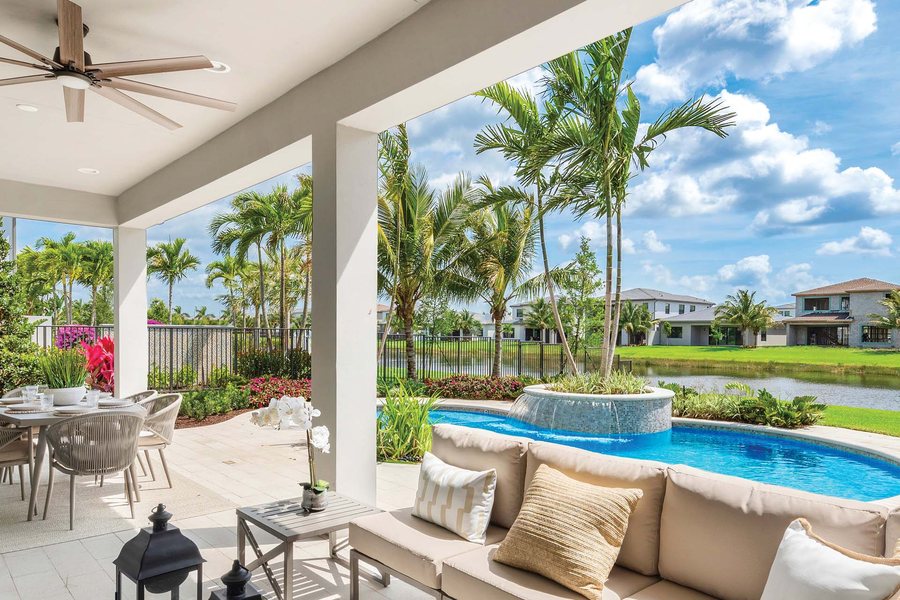
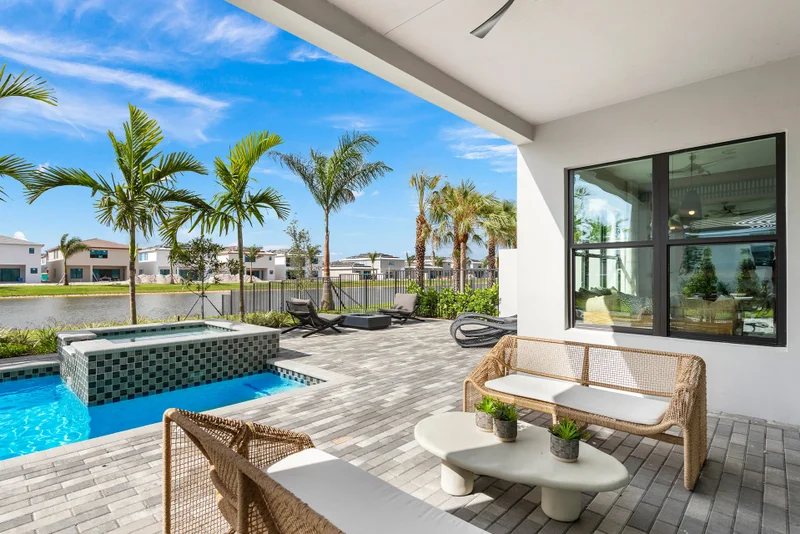
Watch: learn more
Go deeper with my South Florida Insider videos.
Solterra: Everything You Need to Know Before You Visit

The Best Flex-Space Townhome in West Palm Beach: Pulte's Nautical Plan
Inside Everton's Latitude II Model: $458k New Homes In Palm Beach
More articles you might like
Palm Beach Shores, FL Real Estate Market 2026: Prices, Trends & What Buyers Should Expect
13 min readIs Palm Beach Shores a Good Place to Live? Honest 2026 Review
19 min readHow to Choose the Best Suburb in Palm Beach County for Your Family (2026)
17 min read
Buyer's Guide to Westlake, FL: What to Know Before You Purchase
13 min read
Buyer's Guide to Tequesta, FL: What to Know Before You Purchase
18 min read