Greenacres, FL Real Estate Market 2026: Prices, Trends & What Buyers Should Expect
If you’re looking at Greenacres, FL real estate in 2026, here’s what you need to know up front: this is a two-tier market. New construction communities like Blossom Trail and Nash Trail are pricing single-family homes from the low $500s into the $700s, while the resale market of older block homes built in the 1970s through 1990s still offers real value in the mid $300s to high $400s. Most of the confusion buyers run into with the Greenacres, FL real estate market in 2026, prices, trends, and what buyers should expect comes from mixing those two markets together. They are not the same product, they are not the same buyer, and they are not the same negotiation.
This guide breaks down both sides honestly, so you know exactly what you’re shopping for before you start touring.
Where Greenacres Actually Sits on the Map
Greenacres is a central Palm Beach County suburb wedged between Lake Worth Beach to the south, Palm Springs to the east, and unincorporated areas pushing toward Wellington to the west. The city runs along the Jog Road, Melaleuca Lane, 10th Avenue North, and Haverhill Road corridors, which puts most of the city within a 10 to 15 minute drive of I-95 and a similar shot to the Florida Turnpike depending on which side of town you land on.
Break the commute down by job center and the picture gets clearer. Downtown West Palm Beach is a straight shot east on 10th Avenue North or Melaleuca Lane, usually 15 to 20 minutes outside of rush hour. Boca Raton and the office corridor along Yamato Road run 25 to 35 minutes south via the Turnpike or 441, which is realistic for a daily commute if you’re not trying to do it during the 7:30 to 9:00 window. Wellington and the equestrian corridor sit about 15 minutes west on Southern Boulevard, and Palm Beach International Airport is a manageable 20 minute drive, which matters if you travel for work. JFK Medical Center in neighboring Atlantis and Palm Beach State College’s Lake Worth campus are both close enough to be a factor for buyers in healthcare or education fields specifically house hunting for proximity to work.
This location matters more than most buyers realize. Greenacres isn’t a beach town and it isn’t trying to be. It’s a working, middle-income suburb that functions as an affordability release valve for people who want Palm Beach County zip codes and commute access without coastal pricing. If you’re cross-shopping Greenacres against oceanfront or downtown West Palm Beach product, you’re shopping the wrong comp set. The better comparison is against other central county suburbs, which is exactly why it’s worth reading Best Palm Beach County Suburbs for Families Relocating in 2026 before you commit to a specific city.
Greenacres New Construction: What’s Actually Being Built
New construction in Greenacres right now comes from two builders, and they are targeting two different buyers.
Blossom Trail by D.R. Horton
Blossom Trail is a gated community at 5505 Begonia Circle, with 230 total homesites planned and phased vertical construction active through 2026. This is the mixed-product community, meaning D.R. Horton is building both townhomes and single-family homes on the same footprint.
- Townhomes: Two layouts, Bella and Terra, running 1,446 to 1,472 square feet with 1-car garages.
- Single-family homes: 2,034 to over 3,072 square feet with 2-car garages.
- Price range: $484,990 to $747,000 across the full product line.
- Amenities: Community pool, fitness center, tot lot, and landscaped common areas maintained by the HOA.
The spread here is wide on purpose. A buyer looking at the Bella townhome in the high $400s is a completely different household than a buyer looking at a 3,072 square foot single-family home pushing $700k. If you’re touring Blossom Trail, ask upfront which section and which floor plan you’re actually being shown, because the sales team will often lead with the lowest price point in marketing and then walk you toward the larger, more expensive plans once you’re on site.
Nash Trail by Lennar
Nash Trail is Lennar’s single-family-only entry in Greenacres, featuring the Chestnut and Banyan models starting from $532,990 to $552,990 and up. This is a family-oriented development with multi-bedroom layouts, modern kitchens, and integrated smart-home technology built in standard, which is worth factoring into your comparison since retrofitting smart-home systems into a resale home costs real money.
Lennar tends to build in a more mid-scale subdivision format without the same level of gated amenity package as Blossom Trail, so if a resort-style pool and fitness center matter to your household, confirm what’s actually included before assuming parity between the two builders. Lennar also markets under its “Everything’s Included” approach, meaning features other builders sell as upgrades (blinds, appliances, smart-home hubs) are often already baked into the base price. That makes a straight base-price-to-base-price comparison between Nash Trail and Blossom Trail misleading unless you also price out what each builder charges extra for. Ask both sales offices for a like-for-like spec sheet before you decide which number is actually the better deal.
What the Contract-to-Closing Timeline Actually Looks Like
Buyers who haven’t purchased new construction before are often surprised by how the process works compared to a resale offer. With both D.R. Horton and Lennar, you typically start with a homesite reservation and a modest earnest deposit, followed by a design center appointment where you lock in structural options like a third bay, extended lanai, or upgraded kitchen layout. Once you’re past the structural options cutoff, later changes get expensive or aren’t allowed at all.
From signed contract to closing, expect anywhere from 4 to 6 months if you’re buying a home that’s already under construction or near completion, and closer to 8 to 10 months if you’re starting from a raw homesite with a full custom structural package. That timeline matters if you’re relocating on a lease that’s expiring or coordinating a sale of your current home. Ask the sales office for their actual current build schedule, not the generic timeline in the brochure, since labor and permitting pace shifts month to month in Palm Beach County.
Both builders also run their own in-house mortgage arms, DHI Mortgage for D.R. Horton and Lennar Mortgage for Lennar, and both routinely offer rate buydowns or closing cost credits if you finance through them. That incentive can be worth more to your monthly payment than negotiating a few thousand dollars off the purchase price, but it’s worth running the numbers against an outside lender before committing, since you do give up some leverage elsewhere in the contract by using the builder’s preferred lender.
The HOA and CDD Reality
Here’s what most people don’t tell you about new construction in Greenacres: the sticker price on the home is not the full monthly number. Gated communities like Blossom Trail carry HOA dues that fund the gate, the pool, the fitness center, and common area landscaping. Nash Trail and similar Lennar communities typically carry HOA fees as well, even without a gate, because someone has to maintain the entry monument and retention areas.
Before you write an offer on any new construction home in Greenacres, get the actual HOA number in writing, not a verbal estimate from the sales office. Ask specifically whether the community has a CDD (Community Development District) bond attached to the tax bill, since that’s a separate line item from HOA dues and it’s easy to miss if you’re only looking at the base HOA figure. New construction communities built on previously undeveloped land in Palm Beach County increasingly carry CDD assessments to fund infrastructure, so don’t assume Greenacres is exempt just because it’s not a coastal luxury build. Also ask whether the CDD bond is being paid off over 20 to 30 years as a fixed line item, or whether it can be paid off in a lump sum at closing, since some buyers prefer to eliminate that line item entirely if their budget allows it.
The Resale Market: Where the Real Value Still Lives
If new construction pricing in Greenacres has you doing math you don’t like, the resale market is where most of the city’s actual inventory sits, and it’s a different conversation entirely.
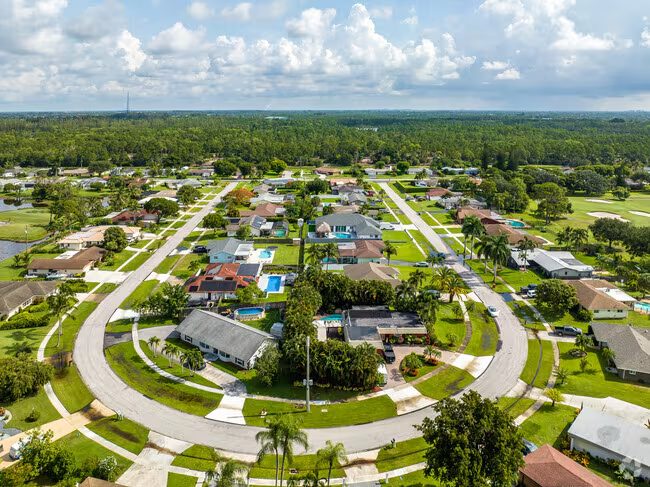
Greenacres built out heavily from the 1970s through the 1990s, which means the resale stock is dominated by concrete block single-family homes on modest lots, typically 3-bedroom, 2-bath layouts in the 1,200 to 1,800 square foot range. These homes generally price well below new construction, often landing in the mid $300s to high $400s depending on condition, lot, and proximity to Jog Road versus the quieter interior streets tucked between Melaleuca Lane and 10th Avenue North.
The tradeoff is straightforward and worth being honest about:
- New construction gets you a builder warranty, modern code compliance, impact windows in most cases, and smart-home wiring, but you pay for all of that plus HOA dues and possibly a CDD.
- Resale gets you a lower purchase price and often a bigger lot, but you inherit the home’s age. That means budgeting for roof age, AC unit age, and electrical panel condition (older homes may still have Federal Pacific panels, which insurers flag and sometimes require replacement before binding a policy).
A practical way to think about this: a roof under 10 years old with a four-point inspection in hand is a genuine asset in a resale negotiation, while a roof pushing 20 years is a repair or replacement conversation you should have before you close, not after. Ask the seller for the four-point inspection and wind mitigation report up front, since both directly affect what you’ll pay for insurance, and a seller who has one ready is usually a seller who’s kept the home maintained.
If you’re a buyer trying to decide which lane fits your budget and risk tolerance, that decision framework is covered in more detail in the Buyer’s Guide to Greenacres, FL: What to Know Before You Purchase.
Schools Zoned to Greenacres
Schools are a real factor for a big share of Greenacres buyers, especially families relocating from out of state who are choosing a city partly based on the zoned school. Greenacres falls within the School District of Palm Beach County, and depending on the specific address, buyers typically land in zones feeding into schools like Discovery Key Elementary, Okeeheelee Middle School, and John I. Leonard High School, which sits directly on Jog Road inside city limits.
Zoning is address-specific and changes with district boundary adjustments, so never assume a listing’s marketing material about “zoned schools” is current. Pull the actual zone from the Palm Beach County School District’s boundary tool using the property address before you write an offer, especially if the school is a primary reason you’re buying in Greenacres over a neighboring suburb. This is a five-minute check that prevents a genuinely painful surprise after closing.
Insurance and Carrying Costs Buyers Underestimate
Palm Beach County insurance costs have climbed enough that they now materially change what a buyer can qualify for, and Greenacres is not immune to that trend. Older resale homes, especially anything with an aging roof or an outdated electrical panel, will draw higher premiums and in some cases outright denials from certain carriers until repairs are made.
New construction in Greenacres tends to insure more favorably because of current wind mitigation code and impact-rated openings, which is a real financial advantage that doesn’t show up on the price tag but shows up every month in your escrow payment. When you’re comparing a $420,000 resale home against a $530,000 new build, run the actual insurance quotes for both before deciding the resale home is the cheaper monthly payment, because it isn’t always true once insurance and a home warranty are factored in.
Property taxes follow a similar pattern. Homestead exemption and the Save Our Homes cap matter enormously here, so if you’re buying your primary residence, understand that a long-time resale seller’s tax bill is not a preview of your own tax bill after purchase. Palm Beach County reassesses at your purchase price, and new construction in particular can carry a meaningfully higher first-year tax bill than the builder’s marketing materials suggest. Run a full escrow estimate, principal, interest, taxes, insurance, and HOA, before you fall in love with a monthly payment number that only reflects principal and interest.
Buyer Scenarios: Who’s Actually Buying Here
It helps to see how this plays out for real households rather than in the abstract.
The relocating family on a $550,000 budget. They’re commuting into West Palm Beach or Boca and want a warranty on a first Florida home. They’re comparing Nash Trail’s Chestnut model against a mid-tier Blossom Trail single-family plan, and the deciding factor usually comes down to HOA amenities and whether the smart-home package matters enough to offset a smaller garage or fewer square feet.
The move-up buyer selling a condo in Lake Worth Beach. They’ve got equity from a smaller property and want a single-family home with a yard, without paying coastal prices. Resale in Greenacres, a 1,600 square foot block home in the $400s with a fenced lot, often makes more sense for this buyer than stretching for new construction, especially if they’re not in a rush and can absorb an inspection punch list.
The first-time buyer under $400,000. This buyer is almost always shopping resale, an older 3-bedroom, 2-bath block home, and needs to budget realistically for a roof or AC replacement within the first five years if the inspection shows either system past its expected life. The purchase price being lower doesn’t mean the total cost of ownership is automatically lower once those repairs are factored in, which is exactly why an experienced inspector matters more here than on a new build.
Who Actually Fits in Greenacres
Greenacres works well for a specific type of buyer, and it’s worth being direct about who that is rather than pretending it’s the right fit for everyone.
It fits well if you:
- Work in West Palm Beach, Lake Worth Beach, or along the I-95 corridor and want a manageable commute without coastal pricing.
- Want new construction with a warranty and don’t need to be walking distance to downtown restaurants or the beach.
- Are comparing central county suburbs on affordability and are willing to trade beach proximity for square footage and price.
- Want a diverse, working-class community feel rather than a manufactured, resort-style master plan.
It fits less well if you:
- Need walkable downtown energy, nightlife, or a dense retail core within blocks of home. That’s a different kind of city, closer to what’s covered in West Palm Beach vs Palm Beach Gardens: City Energy or Suburban Comfort?
- Want ocean or Intracoastal proximity as a daily lifestyle feature. Greenacres is inland, and that’s the tradeoff for the pricing.
- Are set on a large, amenity-heavy master-planned community with a golf course or extensive resort-style clubhouse. Greenacres’ new construction footprint is smaller scale than that.
How Greenacres Compares to Other Palm Beach County Suburbs
Buyers relocating into Palm Beach County often shortlist several suburbs before landing on one, and Greenacres tends to get cross-shopped against a specific set of towns. It’s worth knowing where it lands in that lineup.
Compared to newer, more master-planned communities like Westlake, Greenacres is an older, more established town with a mixed housing stock rather than a single cohesive build-out. If you want to understand what a from-scratch master-planned alternative looks like in pricing and amenities, the Westlake, FL Real Estate Market 2026: Prices, Trends & What Buyers Should Expect breaks down that comparison, and the companion Buyer’s Guide to Westlake, FL walks through what buying into a newer, single-developer town actually involves versus buying into an established suburb like Greenacres.
Compared to its immediate neighbors, Lake Worth Beach offers more walkable, artsy downtown character at a similar or slightly higher price point, while Palm Springs sits closer to a direct affordability match but with less new construction activity right now. Buyers who want the Greenacres price tier but are open to a slightly different neighborhood feel should tour both before assuming Greenacres is the only option in that budget range.
Further north, buyers weighing Jupiter against Palm Beach Gardens are having a different conversation entirely, more about coastal lifestyle and price tier than affordability, and that comparison is worth reading if your search radius stretches that far north: Jupiter vs Palm Beach Gardens: A Relocator’s Real Comparison for 2026.
And if new construction quality and floor plans are your main filter regardless of city, it’s worth seeing what a larger-scale Boca Raton new construction project looks like for comparison on finishes and pricing structure, covered in the Agave Boca in Boca Raton: The New Construction Guide, even though Boca pricing runs well above Greenacres.
What Buyers Should Actually Expect in 2026
Here’s the straight version, no hype attached.
-
Budget under $500,000? You’re realistically shopping the resale market, an older block home that needs a clear-eyed inspection on roof, AC, and electrical, or you’re looking at the entry-level Bella townhome at Blossom Trail if you want new construction and can accept 1-car garage, attached living.
-
Budget $530,000 to $650,000? This is where Nash Trail’s single-family Chestnut and Banyan models and the mid-range Blossom Trail single-family homes compete directly. Compare smart-home tech inclusion, HOA amenities, and garage size line by line, because the base prices are close enough that the differentiators matter.
-
Budget $650,000 and up? You’re in Blossom Trail’s largest single-family plans, over 3,072 square feet. At this price point, it’s worth asking whether that budget gets you more house and better amenities in a neighboring suburb, which is exactly the kind of comparison covered in the suburbs roundup linked above.
-
Get the HOA and CDD numbers in writing before you fall in love with a floor plan. This is the single most common surprise buyers run into in Greenacres new construction, and it’s entirely avoidable with one direct question to the sales office.
-
Run insurance quotes early, not at the closing table. Whether you’re buying resale or new construction, insurance cost has become a qualifying factor, not an afterthought.
-
Ask about builder rate buydowns before you shop outside lenders. DHI Mortgage and Lennar Mortgage regularly offer incentives that can outweigh a small price negotiation, but you need the comparison in hand before you decide, not after you’ve already signed.
Is Greenacres Actually a Good Place to Live?
Pricing and floor plans only tell part of the story. Day-to-day livability, schools, commute reality, and neighborhood character matter just as much when you’re deciding whether to put down roots here. That’s a longer conversation than pricing alone, and it’s covered honestly in Is Greenacres a Good Place to Live? Honest 2026 Review, which is worth reading alongside this pricing breakdown before you make a final decision.
The Bottom Line
The Greenacres, FL real estate market in 2026 rewards buyers who know which lane they’re in. New construction from D.R. Horton and Lennar gets you a warranty, modern insurance-friendly construction, and predictable HOA-maintained common areas, priced from the high $400s into the $700s. Resale gets you a lower entry price and often more land, with the tradeoff of aging systems that need real inspection scrutiny. Neither one is the “right” answer in the abstract. The right answer depends on your budget, your timeline, and how much you value a builder warranty over square footage per dollar.
If you’re relocating into central Palm Beach County and Greenacres is on your shortlist, the smartest next step is getting current floor plan pricing and HOA numbers directly rather than relying on builder marketing pages, since both change faster than most third-party sites update. DM me “GREENACRES” and I’ll send you what’s actually available right now, current pricing included, no sales pitch attached. Make wise decisions with this purchase, it’s not a small one.
More articles you might like
Buyer's Guide to Greenacres, FL: What to Know Before You Purchase
13 min readIs Greenacres a Good Place to Live? Honest 2026 Review
18 min read
Coconut Creek Real Estate Market (2026): Prices, Trends, and What It Means for Buyers
18 min read
Weston Real Estate Market Update: Prices and Conditions in Mid-2026
13 min read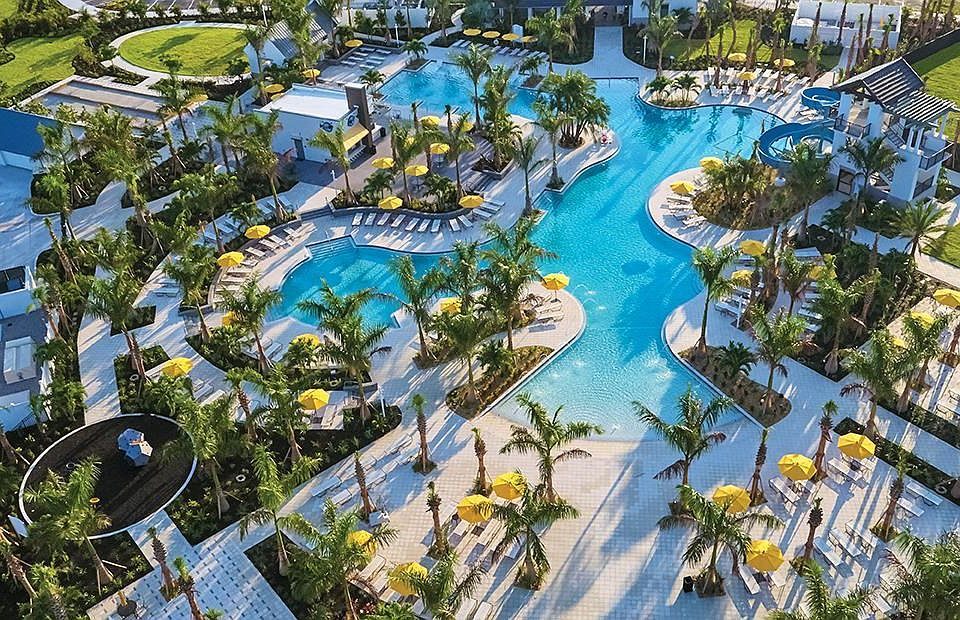
Westlake, FL Real Estate Market 2026: Prices, Trends & What Buyers Should Expect
13 min read