Belle Glade, FL Real Estate Market 2026: Prices, Trends & What Buyers Should Expect
Belle Glade FL Real Estate Market 2026: Prices, Trends & What Buyers Should Expect
If you’re researching the belle glade fl real estate market 2026 prices trends and what buyers should expect, here’s the short version: Belle Glade is still the cheapest city to buy a house in Palm Beach County, most single family homes trade between $130,000 and $260,000, and the market moves slower and thinner than anywhere near the coast. That affordability is real. So are the trade offs. This guide walks through actual price bands, what’s driving the numbers, what you’ll find when you go look at houses, and who this market genuinely fits.
I’ve written about Belle Glade before, including a Buyer’s Guide to Belle Glade, FL and an honest 2026 review of whether it’s a good place to live. This piece is the market data companion to those two. If you already know you’re interested in Belle Glade and want the lifestyle and neighborhood picture, read those first. If you’re trying to figure out whether the numbers make sense for your situation, keep reading.
Where Belle Glade Actually Sits
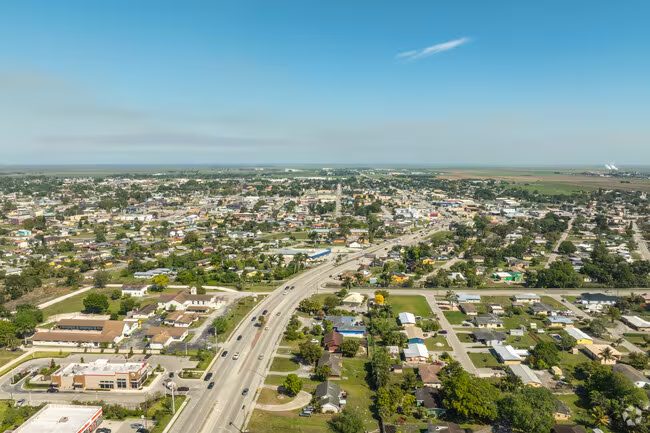
Belle Glade is on the southeastern shore of Lake Okeechobee, roughly 45 miles west of downtown West Palm Beach, out past Wellington and the agricultural reserve along US-27 and State Road 80 (Southern Boulevard). It’s one of the “Glades cities” along with Pahokee and South Bay, and its economy has been built on sugar cane and winter vegetable farming for close to a century. That geography matters more than almost anything else in this market. It’s not a bedroom community for coastal commuters, and it’s not close enough to Wellington’s equestrian economy or the turnpike corridor to catch overflow demand the way places like Westlake do.
That distance from the coast is the single biggest reason prices stay low here. It’s also why buyers need to be honest with themselves about commute times, job access, and what kind of life they’re actually building before they get excited about a $160,000 price tag.
In practical terms, that 45 mile drive from downtown West Palm Beach runs about 55 to 70 minutes each way once you factor in real traffic on Southern Boulevard through Royal Palm Beach and Loxahatchee Groves, not the optimistic Google Maps number you get at 2am with no traffic. If you’re weighing Belle Glade against a coastal commute, drive it yourself at 7am and again at 5:30pm before you write an offer. The map distance doesn’t tell you what the actual two hour daily round trip does to your week.
The town itself sits along the rim canal that wraps Lake Okeechobee, with Torry Island just north across a small bridge, home to the Belle Glade Marina and a handful of fish camps and RV parks that give the area its slower, working waterfront character. This isn’t a resort lake town. It’s a farming town on a big lake, and the housing stock, the pace, and the price tags all reflect that.
Home Prices in Belle Glade Right Now
The Realistic Price Bands
As of 2026, here’s how Belle Glade’s for sale inventory breaks down in practice:
- Under $130,000: Older frame or CBS homes, mostly built in the 1950s through 1970s, often needing roof, plumbing, or electrical work. These move fast to cash buyers and investors, and financing can be difficult if the home doesn’t pass a conventional appraisal or FHA minimum property standards.
- $130,000 to $180,000: The bulk of livable, move-in-ready or lightly updated 3-bedroom, 2-bath homes fall here. This is the price band most first time buyers and relocating families are actually competing in.
- $180,000 to $260,000: Renovated homes, larger lots, and some of the newer builds on the west and south edges of town near SR-717 and around Belle Glade Marina. This band also includes some manufactured and modular homes on larger acreage.
- $260,000 and up: Uncommon, but you’ll see it on larger parcels with acreage, waterfront proximity to Torry Island or the rim canal, or newer construction. Inventory at this level is thin, sometimes just a handful of active listings citywide at any given time.
To put real numbers around it, picture three actual scenarios. A 1962-built 2-bedroom, 1-bath CBS home on a quarter acre lot with an original roof and a 40 year old electrical panel is going to list somewhere around $115,000 to $135,000, and it’s going to need real work before an insurer will write a standard homeowners policy without a wind mitigation credit or a roof replacement first. A 1985-built 3-bedroom, 2-bath home with a roof replaced in the last ten years and updated kitchen and baths lands closer to $155,000 to $175,000, and this is the property type most first time buyers actually end up in contract on. A 2005 or newer manufactured home on an acre or more toward the SR-717 corridor, with a newer well and septic system, often prices between $190,000 and $240,000, and buyers there are usually trading square footage and land for a lower price per square foot than they’d get on a stick built home closer to downtown.
Price per square foot in Belle Glade generally runs somewhere between $90 and $140, depending on age, condition, and construction type, compared to $250 to $400 or more per square foot in coastal West Palm Beach or Palm Beach Gardens zip codes. That gap is the entire reason this market exists for outside buyers, and it’s also exactly why you have to be careful about what condition and what real costs come attached to that lower number.
Compare that to coastal Palm Beach County, where $260,000 barely gets you a condo, or to a planned community like Westlake, where you can read the actual Westlake buyer’s guide and honest Westlake review to see new construction pricing that starts well above Belle Glade’s entire market ceiling.
What’s Actually Moving
Sales volume in Belle Glade is low compared to coastal and central Palm Beach County cities, typically a few dozen closed sales per month citywide across all property types. That’s not a red flag, it’s just the nature of a small agricultural city with roughly 20,000 to 21,000 residents. What it does mean for buyers is fewer comparable sales to lean on, more negotiating room on price, and longer days on market for anything that isn’t priced right out of the gate.
Days on market in Belle Glade regularly stretch into the 60 to 120 day range for properties priced accurately, and well beyond that for anything overpriced or in poor condition. Compare that to a coastal listing in a hot corridor that might go under contract in a week or two. That slower pace cuts both ways. It gives buyers real time to think, inspect thoroughly, and negotiate on price or repairs. It also means sellers here are usually more willing to talk than sellers in a market with five competing offers on day one. If you’re coming from a bidding war mindset in a coastal market, recalibrate. You have leverage here that you won’t have anywhere near the beach.
Rentals and Investor Activity
Rental demand exists here because of the agricultural labor force, and cash flow numbers can look attractive on paper: a $150,000 purchase renting for $1,200 to $1,500 a month pencils out well compared to what you’d pay for a similar unit near the coast. That’s roughly a 9 to 12 percent gross rent to price ratio before expenses, which is a number you almost never see in Palm Beach, Broward, or Miami-Dade coastal submarkets anymore.
But vacancy and turnover are real considerations. Belle Glade’s median household income is well below the county average, and rent collection can be seasonal, tied to the sugar and vegetable harvest calendars that run roughly October through April. Investors who do well here budget for a softer summer stretch, when the harvest labor force thins out and rental demand cools, and they underwrite their numbers around 10 to 11 months of occupancy in a typical year rather than assuming a steady 12. Property management is also thinner on the ground here than in coastal markets, so a lot of investors end up self managing or working with one of a small handful of local managers who actually know the Glades rental pool.
What’s Driving the Market
The Agricultural Economy
U.S. Sugar and other agribusiness employers are the backbone of Belle Glade’s job base. That’s a stabilizing force, people have worked and lived here for generations, but it’s not a growth engine the way tech corridors or corporate relocations drive places like Boca Raton or Delray. If you’re looking at an Agave Boca community in Boca Raton for comparison, understand you’re looking at two entirely different economic engines. One is driven by corporate headquarters and lifestyle migration, the other by a century old farming industry.
That stability shows up in the price data as a market that doesn’t spike the way coastal Palm Beach County did during the 2021 through 2023 run up, but it also doesn’t correct hard when coastal markets soften. Belle Glade’s price curve is flatter in both directions, which matters if you’re thinking about this as a long hold rather than a flip or a two year turnaround.
The Herbert Hoover Dike and Flood Risk
This is the honest part most listings won’t tell you. Belle Glade sits below the Herbert Hoover Dike that rings Lake Okeechobee. The Army Corps of Engineers has spent years and billions of dollars rehabilitating the dike, and the risk profile has genuinely improved, but flood insurance is still a real, ongoing cost for most homes here, not an optional add-on. Before you fall in love with a price, get an actual flood insurance quote, not an estimate. It can add several hundred dollars a month to your real cost of ownership depending on the flood zone and elevation certificate.
Ask specifically what FEMA flood zone the property sits in, whether it’s AE, A, or X, and request the elevation certificate directly from the seller or the city, not a secondhand summary from a listing agent. Two homes three blocks apart can carry meaningfully different flood premiums depending on elevation and zone designation, and that difference can swing your real monthly payment by $150 to $400 or more. This single line item is the most common reason a Belle Glade deal that looked great on paper stops penciling out for a buyer once the actual insurance binder comes back.
Coastal Affordability Pressure
Some of the demand that does exist in Belle Glade comes from buyers priced entirely out of the coast who are willing to trade commute time for a mortgage payment they can actually afford. That’s a legitimate reason to look here, but it only works if your job or income source doesn’t require you to be near the coast. Compare the drive time and lifestyle trade offs against something like West Palm Beach versus Palm Beach Gardens before assuming Belle Glade’s savings are worth it for your specific situation.
Think about it in real dollar terms. A buyer priced out of a $450,000 West Palm Beach starter home might land a comparable sized Belle Glade home for $170,000, a savings of roughly $280,000 on the purchase price and likely $1,400 to $1,800 a month on the mortgage payment. That’s a legitimate, life changing number for a household that can make the commute or work remotely. It is not a legitimate trade if it means two hours a day in the car for a job that pays hourly and doesn’t allow flexibility, because the gas, the vehicle wear, and the lost time have a real cost too, even if it doesn’t show up on a mortgage statement.
What You’ll Actually Find When You Go Look at Houses
Housing Stock
Most of Belle Glade’s housing was built between the 1940s and 1980s. That means:
- CBS (concrete block stucco) homes are common and generally hold up better long term in Florida’s climate than frame construction.
- Older frame homes exist throughout the historic core and can need significant work: roof age, electrical panel upgrades (many still have older panel brands that insurers flag), and plumbing.
- Manufactured and mobile homes are common on the outskirts and on larger lots. Financing these is different from financing a stick built or CBS home, and insurance costs and options vary significantly.
- New construction is essentially absent. There is no active builder pipeline in Belle Glade the way there is in Westlake or the coastal new construction corridors. If new construction and modern floor plans matter to you, this is not your market, full stop.
Walking the historic core near Main Street and Avenue A, you’ll see a mix of 1940s and 1950s bungalow style CBS homes on smaller lots, many with original terrazzo floors under carpet or vinyl that buyers are increasingly asking to have exposed and refinished. Moving out toward the edges of town and along SR-717 and Southbay Road, lots get bigger, some with a half acre or more, and you start seeing a mix of newer manufactured homes, small hobby farms, and the occasional larger renovated property with acreage that commands the upper end of the price range. Neither area is objectively better, they’re just different bets: smaller lot and walkable downtown proximity versus more land and more privacy with a longer walk to anything.
Schools
Belle Glade is served by the School District of Palm Beach County, but school performance in the Glades has historically lagged the county average, and that’s a factor families need to research directly rather than take on faith. If school ratings are a top priority, it’s worth comparing directly against the family-focused options covered in Best Palm Beach County Suburbs for Families Relocating in 2026, most of which are 30 to 45 minutes closer to the coast.
Some families in the Glades commute their kids to charter or magnet options, or make the school factor part of the broader income and commute decision rather than treating it separately. If schools are the deciding factor for your household, don’t let a $150,000 price tag talk you out of the research. Pull the actual school grades and drive the campus before you assume anything.
HOA and CDD Reality
This is one of the genuine upsides. Most Belle Glade neighborhoods do not carry HOA dues or CDD assessments the way newer planned communities do. There are exceptions on some of the newer or gated parcels, but if you’re coming from a market where you’re used to $300 to $500 a month in HOA and CDD fees on top of your mortgage, Belle Glade’s lack of that overhead is a real and meaningful savings, not a marketing point.
Run the math on your own situation. $400 a month in HOA and CDD fees over a 30 year mortgage is $144,000 in carrying cost that builds you no equity. In a market like Belle Glade where most properties carry no HOA at all, that entire line item disappears from your monthly budget, which for a lot of buyers offsets a meaningful chunk of the insurance premium increase that comes with the flood zone.
Honest Risks Buyers Need to Weigh
Being direct here because nobody else in this market is going to be:
- Insurance costs are rising everywhere in Florida, and Belle Glade’s flood zone status makes it worse than average. Get a real quote before you write an offer.
- Resale pool is small. If you need to sell in three to five years, understand you’re selling into a market with far fewer buyers than a coastal city. That affects both your timeline and your negotiating leverage as a seller later.
- Appraisal and financing gaps. Because comparable sales are thin and some housing stock is older or manufactured, appraisals can come in below contract price more often than in a deep, liquid market. Have a plan for that before you’re mid-contract.
- Employment concentration. If your household income depends on the local agricultural economy, that’s stable but not diversified. If it doesn’t, make sure your commute math actually works day to day, not just on paper.
- Hurricane and dike monitoring. The dike rehabilitation has meaningfully reduced risk since the 1928 and 1949 disasters that shaped this region’s history, but emergency evacuation planning and awareness of Lake Okeechobee release schedules are part of living here responsibly, not paranoia.
Add to that list a practical financing note: some conventional lenders and certain loan products carry overlays or extra scrutiny on homes in higher risk flood zones, and manufactured homes often require a specialized loan product rather than a standard 30 year conventional mortgage. Get pre-approved with a lender who has actually closed loans in the Glades before you fall for a specific house, not after. A generic pre-approval from a national call center lender who has never touched a Belle Glade file is one of the most common reasons Belle Glade deals fall apart at the finish line.
Who Belle Glade Actually Works For
Belle Glade makes sense for:
- Buyers whose income and job are tied to the local agricultural economy or nearby Glades communities
- Cash buyers or investors who understand rural, agricultural rental markets and want cash flow over appreciation
- Someone who genuinely does not need coastal proximity and wants the lowest entry price point in Palm Beach County, HOA-free, with no interest in new construction floor plans
Belle Glade does not make sense for:
- Buyers who need to be within 30 minutes of the coast for work
- Anyone prioritizing top rated schools as a non-negotiable
- Buyers who want new construction, modern floor plans, or a builder warranty
- Investors who need fast appreciation or a large, liquid resale market on exit
How Belle Glade Compares to Nearby Palm Beach Suburbs
If Belle Glade’s price point is what’s pulling you in but you’re not sure it’s the right trade off, it’s worth cross-shopping against other Palm Beach County suburbs before you commit. Westlake sits closer to the turnpike and Wellington’s job and equestrian economy, with active new construction and HOA-governed amenities, but at a meaningfully higher price point and with CDD assessments layered on top of HOA dues. Coastal comparisons like West Palm Beach versus Palm Beach Gardens or Jupiter versus Palm Beach Gardens show you what you’re giving up in commute time and lifestyle amenities if you go all the way out to Belle Glade for the price savings. None of these are better or worse in the abstract. They’re different trade offs, and the right one depends entirely on your job, your commute tolerance, and what you actually want daily life to look like.
Put side by side, the decision usually comes down to three numbers: your real commute time, your real monthly insurance and carrying cost, and your real timeline to sell. Belle Glade wins on entry price and no HOA. Westlake wins on new construction, amenities, and proximity to Wellington’s job base, at a real cost premium. The coastal comparisons win on liquidity, school options, and resale pool, at the highest price premium of the three. Nobody wins on all three at once. That’s the actual trade off, and it’s worth sitting with before you fall for a listing photo.
A Step by Step Buyer Strategy for Belle Glade in 2026
- Confirm your income source works from here. If your job doesn’t require the coast, Belle Glade’s affordability is real. If it does, run your actual commute time, not the estimate, during real morning and evening traffic on SR-80.
- Get a flood insurance quote before you write an offer, not after. This is the single most common surprise cost in this market. Ask for the actual flood zone and elevation certificate on any property you’re serious about.
- Budget for an older home. Get a full four-point inspection (roof, electrical, plumbing, HVAC) on anything built before 1990, and factor real repair costs into your offer, not just the list price.
- Talk to a lender who understands rural and manufactured home financing if you’re looking below $150,000 or at manufactured housing. Not every lender handles these loans the same way, and rates and terms can vary more than they would on a standard suburban purchase.
- Think about your exit before you buy. Ask what the resale pool actually looks like for the specific price band and property type you’re buying, and have a realistic hold-period expectation, ideally five years or more.
- Compare against at least one or two other Palm Beach County suburbs before you commit, even if you’re confident Belle Glade is the right call. Ten minutes with the best suburbs for families guide or the Westlake comparisons will either confirm your decision or save you a mistake.
- Walk the specific block, not just the listing. Drive the street at two different times of day, check proximity to the rim canal and flood zone lines, and talk to a neighbor if you can. In a market this thin, the listing photos and the disclosure paperwork will not tell you everything a five minute walk around the block will.
The Bottom Line
Belle Glade in 2026 is exactly what it’s been for years: the most affordable entry point into Palm Beach County real estate, built on an agricultural economy, carrying real flood and insurance considerations that coastal buyers aren’t used to pricing in, and offering a housing stock that’s older, HOA-free, and thin on new construction. The savings are real. So are the trade offs. If you go in with accurate numbers on insurance, financing, and commute, and a clear-eyed view of what the resale market looks like, it can be a smart move for the right buyer. If you’re chasing a low price without doing that homework, it’s an easy place to get a surprise.
Want the current listing sheet, comparable sales, or a walkthrough of specific Belle Glade neighborhoods before you make a move? Comment or message “GLADES” and I’ll send you what’s actually active right now, not a stale market report. You can also find the full Belle Glade buyer’s guide and honest Belle Glade review for the neighborhood and lifestyle side of this decision.
More articles you might like
Buyer's Guide to Belle Glade, FL: What to Know Before You Purchase
17 min readIs Belle Glade a Good Place to Live? Honest 2026 Review
17 min read
Coconut Creek Real Estate Market (2026): Prices, Trends, and What It Means for Buyers
18 min read
Weston Real Estate Market Update: Prices and Conditions in Mid-2026
13 min read
Westlake, FL Real Estate Market 2026: Prices, Trends & What Buyers Should Expect
13 min read