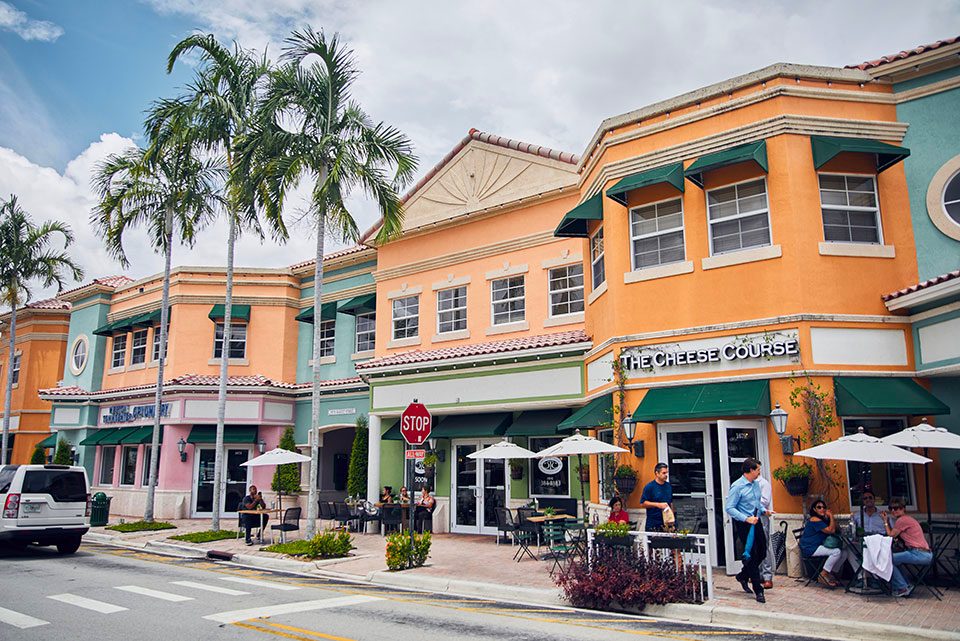
New Construction vs Resale in Broward County: Which Is the Smarter Buy in 2026?
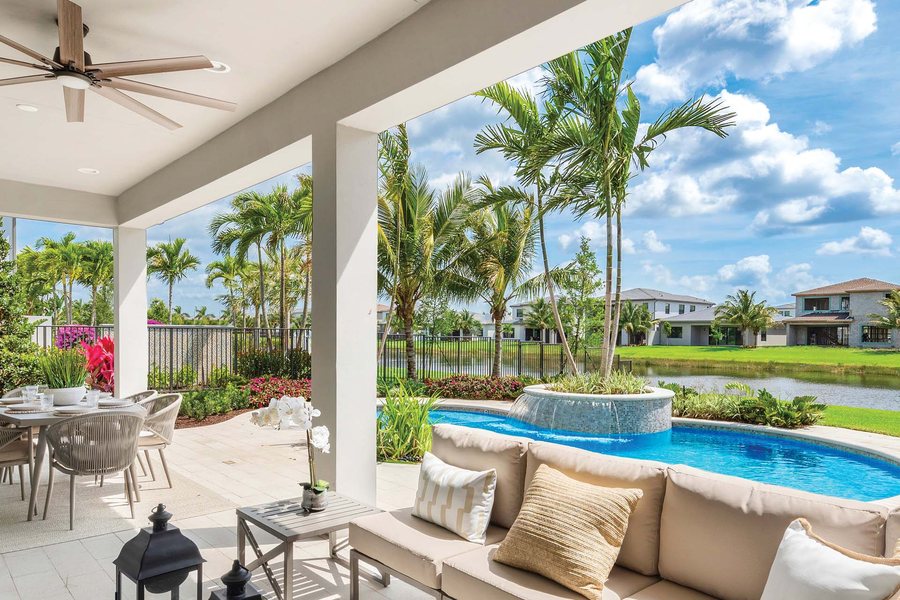
If you’re trying to decide between new construction vs resale in Broward County and which is the smarter buy in 2026, the honest answer depends on what you’re shopping for. Single-family buyers are walking into a market with only 4.6 months of supply, which is balanced but leaning toward sellers, and new construction lets you sidestep that fight entirely. Condo buyers are looking at the opposite situation, with 10.5 months of resale inventory sitting on the market and real room to negotiate. Townhouses fall somewhere in between, and the answer changes depending on which corridor of the county you’re looking at.
I get this question every week from relocators and local move-up buyers alike, and it’s never a one-size answer. Here’s how I’d actually break it down property type by property type, with real numbers and real trade-offs, so you can make an educated decision instead of guessing.
New Construction vs Resale in Broward County: Which Is the Smarter Buy in 2026
Let’s start with the framework. Three things determine whether new construction or resale makes more sense for you: what’s happening in that specific property type’s supply right now, how much you’re willing to pay for certainty versus negotiating leverage, and whether you understand the hidden costs on the new construction side before you sign.
Right now in Broward, the median single-family home is running around $615,000 with 4.6 months of supply. That’s tight enough that desirable inventory in good school zones moves fast, and you’re often competing against other offers. New construction removes that competition. You’re not bidding against anyone. You’re working off a builder’s price list, and the price list doesn’t change because someone else wants the same lot (though the price on the next release often does, and not always in your favor).
Condos are a completely different story. Broward’s condo median sits around $225,000 with 10.5 months of supply, which is a genuine buyer’s market. That much inventory sitting unsold means sellers are motivated, prices have room to move, and you have leverage you simply don’t get when you’re the fifth buyer looking at a new construction floor plan that’s priced the same for everyone.
Townhouses split the difference, and Broward leans buyer-favorable here too, at roughly 6.5 months of supply. That’s worth noting because just north in Palm Beach County, townhouse supply is closer to 4.5 months and leaning seller. So “new construction or resale” for a townhouse in Coral Springs is a different conversation than the same question in Palm Beach Gardens. Geography inside South Florida matters as much as property type.
Broward’s Single-Family Market: Why New Construction Skips the Fight
At 4.6 months of supply, Broward single-family homes are in a market where well-priced, well-located resale inventory doesn’t sit long. If you’ve been watching listings in Coral Springs, Weston, Cooper City, or Southwest Ranches, you’ve probably noticed the good ones go under contract fast, sometimes with multiple offers.
New construction communities solve that specific problem. Builders like Lennar, Toll Brothers, and GL Homes are actively releasing new single-family sections across western Broward, and you’re buying off a price sheet rather than competing in a bidding war. Communities like Hanson Preserve in Cooper City are a good example of what this looks like in practice: a defined builder, a defined price list, and a release schedule instead of an open-market scramble.
That predictability is real value. But it isn’t free. Builders make their margin back through lot premiums (a corner lot, a lake view, a cul-de-sac position can add anywhere from $15,000 to $60,000+ depending on the community), structural upgrade packages that are far more expensive at the design center than they’d be as an aftermarket renovation, and CDD or HOA fees that aren’t always front and center in the marketing materials. Before you fall in love with a base price, ask your builder rep for the “typical closed price” on recently sold homes in that same floor plan and section, not just the advertised starting price. That number tells you what buyers are actually paying once premiums and design center selections are factored in.
If you’re weighing whether the new construction route is worth that premium in the first place, I wrote a full breakdown here: Is Buying New Construction Worth It in the Fort Lauderdale Metro in 2026?
Here’s a scenario I run into constantly. A family relocating from the Northeast wants four bedrooms, a two-car garage, and a fenced yard for the dog, and they’re comparing a resale home in Coral Springs listed at $609,000 against a new construction release in Cooper City base-priced at $598,000. On paper the new build looks like the better deal. Once you add a $22,000 lot premium for a preserve-view lot, $31,000 in design center selections (impact windows upgraded from the base package, tile flooring instead of builder-grade carpet, quartz counters), and a CDD assessment running about $1,800 a year, that “cheaper” new construction home is now closer to $665,000 with an extra annual carrying cost the resale home doesn’t have. That doesn’t make the new build the wrong choice, especially if they want the newest hurricane code and a ten-year structural warranty, but it means the sticker price comparison alone was misleading them.
What Resale Still Wins On for Single-Family Buyers
Even in a tight single-family market, resale has an edge new construction can’t replicate: established landscaping, mature trees, and a neighborhood that’s already settled rather than mid-construction for another two to five years. If you’re buying in a community like Parkland or established Weston, you’re not living next to active job sites, and you’re not waiting on phase three to finish before the community pool opens. For buyers who value a finished, lived-in neighborhood over a blank-slate new build, resale in a tight market is still worth fighting for, you just need to move fast and come in with a clean, well-prepared offer.
Resale also tends to win on lot size in the older, established parts of the county. A lot of new construction in western Broward is platted tighter than the resale stock built in the 1990s and early 2000s, so if a bigger yard matters more to you than brand-new systems, that’s a real factor to weigh, not just a nostalgia preference.
Broward’s Condo Market: Resale Has the Leverage Right Now
This is where the calculus flips hard. At 10.5 months of supply and a $225,000 median, Broward’s condo resale market is sitting on real inventory. Buildings in Fort Lauderdale, Pompano Beach, Sunrise, and Tamarac have units that have been on the market for months, and sellers know it.
That’s genuine negotiating room. You can push on price, ask for closing cost credits, and in many buildings you’ll find motivated sellers who are simply done carrying two mortgages or dealing with a special assessment. New construction condos have to work a lot harder to justify their premium over resale in this environment, because resale sellers are flexible and new construction pricing generally is not.
There’s also a post-Surfside factor that changes the resale condo conversation entirely. Since the 2021 Champlain Towers collapse, Florida law now requires structural integrity reserve studies and, in many cases, significantly higher reserve funding for condo associations. That means older resale buildings, especially anything built before the mid-1990s, may come with a large lump-sum special assessment or a steep jump in monthly HOA dues once the association complies. This isn’t a reason to avoid resale condos, but it is a reason to read the last two years of association meeting minutes and the most recent reserve study before you write an offer. A condo that looks like a steal at $225,000 can turn into a very different number once you understand the building’s reserve funding status.
New construction condos sidestep this entirely because reserves are established fresh and the building complies with current code from day one. That’s a real advantage if you specifically want to avoid special-assessment risk, and it’s worth the premium for buyers who prioritize that certainty. But if you’re simply looking for the best value per square foot in Broward’s condo market right now, resale is where the leverage is.
I’ll give you a real example of how this plays out. I had a buyer looking at a two-bedroom resale unit in a Pompano Beach building from the late 1980s, listed at $240,000 and sitting on the market for five months. The reserve study showed the building had underfunded reserves for years and was facing a roof and concrete restoration project. Rather than walking away, we used that information to negotiate. The seller accepted $212,000 with a $6,000 closing cost credit, because they knew the special assessment disclosure was scaring off other buyers. That’s the leverage a loose condo market gives you, and it simply doesn’t exist when you’re buying a new construction unit priced identically to every other buyer’s contract that month.
Townhouses: A County-by-County, Corridor-by-Corridor Decision
Broward townhouses are sitting at roughly 6.5 months of supply, which favors buyers. That’s meaningfully different from Palm Beach County, where townhouse supply is closer to 4.5 months and leans seller. If you’re relocating and cross-shopping both counties, that gap alone might tilt you toward negotiating on a resale townhouse in Broward corridors like Pembroke Pines, Miramar, or Coral Springs, rather than competing for new construction inventory further north.
Inside Broward, new construction townhouse communities are still moving, particularly ones priced for first-time buyers and young families who want a lower-maintenance option than a single-family home. If that’s your situation, it’s worth reading Best Suburbs for First-Time Home Buyers in the Fort Lauderdale Area (2026) before you commit to a specific builder community, because the right suburb matters as much as the right unit.
Worth noting too: Miami-Dade’s townhouse supply sits around 7.5 months, looser than Broward’s. So if you’re a relocator cross-shopping all three counties for a townhouse, the order of negotiating leverage right now runs Miami-Dade first, Broward second, Palm Beach a distant third. That’s the kind of detail that doesn’t show up in a national relocation guide, but it changes where you should be spending your touring time.
What New Construction Actually Costs You Beyond the Base Price
This is the part builders don’t lead with, and it’s the single biggest reason buyers feel blindsided at closing. The advertised base price is a floor, not a ceiling. Here’s what typically gets added on:
- Lot premiums. Corner lots, preserve views, lake views, and cul-de-sac lots all carry a markup, sometimes tens of thousands of dollars over the base price.
- Design center upgrades. Flooring, cabinetry, countertops, and structural options (extended lanai, second-floor additions, impact windows beyond the base package) are priced at the design center, not at retail, and the markup is real.
- CDD fees. Community Development District fees are common in newer western Broward communities and fund infrastructure like roads, drainage, and amenities. These are separate from HOA dues and can run anywhere from a few hundred to over two thousand dollars a year, sometimes bonded over 20-30 years. Ask specifically whether the CDD is bonded and what the annual assessment is, not just the HOA fee.
- HOA dues on top of CDD fees. New construction communities with resort-style amenities (clubhouses, resistance pools, fitness centers) often carry higher HOA dues than older, more modest resale neighborhoods nearby.
- Builder incentives that aren’t always what they seem. Rate buydowns and closing cost credits are real value, but they’re usually tied to using the builder’s in-house lender, and it’s worth running the numbers against an outside lender to confirm you’re actually coming out ahead.
Communities like Parkland Royale by Lennar and Solterra by Lennar are useful examples to study specifically because their published pricing, HOA structure, and CDD details give you a real template for what to ask about in any Broward new construction community you’re considering, even ones built by a different builder.
A practical tip here: ask the builder rep for a copy of the CDD’s most recent assessment roll, not just a verbal number. Some communities carry two separate CDD layers (one for the master infrastructure, one for a specific phase), and the combined number can be double what gets mentioned during the initial sales walkthrough. I’ve seen buyers get to closing and discover the “estimated CDD” they were quoted at the design center was actually the master CDD only, with a phase-specific CDD added on top once their section was finalized.
The Real Monthly Cost Comparison
When buyers ask me to compare a $615,000 resale single-family home against a similarly priced new construction home, they’re almost always thinking about the mortgage payment alone. That’s maybe 60% of the real monthly number. Add property taxes (which reassess to the new purchase price and are often higher than what the previous resale owner was paying under Florida’s Save Our Homes cap), homeowners insurance (a serious line item in Broward given wind mitigation and flood zone factors), HOA dues, CDD assessments if applicable, and in the case of condos, association reserve contributions.
A resale home with an assumable or long-held tax basis can carry a meaningfully lower monthly nut than a new construction home at the same purchase price, purely because of how Florida property tax reassessment works. That’s not a reason to avoid new construction, but it is a number your lender or agent should walk you through before you sign a reservation agreement, not after.
To put real numbers on it: a resale home purchased for $615,000 that was previously owned for eight years might still be taxed on an assessed value closer to $450,000 thanks to the Save Our Homes 3% annual cap, meaning the new buyer’s first-year tax bill resets higher once the sale triggers reassessment anyway, but a comparably priced new construction home has no prior cap to consider at all, it’s simply assessed at what you paid plus whatever the county’s millage rate applies. Add in the fact that new construction insurance can actually run lower in year one because of updated wind mitigation credits (impact windows, newer roof, modern electrical), and you can end up with a wash on the tax side but real savings on the insurance side. This is exactly why I tell buyers to get a full escrow estimate from their lender for both scenarios before comparing “sticker price” numbers, because the sticker price rarely tells the real story.
Where New Construction Makes the Most Sense in Broward
New construction is the stronger move when you’re buying single-family in a tight submarket, when you want a home with current hurricane code and impact windows without retrofitting, when you value warranty coverage over the first several years, and when you’re relocating from out of state and want a turnkey process without inspection negotiations on an older home. Growing western Broward communities in Cooper City, Parkland, and Southwest Ranches are where this plays out most clearly right now, and if you’re specifically weighing Parkland as a landing spot, Living in Parkland, Florida (2026): Schools, Cost of Living, and Is It Worth It? is worth reading alongside any builder community review.
This is also the right path for buyers who simply don’t have time or appetite for renovation. If you’re moving from out of state with a job start date in six weeks and you don’t want to manage contractors for a kitchen remodel or a roof replacement in your first year of Florida homeownership, new construction removes that entire category of stress. You know exactly what you’re getting, the warranty covers the systems for the first year and structural components far longer, and you’re not negotiating repair credits after a home inspection turns up an aging AC unit or outdated electrical panel.
Where Resale Wins in Broward Right Now
Resale wins clearly in condos, given the 10.5-month supply and real negotiating room. It also wins for buyers who want an established neighborhood with mature landscaping and no ongoing construction traffic, for buyers who need to move quickly and can’t wait 8-14 months for a new build to complete, and for buyers who are priced out of new construction premiums but can find comparable square footage in an older, well-maintained resale home for meaningfully less.
Resale also wins for buyers who want a specific school zone right now rather than whatever’s left in a builder’s next release. New construction communities sell out phase by phase, and if the last available lots in a highly rated school zone are gone, your only option in that zone may be resale. I’ve had buyers specifically targeting a school boundary in Coral Springs discover the new construction options in that exact zone were sold out a year in advance, which pushed them toward a resale search they hadn’t originally planned on.
How to Decide: A Simple Framework
Ask yourself three questions before you start touring:
- What’s the supply picture for the specific property type I’m buying? Single-family in Broward is tight (4.6 months). Condos are loose (10.5 months). Townhouses lean buyer-favorable (6.5 months). That alone should shape whether you expect to negotiate or compete.
- Am I paying for certainty or shopping for leverage? New construction sells certainty (fixed price list, new systems, warranty). Resale sells leverage (negotiating room, established neighborhoods, often a lower tax basis).
- Do I understand the full cost stack, not just the sticker price? Lot premiums, CDD fees, HOA dues, insurance, and reassessed property taxes all belong in your monthly number before you compare it to a resale alternative.
There’s no universal right answer here. There’s only the right answer for what you’re buying, where, and what you’re optimizing for. If you’re actively comparing specific Broward communities, whether that’s a new construction release in Cooper City or a resale condo in Pompano Beach, walk me through your situation and I’ll help you run the real numbers before you commit to either path.
More articles you might like
New Construction vs. Resale in Palm Beach County: Which Is the Smarter Buy in 2026?
13 min readNew Construction vs. Resale in Miami-Dade County: Which Is the Smarter Buy in 2026?
19 min readBest New Construction Communities in Miami-Dade County (2026)
19 min read
Best New-Construction Communities in Broward County (2026): The Honest Comparison
13 min read
Best Palm Beach County Suburbs for Families Relocating in 2026
13 min read