Moving to Boca Raton: The Honest Relocation Guide for 2026
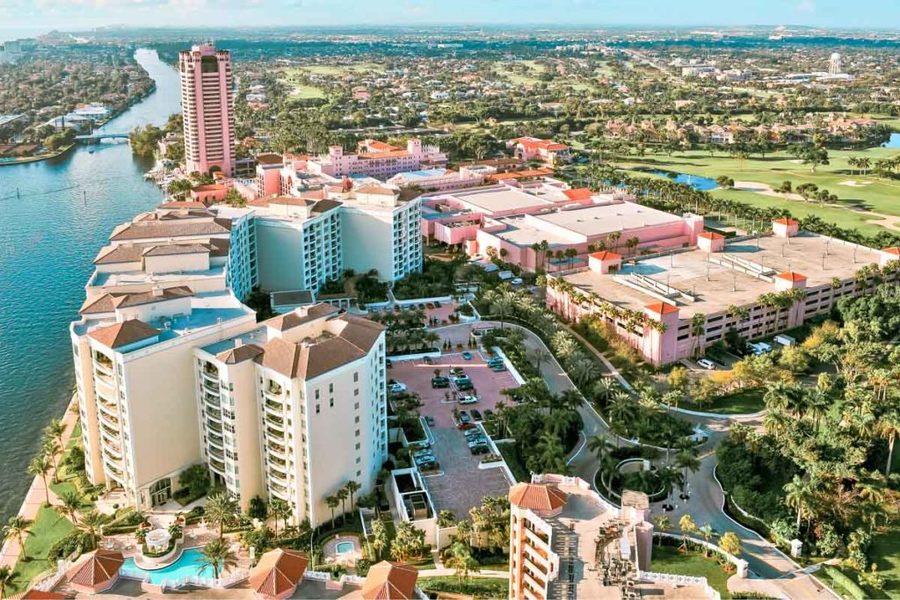
Moving to Boca Raton in 2026 is really two different decisions wearing one zip code. East of I-95, you’re buying into an established, walkable city with beach access, mature landscaping, and a real flood zone conversation. West of 441, you’re often buying into unincorporated Palm Beach County that just happens to say “Boca Raton” on the mailing address. Nobody explains that distinction clearly before people sign a contract, and it’s the single biggest thing that trips up relocators. This guide is the honest version: what East Boca and West Boca actually mean, what things cost right now, where the flood risk really sits, which schools are worth chasing, and what to expect once the moving truck leaves.
If you’re relocating for the first time, pair this with our First-Time Buyer’s Guide to Boca Raton and the Boca Raton FAQ for the specific questions buyers ask before they commit.
East Boca vs. West Boca: The Real Difference
People treat “East Boca” and “West Boca” like a marketing distinction. It’s not. It’s a functional split in how you’ll live day to day, and it starts with I-95.
East Boca
East Boca generally means anything east of I-95, running to the Intracoastal and the beach. Think the Golden Triangle, Royal Palm Yacht & Country Club, Boca Bath & Tennis, Spanish River, and the downtown core around Mizner Park and East Palmetto Park Road. Lots here are older, often smaller, and homes tend to be on the smaller-to-mid size for the price. You’re paying for location: walkability to downtown, proximity to the beach, mature tree canopy, and a shorter drive to everything that makes Boca feel like Boca. Older homes also mean more remodels, more well-inspection questions on septic or older plumbing in a handful of pockets, and higher land value relative to the structure.
This is also where buyers run into more teardown-and-rebuild activity. Walk certain blocks in the Golden Triangle or near Boca Raton Community High School and you’ll see a 1970s ranch next to a brand-new 5,000 square foot spec home, because the land underneath is worth more than the structure sitting on it. That’s a real opportunity if you’re comfortable buying a dated house purely for the lot and location, but it’s also why comparing “price per square foot” between an old East Boca home and a new West Boca home is close to meaningless. You’re not buying the same product.
West Boca
West Boca generally means west of Highway 441 (State Road 7), stretching out toward the Sawgrass Expressway. This is where you find newer subdivisions, bigger lots, more gated communities with amenity centers, and significantly more new construction activity. Communities like Meravita, a gated Toll Brothers enclave at 9933 Meravita Boulevard with homes from roughly $1.9 million into the $3.5 million-plus range (priced from $2,134,995 in developer databases) and floor plans from 3,290 to over 5,426 square feet, are representative of what’s actually building out west right now. Meravita homes come with 3- to 4-car garages and first-floor primary suites, and the HOA covers full horizontal lawn maintenance, meaning you’re not the one mowing, edging, or replacing irrigation heads. The community amenities, a pool, fitness center, event lawn, and sport court, are also standard for what’s building out west now, not the exception.
You get more house, more garage, more yard, and a newer roof and HVAC system, in exchange for a longer commute to the beach and downtown. For a family cross-shopping a 2,000 square foot East Boca home built in 1985 against a 3,800 square foot new build in a community like Meravita or Agave Boca, the monthly numbers can end up closer than the sticker price suggests once you factor in insurance, maintenance, and what you’d actually spend renovating the older home in year one.
The Unincorporated Trap Nobody Explains
Here’s the part that catches people off guard. A meaningful chunk of “West Boca” isn’t actually inside the city limits of Boca Raton. It’s unincorporated Palm Beach County using a Boca Raton mailing address and 33428 or 33433 zip code. That matters in three concrete ways: you don’t vote in Boca Raton city elections, you’re covered by Palm Beach County Fire Rescue and Sheriff’s Office instead of Boca Raton PD and Fire, and your property tax bill doesn’t include a city millage rate, which can actually work in your favor on the tax side. Always ask your agent (or pull the parcel on the Palm Beach County Property Appraiser site) whether a specific address is inside city limits before you fall in love with a listing. It changes what you’re actually buying into.
We see this trip up relocators specifically because national real estate portals list the address the same way regardless of jurisdiction. A listing that says “Boca Raton, FL” tells you nothing about whether the city of Boca Raton actually governs that parcel. We’ve had clients assume they’d get Boca Raton’s downtown events, city recreation programs, and city police response times, only to find out after closing that their actual service providers are the county’s. It’s not a bad outcome, county service in Palm Beach County is generally strong, but it should be a known fact before you sign, not a surprise you discover from a neighbor six months in.
For a neighborhood-by-neighborhood breakdown of where each of these areas lands, read Best Neighborhoods in Boca Raton: The Honest 2026 Guide.
What It Actually Costs to Live in Boca Raton in 2026
The reality is Boca Raton isn’t cheap, and pretending otherwise does relocating families no favors. Here’s what to actually budget for.
Home Prices
Single-family homes in Boca Raton are generally landing in the $650,000 to $900,000 range for standard, non-waterfront, non-gated product, with East Boca often running higher per square foot due to lot value alone. Move into gated new construction west of 441 and you’re looking at $1.2 million and up for townhomes (see Trieste, a 24-hour guard-gated East Boca townhome community with 109 three-story residences from 2,850 to over 3,000 square feet, private elevators, impact glass, and a shared heated pool and spa, starting around $1.2 million, as a benchmark for what low-maintenance luxury horizontal product costs right now), and $1.9 million to $3.5 million-plus for gated single-family communities like Meravita. On the condo side, older mid-rise units inland can still be found from the high $200,000s to low $400,000s, while branded luxury condo product downtown, like the Mandarin Oriental Residences Boca Raton from Penn-Florida Companies, starts around $2.5 million and runs past $10 million.
It’s worth noting that Trieste sits in East Boca, which matters for the “East equals older, West equals new” shorthand people default to. It’s not a hard rule. There is real new construction east of I-95, it’s just condensed, vertical, and priced accordingly, because there’s very little raw land left to build on east of the highway. If walkability matters more to you than a big yard, a community like Trieste is worth cross-shopping against anything out west before you assume new construction automatically means a 20-minute drive to the beach.
Property Taxes and HOA Dues
Palm Beach County property taxes run roughly 1.8 to 2.2 percent of assessed value once you factor in county, school, and (if applicable) city millage, before the homestead exemption kicks in on a primary residence. On a $900,000 home, that’s a rough range of $16,200 to $19,800 a year before homestead, and materially less once the exemption and Save Our Homes cap apply in future years. HOA dues vary enormously: older non-gated East Boca neighborhoods might have no HOA or a nominal one, while amenitized gated communities out west commonly run $300 to $800 a month, and communities with full lawn maintenance bundled in (common in newer master-planned product) can run higher. Always ask what the HOA fee actually covers before comparing two communities on price alone. A $600 HOA that includes lawn care, irrigation, and exterior paint is a different number than a $400 HOA that covers just the guard gate and clubhouse. Run the real math: if a $600 HOA saves you $200 a month in lawn service, pressure washing, and irrigation repairs you’d otherwise pay out of pocket in an East Boca home with no HOA, the gap between the two numbers is smaller than it looks on paper.
Insurance
Homeowners insurance in Palm Beach County has climbed hard over the last few years, and Boca Raton is no exception. Expect meaningfully higher premiums on older East Boca homes (older roofs, older wind mitigation ratings) versus new construction west, where impact windows, newer roofs, and current building codes usually earn real insurance discounts. It’s not unusual to see a 20- to 30-year-old East Boca home with an aging roof quoted well above what a brand-new West Boca build with impact glass and a current wind mitigation report pays for comparable coverage. This is one of the strongest financial arguments for new construction if you’re relocating and comparing an older East Boca charmer against a new build in a community like Agave Boca. Read the full breakdown in Agave Boca in Boca Raton: The New Construction Guide for floor plans and current pricing, and see Lotus Edge for another active new construction option in the market right now.
Before you write an offer on an older home, get an actual insurance quote, not an estimate, based on the roof’s age and the four-point and wind mitigation inspections. We’ve seen deals get renegotiated at the closing table because a buyer assumed a $3,000 annual premium and the real quote came back closer to $7,000 once the insurer saw the roof was original to a 1991 build.
Flood Zones and Insurance: What Nobody Tells You Upfront
This is the section most relocation content skips, and it’s the one that actually changes your monthly payment.
East Boca, particularly anything near the Intracoastal Waterway, the barrier island, or low-lying areas close to the ocean, commonly falls into AE flood zones, which means mandatory flood insurance if you have a mortgage. That’s a real added cost, often $1,500 to $4,000-plus a year depending on elevation, and it’s not optional if a lender is involved. Older homes on the barrier island can also carry higher wind mitigation costs because of age and lower elevation.
West Boca, by contrast, sits mostly in X flood zones (minimal flood hazard), which usually means flood insurance isn’t required and, if you carry it anyway for peace of mind, it’s comparatively cheap. This is a real, quantifiable reason new construction communities out west, from Meravita to the communities near Lyons Road, have become the default move for relocators who want predictable monthly costs.
Here’s a concrete example of how this plays out. A relocating family comparing a $1.4 million East Boca home near the Intracoastal against a $1.4 million West Boca new build in a gated community will often see the West Boca option come out $300 to $500 a month cheaper once you stack mandatory flood insurance, a lower wind mitigation premium, and lower ongoing maintenance costs against the older home’s numbers. That’s not a reason to rule out East Boca, the lifestyle tradeoff is real and some buyers will pay for it every time, but it should be a known number before you compare two homes on list price alone.
The honest advice here: before you write an offer on anything east of Federal Highway, pull the FEMA flood zone for that specific parcel (not the neighborhood in general, the specific lot) and get a real flood insurance quote before you’re under contract, not after. Flood zone lines can change block to block near the water, and two homes on the same street can carry different zone designations depending on elevation surveys.
Schools: Where Families Actually Want to Land
Boca Raton sits inside the Palm Beach County School District, and school zoning is one of the top three reasons families relocate to specific pockets of the city rather than others.
In East and Central Boca, Addison Mizner Elementary and Boca Raton Community High School are consistently sought after, with families often paying a real premium to land inside those attendance boundaries. Spanish River High School and Boca Raton Middle School cover much of the central corridor. Out west, Olympic Heights Community High School and West Boca Raton High School serve the newer subdivisions, and both carry strong reputations locally. FAU High School, a competitive magnet program run in partnership with Florida Atlantic University, is a draw for academically strong students countywide and is worth understanding separately from standard zoning if that’s a fit for your family.
The mistake we see relocating families make constantly: falling in love with a house first and checking the school zone second. Attendance boundaries shift, and a home two streets over can land in a completely different elementary school. We’ve had clients under contract on a home assuming it fed into Addison Mizner, only to find out at the eleventh hour it was zoned for a different elementary school entirely, because the boundary ran down the middle of the block rather than along the main road the way most people assume. Before you commit to a neighborhood, verify the current zoned schools directly with the district, not just what a listing claims. For the full picture on which zones are worth prioritizing and what families actually experience day to day, read Boca Raton Schools: The Best School Zones and What Families Need to Know.
Best Neighborhoods and New Construction Right Now
If you want walkability, beach proximity, and character, look at the Golden Triangle, Boca Villas, and pockets around Mizner Park. If you want new construction, larger floor plans, and lower flood risk, West Boca is where the current building activity is concentrated.
Two active new construction communities worth knowing by name right now: Lotus Edge and Agave Boca, both representative of the modern, amenity-heavy, lower-maintenance product that’s replaced the “buy a lot and build custom” approach for most relocating buyers. New construction also sidesteps a real West Boca headache: older HOA reserve studies that haven’t kept pace with roof and clubhouse replacement costs, which can mean surprise special assessments in older gated communities. A newer HOA usually means a newer reserve fund and fewer surprises in year three of ownership.
If you’re weighing a resale home in an established gated community against a brand-new build, ask to see the HOA’s most recent reserve study, not just the monthly dues. A community with a fully funded reserve for roof and roadway replacement is a very different risk profile than one that’s been underfunding reserves for a decade and is about to hit residents with a special assessment. This single document has saved buyers from expensive surprises more than almost any other piece of paperwork in the transaction.
For the full neighborhood rundown, including which areas are transitioning and which HOAs are genuinely restrictive versus reasonable, see Best Neighborhoods in Boca Raton: The Honest 2026 Guide.
Two Buyer Scenarios: East vs. West in Practice
It helps to see how this plays out for real buyers instead of just comparing numbers in the abstract.
Scenario one: the relocating executive family. A family moving from New Jersey wants walkability, a strong elementary school, and a shorter runway to enroll their kids before the school year starts. They land in East Boca near Addison Mizner Elementary in an older 4-bedroom home that needs a kitchen and roof update within a few years. They pay a premium for land and location, budget real money for flood insurance and an eventual renovation, and get a five-minute walk to Mizner Park and a fifteen-minute bike ride to the beach in exchange. For this family, the lifestyle and school zone justify the higher carrying costs.
Scenario two: the retiring couple downsizing from a bigger house up north. They want low maintenance, predictable monthly costs, and don’t need to be near a school zone at all. They land in a gated community like Meravita, where the HOA handles the lawn, the roof and HVAC are new, and flood insurance isn’t a forced monthly line item because the parcel sits in an X zone. Their tradeoff is a twenty-minute drive to the beach instead of five, which for this buyer is a non-issue since daily beach visits weren’t the priority to begin with.
Neither buyer is making a mistake. They’re just optimizing for different things, and that’s the entire point of understanding East versus West before you start touring homes instead of after.
Commutes, Corridors, and What Daily Life Looks Like
Glades Road, Palmetto Park Road, and Yamato Road are the main east-west arteries connecting I-95 to the western communities, and traffic on all three backs up predictably during the 7:30 to 9 a.m. and 4:30 to 6 p.m. windows. Federal Highway (US-1) runs north-south along the eastern edge and is the slower, more scenic alternative to I-95 for anyone living near downtown or the beach. If you’re commuting daily to a job near the Boca Raton Innovation Campus or the Town Center corridor, West Boca living keeps you closer to work but farther from the beach. If you’re commuting toward Fort Lauderdale or Miami, East Boca’s I-95 access matters more than it looks like on a map, because those extra ten minutes to the highway compound every single day.
Weekend life splits along similar lines. East Boca residents tend to build their routines around Mizner Park, South Beach Park, and the downtown restaurant corridor along Federal Highway. West Boca residents lean more on Town Center Mall, South County Regional Park, and the growing restaurant scene along the 441 corridor. Neither is objectively better, but if your mental picture of “living in Boca” involves walking to dinner and biking to the beach on a Sunday, make sure you’re actually shopping East Boca listings, because that lifestyle mostly doesn’t exist west of 441 regardless of how nice the community is.
For what a typical week actually looks like once you’ve made the move, from grocery runs to weekend routines, read Living in Boca Raton: What Daily Life Actually Looks Like in 2026. And if you’re still deciding whether Boca is the right city at all versus a neighboring option, Is Boca Raton a Good Place to Live? Honest 2026 Review covers the tradeoffs directly.
Moving to Boca Raton: The Honest Relocation Guide for 2026, Who It Actually Fits
Moving to Boca Raton makes the most sense for a specific kind of buyer, and being straight about who that is will save you money and frustration. It fits well for:
- Relocating professionals and families who want top-tier schools and are willing to pay a premium to land inside the right attendance boundary, whether that’s Addison Mizner and Boca High in the east or Olympic Heights and West Boca High out west.
- Retirees and downsizers who want new construction with low maintenance, where a gated community handles lawn care and exterior upkeep and flood insurance isn’t a forced monthly line item.
- Buyers coming from higher cost-of-living metros (New York, Chicago, parts of California) who find Boca’s no state income tax and comparatively lower property tax rate an upgrade even at these home prices.
- Second-home buyers and snowbirds who want walkability and beach access and are comfortable budgeting for flood insurance as a real, permanent line item.
It fits less well for buyers expecting Florida’s cheapest sticker prices. Boca Raton isn’t the budget play in Palm Beach County. If price is the primary driver, Boca Raton vs. Delray Beach: Which Is Right for You in 2026? is worth reading before you commit to a specific city.
The Honest Bottom Line
Moving to Boca Raton in 2026 comes down to a real tradeoff, not a marketing pitch. East Boca buys you walkability, beach proximity, and character, at the cost of higher per-square-foot pricing, older infrastructure, and mandatory flood insurance in AE zones. West Boca buys you newer construction, bigger floor plans, lower flood risk, and often lower insurance, at the cost of a longer drive to the water and, in some pockets, living outside the actual city limits despite the Boca Raton address. Neither is the “right” answer. The right answer is whichever tradeoff matches how you actually plan to live, not how the zip code makes it sound.
Before you write an offer on anything, verify three things yourself: whether the parcel is inside city limits, what FEMA flood zone it sits in, and what the zoned schools actually are today, not what a listing sheet claims. Those three facts, more than square footage or a pretty kitchen, determine whether you’ll be happy here in year three.
If you want a second set of eyes on a specific address, a specific community, or a specific tradeoff between East and West Boca before you commit, that’s exactly the kind of question worth a direct conversation rather than guessing from a listing photo. DM “BOCA” and we’ll walk through what fits your specific situation.

More articles you might like
Is Lotus Edge Worth It? An Honest Look at GL Homes's Boca-Raton Community
20 min readAgave Boca in Boca Raton: The New Construction Guide (Floor Plans, Pricing, What to Know)
20 min readBoca Raton vs. Delray Beach: Which Palm Beach County City Is Right for You?
18 min readBoca Raton FAQ: 20 Questions Buyers Ask Before Moving (2026 Edition)
17 min readLiving in Boca Raton: What Daily Life Actually Looks Like in 2026
18 min read