Living in Boca Raton: What Daily Life Actually Looks Like in 2026
Living in Boca Raton: What Daily Life Actually Looks Like in 2026
Here’s what you really need to know before you move to Boca Raton in 2026: this is not a beach town where you wake up, walk to the sand, and call it a day. It’s a structured, corridor-driven city built around HOAs, gates, school zones, and a downtown core (Mizner Park) that does a lot of the social heavy lifting. Daily life here runs on routine more than spontaneity. If you understand that going in, Boca delivers exactly what it promises. If you’re expecting a laid-back beach village, you’ll be frustrated by month two.
This guide breaks down what an actual day, and an actual week, looks like for someone living in Boca Raton right now, not the postcard version.
The Morning Routine: Traffic, School Runs, and Getting Around
Boca Raton is a car city first. The street grid runs east-west on Palmetto Park Road, Glades Road, Yamato Road, and Spanish River Boulevard, all of which feed into the two corridors that define daily movement: I-95 and Federal Highway (US-1). If you live west of the highway in a community like Boca Falls or Loggers’ Run, your morning includes a stretch of Glades Road or SW 18th Street before you ever see I-95. If you’re east, closer to the beach and Mizner Park, your commute is shorter but Federal Highway traffic between 7:30 and 9am moves at a crawl, especially near Palmetto Park and Camino Real.
Put real numbers on it. A resident in Boca Falls heading to an office near Glades Road and I-95 is realistically looking at 20 to 30 minutes during the morning push, even though the drive is barely 8 miles. Someone in Royal Palm Yacht & Country Club going to the same office is closer to 10 to 15 minutes, because they’re already east of the interstate and skip the western feeder roads entirely. That gap doesn’t sound like much until you’re doing it twice a day, 250 days a year, and it’s the kind of detail that never shows up on a listing sheet but shapes how you actually feel about your commute six months in.
School mornings add another layer. Boca Raton feeds into some of Palm Beach County’s most requested school zones (Addison Mizner Elementary, Boca Raton Community High, Spanish River High, Olympic Heights), and drop-off lines at the higher-performing elementary schools routinely back up onto the main road. Families who care about zoning research this before they buy, not after. If schools are part of your decision, read the Boca Raton Schools guide before you commit to a neighborhood, because the zone the house sits in matters more than the house itself for resale and daily logistics.
FAU (Florida Atlantic University) traffic adds its own rhythm near Glades Road and the I-95 interchange during the school year, and Boca Raton Regional Hospital (part of Baptist Health) pulls staff traffic through the same corridor around shift changes. None of this is unusual for a mid-size Florida city, but it’s the reality that doesn’t show up in the glossy relocation brochures. Add seasonal snowbird traffic from December through April, when the population swells and every one of these corridors gets noticeably heavier, and you have the full picture of what “getting around Boca” actually means on a Tuesday morning.
Where People Actually Live: Neighborhoods and HOA Life
Boca Raton is really a collection of distinct micro-markets, and daily life looks different depending on which one you’re in. Two buyers with the same budget can end up living completely different versions of “life in Boca” just based on which side of the highway they land on, so it’s worth slowing down on this part instead of picking a neighborhood off a map.
East Boca: Walkable in Patches, Expensive Everywhere
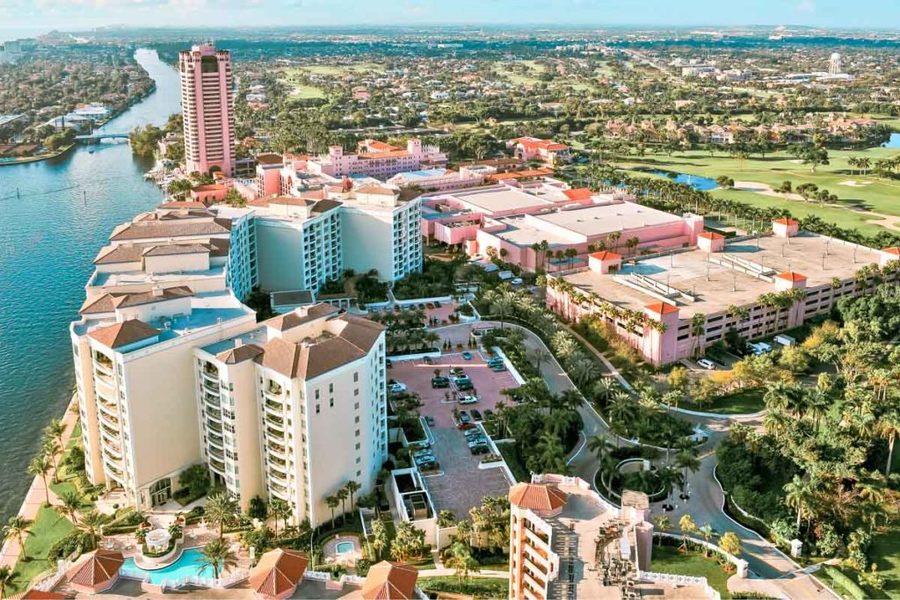
East of Federal Highway, near Mizner Park, Royal Palm Place, and the beach, you get the closest thing to a walkable lifestyle Boca offers. Residents in these pockets can walk to dinner, a farmers market, or the Boca Raton Museum of Art. Older communities like Royal Palm Yacht & Country Club carry deed restrictions and country club social expectations even without a traditional HOA fee structure. This is where waterfront and proximity to the ocean drive price more than square footage.
The tradeoff in East Boca is lot size and home age. A lot of the housing stock dates back to the 1960s through the 1980s, which means updated kitchens, newer roofs, and impact windows carry a real premium over untouched originals, even on the same street. Buyers here are typically trading square footage and a three-car garage for a five-minute drive to the beach and a walk to dinner, and that’s a fair trade for people whose daily life actually uses those things.
West Boca: Gated, HOA-Heavy, Family-Oriented
West of the turnpike and out toward US-441, communities like Boca Falls, Loggers’ Run, and the newer gated enclaves are built around HOA-managed amenities: pools, clubhouses, tennis and pickleball courts. This is where most new construction activity is happening now. Meravita at Boca Raton, a Toll Brothers gated single-family community off Meravita Boulevard in unincorporated West Boca, prices from roughly $1.9 million to $3.5 million and includes horizontal lawn maintenance in the HOA, which matters if you’re comparing true carrying costs against an older non-HOA home. Homes range from 3,290 to over 5,400 square feet with 3- to 4-car garages, which tells you who this community is built for: move-up buyers who want space and don’t want to manage a lawn crew themselves.
The daily-life payoff in West Boca is consistency. The HOA enforces landscaping standards, the gate cuts down on cut-through traffic, and the amenity package (pool, fitness center, event lawn, sport court at Meravita, for example) means a family doesn’t need a country club membership to have somewhere to spend a Saturday afternoon. What you give up is proximity. A round trip to Mizner Park or the beach from deep West Boca can eat 40 minutes to an hour, so residents here tend to treat those trips as planned outings rather than habits.
The New Wave: Agave Boca and What’s Coming
GL Homes is bringing Agave Boca to the market, a planned 300+ unit ultra-luxury townhome community starting from $1.3 million, positioned as a genuine departure from GL’s typical single-family playbook: turnkey, low-maintenance, curated amenities. It’s still pre-launch as of this writing, with floor plans and full pricing releasing over the coming months, but the early-mover interest tells you something about where daily life in Boca is heading: more buyers want the low-maintenance, lock-and-leave lifestyle without giving up the Boca zip code. If you’re tracking this one, the Agave Boca new construction guide has the fuller breakdown of what’s known so far.
This shift matters for anyone weighing a purchase right now. Two- and three-story townhome product at this price point in Boca has historically been scarce, so a community like Agave gives buyers who want space and design quality, but not a quarter-acre of lawn to maintain, an option that simply hasn’t existed here before. Expect a wave of similar low-maintenance product to follow once GL Homes proves the demand, which is exactly what happened with the Valencia brand further north in Boynton Beach.
Whichever pocket you land in, budget for the HOA. Mandatory dues in Boca Raton’s newer and gated communities commonly run $300 to $900+ a month depending on gate staffing, lawn maintenance, and amenity load, and that’s before CDD assessments show up on some newer western developments. Ask for the HOA budget and reserve study before you write an offer, not after closing. A healthy reserve study tells you whether that $400 monthly fee is actually funding future roof and road repairs, or whether it’s headed for a special assessment in three years.
Beach Days: What It Really Takes to Get Sand Between Your Toes
Boca Raton’s beaches (Red Reef Park, South Beach Park, Spanish River Park) are genuinely excellent, but access isn’t as casual as people assume. Residents can get an annual beach parking permit for a modest fee that covers city lots, but non-residents pay a daily rate that runs $20 to $40 depending on the lot and season, and lots at Red Reef and South Beach fill up by mid-morning on weekends, especially in season (November through April).
The realistic version of “living near the beach” in Boca: most residents go on weekday mornings or plan around lot capacity on weekends, rather than a spontaneous after-work dip. If beach access is a top priority for you day to day, proximity actually matters, not just being “in Boca,” because a 20-minute drive across town to fight for parking defeats the purpose. This is one of the most common gaps between expectation and reality that shows up in the Boca Raton FAQ, where “how close do I need to be to actually use the beach regularly” comes up constantly from relocating buyers.
Think about it in practical terms. A retiree in a west-side 55+ community who imagined daily beach walks usually ends up going once every week or two, because the drive plus parking search turns a simple habit into an errand. Someone in an East Boca condo within walking or biking distance of Spanish River Park, on the other hand, can actually make it a daily or near-daily habit. If the beach is the reason you’re moving to Boca in the first place, buy accordingly, because no amount of HOA amenities out west replaces sand access.
Mizner Park and Downtown: The Social Center of the City
If Boca Raton has a heartbeat, it’s Mizner Park. The open-air complex on Federal Highway combines retail, restaurants, the Boca Raton Museum of Art, and the Mizner Park Amphitheater, which hosts concerts and events through the cooler months. For a lot of residents, especially those without kids at home, Mizner Park functions as the default answer to “where should we go tonight.” Royal Palm Place, a few blocks south, adds another walkable cluster of restaurants and boutiques.
This matters for daily life because it concentrates Boca’s social and cultural options in one corridor instead of spreading them across strip malls, which is common elsewhere in South Florida. The tradeoff is that everyone else has the same idea on a Friday night, so parking and reservations require some planning, particularly in season.
The Boca Raton Resort & Club (operated as a Waldorf Astoria property) anchors the east side and shapes a lot of the city’s identity, even for residents who never step foot on the property. It’s part of why Boca carries a more polished, resort-adjacent reputation compared to nearby Delray Beach, which leans artsier and more independent. If you’re deciding between the two, the Boca Raton vs. Delray Beach comparison breaks down the daily-life differences in more depth.
Work Life: Who’s Actually Working in Boca and Where
Boca Raton has a real office and corporate base, it’s not purely a bedroom community. The Boca Raton Innovation Campus (the former IBM site off Yamato Road, where the original PC was developed) has been repositioned as a large mixed-use office and tech park, and the broader Yamato Road / Congress Avenue corridor holds a concentration of professional services, healthcare, and finance offices. FAU adds an education and research employment base near Glades Road.
Remote and hybrid work has changed the daily map for a meaningful share of residents since 2020, and it hasn’t fully reversed. A lot of new construction buyers in communities like Meravita are professionals who need a dedicated home office more than a short commute, which is part of why builders are leaning into flexible floor plans with first-floor primary suites and separate den or office spaces. If you’re relocating with a hybrid job, the location math changes: you can prioritize school zone and lifestyle over minimizing drive time to an office park.
Consider two versions of the same buyer. A finance professional who commutes into a Yamato Road office five days a week has a strong incentive to stay east or central, close to the Congress Avenue corridor, to keep the drive under 15 minutes. That same professional, now hybrid two days a week, can reasonably move west into Meravita or a similar gated community, accept a 20 to 25 minute commute on office days, and gain a home office, a bigger lot, and a lower price per square foot the other three days a week. That single change in work schedule reshapes the entire buying decision, which is why “where do you actually work, and how often” should be one of the first questions in any Boca relocation conversation.
Grocery Runs, Errands, and Healthcare Access
Daily life isn’t just commutes and beach days, it’s the small stuff, and Boca handles it well if you know where things are. Publix has multiple locations spread across both the east and west sides of the city, so grocery runs rarely require crossing the highway. Town Center Mall and the surrounding Glades Road corridor cover most big-box and specialty shopping needs, which means residents rarely need to leave the city for errands, a real contrast to some smaller South Florida municipalities.
Healthcare access is a genuine strength here. Boca Raton Regional Hospital, part of Baptist Health, anchors a dense concentration of specialists, urgent care centers, and imaging facilities along the Glades Road and Federal Highway corridors. For retirees and families weighing Boca against communities further west or north with thinner medical infrastructure, this is worth factoring in seriously, not as an afterthought. Proximity to quality healthcare matters more with each passing decade, and Boca’s is genuinely above average for the county.
Dining, Culture, and How Locals Spend a Free Evening
The dining scene in Boca skews upscale but isn’t limited to it. Mizner Park and Royal Palm Place carry the higher-end, see-and-be-seen restaurants, while the Federal Highway corridor and pockets near Town Center Mall have a wider mix, including long-standing family-owned spots that don’t get the same attention online. Town Center at Boca Raton remains the retail anchor for the city and draws shoppers from Delray Beach and even Palm Beach Gardens on weekends.
Culturally, the Boca Raton Museum of Art and the amphitheater programming at Mizner Park give the city more going on than it gets credit for outside the county. Golf and country club life is also a genuine daily-life factor here, not a stereotype: communities built around private clubs (St. Andrews Country Club, Boca West Country Club, and others) structure a real portion of residents’ weekly calendar around tee times, club dining, and member events. If that lifestyle appeals to you, it’s worth understanding that many of these communities carry both HOA dues and separate club membership costs, which can add up to a significant monthly number beyond the mortgage.
To put a real figure on it, equity memberships at some of Boca’s private clubs run well into five figures for initiation, plus monthly dues and food minimums that can add another $500 to $1,000 or more a month. That’s a lifestyle cost most relocating buyers from outside South Florida don’t budget for, and it’s worth asking about explicitly if you’re touring homes in a club-centered community, because the home price is only part of what you’re signing up for.
The Weekend Rhythm
A realistic Boca Raton weekend for a lot of residents looks like this: Saturday morning errands and a beach trip if the timing works out, Saturday evening at Mizner Park or a neighborhood restaurant, Sunday reserved for family time, a club activity, or catching up on yard and house projects that the HOA doesn’t cover. Families with school-age kids layer travel sports and academic prep into the weekend, since Boca’s competitive school culture extends well beyond the classroom.
Retirees and empty nesters, especially in 55+ communities in the western part of the city and just over the line into Boynton Beach (Valencia Grand, Valencia Del Mar, and similar GL Homes communities), build their week around clubhouse programming: pickleball, fitness classes, and organized social events. It’s a genuinely different daily rhythm than the family-with-kids version of Boca, even though both fall under the same city name.
A family with two kids in travel soccer, for example, might spend most of a Saturday at a tournament in Boynton Beach or Coral Springs and only get a couple of free hours for Mizner Park or the beach. A retired couple in a Lyons Road 55+ community, by contrast, might fill the same Saturday with a pickleball round-robin, a clubhouse happy hour, and dinner without ever leaving the neighborhood. Neither is wrong, but they’re planning for completely different versions of “living in Boca,” and it’s worth being honest with yourself about which one describes your actual life before you buy.
New Construction Changing the Daily Map
The daily-life picture in Boca Raton keeps shifting as new construction fills in the western edges of the city. Beyond Meravita and Agave Boca, the broader West Boca and Boynton Beach corridor along Lyons Road is absorbing most of the new inventory, because there’s very little raw land left inside the older east-side boundaries. That means new buyers in 2026 are increasingly choosing between an established, walkable-in-pockets East Boca home with an older HOA structure, or a newer, more amenity-heavy western community with a longer drive to the beach and downtown but more space and lower-maintenance living.
Neither choice is objectively better, it depends on what your actual week looks like. If your daily life revolves around the beach and Mizner Park, don’t buy 20 minutes west and expect to use those amenities regularly. If your daily life revolves around a home office, a pool, and a gated sense of quiet, the western communities deliver that more consistently than older east-side streets. The Best Neighborhoods in Boca Raton guide goes deeper on matching specific neighborhoods to specific lifestyles.
This westward build-out also means the daily map for shopping, dining, and even healthcare is stretching with it. New retail and medical offices are starting to follow the rooftops out along Lyons Road, which will gradually close the convenience gap between east and west over the next several years. Buyers looking five years out, not just at today’s map, should factor that trajectory in, because a community that feels remote in 2026 may not feel that way by 2030.
What It Costs to Live Here Day to Day
Beyond the mortgage, the real monthly cost of living in Boca Raton includes HOA dues ($300 to $900+ in most gated and newer communities), property taxes that reflect Palm Beach County’s rates and any CDD assessments in newer developments, homeowner’s and flood insurance (which has climbed meaningfully across South Florida and deserves its own line-item conversation before you make an offer), and, if you’re in a club community, separate membership dues that can run into the thousands annually.
None of this is disclosed clearly in most listing photos. If you’re a first-time buyer trying to figure out what’s actually achievable on your budget, start with the First-Time Buyer’s Guide to Boca Raton, which lays out realistic price bands and what they actually get you in 2026.
Run the math before you fall in love with a house. On a $2 million home in a community like Meravita, a buyer should reasonably budget for property taxes in the range of $30,000 to $40,000 a year depending on homestead status and millage, HOA dues that could land anywhere from $500 to $900 a month, and homeowner’s insurance that, in today’s Palm Beach County market, can easily run $6,000 to $12,000 a year depending on the carrier, the roof age, and whether flood coverage is required. Stack those together and you’re looking at $4,000 to $6,000 a month in carrying costs before principal and interest even enter the conversation. That’s the number a lot of out-of-state buyers underestimate, and it’s the number that should drive your search radius, not the listing price alone.
Who Boca Raton Actually Fits
Boca Raton works well for people who want structure: good school zones, HOA-maintained curb appeal, a walkable downtown core for social life, and a strong resale market. It works less well for people who want a low-cost, low-commitment, spontaneous beach-town lifestyle, that’s a better fit further north or in a less structured part of the county.
The honest answer to “is Boca Raton a good place to live” depends entirely on which version of daily life you’re trying to build. For a deeper, unfiltered breakdown of the tradeoffs, read Is Boca Raton a Good Place to Live? Honest 2026 Review.
If you’re weighing a move and want to talk through which pocket of Boca actually matches your day-to-day, not just the listing photos, that’s the conversation worth having before you start touring homes.
More articles you might like
Is Lotus Edge Worth It? An Honest Look at GL Homes's Boca-Raton Community
20 min readAgave Boca in Boca Raton: The New Construction Guide (Floor Plans, Pricing, What to Know)
20 min readBoca Raton vs. Delray Beach: Which Palm Beach County City Is Right for You?
18 min readBoca Raton FAQ: 20 Questions Buyers Ask Before Moving (2026 Edition)
17 min readIs Boca Raton a Good Place to Live? Honest 2026 Review
18 min read