Boca Raton FAQ: 20 Questions Buyers Ask Before Moving (2026 Edition)
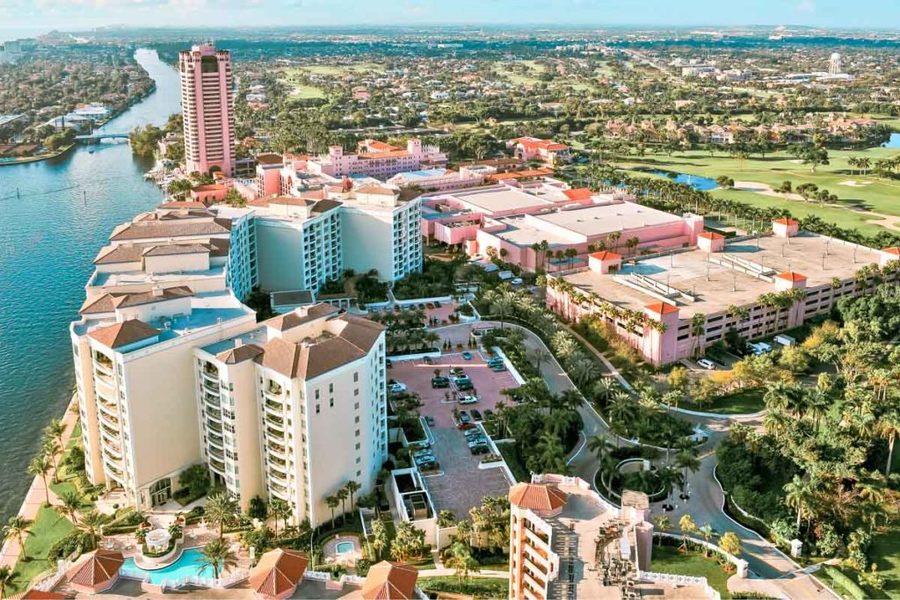
Boca Raton FAQ: 20 Questions Buyers Ask Before Moving
If you are weighing a move to Boca Raton, here is the short version: it is a strong buy for families chasing A-rated schools, retirees who want no state income tax, and professionals who want walkable downtown living without a Miami price tag on everything. But the details matter more here than in most South Florida markets. This Boca Raton FAQ: 20 Questions Buyers Ask Before Moving covers the stuff that actually changes your monthly payment, your insurance bill, or your kid’s school assignment, answered without the sales pitch.
Stanley has fielded these same questions from relocating buyers for years, on calls, at open houses, and in DMs from people who haven’t even booked a flight yet. Below are the 20 that come up most, grouped so you can jump to what matters to you.
Boca Raton FAQ: 20 Questions Buyers Ask Before Moving, By the Numbers
1. How much does it cost to buy in Boca Raton right now?
Entry-level condos in West Boca and near Town Center start around $250,000 to $350,000. Single-family homes in established neighborhoods like Boca Square, Country Club Village, or Sandalfoot run $500,000 to $800,000. New construction communities like Agave Boca and Lotus Edge price townhomes and single-family homes from the high $600,000s into the $1M+ range. Gated luxury enclaves further west, like Meravita, start near $1.9M and climb past $3.5M, with expansive modern homes ranging from roughly 3,290 to over 5,426 square feet and 3 to 4 car garages. There is a real Boca Raton for almost every budget, but the gap between West Boca and the beach corridor is wide. A buyer working with $600,000 is shopping a completely different city than a buyer working with $2.5 million, even though both are technically buying “in Boca.” Price per square foot tells the real story: West Boca resale runs meaningfully lower than east-of-Federal Highway product, and that gap widens further the closer you get to the Intracoastal.
2. Does Boca Raton have a city income tax?
No. Florida has no state income tax, and that applies to Boca Raton residents the same as anywhere else in the state. What you do pay is property tax, and Boca Raton’s effective rate lands around 1.7% to 2% of assessed value once you stack county, school district, and city millage together. Homestead exemption and the Save Our Homes cap reduce this significantly for owner-occupants who stay long term. For a buyer relocating from a high income tax state like New York, New Jersey, or California, this is often the single biggest number in the whole decision. On a $200,000 household income, skipping a 6 to 9 percent state income tax is worth more annually than most of the line items in this FAQ combined.
3. Are property taxes higher in Boca Raton than the rest of Palm Beach County?
Slightly, because of the city’s own millage on top of county and school district rates. But the bigger driver of your actual bill is the CDD or HOA situation and whether the home is homesteaded. Non-homesteaded buyers (out-of-state investors, second-home buyers) pay the full non-capped rate, which can be a meaningful jump from what the seller was paying. This trips up relocating buyers constantly: they see the seller’s current tax bill on the listing, assume it carries over, and get surprised at closing when the county reassesses at purchase price. If you’re moving from another Florida homestead, ask your agent about portability. It lets you transfer some of your Save Our Homes savings to the new property instead of starting from zero.
4. What are HOA fees like across Boca Raton?
This varies more than any other line item on a Boca Raton buyer’s budget. Standard townhome and gated single-family HOAs run $300 to $700 a month and typically cover landscaping, a gate, and a community pool. Country club communities like Boca West, Broken Sound, and St. Andrews Country Club carry mandatory golf or social membership on top of HOA dues, and total carrying costs there can hit $1,500 to $2,500+ a month. If a listing looks priced well below comparable homes, check the HOA line first. It usually explains the gap. A buyer comparing a $700,000 home in a no-frills subdivision against a $700,000 home in a country club community needs to run the full carrying cost side by side, not just the purchase price, because the second home could easily cost $1,200 more per month to own once membership and dues are factored in.
5. Is there a CDD (Community Development District) fee in Boca Raton?
Less common inside Boca Raton proper than in newer communities further west and north in Palm Beach County, but not unheard of in some newer master-planned developments. CDD fees are separate from HOA dues, appear on the property tax bill, and fund infrastructure like roads and drainage. Always ask your agent to pull the CDD status before you fall in love with a floor plan. Unlike an HOA fee, a CDD assessment is a lien on the property tied to bond repayment, and it does not go away just because you didn’t know it was there. Get the CDD payoff schedule (some are structured to be paid off over 20 to 30 years, others can be prepaid at closing) before you sign anything.
Boca Raton Schools: What Families Actually Need to Know
6. What school district is Boca Raton in?
Palm Beach County Schools, one of the larger districts in Florida. Boca Raton benefits from having several of the district’s stronger-performing schools, but assignment is address-specific, not just city-specific, so two homes a mile apart can zone to different high schools. This is one of the most common relocation mistakes: buyers assume “Boca Raton” is one school zone. It is not. Elementary and middle school boundaries shift more often than high school boundaries, so a family with younger kids should verify zoning every single time, even if a neighbor two streets over told them their kid attends a specific school.
7. Which Boca Raton high schools are worth targeting?
Spanish River High School runs a well-regarded International Baccalaureate program. Boca Raton High School (Boca High) is the classic east-side option with strong AP offerings. West Boca Raton High School and Olympic Heights Community High School serve the western neighborhoods and both carry solid ratings. All four are A-rated in recent Florida DOE scoring, but program strength (IB vs AP vs magnet tracks) differs, so match the school to what your kid actually wants, not just the letter grade. A student who wants a rigorous, exam-driven IB diploma track is going to have a very different four years than one who wants a broader AP course catalog with more electives. Our full Boca Raton schools guide breaks down elementary and middle school zones too, which matters just as much for families relocating with kids under 14.
8. Are there good private school options if we don’t want public school?
Yes. Saint Andrew’s School, Pine Crest School’s Boca campus, and Donna Klein Jewish Academy are all established options with real academic track records, and several sit within a reasonable drive of both East and West Boca neighborhoods. Families relocating from out of state should budget accordingly. Private tuition in this market commonly runs well into five figures per child per year once you account for tuition, fees, and extras, so factor that into your total housing and cost of living comparison rather than treating school choice and home choice as separate decisions.
9. Do I need to verify school zoning before I make an offer?
Always. School boundaries shift, and a listing agent’s claim about “zoned for Spanish River” is not the same as confirming it on the Palm Beach County Schools boundary tool using the actual parcel address. This is a five-minute check that prevents a very expensive surprise. Stanley has seen buyers write a full price offer on the assumption of a specific school zone, only to find out at closing the boundary had shifted the prior school year. Confirm it before you write the offer, not after you’ve fallen for the house.
Flood Zones, Insurance, and Where Buyers Get Burned
10. Is Boca Raton in a flood zone?
Partially, and location inside the city matters enormously. Coastal neighborhoods and anything near the Intracoastal Waterway east of Federal Highway often falls into FEMA Zone AE, which requires flood insurance for any mortgaged property. Central and West Boca, including most of the neighborhoods along the Turnpike and west toward the Agricultural Reserve, generally sit in Zone X, which does not mandate flood coverage. Never assume. Pull the FEMA flood map for the specific parcel. A home just three or four blocks from the water can sit in a completely different flood zone than one closer to the beach, and that difference alone can swing your annual insurance cost by well over a thousand dollars.
11. How much does flood insurance actually cost in Boca Raton?
For a Zone AE home, expect anywhere from $600 to $2,500+ a year depending on elevation certificate results, home age, and construction type. Zone X homes can often get an optional policy for a few hundred dollars a year, which many buyers still choose given how much rainfall South Florida sees regardless of official flood zone. If you’re financing a home in Zone AE, get the elevation certificate before you go hard on inspections. It directly drives the premium quote, and a home built a foot below base flood elevation can carry a dramatically higher bill than one built above it, even on the same street.
12. Is homeowners insurance expensive in Boca Raton right now?
Yes, and it has been rising across all of South Florida, not just Boca Raton. Newer homes with impact windows, updated roofs (under 15 years old), and modern wind mitigation features get meaningfully better rates than older homes with original roofs. This is one more reason new construction communities like Agave Boca, covered in depth in our Agave Boca new construction guide, carry an insurance advantage buyers underestimate at first glance. It is common for a 1980s resale home with an original roof to carry an annual premium two to three times higher than a comparably sized new construction home a few miles away, purely because of roof age and wind mitigation features. Get a real insurance quote before you write an offer on an older home, not after, because that number can change your monthly payment more than a rate difference on the mortgage itself.
13. Does Boca Raton flood during hurricane season?
Isolated street flooding happens during heavy summer storms, particularly in low-lying older neighborhoods and near drainage canals, but Boca Raton is not generally a high-flood-risk city compared to some coastal Broward and Miami-Dade pockets. Elevation and drainage infrastructure quality vary block by block, which is exactly why the flood zone check in question 10 matters more than a general reputation. Ask neighbors or your agent about how a specific street handled the last major storm season. That kind of firsthand, block-level knowledge tells you more than any flood map alone.
Condos, New Construction, and What’s Actually Available
14. Should I buy a condo or a single-family home in Boca Raton?
Depends on your stage of life and how much yard maintenance you want to deal with. Downtown and Mizner Park area condos put you walking distance to restaurants, the Mizner Park Amphitheater, and Royal Palm Place, with HOA fees covering building maintenance, often $600 to $1,200+ a month depending on amenities. Single-family homes give you space and privacy but come with their own upkeep and, in many communities, their own HOA on top of it. Retirees and empty nesters who are done mowing a lawn tend to gravitate toward the condo lifestyle. Families who need a yard, a garage, and more square footage for the money usually land on single-family, even if it means a slightly longer drive to downtown.
15. What’s new construction looking like in Boca Raton right now?
Active. Lotus Edge and Agave Boca are both delivering townhomes and single-family product aimed at buyers who want modern floor plans and builder warranties instead of renovating a 1980s resale. Further west, gated communities like Meravita by Toll Brothers are building estate-level single-family homes from roughly $1.9M to $3.5M+, with private multi-car garages, first-floor primary suites, and homes ranging from 3,290 to over 5,426 square feet. The HOA there covers complete horizontal lawn maintenance, and the community amenities include a pool, fitness center, event lawn, and sport court, the kind of full-service package that appeals to buyers who want a lower-maintenance lifestyle without giving up single-family living. Downtown, there are also newer townhouse projects working through the city’s review process aimed at high-end urban buyers who want a garage without a full HOA-managed high-rise, engineered around private multi-car garages and modern architectural details.
16. Are new construction HOA fees lower than resale communities?
Not necessarily lower, but often more predictable, since reserves are newly funded and major systems (roof, roads, drainage) are new rather than approaching a replacement cycle. That said, always ask for the HOA’s reserve study and budget before closing on new construction. A brand-new community with an underfunded reserve account is still a future special assessment waiting to happen. Do not assume “new” automatically means “well capitalized.” Some developers set initial dues artificially low to make the community more attractive at launch, then raise them once the builder turns control over to the homeowner association.
17. Is Boca Raton condo living affected by the statewide condo safety laws?
Yes, and buyers should ask about it directly. Florida’s post-Surfside structural inspection and reserve funding requirements apply statewide, and older Boca Raton condo buildings are working through required milestone inspections and reserve studies. This has driven HOA fee increases in some older buildings as associations fund reserves that were previously underfunded. Ask for the most recent inspection report and reserve study on any condo building more than a few decades old before you make an offer. If a building has an open structural issue or a large pending special assessment, you want to know that before you’re under contract, not after.
Commute, Lifestyle, and Daily Life
18. What’s the commute like from Boca Raton?
I-95 and Florida’s Turnpike both run through Boca Raton, giving reasonably direct access north to Delray Beach and West Palm Beach or south into Broward County. Commute to Fort Lauderdale runs about 35 to 45 minutes outside peak traffic, and into Miami you’re realistically looking at an hour or more during rush hour. Tri-Rail has a Boca Raton station on Yamato Road for commuters heading toward Fort Lauderdale or Miami without driving. Glades Road, Palmetto Park Road, and Yamato Road are the main east-west corridors locals use to avoid I-95 backups. If your job is in downtown Fort Lauderdale or Miami and you’re weighing Boca against a city further south, factor in the daily commute honestly. What looks like a 35 minute drive on a map can become an hour during snowbird season, from roughly November through April, when both traffic and population swell.
19. What does daily life in Boca Raton actually look like?
Beach mornings, a genuinely walkable downtown around Mizner Park and Royal Palm Place, a heavy concentration of golf and country club communities, and a school and family culture that leans more buttoned-up than Fort Lauderdale or Delray Beach. Our deeper breakdown in Living in Boca Raton: What Daily Life Actually Looks Like in 2026 covers the day-to-day rhythm, and Is Boca Raton a Good Place to Live? Honest 2026 Review is worth reading if you’re still deciding between Boca and a neighboring city.
20. Should I choose Boca Raton over Delray Beach or another nearby city?
It comes down to what you’re optimizing for. Boca Raton generally offers stronger school ratings, a more established country club and gated-community culture, and slightly higher price points across the board. Delray Beach leans younger, more walkable-artsy downtown, and a bit more affordable in comparable neighborhoods. We laid out the direct comparison in Boca Raton vs. Delray Beach: Which Is Right for You in 2026? if you’re cross-shopping both.
Where to Look Based on Your Budget
If you’re a first-time buyer, start west. West Boca neighborhoods and townhome communities give you A-rated schools without East Boca pricing, and our First-Time Buyer’s Guide to Boca Raton, FL breaks down what’s realistically achievable at different price points in 2026.
If you’re moving up or relocating with equity from out of state, the Golden Triangle, Boca Square, and newer construction communities like Agave Boca and Lotus Edge give you modern product without the country club membership requirement.
If budget isn’t the constraint and lifestyle is, Royal Palm Yacht & Country Club, Boca West, and St. Andrews Country Club deliver the amenity-heavy, gated experience Boca Raton is known for, at a real monthly carrying cost you should budget for before you fall for a listing photo. Our full Best Neighborhoods in Boca Raton: The Honest 2026 Guide maps out which pockets fit which budget and lifestyle in more detail.
Three Real Buyer Scenarios (And What Actually Happened)
The out-of-state retiree. A couple relocating from New Jersey wanted no state income tax and low maintenance. They looked at a resale in a country club community first, drawn in by a listing price that looked reasonable. Once we ran the full carrying cost, mandatory golf membership included, it came out over $2,000 a month above their target. They pivoted to a West Boca gated single-family community with a $450 monthly HOA and no membership requirement, and still got the low-maintenance lifestyle they wanted, just without the club dues attached.
The relocating family with two kids. A family moving from Illinois had their heart set on a home a real estate portal listed as “zoned for Spanish River.” We pulled the parcel on the county boundary tool before writing an offer and found it actually zoned to West Boca Raton High School, still A-rated, but not the IB program they wanted. That five-minute check saved them from a decision they would have regretted for four years, and we found them a comparable home two miles east that actually zoned correctly.
The first-time buyer stretching for East Boca. A young professional wanted to live east of the Intracoastal on a budget that only worked in Zone AE. Once we ran a real flood insurance quote alongside the homeowners policy, the total monthly payment jumped enough to change the math. She ended up in a Zone X condo in the Golden Triangle instead, same commute to downtown, same walkability, and a materially lower insurance bill every year she owns it.
The Bottom Line
Boca Raton rewards buyers who do the homework: checking the actual flood zone for the parcel, pulling the HOA budget and reserve study, confirming school zoning on the address rather than the city name, and understanding whether a listing’s low HOA fee is a feature or a sign of deferred maintenance. Do that work up front and Boca Raton delivers exactly what it promises, strong schools, no state income tax, and a market that has stayed resilient through every South Florida cycle.
Have a question that didn’t make this list? Send it over and we’ll get you a straight answer, not a sales pitch.



Watch: learn more
Go deeper with my South Florida Insider videos.
Solterra: Everything You Need to Know Before You Visit
Solterra: Everything You Need to Know Before You Visit
More articles you might like
Is Lotus Edge Worth It? An Honest Look at GL Homes's Boca-Raton Community
20 min readAgave Boca in Boca Raton: The New Construction Guide (Floor Plans, Pricing, What to Know)
20 min readBoca Raton vs. Delray Beach: Which Palm Beach County City Is Right for You?
18 min readLiving in Boca Raton: What Daily Life Actually Looks Like in 2026
18 min readIs Boca Raton a Good Place to Live? Honest 2026 Review
18 min read