Jupiter Inlet Colony, FL Real Estate Market 2026: Prices, Trends & What Buyers Should Expect
Jupiter Inlet Colony, FL Real Estate Market 2026: What It Actually Costs to Buy Here
If you’re trying to figure out what it actually costs to buy in Jupiter Inlet Colony, FL in 2026, here’s the honest answer: expect to spend somewhere between $3 million and $15 million depending on lot type, canal access, and how much of the original 1960s and 70s home is still standing versus rebuilt. This isn’t a market with starter homes or a “wait for the dip” strategy. It’s one of the smallest, most tightly held residential enclaves in South Florida, and the pricing reflects scarcity as much as it reflects the water.
This guide breaks down what’s actually happening in the Jupiter Inlet Colony real estate market right now, what buyers should realistically expect to find, and how the town compares to the bigger, more familiar names around it like Jupiter Island and Admirals Cove. If you’ve been watching this market from a distance, whether because you already live in Jupiter and have your eye on the water, or because you’re relocating from up north and someone told you to look at “the little island town by the inlet,” this is the real picture, not the polished version you get from a single listing photo.
What Jupiter Inlet Colony Actually Is
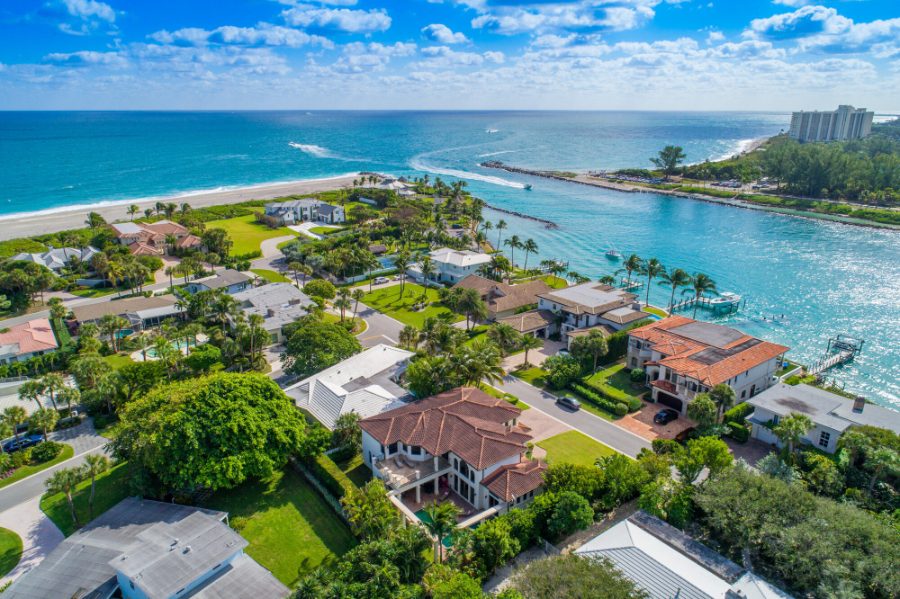
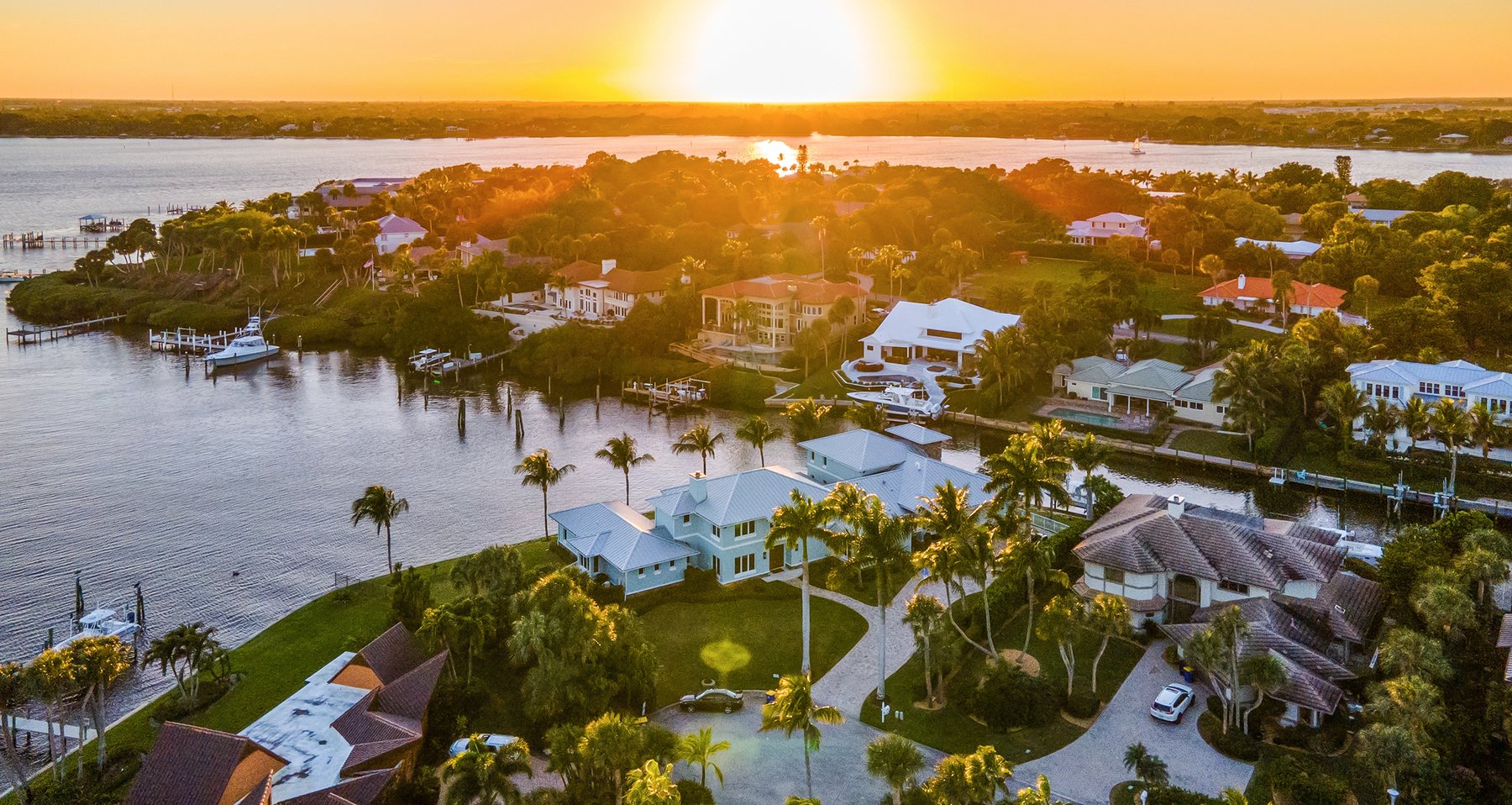
Jupiter Inlet Colony is its own incorporated town, not a neighborhood inside the Town of Jupiter. It sits on a barrier island wedged between the Jupiter Inlet to the north, the Atlantic Ocean to the east, and the Intracoastal Waterway to the west, just south of DuBois Park. The town runs its own police department and its own local government, which is part of why it feels so insulated from the growth happening a few miles inland along the Central Boulevard and Indiantown Road corridors.
The physical footprint is small. We’re talking about roughly 230 to 260 homes total, most built between the late 1950s and the 1980s, many since renovated or rebuilt entirely. There’s no commercial strip, no HOA run clubhouse, no new construction subdivision going up. What you’re buying into is land, water access, and privacy, not amenities.
The town itself runs along a narrow stretch bounded loosely by S Beach Road and A1A, with interior streets branching off toward the Intracoastal side. It’s genuinely walkable end to end in about fifteen minutes, which surprises people who assume “barrier island” means sprawling. That compact footprint is exactly why supply never grows. There’s no vacant land sitting around waiting for a developer, and the town has no appetite to change its zoning to allow one. What existed in 1962 when much of it was platted is basically what exists today, just with newer, taller, more expensive houses sitting on the same lots.
If you want the deeper walkthrough on what to check before you write an offer here, including lot orientation, flood zone realities, and dock/seawall condition, read the Buyer’s Guide to Jupiter Inlet Colony, FL. And if you’re still deciding whether this town fits your life at all, not just your budget, the honest 2026 review of Jupiter Inlet Colony covers the day to day reality: what it’s like to actually live there versus visit.
Jupiter Inlet Colony, FL Real Estate Market 2026: Prices, Trends & What Buyers Should Expect
Here’s the pricing breakdown buyers actually need, broken out by property type, because “the market” in a town this small doesn’t move as one block. A buyer comparing an interior lot to an oceanfront estate isn’t shopping the same market, even though both addresses say Jupiter Inlet Colony.
Interior canal lots (non-direct water or narrower canal frontage)
These are the entry point into the town, and “entry point” still means real money. Older, unrenovated homes on interior canals have traded in the $2.8 million to $4 million range recently, largely reflecting land value with a teardown or major renovation expected. Once a buyer puts $1 million to $2 million into a rebuild, all-in cost climbs well past $5 million.
Picture a typical scenario: a 1968 three-bedroom concrete block home on a narrower interior canal, original terrazzo floors, a seawall that’s held up fine but a dock that’s seen better days. That house might trade around $3.2 million as-is. The buyer who takes it isn’t buying a house, they’re buying a rebuild permit and a piece of a town that isn’t making more lots. Most of these buyers go in already planning to demo within the first year or two, once they’ve lived on the lot long enough to know exactly where they want the new footprint to sit.
Direct Intracoastal or wide-canal waterfront
This is where most of the town’s activity concentrates. Homes with true deep water access, dock capacity for a real boat, and no fixed bridge obstruction typically run $6 million to $12 million depending on lot width, square footage, and whether the home is original or has been rebuilt to current flood elevation standards.
This tier is where you see the widest range of buyer profiles: a Palm Beach Gardens family finally trading up after years of watching this stretch from the outside, an Admirals Cove member who’s done with club dues and wants their own dock instead of a shared marina slip, or an out of state buyer who spent a winter in Jupiter, fell for the inlet, and decided renting was no longer the plan. What they have in common is they all want the same thing: a boat that clears the inlet without ducking under a fixed bridge first. That single feature, unobstructed access to open water, is worth more than an extra bedroom or a pool upgrade in this town.
Oceanfront or near-inlet premium lots
The smallest slice of inventory, and the highest priced. These properties, closest to the inlet itself or with unobstructed ocean frontage, have listed and closed north of $12 million, occasionally clearing $18 million to $20 million for the largest, most updated estates.
There are realistically only a handful of true oceanfront parcels in the entire town. When one comes up, it isn’t really a “listing” in the traditional sense, it’s an event that gets worked through relationships before it ever sees a public portal. Buyers at this level aren’t comparing square footage spreadsheets. They’re comparing this specific stretch of sand against Jupiter Island’s oceanfront pricing a few minutes south, and often deciding they’d rather have the quieter, ungated version.
What’s actually moving in 2026
Days on market vary wildly here because volume is so low that a single sale can skew the “average.” What’s consistent: well priced, updated waterfront homes with real dock access move in weeks. Original, dated homes on smaller lots sit for months, sometimes longer, because most buyers at this price point want either a true renovation ready teardown priced accordingly, or a home that’s already done. There isn’t much appetite for paying top dollar for a home that still needs $1.5 million of work.
What’s changed heading into 2026 is the gap between those two buyer pools has actually widened. A finished, elevated, hurricane rated new build with a modern dock sells faster than it did two years ago, because more buyers now understand exactly what a ground up barrier island rebuild costs and timeline wise, and they’d rather pay a premium to skip that process entirely. Meanwhile sellers holding original 1960s homes without pricing in the true land plus demo value are the ones sitting unsold longest.
Why Prices Sit Where They Do
Four things drive Jupiter Inlet Colony pricing, and none of them are going away.
Scarcity of land. The town is built out. There is no new subdivision, no builder releasing phase two. Every transaction is a resale of one of roughly 250 existing lots, and the town has zero interest in expanding its footprint.
Water access. Most of the value here isn’t the house, it’s what’s underneath the dock. A boat that can reach the Jupiter Inlet and open ocean without a fixed bridge in the way is worth a significant premium over a similar home on a landlocked canal a few blocks inland.
Privacy and control. Jupiter Inlet Colony runs its own police force and has historically kept a low profile compared to Jupiter Island or Admirals Cove. For buyers who want proximity to Jupiter’s restaurants, marinas, and Harbourside Place without living inside a gated country club community, this town fills a specific niche.
Rebuild cost and code compliance. Every home built or substantially remodeled on this barrier island now has to meet current flood elevation and wind load standards, which raises the baseline cost of anything “new” in the town. That reality gets baked into resale pricing too. A home that’s already been rebuilt to code commands a real premium over a comparable original structure, because the buyer isn’t just paying for finishes, they’re paying to skip 18 to 24 months of permitting and construction on a barrier island where every step is more expensive and more regulated than a standard inland build.
Market Trends Buyers Should Understand Before Shopping
Inventory is thin, and it stays thin
In a typical year, the number of homes that actually close in Jupiter Inlet Colony can be counted on two hands. That means public listing portals often show zero or one active listing at any given moment. Buyers who limit their search to what’s publicly listed will miss most of the real activity, because agents working this town regularly hear about a sale before it ever hits the MLS.
Teardown and rebuild activity is steady
Given the age of the housing stock, a meaningful share of “sales” in this town are really land purchases with the intent to demolish and rebuild to modern hurricane and flood standards. Buyers should budget accordingly and factor in Palm Beach County permitting timelines, which have stretched in recent cycles for coastal rebuilds. A realistic timeline from closing to move in on a full teardown and rebuild here runs 20 to 30 months once you account for permitting, demolition, seawall or dock work, and construction itself. Buyers who go in expecting a 12 month turnaround are almost always disappointed.
Cash is the norm, not the exception
At this price tier, and with FEMA flood zone requirements on much of the barrier island, a large share of buyers pay cash or use jumbo financing with substantial down payments. Sellers here are less motivated by financing contingencies and more focused on close speed and certainty. If you’re financing, expect sellers and their agents to scrutinize your lender letter closely, and expect a shorter list of lenders who actually want to underwrite jumbo loans on a barrier island flood zone property in the first place.
Buyers are trading proximity for privacy
A growing number of buyers looking at Jupiter Inlet Colony are relocating from Jupiter Island or Admirals Cove because they want walkable or short drive access to downtown Jupiter without the country club membership requirement. Others are coming from out of state and comparing this town directly against Manalapan, Gulf Stream, and Ocean Ridge further south in Palm Beach County. What they’re usually optimizing for is the same thing: real water access, real privacy, without signing up for a social club structure they didn’t ask for.
Off market activity is where the real market lives
This is worth its own callout because it trips up more buyers than anything else. In a town this small, listing agents and buyer’s agents who work barrier island properties regularly know which owners are quietly thinking about selling well before a sign goes in the yard. A phone call, an estate situation, a family that’s ready to downsize once their kids are through school. None of that shows up on Zillow. If your search strategy is “check the portals every morning,” you are, by definition, working from the smallest and least representative slice of what’s actually available.
What Buyers Should Realistically Expect in 2026
Set expectations before you start touring:
- You will not find a “deal.” This isn’t a market where a motivated seller drops price 15% because a home sat too long. Sellers here are rarely under financial pressure, so pricing tends to hold even through slower stretches. Even in a soft month, you’re negotiating around the margins, not chasing a discount.
- Renovation ready homes need real renovation. Many of the original homes are 50 to 70 years old. Buyers need to budget for full electrical, plumbing, and structural updates, not cosmetic refreshes. What looks like “just needs a kitchen update” in listing photos is frequently a home that also needs a new roof, updated plumbing, and elevation work to meet current flood standards.
- Dock and seawall condition matters as much as the house. Get a marine survey, not just a home inspection, before closing on any waterfront property here. Seawall repair and replacement on a barrier island lot can run into six figures on its own, and it’s not something a standard home inspector is qualified to evaluate.
- Insurance costs are significant. Windstorm and flood coverage on a barrier island home run materially higher than inland Jupiter or Palm Beach Gardens. Get quotes before you fall in love with a listing. It’s not unusual for combined windstorm and flood premiums on an older, non elevated home here to run well into five figures annually, and that number drops meaningfully once a home has been rebuilt to current elevation standards, which is one more reason rebuilt homes command a premium.
- You’ll compete with relationship based buyers. A large share of sales happen through agent networks before hitting public portals. If you’re serious about buying here, you need someone actively watching this specific town, not just running a general Jupiter search.
Who’s Actually Buying in Jupiter Inlet Colony Right Now
Three buyer profiles show up consistently. The first is the local upgrade: someone already living in Jupiter, Palm Beach Gardens, or one of the gated communities inland, who has watched this stretch of water for years and finally has the liquidity to make the move. The second is the club dropout: a member of Admirals Cove or a similar community who’s decided they’d rather own their own dock and skip the membership structure entirely. The third is the out of state relocator, often from the Northeast or Midwest, who spent enough winters in the area to know exactly which few blocks of South Florida they actually want, and Jupiter Inlet Colony’s combination of privacy and inlet access checks every box once they see it in person.
What none of these buyers have in common is urgency driven by a “hot market” narrative. Almost everyone buying here is doing so deliberately, often after months of watching quietly before a property they want actually becomes available.
HOA, Taxes, and Local Governance
Jupiter Inlet Colony does not operate like a typical HOA community. There’s no clubhouse fee or amenity dues structure. Instead, as its own incorporated town, residents pay municipal property taxes that fund the town’s own police department and local services, on top of standard Palm Beach County taxes. Buyers should pull the actual millage rate and prior year tax bill for any specific property, since flood elevation, homestead status, and recent renovation permits can shift the number significantly from one house to the next.
It’s also worth understanding that a recently rebuilt home will typically carry a meaningfully higher assessed value, and therefore a higher tax bill, than a neighboring original home on a similar sized lot, at least until that original home eventually sells and gets reassessed. Buyers comparing two similarly priced properties should never assume the tax line will be similar just because the purchase price is.
How Jupiter Inlet Colony Compares to Nearby Markets
If the price point or the tiny inventory pool feels like too tight a needle to thread, it’s worth understanding where Jupiter Inlet Colony sits relative to its neighbors.
Jupiter Island, just south, is larger, more famous, and generally commands even higher prices on its most exclusive stretches, with a longer history of celebrity and executive ownership. It also has a much larger footprint of true estate sized lots, meaning buyers there are often working with more land and more separation from neighbors than what’s realistic on most Jupiter Inlet Colony lots.
Admirals Cove and other gated Jupiter communities offer country club amenities, golf, and marina access with more available inventory, but you’re paying club dues and buying into a more social, structured lifestyle rather than the quiet, ungated feel of Jupiter Inlet Colony. For a buyer who wants tennis, golf, and a built in social calendar, that structure is a feature. For a buyer who specifically wants to avoid it, Jupiter Inlet Colony is the answer.
Manalapan, Gulf Stream, and Ocean Ridge, further south in Palm Beach County, are the closest true comparables in terms of scale, privacy, and barrier island pricing. Buyers cross shopping Jupiter Inlet Colony against these towns are usually weighing the same tradeoff: proximity to Jupiter’s restaurant and marina scene versus proximity to Palm Beach and Delray Beach. Neither is objectively better, it comes down to which downtown you actually want to be fifteen minutes from.
Downtown Jupiter and Abacoa are far more accessible price points with actual new construction activity, though nothing waterfront at this level. If new construction with real builder pricing is what you’re after, projects like Water Pointe in Jupiter (waterfront townhome style condos from roughly $1.1 million) show what “new” actually costs a few miles inland from the barrier island. That gap, from roughly $1.1 million for a new construction waterfront townhome inland to $6 million plus for direct Intracoastal frontage in Jupiter Inlet Colony, is the clearest illustration of what buyers are actually paying for when they choose the barrier island: not square footage, but the water underneath the dock and the privacy of an incorporated town with its own police force.
For a broader read on how Jupiter stacks up against its closest competitor to the south, see Jupiter vs Palm Beach Gardens: A Relocator’s Real Comparison for 2026. And if Jupiter Inlet Colony’s price point simply isn’t realistic for your relocation, the Best Palm Beach County Suburbs for Families Relocating in 2026 guide covers more attainable towns with strong schools and shorter commutes.
Buyers who want new construction at a fraction of barrier island pricing, with modern floor plans and builder warranties, should also look at planned communities further west like Westlake. The Westlake, FL Real Estate Market 2026 breakdown covers pricing there for comparison, a completely different product but a useful reality check on what “new” and “affordable” mean in Palm Beach County right now.
Schools and Everyday Life
Jupiter Inlet Colony falls within the Town of Jupiter’s zoned school district, feeding into the same well regarded Palm Beach County public schools that serve much of the Jupiter area, including Jupiter Elementary, Independence Middle, and Jupiter High. Most families at this price point also consider nearby private options like The Benjamin School or The King’s Academy, both a short drive away, rather than relying solely on the zoned public path.
Day to day life here is quiet: no retail, no restaurants inside town limits, a short drive or golf cart ride to Harbourside Place, Jupiter’s marina district, and the shops along US-1. DuBois Park, with its beach access and historic DuBois Pioneer Home, sits right at the town’s northern edge, and it’s the closest thing the town has to a shared community gathering spot. Most residents describe the lifestyle here less as “neighborhood” and more as “compound with neighbors,” everyone has their own dock, their own privacy, and community happens more through the boat traffic on the water than through any organized clubhouse calendar.
The Bottom Line
Jupiter Inlet Colony in 2026 is not a market you time or negotiate hard in. It’s a market you position yourself for. Prices run from roughly $3 million for an interior lot needing full renovation to well past $15 million for direct waterfront with real dock access. Inventory is thin enough that most of the real activity never makes it to a public listing before it’s already in contract.
If you’re serious about buying here, the move isn’t to keep refreshing Zillow. It’s to build a relationship with someone who actively tracks this specific town’s inventory, off market conversations, and pricing history, because in a market this small, that relationship is often the difference between getting the house and finding out three weeks later that it sold.
DM me “JUPITER INLET” and I’ll walk you through current inventory, realistic pricing for what you’re looking for, and what to check before you write an offer on a barrier island property.
More articles you might like
Buyer's Guide to Jupiter Inlet Colony, FL: What to Know Before You Purchase
17 min readIs Jupiter Inlet Colony a Good Place to Live? Honest 2026 Review
13 min read
Coconut Creek Real Estate Market (2026): Prices, Trends, and What It Means for Buyers
18 min read
Weston Real Estate Market Update: Prices and Conditions in Mid-2026
13 min read
Westlake, FL Real Estate Market 2026: Prices, Trends & What Buyers Should Expect
13 min read