Moving to Palm Beach Gardens: The Honest Relocation Guide for 2026
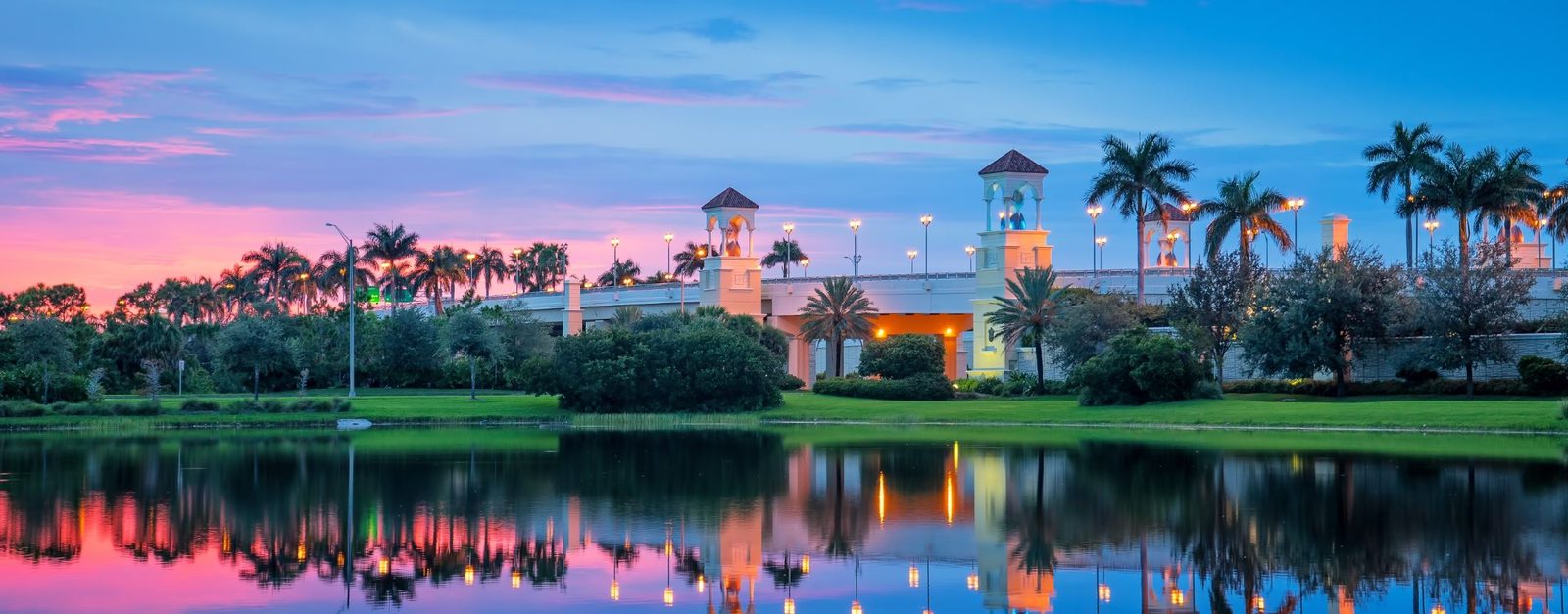
If you’re moving to Palm Beach Gardens, the honest answer is this: you’re choosing between two very different versions of the city. One is north of Northlake Boulevard, where Avenir is turning 4,700 acres of former agricultural land into the biggest master-planned community Palm Beach County has seen in decades. The other is the established Palm Beach Gardens most people picture, the PGA Corridor, golf communities, and neighborhoods built out over the last 30 years, where you’re buying resale and paying for location instead of newness. This guide breaks down both, with real prices, real HOA and CDD numbers, and the tradeoffs that don’t make it into the glossy brochures.
This is the moving to Palm Beach Gardens honest relocation guide for 2026 that treats you like an adult who can handle real numbers, not marketing copy. If you want the deeper dive on any single piece, we’ve written full guides on Palm Beach Gardens schools, the best neighborhoods, and daily life once you’re actually living there. This is the one that ties it all together.
Moving to Palm Beach Gardens: The Honest Relocation Guide for 2026, Neighborhood by Neighborhood
Palm Beach Gardens isn’t one market. It’s at least four, and treating it like one is how buyers end up disappointed after closing.
North Palm Beach Gardens (Avenir). New construction only. Everything here is being built right now or was built in the last two years. You’re buying a lifestyle that’s still under construction, literally, with amenities that won’t be finished for another year or two in some pods. This is the part of the city growing the fastest, and it’s also the part where you need to ask the most questions before you sign anything, because the finished product you’re picturing from the sales center renderings might be 18 to 24 months out.
The PGA Corridor (PGA Boulevard, Central Boulevard, Hood Road area). This is the established core. Golf communities, gated single-family neighborhoods, and the shopping and dining hub at Downtown at the Gardens and The Gardens Mall. Homes here are mostly resale, built between the 1980s and 2010s. If you want mature landscaping, an HOA with a track record, and neighbors who’ve lived there for a decade, this is where you look.
Alton and the I-95/PGA Boulevard corridor. A Kolter-built master-planned community that’s mostly built out now, offering a middle ground between Avenir’s newness and the PGA Corridor’s maturity. Mixed single-family and townhomes, with a mixed-use village center. Alton is close enough to I-95 that your commute calculus looks a lot more like the PGA Corridor than like Avenir, even though the housing stock is newer.
Central and eastern Palm Beach Gardens. Older, closer to US-1 and the Intracoastal, smaller lots, generally the most affordable entry point into the city, though inventory is thin. This is the part of Palm Beach Gardens most relocation content skips entirely, because it doesn’t have a marketing budget behind it. It’s worth a look if your priority is proximity to the water and US-1 corridor over square footage.
If you want the full neighborhood-by-neighborhood breakdown with HOA specifics for each, that’s covered in our best neighborhoods guide. Here, we’re focused on what it costs to actually move into each of these.
What Palm Beach Gardens Actually Costs in 2026
The reality is that Palm Beach Gardens spans a wide price band, and where you land depends entirely on new versus resale, and how close you are to PGA Boulevard.
New construction (Avenir): Base pricing across the master plan runs roughly $665,000 to $2 million and up, depending on which of the 15 neighborhoods (called pods) you’re looking at and whether you want a 55+ enclave or a family section. That’s a wide enough range that two buyers with the same $900,000 budget can end up in completely different products depending on which pod they land in, one might get a spacious single-family lot backing to preserve, the other a smaller lot closer to the front entrance with less privacy.
New construction (Alton): Mostly sold out of new inventory at this point, but resale within Alton runs comparable to or slightly above PGA Corridor resale, since the homes are newer and the community is younger. If you liked the idea of Avenir’s newer building standards but wanted the shorter commute of the PGA Corridor, Alton resale is worth a serious look before you commit to a long drive from north of Northlake.
Resale, PGA Corridor: Single-family homes in established gated neighborhoods typically run $600,000 to $1.2 million for standard product, with golf-front and larger estate homes pushing well past that. Condos and townhomes closer to PGA Boulevard start lower, often in the $350,000 to $550,000 range depending on age and amenities. A buyer with a $700,000 budget in the PGA Corridor is generally looking at an updated three or four bedroom home built in the 1990s or 2000s, on a standard lot, in a community with an established HOA and no CDD debt attached.
Resale, non-gated and older sections: This is where you find the most affordable entry into Palm Beach Gardens proper, though it’s a smaller slice of inventory and moves fast when it hits the market. Buyers priced out of the gated communities but who still want the Palm Beach Gardens address and school zoning often end up here, and the tradeoff is usually smaller lots and older mechanicals in exchange for a lower purchase price.
For the full market breakdown with trend data, see our 2026 Palm Beach Gardens real estate market report. The short version: new construction is setting the price ceiling in the north end of the city, and resale in the PGA Corridor is holding steady because there’s simply not enough of it. When inventory in the established gated communities is thin, sellers know it, and pricing reflects that scarcity even as new construction expands the total supply of homes in the city overall.
Avenir: The New Construction Story Driving Growth North
Avenir is the reason “moving to Palm Beach Gardens” looks different in 2026 than it did five years ago. This is a master plan on the northern edge of the city, still under active construction, with framing and horizontal infrastructure ongoing into mid-2026 across several pods.
A few specific communities worth knowing if you’re actually shopping Avenir right now:
Esprit at Avenir, built by Kolter Homes, is a gated 55+ active adult enclave with 144 planned homes, priced from the mid-$800s up to $1.5 million-plus for larger inventory homes. Homes range from 1,911 to over 3,274 square feet, and the private club includes resort pools, a full-service restaurant and bar, lighted tennis and pickleball, and an EGYM fitness center with a cold plunge pool. Models are scheduled to finish in late 2026, which means buyers touring today are still buying largely off floor plans and renderings for some inventory rather than walking a finished model.
L’Ambiance at Avenir, also Kolter, is a family-focused gated enclave of 144 single-family homes priced from $829,990 up to $2,479,990 for showcase models. About 75 percent of homesites back up to preserve or lake views, and the HOA includes full lawn care plus Envera gate security. It sits directly across from the planned Avenir West Clubhouse, so buyers here are effectively betting on an amenity center that isn’t open yet, another reason to ask your builder rep for a hard completion date instead of a general timeframe.
Windgate at Avenir, built by Toll Brothers, offers 119 homesites with base pricing from the high $800s to $1.2 million-plus, open-concept layouts, and lake views.
Beyond those three, other single-family sections still breaking ground on the north side of the master plan add roughly 390 more planned homes starting in the $800s, with floor plans running from 2,500 to 4,800 square feet. Those pods are built around private parks, walking trails, and smart-home community integration from the start, and framing plus horizontal infrastructure work is active there into mid-2026. That’s five builders total working inside one master plan at the same time, which is part of why price and product vary so much depending on which street you’re standing on.
If you’re serious about buying here, read the complete Avenir buyer’s guide before you tour, and see current available inventory and floor plans so you’re not walking in blind on pricing.
The tradeoff with Avenir is honest and simple: you get a brand new home with a builder warranty, modern impact windows, and current Florida Building Code standards, but you’re moving into an active construction zone. Trucks, dust, and a clubhouse that might not open for another year are part of the deal in the earlier phases. That’s not a dealbreaker for most buyers, but it’s something nobody tells you in the sales office. If you’re the kind of buyer who wants to move in and have the community already feel finished, ask specifically which pod and which phase you’re buying into, and get a written completion date for the amenities you’re paying HOA dues toward, not just the house itself.
Alton and the PGA Corridor: Where Resale and Newer Builds Meet
Alton sits closer to I-95 and PGA Boulevard, and it’s mostly built out now, which means you’re shopping resale within a community that’s only a few years old. That gets you newer construction standards (impact windows, modern layouts, updated code compliance) without the active construction chaos of Avenir. The tradeoff is you’re paying resale premium on a young community instead of builder base pricing, and you’re relying on the current owner’s upgrade choices rather than picking your own finishes.
The PGA Corridor itself, meaning the established neighborhoods along and near PGA Boulevard, is where most of the golf course communities live. This is genuinely the heart of “Palm Beach Gardens” as most relocating buyers picture it: mature trees, gated entries, proximity to Downtown at the Gardens and The Gardens Mall, and a 10 to 15 minute drive to the beach in Juno or North Palm Beach. You’re not going to find new construction pricing here, and you’re not going to find Avenir’s amenity newness either. What you get instead is location that’s already proven itself, and a shorter commute to the shopping, dining, and medical corridor along PGA Boulevard.
For a buyer trying to decide between the two, the practical question is what you’re actually optimizing for. If you want the shortest possible commute to a job near downtown West Palm Beach or Boca Raton, and you don’t need a brand new build, the PGA Corridor wins on time saved every single day. If you want lower maintenance, newer systems, and don’t mind adding 10 to 15 minutes to your drive, Avenir starts to make more sense, especially once its amenity buildout catches up over the next couple of years.
If you’re weighing Palm Beach Gardens against the town next door, our honest comparison to Jupiter covers where each city wins on schools, commute, and price per square foot.
HOA and CDD Fees: What Nobody Tells You Before You Sign
This is the section that actually matters and the one most agents skip.
HOA fees in Palm Beach Gardens vary enormously by community type. A basic gated single-family neighborhood with no amenities beyond a guard gate might run $200 to $350 a month. A lifestyle community like Esprit or L’Ambiance at Avenir, with a resort pool, fitness center, and lawn maintenance included, can run $350 to $600-plus a month. Golf communities with mandatory membership are their own category entirely, where you’re paying HOA dues plus a separate golf or club membership that can add another $10,000 to $30,000-plus a year depending on the club.
CDD fees are the one buyers moving from out of state consistently get blindsided by. A Community Development District is a special taxing district that issued bonds to pay for the roads, utilities, and infrastructure inside a new master-planned community. That debt gets paid down over 20 to 30 years, and it shows up as a separate line item on your annual property tax bill, not folded into your HOA. In Avenir and similar new construction communities in this part of Palm Beach County, CDD assessments commonly run $2,000 to $4,500-plus a year depending on lot size, phase, and how much of the district’s debt has already been retired. It doesn’t disappear when you pay off your mortgage. It’s tied to the property, and it’s separate from HOA dues, not instead of them.
Established PGA Corridor neighborhoods built before CDDs became standard practice generally don’t carry this cost, which is one of the real, unglamorous reasons resale in an older gated community can pencil out better long-term than new construction, even at a similar sticker price.
Insurance is the other line item that catches relocating buyers off guard. New construction in Avenir is built to current Florida Building Code, with impact windows and doors standard, which typically qualifies for meaningfully better wind mitigation credits than an older PGA Corridor home with an original roof and non-impact glass. That difference can run into hundreds of dollars a year on homeowners insurance alone, and it’s worth asking your insurance agent to quote both scenarios side by side before you assume new construction and resale cost the same to insure. It usually doesn’t, and the gap has only gotten wider as Florida’s property insurance market has tightened.
We break down every CDD and HOA number community by community in our Palm Beach Gardens FAQ for buyers, which is worth reading before you make an offer anywhere north of Northlake.
A Real Numbers Example: Avenir New Construction vs. PGA Corridor Resale
Here’s what this actually looks like on paper, because “new construction costs more upfront but resale costs more in fees” is the kind of statement that sounds true but means nothing until you run real numbers.
Say two buyers each have roughly $900,000 to spend.
Buyer A buys new construction in one of the family pods at Avenir. Purchase price around $875,000. HOA runs $450 a month, or $5,400 a year, for lawn care and amenity access. CDD assessment lands around $3,200 a year based on lot size and phase. Insurance, thanks to impact windows and current code, comes in on the lower end for a home this size. Add it up and this buyer is carrying roughly $8,600 a year in HOA and CDD costs on top of mortgage, taxes, and insurance, and that CDD line item continues for another 20-plus years regardless of what happens to the mortgage.
Buyer B buys resale in an established PGA Corridor gated community for a similar $875,000. HOA runs $280 a month, or $3,360 a year, guard gate and common area maintenance only, no CDD because the community predates that financing structure. Insurance runs somewhat higher because the roof is 12 years old and windows aren’t impact rated, but this buyer is carrying roughly $3,360 a year in HOA costs with no CDD at all.
That’s a real difference of over $5,000 a year in carrying costs between two homes at the same purchase price, and it’s a gap most buyers never see quantified until after they’ve closed. Neither buyer made a mistake. Buyer A is paying for a brand new home, current code, and a lifestyle amenity package. Buyer B is paying for an established neighborhood and lower ongoing costs. But you should know which one you’re choosing, and why, before you sign, not discover it on your first annual tax bill.
Schools and Family Logistics
Palm Beach Gardens is zoned into the School District of Palm Beach County, and it’s one of the stronger draws for relocating families, particularly for buyers coming from Broward or Miami-Dade where school assignment can be more of a gamble. Zoning depends on exact address, not just neighborhood name, so this is one area where you verify before you write an offer, not after. Two homes on the same street in some parts of Palm Beach Gardens can be zoned for different schools depending on which side of a boundary line they sit on.
Avenir’s location north of Northlake means it feeds into different elementary and middle school zones than the established PGA Corridor neighborhoods do, and with the community still building out, some zoning has shifted as new schools have come online to serve the growth. That’s not a knock on Avenir, it’s simply what happens when a city adds thousands of new rooftops in one corner over a decade. If you’re relocating with kids currently enrolled in school elsewhere, get the zoned school confirmed in writing from the district, not from a listing agent’s memory, before you get emotionally attached to a specific address.
If schools are the deciding factor in your move, and for most relocating families with kids they are, read the full Palm Beach Gardens schools guide before you fall in love with a floor plan. It walks through actual zoned schools by neighborhood, not just district reputation. For a family relocating from out of state with two kids in elementary and middle school, this single step, confirming the zoned school before making an offer, is the one that saves the most heartache six months after closing.
Commute, Corridor, and Daily Life
Palm Beach Gardens sits between I-95 and the Florida Turnpike, with PGA Boulevard as the main east-west spine connecting the interstate to the beach at Juno and Singer Island. Daily life here revolves around that corridor.
If you work south toward West Palm Beach or Boca Raton, I-95 gets you there in 20 to 40 minutes depending on time of day and how far south you’re headed. If you’re commuting from Avenir specifically, add another 10 to 15 minutes to reach I-95 itself, since you’re starting further west and north than the PGA Corridor neighborhoods are. Palm Beach International Airport is roughly 20 to 25 minutes from the PGA Corridor and closer to 30 to 35 minutes from Avenir, worth factoring in if you travel often for work.
Shopping and daily errands center on PGA Boulevard between Central and Military Trail, home to The Gardens Mall, Downtown at the Gardens, Legacy Place, and the bulk of the city’s restaurants and medical offices. If you’re moving from a dense urban market, this will feel suburban and car-dependent, which is accurate. There’s no walkable downtown core the way there is in, say, downtown Delray or Lake Worth Beach. What you get instead is easy parking, shorter drive times to daily needs, and a genuinely strong grocery and healthcare footprint for a city this size, with multiple hospital systems and specialty medical offices concentrated along the corridor.
For buyers coming from Avenir, daily errands mean a slightly longer drive south to reach that PGA Boulevard corridor, at least until more retail fills in closer to the master plan itself as later phases complete. That’s improving year over year, but it’s not there yet, and it’s worth a test drive at actual rush hour before you assume the commute on paper matches the commute in reality.
For what an actual week looks like living here, from school drop-off to weekend routines, our lifestyle guide covers it in more day-to-day detail than most relocation content bothers to.
Who Palm Beach Gardens Is Actually Right For
Palm Beach Gardens works well for:
- Families who want strong schools and are willing to pay for them. This is not the budget play in Palm Beach County. If your top priority is school quality over square footage, this city consistently delivers, but plan your budget around it rather than hoping to find a bargain in a strong zone.
- Buyers who want new construction with a resort-style amenity package and don’t mind a few years of construction noise while Avenir finishes building out. This is the buyer who values a builder warranty and current code over an established, finished neighborhood feel.
- Golfers and country club buyers who want the PGA Corridor’s mature golf community inventory and don’t need to be near the beach every day. If club life is the priority, this corridor has more established options than almost anywhere else in the county.
- Retirees and 55+ buyers looking at Esprit at Avenir or similar active adult sections, who want low-maintenance living with a full amenity package included in HOA. For this buyer, the CDD and HOA math looks different, since the lifestyle amenities are often the whole point of the purchase.
It’s a tougher fit for buyers who want walkability, a lower cost of entry, or who need to be directly on the water. For that, Jupiter or the barrier island communities are usually a better search. And if your budget realistically caps under $500,000, it’s worth reading our first-time buyer’s guide to Palm Beach Gardens before you start touring, since it lays out honestly what’s actually possible at that price point in this city versus where you’ll need to widen your search.
The Bottom Line
Moving to Palm Beach Gardens in 2026 comes down to one real decision: new construction north in Avenir, where you’re paying builder pricing plus CDD debt for a brand new home in a community that’s still finishing itself, or resale in the established PGA Corridor, where you’re paying for location and maturity with lower ongoing carrying costs in most cases. Neither is the wrong answer. The mistake is not running the actual numbers, HOA plus CDD plus tax rate plus insurance, before you fall in love with a model home or a golf course view.
If you want a second opinion on a specific address, a specific pod in Avenir, or whether a listing’s HOA and CDD numbers actually make sense, that’s a conversation worth having before you write an offer, not after. For a deeper walk through the questions most buyers ask before they move here, our Palm Beach Gardens FAQ and honest 2026 review of whether it’s actually a good place to live are the next two things worth reading.

Watch: learn more
Go deeper with my South Florida Insider videos.

The Best Flex-Space Townhome in West Palm Beach: Pulte's Nautical Plan
Inside Everton's Latitude II Model: $458k New Homes In Palm Beach
The Best Flex-Space Townhome in West Palm Beach: Pulte's Nautical Plan
More articles you might like
Is Avenir Worth It? An Honest Look at Multiple builders's Palm-Beach-Gardens Community
20 min readPalm Beach Gardens FAQ: 18 Questions Buyers Ask Before Moving
18 min readLiving in Palm Beach Gardens: What Daily Life Actually Looks Like
14 min readIs Palm Beach Gardens a Good Place to Live? Honest 2026 Review
17 min readBest Neighborhoods in Palm Beach Gardens: The 2026 Guide
19 min read