Living in Palm Beach Gardens: What Daily Life Actually Looks Like
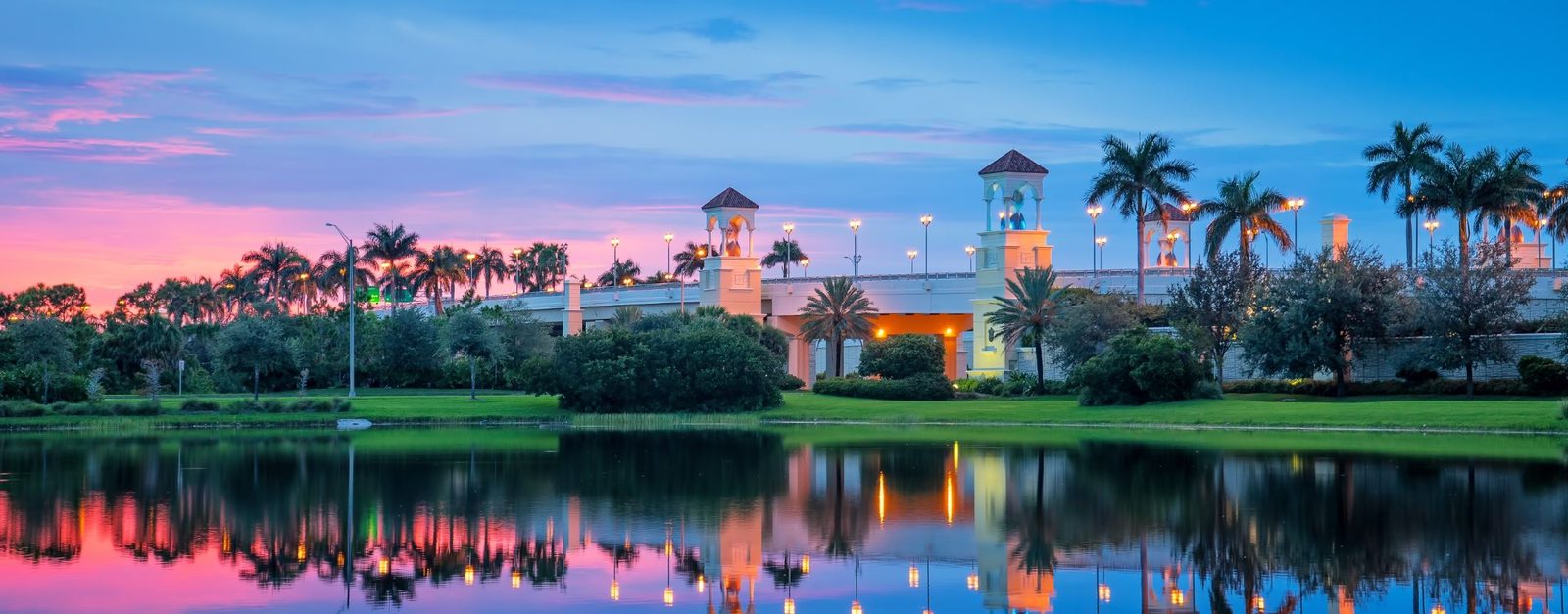
Living in Palm Beach Gardens means something different depending on which zip code you’re in, but the daily rhythm is more consistent than most articles let on. Mornings start with a drive, not a walk. Afternoons revolve around PGA Boulevard, whether you’re picking kids up from Dwight D. Eisenhower Elementary or grabbing lunch at the Gardens Mall. Evenings split between the golf course, the beach at John D. MacArthur State Park, or a patio table at one of a dozen restaurants clustered along PGA Boulevard and Legacy Place. This is the real version of living in Palm Beach Gardens, what daily life actually looks like once you strip out the glossy relocation-guide language and get into the specifics: the traffic patterns, the HOA dues, the school pickup lines, and the trade-offs nobody puts on a postcard.
We covered the broader “should you move here” question in Is Palm Beach Gardens a Good Place to Live? Honest 2026 Review. This piece goes narrower: what an actual week looks like once you’ve closed on the house and the moving truck is gone.
Living in Palm Beach Gardens: What Daily Life Actually Looks Like Hour by Hour
Start with the commute, because it shapes everything else. Palm Beach Gardens sits between I-95 and the Turnpike, with PGA Boulevard running east-west as the main artery connecting the beach side of town to the western communities like Avenir and Mirasol. If you live east of the Turnpike near Old Palm Golf Club or BallenIsles, you’re 10 to 15 minutes from I-95 and can be downtown in West Palm Beach in 20 minutes. If you live west, out toward Avenir or Ibis Golf and Country Club, you’re adding another 10 to 15 minutes to almost every trip, because Central Boulevard and Northlake Boulevard are your only real east-west options until you hit the Turnpike.
The 7:30 to 8:30am window is when Palm Beach Gardens High School, Dwight D. Eisenhower Elementary, and Watson B. Duncan Middle School all pull cars onto the same handful of feeder roads. If your neighborhood empties onto Central Boulevard or Hood Road during that window, budget extra time. It’s not Miami-level gridlock, but it’s real, and it’s predictable enough that most longtime residents have already rerouted around it.
The Commute and PGA Boulevard Corridor Reality
PGA Boulevard is the spine of daily life here, for better and worse. It’s where the Gardens Mall sits, along with Downtown at the Gardens, the open-air shopping and dining district next door. It’s also where afternoon traffic gets genuinely frustrating, especially between Central Boulevard and Military Trail from about 4:30 to 6:30pm on weekdays. Add snowbird season (January through April, when the part-time population swells) and that window stretches earlier and later.
The upside: almost everything you need day to day sits on or just off PGA Boulevard. Publix, Whole Foods, urgent care, the post office, your dentist, your dry cleaner. Most residents can run their entire weekly errand list without leaving a three-mile stretch of road. That convenience is a real quality-of-life factor that people underweight when they’re comparing Palm Beach Gardens to more spread-out suburbs.
For a side-by-side on how this compares to the town just north, see Palm Beach Gardens vs. Jupiter: The Honest 2026 Comparison. Short version: Jupiter has less traffic and a beachier feel, Palm Beach Gardens has more shopping, dining, and medical infrastructure packed into a tighter radius.
Where People Actually Eat, Shop, and Spend Weekends
The Gardens Mall anchors the retail scene, with Nordstrom, Macy’s, and a food court that gets a genuine lunch crowd from the nearby office parks. Right next door, Downtown at the Gardens is where people actually go for dinner and a walk afterward: restaurants like Kapow! Noodle Bar, City Cellar Wine Bar & Grill, and Yard House sit around a central green space with a splash pad that runs on weekends, which makes it a default option for families with young kids.
For a more local, less mall-adjacent scene, Legacy Place off PGA Boulevard has a Total Wine, a movie theater, and a rotating set of restaurants. Grato, one of the more talked-about Italian spots in the area, sits just over the line in West Palm Beach but pulls a steady crowd of Palm Beach Gardens residents willing to make the 15-minute drive.
Weekends split a few ways depending on the household. Golf communities run their own clubhouse dining and pool days. Families without club memberships tend toward Downtown at the Gardens, the farmers market circuit, or the drive out to the beach at John D. MacArthur Beach State Park, one of the last stretches of undeveloped coastline in the county and a genuine draw for anyone who wants beach access without the crowds of Palm Beach proper.
Golf Isn’t a Cliche Here, It’s the Social Fabric
It’s easy to roll your eyes at “golf community” as a real estate cliche, but in Palm Beach Gardens it’s an accurate description of how a lot of daily social life actually functions. Communities like BallenIsles Country Club, Old Palm Golf Club, PGA National, and Mirasol Country Club aren’t just built around a golf course, they’re built around a club calendar: member dinners, tennis leagues, holiday events, junior golf programs. If you buy into one of these communities, you’re buying into that calendar whether you golf or not, because that’s where a lot of the neighborly relationship-building happens.
Newer luxury development has doubled down on this. Panther National at Avenir, the Jack Nicklaus and Justin Thomas-designed course that opened in late 2023, anchors an ultra-luxury custom home enclave with prices from $4.5 million to over $20 million, and it’s already ranked #3 in Florida by Golfweek. That’s an extreme end of the market, but it signals how central golf remains to how Palm Beach Gardens sells itself and how residents actually spend their time.
If golf isn’t your thing, you’re not locked out of Palm Beach Gardens, you just live a different version of it. Communities like Alton, the non-golf sections of Evergrene, and the family-oriented product coming out of the Avenir master plan give you the same schools, the same PGA Boulevard access, and the same HOA-managed amenity package (pools, fitness centers, playgrounds) without the club membership fees layered on top.
Parks, Beaches, and Getting Outside
Palm Beach Gardens does outdoor life well, but it requires a car. John D. MacArthur Beach State Park is the marquee spot: nearly two miles of protected coastline, a nature center, and enough space that it doesn’t feel like South Beach on a Saturday. It’s about a 15 to 20 minute drive from most of central Palm Beach Gardens.
Closer to home, Lake Catherine Park and Sandhill Crane Park serve the day-to-day version of outdoor time: playgrounds, sports fields, walking paths. The city has also invested in its trail network along Central Boulevard and around the Gardens GreenMarket area, which runs seasonally and gives residents a Sunday-morning routine that doesn’t involve a shopping center.
For residents further west, near Avenir, the newer parks and green space built into the master plan are part of the draw. Avenir’s HOA-managed amenities (planned parks, trails, and a future town center) are specifically designed to reduce how often residents need to drive east for basic recreation, which matters given how far west that community sits from the coast.
Schools and Family Life
Schools are one of the biggest reasons families choose Palm Beach Gardens specifically over nearby alternatives, and the daily rhythm of family life here is built around the school calendar as much as anything else. Palm Beach Gardens High School, Dwight D. Eisenhower Elementary, and Watson B. Duncan Middle School are the most commonly referenced zoned schools, and they’re consistently rated well within the Palm Beach County School District. For families considering private options, The Benjamin School (both the lower campus in Palm Beach Gardens and the upper campus) is the most frequently mentioned alternative among relocating families.
We go much deeper on zoning, ratings, and how to actually verify your address against current attendance boundaries in Palm Beach Gardens Schools: Complete Guide for Relocating Families. The short version for daily life: carpool lines, after-school sports schedules, and PTA involvement are a real part of the social calendar here, not an afterthought, especially in family-heavy communities like Mirasol, Evergrene, and the newer Avenir product.
What It Actually Costs: HOA, CDD, and Price Ranges by Neighborhood
This is where “living in Palm Beach Gardens” stops being a lifestyle question and becomes a math question, and it’s the part most relocation content glosses over.
At the entry level, you’re looking at gated townhome communities rather than single-family homes. Over in the broader Palm Beach Gardens and Royal Palm Beach corridor, D.R. Horton’s Vintage Oaks community (11471 Vintage Oaks Circle West) offers four floor plans from 1,640 to 1,871 square feet, 3 bedrooms, 2.5 to 3 bathrooms, with a pool, clubhouse, and playground included in the HOA. That kind of product, along with comparable townhome communities like Lakeside Landing in nearby Royal Palm Beach (100 units, $491,990 to $529,990, 1,446 to 1,532 square feet), gives you a realistic sense of what “affordable new construction near Palm Beach Gardens” actually looks like in 2026: high $400Ks to low $500Ks for a townhome, not a single-family house.
Move into the Avenir master plan itself and the range widens dramatically. K. Hovnanian’s La Terre at Avenir sells completed single-family homes from roughly $800,000 to $1.2 million, with open-concept layouts and covered lanais. WL Homes’ Stone Gate at Avenir (Pod 11) is approved and expected to start in the $800Ks once pricing releases. At the top of the market, Panther National’s custom estates start at $4.5 million and run past $20 million.
The HOA and CDD math matters as much as the purchase price. Gated townhome communities like Vintage Oaks or Lakeside Landing typically run HOA dues in the $250 to $400 a month range for pool, clubhouse, and landscaping. Golf and country club communities like BallenIsles, Old Palm, or PGA National carry significantly higher dues, often $800 to over $1,500 a month once club membership and food minimums are factored in, and many require mandatory equity or social membership as a condition of purchase. Avenir, as a CDD-governed master plan, layers a CDD assessment on top of any HOA dues, which pays down the infrastructure bonds for roads, utilities, and amenities. That CDD fee typically runs a few thousand dollars a year and shows up as a separate line on the tax bill, not folded into the HOA statement, so budget for it separately when you’re running numbers.
For the full rundown on current pricing trends across the market, including how new construction is affecting resale values, see Palm Beach Gardens Real Estate Market 2026: Prices, Trends & New Construction, and for a neighborhood-by-neighborhood breakdown of which communities fit which budget and lifestyle, Best Neighborhoods in Palm Beach Gardens: The 2026 Guide is the better starting point than any single blog post can be.
Healthcare and Everyday Services
Daily life in Palm Beach Gardens is well served on the medical front, which matters for the significant retiree and part-time resident population. Palm Beach Gardens Medical Center sits right off I-95, and Jupiter Medical Center is a short drive north for residents in the western and northern parts of town. Urgent care clinics are scattered along PGA Boulevard and Northlake Boulevard, so same-day care rarely requires a long drive.
This matters practically: a lot of the older, established golf communities (BallenIsles, PGA National, Ibis) skew toward a mix of full-time retirees and seasonal residents, and the density of medical infrastructure is part of why those buyers choose Palm Beach Gardens over less-developed areas further west or north.
The Honest Trade-offs Nobody Puts in the Brochure
Living in Palm Beach Gardens has real downsides, and it’s worth naming them plainly rather than glossing over them the way most relocation content does.
Heat and hurricane season run June through November, and August through September is when it’s genuinely uncomfortable to do much outside between 11am and 4pm. Afternoon thunderstorms are a near-daily occurrence in summer, predictable enough that most residents plan outdoor activities for morning.
HOA rules in the established golf communities can be strict: exterior paint colors, landscaping choices, even holiday decoration timelines are often governed. If you value not having anyone weigh in on your front yard, a non-HOA or lighter-HOA community is a better fit than BallenIsles or Old Palm.
Traffic on PGA Boulevard during snowbird season is a real quality-of-life cost, not a minor inconvenience, especially if your daily errands or commute cross that corridor during peak hours.
And cost has moved. Palm Beach Gardens is no longer a hidden-value alternative to Palm Beach proper, entry-level product now starts in the high $400Ks for a townhome, and anything single-family west of the Turnpike in a newer community like Avenir starts closer to $800K. If budget is the primary driver, it’s worth comparing against Jupiter or western Royal Palm Beach before committing, which is exactly what Palm Beach Gardens vs. Jupiter: The Honest 2026 Comparison is built to help with.
Who Actually Thrives Living in Palm Beach Gardens
Put it all together and the pattern is consistent. Families who want A-rated public schools, or access to The Benjamin School, and who don’t mind driving for daily errands, do well here. Retirees and part-time residents who want golf, club social life, and strong medical infrastructure do very well here, it’s genuinely one of the better-built environments in the county for that lifestyle. Buyers priced out of Palm Beach or Jupiter but who still want the PGA Boulevard convenience and school quality find real value in the western communities and in Avenir specifically.
What doesn’t fit as well: anyone who wants a walkable, car-optional lifestyle. Palm Beach Gardens is not that, and no amount of new mixed-use development at Avenir’s future town center is going to fully change that in the next few years. If walkability is non-negotiable, downtown West Palm Beach or downtown Delray Beach are better fits than Palm Beach Gardens.
If you’re still working through whether this town fits your specific situation, Palm Beach Gardens FAQ: 18 Questions Buyers Ask Before Moving covers the tactical questions (schools, flood zones, closing costs, insurance) that don’t fit neatly into a lifestyle piece like this one. And if you’re a first-time buyer trying to figure out what’s actually within reach here, First-Time Buyer’s Guide to Palm Beach Gardens: What’s Actually Possible breaks down realistic price points by loan type and down payment.
Living in Palm Beach Gardens comes down to this: it’s a car-dependent, amenity-rich, school-driven suburb where a meaningful share of the social calendar runs through golf and club life, where PGA Boulevard is both the best asset (convenience) and the biggest daily annoyance (traffic), and where the price of admission has climbed enough that it’s worth comparing honestly against Jupiter and the western county before you commit. Get those trade-offs straight before you buy, not after, and it’s a genuinely strong place to build a life.
Watch: learn more
Go deeper with my South Florida Insider videos.

The Best Flex-Space Townhome in West Palm Beach: Pulte's Nautical Plan
Inside Everton's Latitude II Model: $458k New Homes In Palm Beach
The Best Flex-Space Townhome in West Palm Beach: Pulte's Nautical Plan
More articles you might like
Is Avenir Worth It? An Honest Look at Multiple builders's Palm-Beach-Gardens Community
20 min readAvenir Review (2026): Prices, Floor Plans, HOA, CDD, and Who It's Actually For
13 min readPalm Beach Gardens FAQ: 18 Questions Buyers Ask Before Moving
18 min readIs Palm Beach Gardens a Good Place to Live? Honest 2026 Review
17 min readBest Neighborhoods in Palm Beach Gardens: The 2026 Guide
19 min read