Is Palm Beach Gardens a Good Place to Live? Honest 2026 Review

Is Palm Beach Gardens a Good Place to Live? The Honest 2026 Review
Yes, for the right buyer. Palm Beach Gardens delivers A-rated schools, a genuinely walkable town center, one of the highest concentrations of golf courses in the country, and a 15-minute drive to the Atlantic. What it doesn’t deliver is cheap. Home prices sit in the mid-$600,000s and climbing, HOA fees in the gated golf communities can rival a car payment, and PGA Boulevard turns into a parking lot every winter when the seasonal residents arrive. This is the honest version of that trade-off, not the version a listing agent tells you to get you in the car.
I work new construction and relocation buyers across Palm Beach County every week, and Palm Beach Gardens is the single most requested suburb from people moving down from the Northeast and Midwest. That demand is earned. It’s also the reason prices have moved the way they have, and why the town doesn’t feel like the sleepy golf suburb it was twenty years ago. It’s also, frankly, the reason I get the same five questions on every single call: what are the schools actually like, how bad is the traffic really, what does the HOA cover, is Avenir worth the wait, and can I still find something under $600,000. This post answers all five, in order, with real numbers instead of the version you’ll hear from an agent trying to get you in the car for a Saturday showing.
What Palm Beach Gardens Actually Gets Right
The schools are not marketing spin
This is the number one reason families choose Palm Beach Gardens over Jupiter, Royal Palm Beach, or West Palm Beach proper. Dwight D. Eisenhower Elementary and Timber Trace Elementary both post strong state assessment scores. Watson B. Duncan Middle feeds into William T. Dwyer High School, and Dwyer’s IB and AICE programs are legitimate college-prep tracks, not just a line on a brochure. Families relocating from strong public school districts up north are usually the most skeptical group I work with, and they’re also the ones who come back after the first parent-teacher conference and say the schools actually held up. If school quality is the deciding factor in your move, it’s worth reading the full breakdown in Palm Beach Gardens Schools: Complete Guide for Relocating Families before you pick a neighborhood, because attendance zones cut through some communities in ways that surprise buyers. I’ve had clients fall in love with a house two streets over from their target zone and lose the school assignment entirely. Always confirm the zoned school with the exact address, not the neighborhood name, before you write an offer.
PGA Boulevard functions like an actual downtown
Downtown at the Gardens and The Gardens Mall sit within a mile of each other, and between them you get sit-down restaurants, a movie theater, a farmers market, grocery anchors, and enough foot traffic that you can run errands without getting back on I-95. Legacy Place adds more retail and a Whole Foods a few minutes north, and the Downtown Saturday Green Market has become a genuine weekend habit for a lot of the families I work with, not a novelty they do once. Compare that to towns twenty minutes in either direction that still make you drive to three different plazas for the same list of errands, and the value of that density becomes obvious once you’ve lived here a few months. It’s a small thing on paper and a real quality-of-life difference once you’re the one doing the school run, the grocery run, and the dinner reservation all in the same three-mile radius. Living in Palm Beach Gardens: What Daily Life Actually Looks Like goes deeper on what a normal week actually looks like.
Golf access most buyers underestimate
BallenIsles, PGA National, Old Palm, Mirasol, and Frenchman’s Creek put Palm Beach Gardens among the highest concentrations of private and semi-private golf in Florida. PGA National alone runs five courses including the Champion, home to the Cognizant Classic. If golf is part of the lifestyle you’re buying into, and not just a view you want out the back window, this is one of the few places in the state where you have real choice between bundled-golf HOA communities and equity clubs. That choice matters more than most buyers realize going in. Bundled golf means the membership cost is baked into your HOA whether you play twice a week or twice a year. An equity club means a separate initiation fee and dues, but usually better tee times, better course conditions, and a membership that can hold or gain value over time. I always ask golfers how many rounds a month they realistically play before we start touring, because the answer changes which structure actually saves them money.
New construction that isn’t an afterthought
Avenir is the biggest reason the “is it still worth moving here” conversation has changed in the last two years. It’s a roughly 4,700-acre master plan in the northern part of the city with multiple builders delivering price points from the mid-$600,000s into the multi-millions, plus a planned town center, schools, and hundreds of acres of preserved green space. The plan currently spans several distinct pods, each with a different builder and a different buyer in mind. Esprit at Avenir, built by Kolter Homes, is a gated 55+ enclave with 144 single-family homes priced from the mid-$800,000s to $1.5 million, resort pools, a full-service restaurant and bar, and a fitness center with a cold plunge pool. It’s aimed squarely at active-adult buyers who want a lock-and-leave lifestyle without leaving Palm Beach Gardens. L’Ambiance, also Kolter, is a 144-home family enclave priced from roughly $829,990 into the $2.4 million range for showcase models, with 75 percent of homesites backing to preserve or lake views and HOA dues that include full lawn care. Windgate, built by Toll Brothers, adds 119 more single-family homesites starting in the high $800,000s and running past $1.2 million. That’s three very different products under one master plan name, which is exactly why “what does Avenir cost” is the wrong question. The right question is which pod fits your stage of life and budget. If new construction is even a possibility for you, read Avenir Palm Beach Gardens: Complete Buyer’s Guide before you assume resale is your only option, and browse the current builders and pricing directly at Avenir.
Genuine proximity to healthcare and jobs
Palm Beach Gardens Medical Center is in the city itself, Jupiter Medical Center is a short drive north, and the Scripps Florida and Max Planck Florida research campuses sit just over the line in Jupiter, anchoring a biotech corridor that has quietly become a real employment driver, not just a talking point in a relocation packet. For buyers relocating for work in life sciences, healthcare administration, or research, that corridor is a genuine draw, and it’s part of why Palm Beach Gardens and northern Jupiter have both seen steady demand from professionals who could technically live anywhere in the county but want the shortest possible commute to that cluster of employers.
What Actually Frustrates People Who Live Here
An honest review has to include the parts that don’t make the brochure.
PGA Boulevard and Northlake Boulevard traffic
From November through April, PGA Boulevard between the Turnpike and Alternate A1A slows to a crawl during peak hours, and Northlake Boulevard isn’t much better. If your daily route touches either corridor at 8am or 5pm during season, budget extra time, and don’t assume your Google Maps estimate from a July house-hunting trip will hold up in February. Locals learn the back roads (Hood Road, RCA Boulevard) fast, but there’s no fully avoiding it, and buyers coming from smaller Midwest or Northeast towns tend to underestimate how much seasonal traffic changes the daily rhythm here. I tell every relocating client to drive their prospective commute at 8am on a Tuesday in season, not on a Sunday afternoon in June, before they finalize a neighborhood.
HOA fees that add up quickly
This is the complaint I hear most from buyers who relocate from lower-HOA states. Non-golf communities like Evergrene or Alton typically run $250 to $450 a month. Bundled-golf communities like PGA National or BallenIsles often run $800 to $1,200+ a month once you include the golf membership component, and equity clubs like Old Palm carry initiation fees on top of that, sometimes well into six figures depending on the membership tier. None of this is hidden, but buyers who don’t budget for it feel the squeeze in year one. I’ve had clients qualify comfortably for the mortgage and then get genuinely surprised when the HOA bill lands, because in a lot of the country that number simply doesn’t exist at this scale. Always ask for the current HOA budget and the last three years of assessment history before you write an offer, not just the current monthly number, because special assessments for roof replacement, road resurfacing, or clubhouse renovation can hit hard in an older community.
Home prices have moved fast
Palm Beach Gardens isn’t the value play it was a decade ago. Entry-level single-family homes that were priced in the $400,000s in 2019 are now solidly in the $600,000s, and updated homes in desirable school zones push past $750,000 without much effort. That’s not a slow drift, that’s a compounding run over five or six years, and it’s the single biggest thing that catches out-of-state buyers off guard when they last shopped this market before the pandemic. If budget is tight, First-Time Buyer’s Guide to Palm Beach Gardens: What’s Actually Possible lays out where realistic entry points still exist, and in most cases that means looking at townhomes, older condos, or neighboring suburbs rather than holding out for a detached single-family home inside the city limits.
Insurance costs that catch relocators off guard
Homeowners insurance in Palm Beach County runs meaningfully higher than the national average, and flood insurance is a real line item depending on the specific parcel, even for homes that aren’t technically waterfront. Ask for the actual current premium on any resale home before you fall in love with it, not an estimate pulled from a general county average, because premiums can vary significantly block to block depending on elevation, roof age, and construction type. Newer construction with modern wind mitigation and updated roofs generally scores better here than 1980s and 1990s product, and that gap has only gotten wider as insurers tighten underwriting standards statewide. It’s one more reason new construction communities like Avenir carry an advantage that doesn’t show up in the sale price alone.
Some newer sections feel manufactured
This is a matter of taste, but it comes up. Some of the newer gated communities, with their repeating elevations and HOA-mandated landscaping palettes, read as a little sterile compared to the older, tree-canopied streets closer to Burns Road and Hood Road. If character and mature trees matter more to you than a fresh build, that’s worth test-driving in person before you commit. Drive the older sections in the late afternoon when the canopy is doing its job and compare that feeling to a brand-new pod with saplings still staked to the ground. Some buyers genuinely prefer the clean, uniform look of new construction. Others feel like they could be in any gated community in any Sun Belt state. Neither instinct is wrong, but you should know which one you have before you sign a contract.
The Real Cost of Living Here in 2026
Numbers, not adjectives:
- Median single-family home price: mid-$600,000s to $750,000s, depending on neighborhood and school zone
- Condos and townhomes: generally $300,000 to $550,000, with golf-course units running higher
- HOA fees: $250-$450/month in non-golf communities, $800-$1,200+/month in bundled-golf communities
- Property taxes: roughly 1.8% to 2.1% of assessed value annually, varying by community and any CDD assessments
- CDD debt: present in some of the newer master-planned sections, including parts of Avenir; always ask for the exact annual assessment on a specific address, don’t assume it’s zero or assume it’s included in the HOA number
- Insurance: higher than the Florida average; get a real quote before you write an offer, not after
For a full market breakdown including inventory trends and where new construction pricing is heading, Palm Beach Gardens Real Estate Market 2026: Prices, Trends & New Construction is the deeper dive.
Neighborhood by Neighborhood: Where the Honest Review Actually Changes
This is where a lot of “is it a good place to live” content falls apart, because Palm Beach Gardens isn’t one market. It’s a dozen very different micro-markets under one city name, and the right answer to “should I move here” depends entirely on which one you’re actually shopping.
PGA National
The original golf destination brand in the Gardens. Five courses, resort amenities, HOA-bundled golf, prices from the $500,000s for older product up into the millions for renovated estates. Great for golfers who want the resort lifestyle without leaving the neighborhood, and a strong fit for buyers who want to walk out the back door and be on the tee in ten minutes rather than driving to a club.
BallenIsles
Gated, equity country club, higher price floor, strong resale demand, a favorite for buyers coming from similar clubs up north who know exactly what they’re buying. Buyers who’ve belonged to an equity club before tend to move through this community faster than anyone else, because they already know how to evaluate initiation structure and membership tiers.
Mirasol and Evergrene
Newer, more contemporary construction, strong for families who want a gated community without a full country club commitment. Evergrene skips golf entirely and leans into a lakes-and-parks lifestyle instead, which makes it a good fit for families who want the gated-community feel and the HOA-maintained amenities without paying for a golf membership they won’t use.
Alton
One of the newest master-planned communities in the city, built around a more urban, walkable layout with retail woven into the residential grid. Attracts younger families and buyers who want new construction without the golf-community price premium, and it tends to draw buyers who came from denser, more walkable markets up north and don’t want to give that up entirely just because they moved to Florida.
Old Palm and Frenchman’s Creek
The top of the market. Full equity clubs, significant initiation fees, and estate-level pricing. Not the segment most relocators are shopping, but worth knowing exists if that’s your budget, and worth knowing about even if it isn’t, because resale strength in these communities tends to anchor values in the surrounding area.
Avenir
The newest and largest story in the city, still being built out in phases through the back half of this decade. Multiple builders, multiple price points, from Kolter’s 55+ product at Esprit, to Kolter’s family-oriented L’Ambiance, to Toll Brothers’ Windgate, and the only place in Palm Beach Gardens where true ground-up new construction is available at real scale right now. That scale is what makes Avenir worth a serious look even for buyers who came in assuming they wanted resale. New construction here means a builder warranty, current wind mitigation standards, and floor plans built for how people actually live now, not retrofitted from a 1990s layout.
For a full side-by-side of these and more, Best Neighborhoods in Palm Beach Gardens: The 2026 Guide breaks down HOA ranges, school zones, and who each one actually fits.
What This Actually Looks Like for Two Different Buyers
A retired couple relocating from a golf community in the Northeast usually lands in PGA National or Old Palm, because they already understand equity club economics and want the course access more than the school zone. Their HOA conversation is about membership tier and initiation cost, not classroom ratios.
A family with two kids under twelve relocating for a job near the Scripps and Max Planck corridor usually lands somewhere between Evergrene, Alton, or the Avenir family pods, because the priority stack flips: school zone first, walkability second, golf a distant third if it matters at all. Their HOA conversation is about lawn care and gate security, not initiation fees. Same city, same “is it a good place to live” question, completely different answer depending on which buyer is asking. That’s the trap in most generic reviews of this market: they answer for an imaginary average buyer who doesn’t exist.
Palm Beach Gardens vs. the Obvious Alternative: Jupiter
Most buyers cross-shopping Palm Beach Gardens are also looking at Jupiter, and the honest answer is that they solve slightly different problems. Jupiter leans more toward beach-town character and a slightly younger, more laid-back feel, while Palm Beach Gardens leans into retail density, golf infrastructure, and a more built-out town center. Neither is “better” in a vacuum. Buyers who prioritize proximity to the actual coastline and a lower-key downtown tend to end up in Jupiter. Buyers who prioritize school zoning certainty, golf infrastructure, and a genuine retail core tend to end up in Palm Beach Gardens. The full comparison, including price differences and commute realities, is in Palm Beach Gardens vs. Jupiter: The Honest 2026 Comparison.
Who Palm Beach Gardens Is Actually Right For
It’s right for you if:
- School quality is a top-three priority and you want zoned, not lottery, access to strong public schools
- You want walkable retail and dining without living in a downtown high-rise
- Golf is part of your daily or weekly life, not just a scenic backdrop
- You can comfortably absorb HOA fees in the hundreds per month as a normal cost of living
- You want the option of new construction at scale (Avenir) rather than only resale
It’s probably not right for you if:
- You want low or no HOA fees and maximum flexibility on your property
- Your budget caps out under $450,000 for a single-family home (townhomes and condos, or neighboring suburbs, will serve you better)
- You want a beach-town identity over a golf-and-retail-corridor identity
- You’re allergic to seasonal traffic and can’t adjust your schedule around it
The Honest Bottom Line
Palm Beach Gardens earns its reputation. The schools are real, the retail corridor works the way a downtown should, and the golf and new-construction options give buyers more real choice than almost anywhere else in Palm Beach County. But it’s not a bargain, and it’s not for everyone. The HOA fees are real, the traffic during season is real, and the price growth over the last five years is real. If you go in with accurate numbers instead of assumptions, and you pick the right neighborhood for your actual lifestyle instead of the one with the best drone footage, it’s one of the smartest relocation decisions you can make in South Florida right now. The buyers who end up frustrated a year later are almost never the ones who did the math first. They’re the ones who fell for a model home and worked out the HOA and commute afterward.
If you’re still working through the specifics, whether that’s a school zone question, a CDD line item on a specific Avenir pod, or how a particular HOA compares to what you’re used to paying, that’s exactly the kind of question worth getting a straight answer on before you write an offer, not after. Palm Beach Gardens FAQ: 18 Questions Buyers Ask Before Moving covers most of what comes up in that first serious conversation. Send me the neighborhood you’re considering and I’ll tell you what it actually costs to live there, HOA and all.
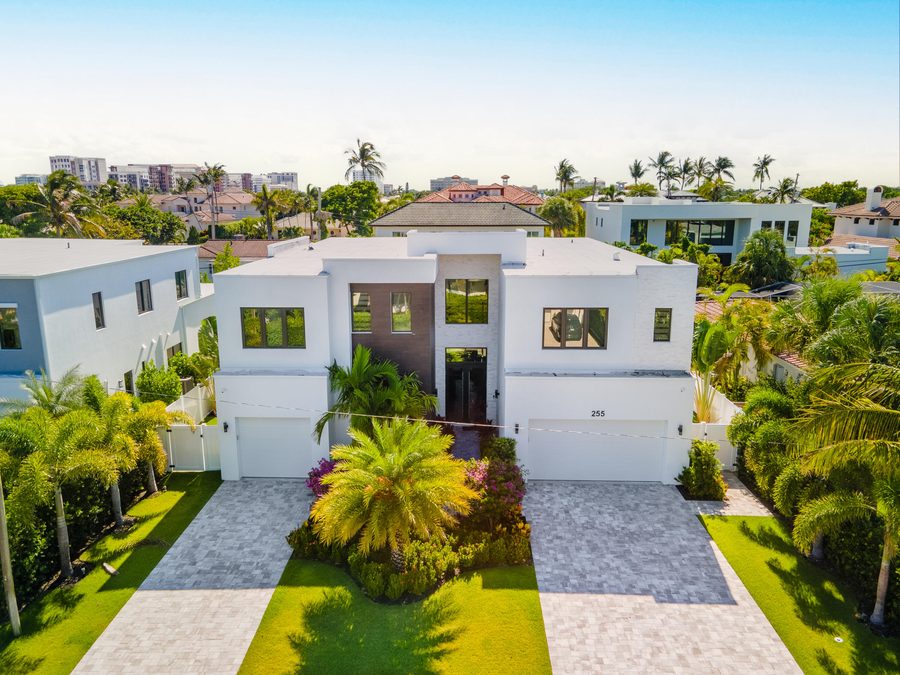



Watch: learn more
Go deeper with my South Florida Insider videos.

The Best Flex-Space Townhome in West Palm Beach: Pulte's Nautical Plan
Inside Everton's Latitude II Model: $458k New Homes In Palm Beach
The Best Flex-Space Townhome in West Palm Beach: Pulte's Nautical Plan
More articles you might like
Is Avenir Worth It? An Honest Look at Multiple builders's Palm-Beach-Gardens Community
20 min readPalm Beach Gardens FAQ: 18 Questions Buyers Ask Before Moving
18 min readLiving in Palm Beach Gardens: What Daily Life Actually Looks Like
14 min readBest Neighborhoods in Palm Beach Gardens: The 2026 Guide
19 min readPalm Beach Gardens vs. Jupiter: The Honest 2026 Comparison
18 min read