Palm Beach Gardens Real Estate Market 2026: Prices, Trends & New Construction
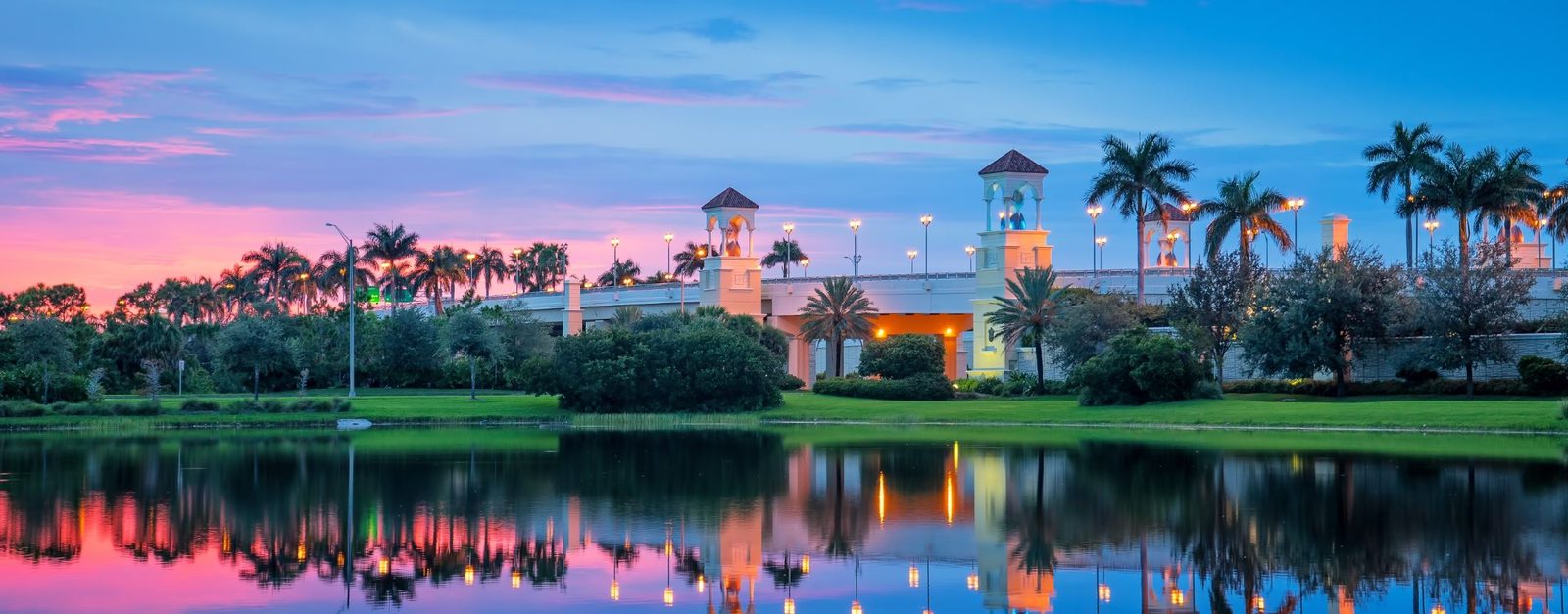
Palm Beach Gardens real estate market in 2026 doesn’t move as one thing. It’s at least four different markets stacked on top of each other, and if you only look at one number (median price, average price, whatever a headline throws at you) you’re going to make a decision based on the wrong data. This is the honest breakdown: what things actually cost right now, what’s changed since 2023, what Avenir is doing to the new construction picture, and what it actually costs to carry a home here once you factor in HOA, CDD, and insurance.
I work this market every week. What follows is what I’m telling my own buyers, not a recycled market report.
Palm Beach Gardens Real Estate Market 2026: Prices, Trends & New Construction
Here’s the range you need to hold in your head before anything else: PGA National condos start around $250K, townhomes in newer communities like Alton and Evergrene run $500K to $750K, resale single-family homes mostly land between $700K and $1.5M, and estate-level product in Old Palm, BallenIsles, or Frenchman’s Reserve regularly clears $2M and climbs past $8M for the top of the market. New construction at Avenir sits in its own lane, roughly $665K to $2M depending on builder and section.
The trend underneath those numbers: inventory has grown since the tight years of 2021-2022, days on market have stretched out, and price reductions are common again. That’s not a crash. It’s a market returning to something closer to normal after three years of conditions that never should have been treated as permanent. Sellers who bought the “prices only go up” story in 2024 are getting a correction now. Buyers who waited are finally getting some leverage back.
To put actual numbers on “stretched out”: homes that would have gone under contract in seven to ten days back in 2022 are now sitting 45 to 60 days in most price bands under $1.5M, and longer above that. That’s not a broken market, that’s a market where buyers finally have time to think, get an inspection scheduled without rushing, and negotiate on more than just “who can waive the most contingencies fastest.” I’ve had buyers this year who lost three homes in 2022 to cash offers over asking, and this year those same buyers are the ones asking sellers for a rate buydown credit and getting it.
Why one “average price” is misleading
Palm Beach Gardens spans everything from garden condos off PGA Boulevard to eight-figure estates behind guard gates on the golf corridor. Averaging those together produces a number that describes nothing. If someone quotes you “the average home price in Palm Beach Gardens” without breaking it down by product type, they’re giving you a headline, not information you can use.
Think about what that average actually blends together. A one-bedroom condo in a 1980s PGA National building selling for $260K and an eight-bedroom estate on the golf course in Old Palm selling for $6.5M are both “Palm Beach Gardens home sales.” Put them in the same dataset and the resulting average tells you nothing about what either buyer should expect to pay. The only useful way to read this market is by product type and by neighborhood, which is exactly why the breakdowns below matter more than any single citywide number a portal or a headline is going to hand you.
What’s Actually Driving the 2026 Market
Three forces are doing most of the work right now, and none of them are secret, but most agents don’t explain how they interact.
Interest rates settled, they didn’t collapse. Rates came down off their 2023 peak but they’re not back to 2021 levels, and they’re not going to be. Buyers who were waiting for 3% financing to return are still waiting. The buyers who are actually transacting have made peace with today’s rate and are negotiating price and closing costs instead.
What that looks like in practice: a buyer on a $900K home isn’t asking the seller to drop the price by $50K anymore, they’re asking for a 2-1 rate buydown funded by the seller, or a straight closing cost credit they can use to buy down their own rate with their lender. Sellers who’ve had a home sitting for 60 days are increasingly willing to do this because it doesn’t show up as a lower sale price on record, which matters to them psychologically even when the dollar impact is similar. If you’re a buyer and your agent hasn’t run this math for you side by side, ask them to before you write an offer.
Inventory rebuilt after years of nothing to buy. For a stretch in 2021-2022 there was genuinely nothing to show buyers in some Palm Beach Gardens price bands. That’s over. Resale inventory is up, and new construction at Avenir has added meaningful supply that didn’t exist five years ago. More supply means less panic, longer negotiations, and sellers who actually have to price correctly the first time instead of counting on a bidding war.
Migration into Palm Beach County hasn’t stopped, it’s just less frantic. People are still relocating from the Northeast and Midwest into Palm Beach Gardens for the same reasons they always have: no state income tax, the school districts, the golf and country club infrastructure, and proximity to Palm Beach International without living in downtown West Palm. That demand is steady, not explosive, and that’s exactly why this market has cooled instead of crashed.
There’s a fourth factor worth naming even though it’s less talked about: seasonality is back to being a real thing in this market. During the frenzy years, homes sold at the same pace in July as they did in January. That’s not true anymore. Snowbird season, roughly November through April, is when showings pick up and offers get more competitive, especially in PGA National and the country club communities where seasonal buyers want to be in before season starts. If you’re selling, listing in September to catch that wave matters again. If you’re buying and you want less competition, summer is genuinely a better time to be house hunting here than it was three years ago.
Avenir: The New Construction Story Everyone’s Watching
If you want to understand where new construction is going in Palm Beach Gardens, you’re really talking about one project: Avenir. It’s the single biggest master-planned community the city has approved in years, over 3,100 acres off Northlake Boulevard near the Beeline Highway, and it’s being built out by more than five different builders across price points that range from roughly $665K into the $2M-plus range.
That’s unusual. Most master-planned communities in Palm Beach County pick one builder and one price band. Avenir spreads across more than a dozen distinct neighborhoods, each with its own builder, floor plans, and amenity access, which means the “new construction” conversation in Palm Beach Gardens isn’t one price point, it’s a spectrum. A young family looking at a $665K townhome-style product and a buyer shopping $1.8M estate homes could both be buying in Avenir, in neighborhoods that feel almost nothing alike.
What buyers actually get with Avenir
New construction here means current Florida Building Code, which is the part most buyers underweight until they see their insurance quote. Homes built to post-2002 wind-load and impact standards routinely see insurance premiums come in significantly lower than comparable resale homes built before those codes existed, sometimes by close to half. In a county where windstorm coverage has become one of the biggest line items in a monthly payment, that’s not a minor perk, it’s often the difference between a deal that pencils and one that doesn’t.
The tradeoff is the CDD (Community Development District) assessment. Avenir’s infrastructure, roads, drainage, the amenity centers, is financed through CDD bonds, which show up as a non-ad valorem line on your tax bill for the life of the bond, typically decades. Depending on the neighborhood and lot size, that assessment has historically landed somewhere in the $2,000 to $4,500 per year range on top of any HOA dues. It’s not disclosed loudly by builders, and it’s exactly the kind of number that changes whether a $700K new construction home actually costs less to carry than a $750K resale home without CDD debt. If you’re comparing new to resale on price alone, you’re not actually comparing carrying cost, and carrying cost is what your mortgage servicer bills you every month.
Here’s a scenario I actually walked a buyer through this summer. Two homes, both roughly 2,400 square feet, both three bedroom. One was a new construction townhome in an Avenir neighborhood priced at $712K with an estimated $3,100 annual CDD plus $340 monthly HOA. The other was a resale in Evergrene, built in 2015, priced at $745K with a $410 monthly HOA and no CDD. On sale price alone, the Avenir home looks like the better deal by $33K. Once you run twelve months of carrying cost, HOA, CDD, and a real insurance quote from each home’s actual build year, the gap narrows to under $4K a year in the Avenir home’s favor, almost entirely because of the insurance savings from the newer building code. That’s the kind of math that should drive the decision, not the sticker price on the listing sheet.
Amenities are also not uniform across Avenir’s neighborhoods, which surprises buyers who assume “it’s all one community.” Some sections have direct access to the planned town center and central amenity campus, others are further out and rely on their own smaller neighborhood pool and clubhouse until later phases complete. If lifestyle access to the main amenity center matters to you, confirm which phase and which neighborhood you’re actually looking at, because Avenir is being built out over multiple years and not every section is equally close to finished common areas today.
I’ve written the full breakdown of Avenir’s builders, neighborhoods, and what each price tier actually gets you in the complete Avenir buyer’s guide, including how to decode which of its 15-plus neighborhoods fits your budget and lifestyle. If you’re seriously considering Avenir, read that before you tour, because the sales office will walk you through their preferred sequence, not necessarily the sequence that gets you the best-fit home.
Resale Neighborhoods Still Worth a Serious Look
New construction gets the headlines, but most Palm Beach Gardens buyers still end up in resale, and for good reason. PGA National remains the entry point for buyers who want golf-community living without new construction pricing, with condos starting near $250K and single-family homes climbing well past $1M depending on the section. BallenIsles and Old Palm sit at the top of the resale market, both gated, both golf-anchored, both regularly trading estate homes in the $2M to $8M range. Evergrene and Alton represent the newer wave of resale, built in the last decade, priced more like new construction but without the CDD debt Avenir carries in most sections.
PGA National deserves a closer look because it’s not one product, it’s roughly a dozen sub-communities inside one gate, ranging from older garden condos that need updating to fully renovated single-family homes on the Champion course. A buyer chasing the $250K entry point needs to understand they’re likely buying into an older building with a milestone inspection and reserve study on the horizon, which is its own conversation with your lender and your insurer before you assume that price holds as your true carrying cost.
Frenchman’s Reserve, on the north end of the city, is worth naming specifically because it’s often overlooked next to BallenIsles and Old Palm despite trading in a similar range. It’s a full golf and social membership community with estate and courtyard homes generally in the $1.2M to $3M range, and it tends to have slightly more available inventory at any given time than Old Palm, which is smaller and turns over less often. If you want the country club lifestyle without competing for one of a handful of listings, Frenchman’s Reserve is usually the more realistic hunting ground.
If you’re trying to figure out which of these actually fits your life and not just your budget, the Best Neighborhoods in Palm Beach Gardens guide breaks down the tradeoffs by lifestyle, commute, and school zone, which matters more here than in almost any other South Florida suburb given how spread out the city is.
Palm Beach Gardens vs. the Neighboring Markets
Buyers relocating to this part of Palm Beach County are almost always cross-shopping Palm Beach Gardens against Jupiter, and the two markets get compared constantly without anyone explaining the actual differences in inventory, schools, and price per square foot. Palm Beach Gardens generally offers more new construction volume right now because of Avenir, more golf-community inventory, and a slightly more central location relative to PBI Airport and the Turnpike. Jupiter trades on lower density, a stronger small-town identity, and beach proximity that Palm Beach Gardens can’t match without a drive to Juno Beach or Singer Island.
Price per square foot tells part of that story. Comparable single-family resale product in Jupiter typically runs somewhat higher per square foot than Palm Beach Gardens once you get within a few miles of the water, a premium buyers are paying for beach access and the Jupiter school zone specifically. Palm Beach Gardens buyers are generally paying for golf and country club infrastructure and a shorter commute to the airport and the Turnpike corridor, not oceanfront proximity, and that’s the honest tradeoff to weigh rather than assuming one city is simply “more expensive” than the other.
Neither city is objectively “better.” It depends on whether you’re optimizing for walkable beach access or for master-planned community amenities and new construction selection. I broke this down property type by property type, school district by school district, in the Palm Beach Gardens vs. Jupiter comparison, because most agents just tell buyers “they’re both great” without giving you anything to actually decide on.
The Carrying Cost Truth Nobody Puts in the Listing
This is the part of the Palm Beach Gardens market that gets skipped in most write-ups, and it’s the part that actually determines whether a home fits your budget long-term. Three numbers stack on top of your mortgage payment here: HOA dues, CDD assessments where they exist, and windstorm/homeowners insurance.
HOA dues in Palm Beach Gardens range enormously, from a few hundred dollars a month in non-amenitized communities to $1,000-plus monthly in full-service country club communities like BallenIsles or Frenchman’s Reserve where the dues fund golf, tennis, and clubhouse operations whether you use them or not. CDD assessments apply mainly to newer horizontal developments like Avenir, and they don’t show up on the sale price, only on the tax bill, which means they’re easy for an unprepared buyer to miss entirely until the first annual bill arrives.
Insurance is the newest and most consequential factor. Homes built before the 2002 Florida Building Code overhaul are seeing windstorm premiums that, in some cases, rival the property tax bill. Homes built after, especially new construction with impact glazing, poured concrete tie beams, and wind-engineered roofing, get real, quantifiable rate reductions from insurers. When you’re comparing a $750K resale home to a $780K new construction home, the sale price difference is the least important number. Run the HOA, CDD, and insurance quote side by side before you decide either one is “the better deal.”
There’s a fourth number that belongs in this same conversation and almost nobody asks about it until closing: condo and HOA reserve funding. Since the statewide milestone inspection and reserve study requirements tightened after the Surfside collapse, older condo buildings, including several in PGA National, have had to fully fund reserves for major structural items like roofing and concrete restoration. That’s shown up as special assessments in the tens of thousands of dollars on some buildings, on top of the regular monthly HOA fee. Before you buy any condo or townhome in an older building here, ask directly for the most recent reserve study and milestone inspection report, not just the current HOA statement. A low monthly HOA fee on a building with underfunded reserves is not actually cheap, it’s a bill that hasn’t arrived yet.
Schools Are Still the Number One Driver for Families
A large share of Palm Beach Gardens buyers are relocating specifically for school access, and the district lines here matter more than almost any other variable in a family’s decision. Palm Beach Gardens feeds into some of the county’s strongest public schools, and the exact address, not just the city, determines which elementary, middle, and high school a family is zoned for. Two homes half a mile apart can land in completely different school assignments, which is exactly the kind of detail that gets lost if you’re shopping listings online instead of confirming zoning directly.
I’ve seen this trip up out-of-state buyers more than any other single issue. A family relocating from Chicago found a home they loved on the north end of the city, assumed it fed into the same elementary school as a similar home they’d toured a mile south, and it didn’t. The zoning line ran directly between the two streets. They found out during their inspection period, not before writing the offer, and it nearly cost them the deal when they had to decide whether school zone or house mattered more. Confirm zoning with the Palm Beach County School District’s own address lookup before you fall for a house, not after you’re under contract.
If schools are part of your decision, and for most relocating families they are, go through the Palm Beach Gardens Schools Guide before you fall in love with a specific neighborhood, not after.
Should You Buy Now or Wait?
The reality is there’s no perfect timing move available to you in this market. Rates aren’t dropping fast enough to justify waiting, and inventory is unlikely to tighten back up to 2021 levels anytime soon given how much new construction is still being delivered through Avenir. What’s actually changed in your favor as a 2026 buyer is negotiating leverage. Sellers are sitting longer, price reductions are common, and builders at Avenir are running incentives on rate buydowns and closing costs that didn’t exist when demand was outpacing supply.
The people who lose in this kind of market are the ones trying to time a bottom that isn’t coming in any dramatic way. Rates moving a quarter point in either direction over the next year isn’t going to change your monthly payment as much as negotiating $20K off a home that’s been sitting for 70 days, or getting a builder to cover your closing costs at Avenir instead of just taking their sticker price. Focus your energy on the negotiation you can actually control today instead of a rate environment you can’t predict.
If you’re a first-time buyer trying to figure out what’s realistically in reach here, most people are surprised by what’s actually possible once they understand the full range of product, from PGA National condos to Avenir’s entry-level neighborhoods. That breakdown is in the First-Time Buyer’s Guide to Palm Beach Gardens, and it’s worth reading before you assume you’re priced out of this city entirely, because a lot of buyers do and they’re wrong.
The Bottom Line
Palm Beach Gardens in 2026 is a market with real range and real leverage for buyers who do the homework. Prices haven’t crashed, but they’ve stopped sprinting, which means you have room to negotiate that didn’t exist two years ago. Avenir is reshaping what new construction means in this city, spreading across price points from the $665Ks past $2M, but it comes with a CDD assessment you need to run against resale alternatives before you decide it’s the better financial move. And the number that actually determines your monthly payment isn’t the sale price, it’s the sale price plus HOA, plus CDD where it applies, plus whatever your insurer quotes based on when the home was built.
Get those four numbers before you make an offer, on any home in any neighborhood, new construction or resale. That’s the difference between buying a home that fits your budget and buying one that surprises you a year later.
Want the specific numbers for a home or neighborhood you’re actually considering? Send me the address or the Avenir section you’re looking at and I’ll run the real carrying cost breakdown, not just the listing price.
Watch: learn more
Go deeper with my South Florida Insider videos.

The Best Flex-Space Townhome in West Palm Beach: Pulte's Nautical Plan
Inside Everton's Latitude II Model: $458k New Homes In Palm Beach
The Best Flex-Space Townhome in West Palm Beach: Pulte's Nautical Plan
More articles you might like
Is Avenir Worth It? An Honest Look at Multiple builders's Palm-Beach-Gardens Community
20 min readAvenir Review (2026): Prices, Floor Plans, HOA, CDD, and Who It's Actually For
13 min readPalm Beach Gardens FAQ: 18 Questions Buyers Ask Before Moving
18 min readLiving in Palm Beach Gardens: What Daily Life Actually Looks Like
14 min readIs Palm Beach Gardens a Good Place to Live? Honest 2026 Review
17 min read