Delray Beach Real Estate Market 2026: The Two Markets You Need to Know
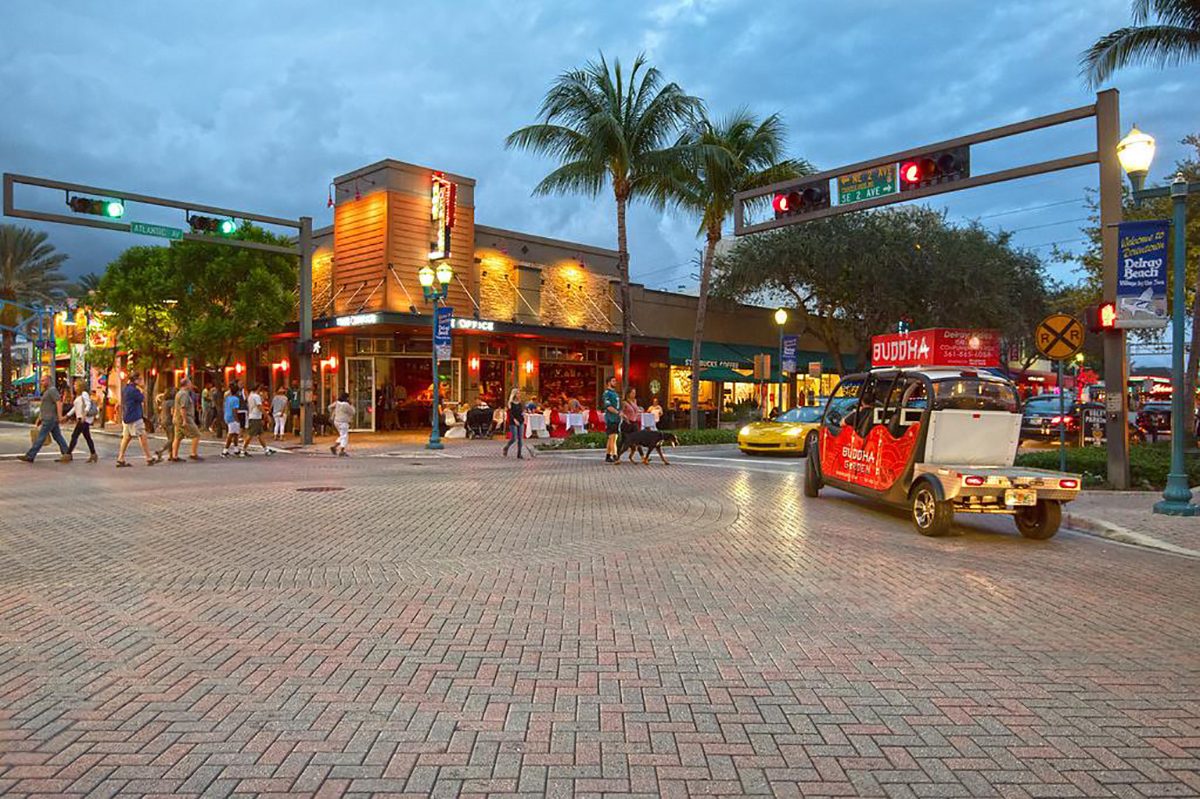
Delray Beach real estate market 2026: the two markets you need to know come down to this. If you’re shopping east of I-95, you’re competing for rebuild-ready lots and renovated bungalows in a market that keeps climbing. If you’re shopping west of Military Trail, you’re often negotiating with sellers in 55+ communities who are watching HOA fees and insurance premiums eat into their equity. Treating Delray Beach as one uniform market, the way most national real estate sites do, will get you the wrong price expectation no matter which side you’re buying or selling on.
This is the honest breakdown of both markets, what’s driving each one, where new construction fits, and how to think about your budget depending on which Delray Beach you actually want to live in.
Delray Beach Real Estate Market 2026: The Two Markets You Need to Know
Split Delray Beach down the middle at I-95 and you get two economies operating almost independently of each other.
East of I-95 is the Delray Beach people picture when they think “Delray”: Atlantic Avenue, the beach, the Marina and Beach Historic Districts, canal-front homes in Tropic Isle, and walkable bungalow neighborhoods like Lake Ida, Osceola Park, and Del-Ida Park. This side of town has almost no vacant land left. Growth here happens one way, tear-downs and rebuilds on lots that were platted in the 1940s through 1960s. Demand has stayed strong enough that a 1,400 square foot concrete block home on a quarter acre near Swinton Avenue can sell as a teardown for land value alone, then reappear eighteen months later as a $2 million-plus new build.
West of Military Trail (and further out toward the Turnpike and Lyons Road) is a different economy entirely. This is where Delray Beach’s big 1970s through 1990s active-adult and country club developments live: Kings Point, Huntington Lakes, Hunters Run, Polo Trace, High Point, and the Villages of Oriole among them. This side of the city has land, it has HOAs with deep amenity packages (golf, clubhouses, pools, fitness centers), and it has an aging inventory of condos and villas that are now running into the same structural and insurance pressures hitting older buildings statewide since the Surfside collapse and the resulting milestone inspection and reserve funding laws.
Those two forces, an east side with no land left and unstoppable rebuild demand, and a west side with plenty of inventory but rising carrying costs, are why “the Delray Beach market” isn’t a useful phrase anymore. You have to ask which Delray Beach.
East Delray Beach: The Rebuild and Luxury Surge
East of I-95 is where Delray Beach’s price growth is concentrated, and it’s not subtle.
On the barrier island and directly on the Intracoastal, homes routinely list from $3 million into the $20 million-plus range. These aren’t hypothetical numbers, they’re what’s moving in the Beach Historic District and along the Intracoastal-facing streets near George Bush Boulevard. Buyers here are paying for direct water access, walkability to the sand, and scarcity. There is no more oceanfront land to develop in Delray Beach. Every sale is a resale or a rebuild.
One block or two inland, in neighborhoods like Seagate, Tropic Isle, and the Marina Historic District, canal-front homes with ocean access (no bridges, or low fixed bridges only) are commanding premiums well above their non-waterfront neighbors. A three-bedroom canal-front home that would have traded in the high $900,000s five years ago is now more commonly a $1.4 million to $1.8 million conversation, and that’s before any renovation.
Further from the water but still inside the walkable core, Lake Ida, Osceola Park, and Del-Ida Park are the neighborhoods absorbing the rebuild wave. These were originally modest concrete block homes built for a different era of Delray Beach. Today, a buyer has three real options in these pockets: buy a renovated flip (usually the most expensive per square foot but move-in ready), buy an original 1950s-60s home and renovate it yourself, or buy strictly for the lot and build new. All three strategies are active in the market right now, and all three are pushing east-side price floors higher every year.
If you’re trying to understand what daily life is actually like on this side of town before you commit to it, Living in Delray Beach: What Daily Life Actually Looks Like walks through the walkability, the Atlantic Avenue corridor, and what it’s really like to live inside the core versus just visiting it. And if you want the full picture on which specific streets and pockets are worth the premium, Best Neighborhoods in Delray Beach, FL: The Honest 2026 Guide breaks it down block by block rather than by broad brush.
West Delray Beach: Where Active Adult Communities Are Softening
This is the part of the Delray Beach story that doesn’t get talked about enough, because it’s not the flattering part.
Kings Point, Delray Beach’s largest active-adult community, along with comparable communities like Huntington Lakes, has seen resale activity slow and, in a growing number of buildings, prices flatten or dip when you account for what sellers are actually netting after closing costs. The reasons are structural, not about the neighborhoods themselves:
Milestone inspections and reserve funding. Florida’s post-Surfside condo safety laws require structural inspections at 30 years (25 in some coastal counties) and force associations to fully fund reserves rather than waive them. A lot of Delray’s west-side condo and villa buildings were built in the 1980s, which means they’re hitting these inspection thresholds now. Where inspections turn up deferred maintenance, owners are getting hit with special assessments that can run from a few thousand dollars to well over $30,000 per unit depending on the building.
Insurance costs. Florida condo insurance premiums have climbed sharply across the state, and older buildings with aging roofs, plumbing, and electrical systems pay the steepest increases. HOA dues that were $350 a month five years ago are commonly $550 to $700 a month now once insurance and reserve contributions are folded in, and that’s before any special assessment.
Competition from newer product. Buyers who want the 55+ lifestyle, golf, clubhouse, low-maintenance living, now have newer options elsewhere in Palm Beach County with lower projected assessment risk, which pulls some demand away from Delray’s older stock.
None of this means west Delray Beach is a bad place to buy. Hunters Run and Polo Trace still deliver real value for buyers who want space, golf access, and a lower price per square foot than anything east of I-95. But it does mean sellers in these communities need realistic pricing expectations, and buyers have real leverage to negotiate, especially on units in buildings that haven’t completed their milestone inspection yet. Get the inspection report and reserve study before you write an offer, not after.
New Construction Filling the Gap Between the Two Markets
Because east Delray Beach has essentially no land left and west Delray Beach’s existing inventory is aging, new construction has become the pressure release valve for buyers who want new product without picking a side. Three communities currently define that middle ground.
Delray Trails (Lennar) is the volume play. It’s a large master-planned community with both 55+ villas and core single-family sections, priced from roughly $450,000 to $730,000-plus depending on product line and phase. This is where most first-time and move-up buyers priced out of the east side are landing, because it delivers brand-new construction, current hurricane codes, and manageable HOA dues without the special-assessment risk that comes with 1980s condo stock.
Layton Pointe (Toll Brothers) is the gated move-up option, priced from about $1.35 million to $1.68 million-plus across 31 single-family homesites. This community sits in the price band between Delray Trails’ volume pricing and the ultra-luxury tier, and it’s become the go-to for buyers who want new construction with more space and a gated setting but aren’t chasing barrier island or Intracoastal pricing.
Delray Ridge (Toll Brothers) is the top of the new-construction ladder in Delray Beach, an intentionally scarce offering of just 5 ultra-exclusive homesites priced from roughly $2.9 million to $3.5 million-plus. This is new construction competing directly with the east-side rebuild market on price, but offering a turnkey estate home instead of a renovation or ground-up build project.
The pattern across all three: new construction in Delray Beach in 2026 isn’t concentrated in one price tier, it’s stratified to match exactly where the resale market has gaps. If you want brand-new and you don’t want to gamble on an older HOA’s reserve study, one of these three communities is probably your answer regardless of budget.
What This Means for Buyers by Budget
Under $600,000: Your realistic path is west of Military Trail, either resale in an established active-adult or family community, or new construction at Delray Trails. East of I-95 at this price point means a small condo or a serious fixer, if you can find one at all. If you’re a first-time buyer trying to figure out what’s actually possible on a real budget, First-Time Buyer’s Guide to Delray Beach, FL: What’s Actually Possible lays out the realistic options rather than the aspirational ones.
$600,000 to $1.2 million: This is the most competitive middle band in the whole city. You’re choosing between an updated bungalow in Osceola Park or Lake Ida, a villa or single-family resale in a west-side country club community, or the upper end of Delray Trails. Location priorities should drive this decision more than price, because you can find a home in this range on either side of I-95, but the lifestyle and commute tradeoffs are completely different.
$1.2 million to $2 million: East of I-95 rebuild and renovation projects live here, alongside Layton Pointe’s new construction. This is where buyers most often ask “do I renovate or do I buy new,” and the honest answer depends on how much control you want over finishes versus how much time you’re willing to spend managing a renovation in a hot labor market.
$2 million and up: Barrier island, Intracoastal, Seagate, and Delray Ridge’s five estate homesites. At this level you’re not comparing Delray Beach to itself anymore, you’re comparing it to Boca Raton and Highland Beach, and the water access, walkability to Atlantic Avenue, and lower density than Boca are usually the deciding factors.
Before you commit to any budget tier, it’s worth reading through the questions buyers actually ask before they move here. Delray Beach FAQ: 18 Questions Buyers Ask Before Moving covers everything from flood zones to property tax portability that doesn’t always come up in a first showing.
What This Means for Sellers in Each Market
If you’re selling east of I-95, your biggest lever isn’t staging, it’s disclosure of lot potential. Buyers in this market are frequently evaluating your home as a renovation project or a teardown, so having a clear sense of your lot’s zoning, setbacks, and rebuild potential (and being upfront about it) speeds up negotiations rather than slowing them down. Overpricing based on a neighbor’s brand-new rebuild, when your home is the original structure, is the single most common mistake east-side sellers make.
If you’re selling west of Military Trail, especially in a condo or villa association, get ahead of the milestone inspection and reserve study conversation before you list. Buyers and their agents are asking for this documentation immediately in 2026, and a seller who can hand over a clean inspection report and a fully funded reserve account will close faster and closer to asking price than one who can’t. If your building hasn’t completed its inspection yet, expect buyers to price in that uncertainty, and be ready to negotiate on it rather than be surprised by it.
Where Delray Beach Fits Against Its Neighbors
Delray Beach doesn’t exist in a vacuum, and a meaningful share of buyers looking here are cross-shopping it against Boca Raton to the south and Boynton Beach to the north. The short version: Boca generally commands a premium for schools and brand recognition, Boynton Beach offers more new construction and lower entry prices, and Delray Beach sits in between with the strongest walkable downtown of the three. If you’re actively deciding between markets, Boca Raton vs. Delray Beach: Which Is Right for You in 2026? and Delray Beach vs. Boynton Beach: Which Is the Better Buy in 2026? both go through the tradeoffs directly rather than picking a favorite.
For relocating families, schools are usually the deciding factor regardless of which side of I-95 you land on. Delray Beach Schools: What Families Need to Know Before Buying covers zoning by neighborhood, which matters more here than in a lot of South Florida cities because school assignment can differ significantly between east-side and west-side addresses just a few miles apart.
The Bottom Line for 2026
Delray Beach real estate market 2026 isn’t a single trend line, it’s two markets moving in different directions at the same time. East of I-95, land scarcity and rebuild demand keep pushing prices up with no relief in sight, because there’s simply nowhere else to build. West of Military Trail, older active-adult communities are working through a real reckoning with insurance costs and deferred maintenance that’s creating both risk and opportunity depending on which side of the negotiation you’re on. New construction at Delray Trails, Layton Pointe, and Delray Ridge is quietly absorbing buyers from both camps who want new product without picking a fight over an old roof or an empty lot.
If you’re relocating and still deciding whether Delray Beach itself is the right call before you even get to which side of town, start with Is Delray Beach a Good Place to Live? Honest 2026 Review or the full Moving to Delray Beach: The Honest Relocation Guide for 2026. Both are built to answer the question honestly, not sell you on a city that isn’t the right fit.
Know which Delray Beach you’re actually buying into before you fall in love with Atlantic Avenue on a Saturday afternoon. The lifestyle is the same city. The market underneath it is not.

Watch: learn more
Go deeper with my South Florida Insider videos.
Solterra: Everything You Need to Know Before You Visit

The Best Flex-Space Townhome in West Palm Beach: Pulte's Nautical Plan
Inside Everton's Latitude II Model: $458k New Homes In Palm Beach
More articles you might like
Delray Beach FAQ: 18 Questions Buyers Ask Before Moving
17 min readLiving in Delray Beach: What Daily Life Actually Looks Like
16 min readIs Delray Beach a Good Place to Live? Honest 2026 Review
16 min readBest Neighborhoods in Delray Beach, FL: The Honest 2026 Guide
14 min readDelray Beach vs. Boynton Beach: Which Is the Better Buy in 2026?
17 min read