Living in Delray Beach: What Daily Life Actually Looks Like
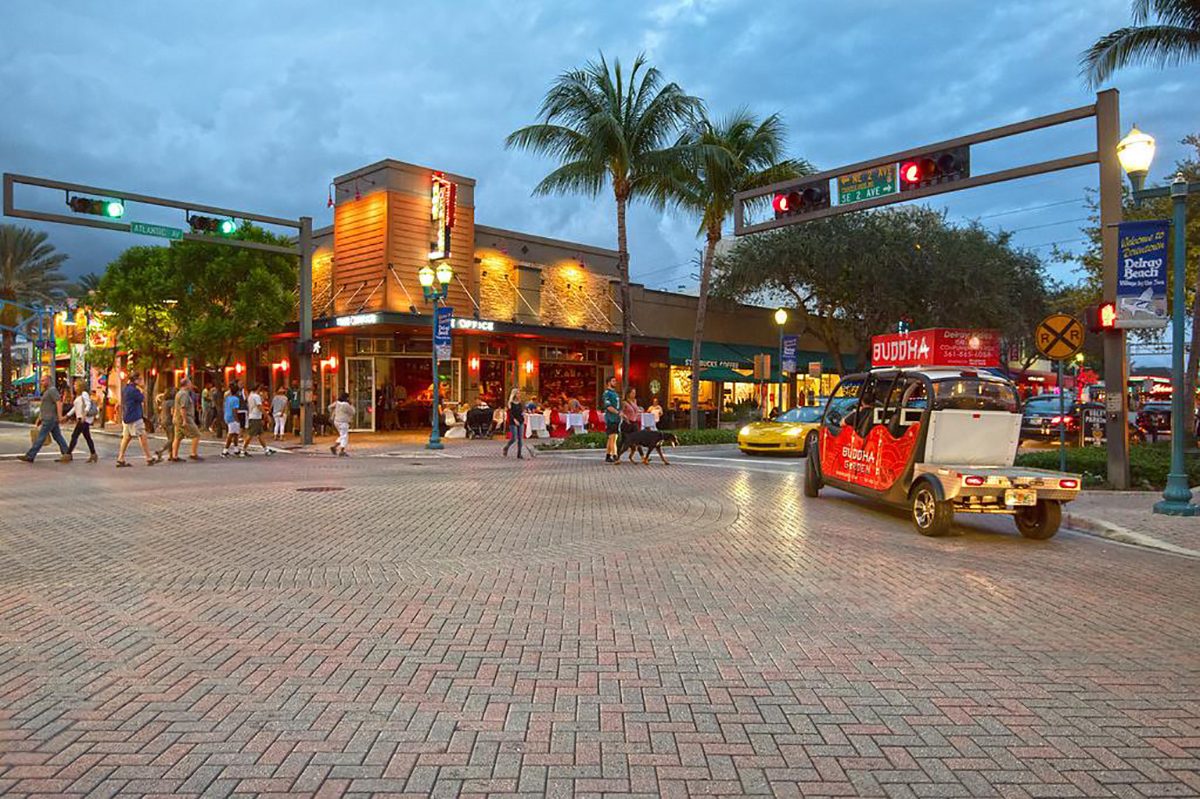
Living in Delray Beach looks less like a vacation and more like a rhythm: a walk or short drive to Atlantic Avenue for coffee, a stretch of beach that’s actually part of your week instead of a special occasion, and a real decision every resident makes about how close they’re willing to pay to live to all of it. That’s the honest version. Not the postcard version.
This guide breaks down what a normal day, week, and year actually feel like for someone living here, based on how the town actually functions, not how it’s marketed. If you’re deciding whether to move here, or you just moved and are still getting your bearings, this is the version nobody puts in a brochure.
What a Normal Day Looks Like in Delray Beach
Mornings start early for a lot of Delray Beach residents, and not by choice. Between May and October, the smart move is to get outside before 9am, whether that’s a beach walk, a run along the Lake Ida loop, or coffee on Atlantic Avenue before the heat and the tourists both show up. By midday in summer, most locals are indoors, at work, or in the water, not wandering the sidewalks. The 4pm afternoon thunderstorm is close to a daily guarantee from June through September, and residents who’ve been here more than one summer plan outdoor errands and workouts around it instead of getting caught off guard.
Winter (roughly November through April) flips the schedule. That’s when Delray Beach fills up with seasonal residents and visitors, Atlantic Avenue gets genuinely busy on weeknights, and parking downtown becomes a small daily negotiation. Locals learn to either embrace the energy or route around it. This is also the stretch when daytime highs sit in the mid-70s, which is why so much of the calendar, art walks, outdoor markets, the Delray Affair, gets scheduled for these months instead of August.
Evenings are where Delray Beach earns its reputation. Restaurant patios along Atlantic Avenue and in Pineapple Grove fill up starting around 6pm, live music spills out of a handful of bars, and it’s common to run into three people you know on a ten-minute walk. That social density is real and it’s a big part of why people move here. It’s also not evenly distributed. Residents living in Tropic Isle or Delray Shores experience a quieter, more suburban version of the same city, where the evening routine looks more like a walk with the dog than a night out on the Avenue.
Living in Delray Beach: What Daily Life Actually Looks Like on Atlantic Avenue
Atlantic Avenue is the spine of the city, and understanding it is the fastest way to understand what living in Delray Beach actually looks like day to day. It runs from the beach on A1A west through downtown, through the roundabout at Swinton Avenue, and continues as a residential corridor toward I-95 and beyond.
The downtown stretch, roughly from the Intracoastal to Swinton, is where most of the restaurants, boutiques, and galleries sit. It’s dense, walkable, and genuinely mixed-use, residents live in condos and townhomes directly above or beside the same blocks where they eat dinner. That’s unusual for South Florida, where most downtowns are commercial-only. Worthing Park, tucked just off Atlantic near the Old School Square cultural arts district, functions as the closest thing the city has to a town square, hosting the Green Market on Saturday mornings in season and smaller pop-up events the rest of the year.
Pineapple Grove, the arts district just north of Atlantic Avenue, has its own daily rhythm. It’s quieter during the day, home to working studios and a Saturday morning green market that locals treat as a weekly errand as much as a social outing. The Delray Beach Market, a food hall on the water near the Marina District, has become another daily-use spot, not just a destination, and it’s given residents a place to grab dinner or a coffee without fighting for parking on the Avenue itself.
What doesn’t show up in tourism photos: parking downtown during peak season requires patience, several restaurants only take reservations on weekend nights, and rent for retail space on Atlantic Avenue has pushed some longtime local businesses further west or out entirely. Ground-floor retail rents on the busiest blocks have climbed well past what a lot of independent shop owners can sustain, which is part of why the storefront mix on the Avenue keeps shifting toward higher-end boutiques and restaurant groups instead of the mom-and-pop shops that built the street’s reputation. The Avenue is loved and it is also expensive to operate on, which shapes what’s actually there.
Beach Life: How Residents Actually Use the Sand
Delray’s public beach runs along A1A and is one of the more accessible in Palm Beach County, metered parking, public restrooms, and no membership required. That accessibility changes how residents actually use it. It’s not a rare treat, it’s a Tuesday.
People who live east of I-95, especially in neighborhoods like Seagate, Lake Ida, and the Marina Historic District, tend to treat the beach like a gym membership: early morning walks, quick sunset dips after work, weekend mornings with a book and a chair. The drive or bike ride is short enough that it becomes routine rather than an event. Anchor Park, at the south end of the beach, and the stretch near Atlantic Dunes Park tend to draw the regulars who want a quieter patch of sand away from the pavilion crowds near the main crossing at A1A and Atlantic.
Residents further west, in communities off Military Trail or near Delray Beach’s western edge toward Lyons Road, still go, but it’s more of a planned outing than a daily habit. The extra 15 to 20 minutes each way matters when you’re deciding between the beach and just staying home after work. Those residents tend to bundle beach trips with an Atlantic Avenue dinner to make the drive worth it, rather than making the two separate trips.
Parking is the real limiting factor. Metered spots along A1A fill quickly on weekends and during winter season, and the municipal garage near the beach helps but doesn’t eliminate the crunch. Longtime residents know the side streets and the times to avoid; new residents usually learn this the hard way in their first few months. Getting there before 9am or after 4pm on a weekday is still the most reliable way to find a spot without circling.
Where People Actually Live: Neighborhoods and Daily Commutes
Delray Beach isn’t one lifestyle, it’s several, depending on which side of I-95 you’re on and how close you are to the water. If you want the full breakdown of neighborhoods and what each one actually delivers, the Best Neighborhoods in Delray Beach guide goes deep on this. Here’s the daily-life version.
East of I-95 (Beach Proximity)
Neighborhoods like Seagate, Del-Ida Park, and the Marina Historic District put residents within a short walk or bike ride of both the beach and Atlantic Avenue. Homes here command a real premium for that proximity, and daily life leans toward walking and biking for errands, restaurants, and social life. Traffic and parking are the trade-offs, along with older housing stock that often means a remodel or a full teardown before move-in, since a lot of the inventory east of the Intracoastal dates back to the 1950s and 60s.
Lake Ida and Tropic Isle
These established, tree-lined neighborhoods sit closer to the middle of the city, giving residents a five to ten minute drive to downtown without the beachfront price tag. Lake Ida in particular has a strong sense of community, with the park itself functioning as a daily gathering spot for dog walkers, families, and paddleboarders. Tropic Isle’s canal-front lots appeal to boaters who want water access without Intracoastal pricing, though residents there should budget for seawall maintenance and dock permitting as part of ongoing ownership costs, not just the purchase price.
West of I-95 (Delray Shores, Rainberry Bay, and Beyond)
This is where a lot of the newer construction and more affordable single-family and townhome inventory sits, including active adult communities like Kings Point and Rainberry Bay. Daily life here is more car-dependent and more suburban, with Publix, shopping plazas, and schools closer than the beach. HOA fees in these communities vary widely, some 55+ communities bundle in amenities like clubhouses and pools for $300 to $500 a month, while newer gated single-family sections can run leaner. If you’re weighing this trade-off against a nearby suburb, the Delray Beach vs. Boynton Beach comparison lays out the price gap directly. A buyer choosing between a $1.2 million cottage two blocks from the sand in Seagate and a $550,000 single-family home off Barwick Road west of I-95 isn’t really choosing between two prices, they’re choosing between two different daily routines, and both are legitimately good, they’re just not the same product.
Groceries, Errands, and the Practical Stuff
The unglamorous side of living in Delray Beach matters more than the restaurant reviews once you actually move here. Publix has multiple locations across the city, including a GreenWise Market on Linton Boulevard for residents who want the higher-end grocery option without driving to Boca Raton. Trader Joe’s sits on West Atlantic near Fair Oaks. A Whole Foods is a short drive north in Boca Raton for residents who want the full sweep of grocery options. Costco and Sam’s Club both sit a short drive south in Boca Raton or west near the Boynton Beach line, which is a routine bulk-shopping trip for a lot of Delray families rather than something available inside city limits.
Congress Avenue and Linton Boulevard function as the city’s practical corridors, banks, pharmacies, big-box stores, and the kind of errands that don’t happen on Atlantic Avenue. This is also where a lot of the city’s medical offices and Delray Medical Center sit, which matters for daily convenience, not just emergencies. Bethesda Hospital East, just over the line in Boynton Beach, is the other option most residents end up using at some point, and both are close enough that healthcare access rarely factors into where someone chooses to live within the city.
Delray Beach doesn’t have its own major airport, residents fly out of Palm Beach International (about 25 minutes north) or Fort Lauderdale-Hollywood International (about 30 to 40 minutes south depending on traffic), both real considerations if you travel for work.
Schools and Family Routines
Families living in Delray Beach are zoned into Palm Beach County Public Schools, with options including Pine Grove Elementary, Banyan Creek Elementary, Village Academy (a countywide choice school with a strong reputation), Carver Middle School, and Atlantic High School’s IB program, which draws families from across the county. The Delray Beach Schools guide breaks down zoning and ratings in detail, but the daily-life version is this: school pickup traffic on Atlantic Avenue and around Barwick Road adds a predictable bottleneck in the afternoons, and families who want a specific school often choose their neighborhood around zoning lines first, house second.
Families who go the private route have options too, St. Vincent Ferrer Catholic School sits right in the city, and a stretch of well-regarded private schools in Boca Raton is close enough to be a realistic daily commute for parents who work near the I-95 corridor anyway. That’s a real fork in the road for a lot of buyers with young kids: pay the zoning premium for a top-rated public elementary, or buy for lifestyle first and commute to a private school instead.
Youth sports, swim teams, and after-school programs run heavily through the Delray Beach Tennis Center, the Pompey Park recreation complex, and the YMCA on Lake Ida Road. Weekend mornings in family-heavy neighborhoods like Rainberry Bay and Sherwood Park revolve around these programs as much as anything downtown.
Traffic, Parking, and Getting Around
This is the part that catches new residents off guard. Delray Beach is compact, but it’s not immune to South Florida traffic patterns. Federal Highway (US-1) and Atlantic Avenue both slow down predictably during snowbird season, roughly January through April, and again on weekend evenings year-round when restaurant traffic peaks.
I-95 runs through the western edge of the city and is the fastest way to reach Boca Raton, Boynton Beach, or points north and south for work commutes. Residents who work outside Delray Beach, in Boca’s office corridor or as far as Fort Lauderdale, factor I-95 access into where they choose to live almost as much as school zoning. A resident living east of I-95 in Seagate who commutes to an office job in Boca Raton is often looking at a 25 to 35 minute drive during peak hours, even though the two downtowns are only about 6 miles apart, because there’s really only one practical route in and out.
Tri-Rail has a station in Delray Beach, giving commuters a car-free option toward West Palm Beach or south toward Boca and Fort Lauderdale, though schedules are limited compared to a true daily commuter line. Most residents still default to driving. The city has also expanded bike lanes on some of the residential streets feeding into downtown, and biking to the Avenue from anywhere east of Swinton is genuinely faster than driving and parking most weeknights.
Downtown parking is metered, and the city has added garages near the beach and along Atlantic Avenue to absorb demand, but weekend evenings in season still mean circling for a spot or paying for the garage. Locals adjust by biking or walking from nearby neighborhoods instead of driving in.
Hurricane Season and the Weather Reality
Living in Delray Beach means living with hurricane season, officially June through November, whether or not a storm ever makes landfall nearby. Most years bring at least one stretch of a few days where residents are tracking a system, stocking water and batteries, and deciding whether to board up. Homes east of the Intracoastal and directly on A1A carry the added consideration of storm surge and flood insurance requirements, which is a real line item, not a footnote, when budgeting for beachside property.
That said, most seasons pass without a direct hit on Delray Beach specifically, and residents who’ve been here a while develop a practical, unbothered routine around it rather than genuine anxiety: know your evacuation zone, keep supplies on hand from June through November, and pay attention starting when a storm enters the Caribbean, not when it’s already off the coast.
The Cost of Daily Life in Delray Beach
Delray Beach isn’t cheap, and the cost shows up in more than just the home price. Single-family homes east of I-95 in neighborhoods like Del-Ida Park and Seagate regularly sell well above $1 million, while homes further west or in established mid-city neighborhoods like Delray Shores and Sherwood Park can still be found in the $500,000 to $700,000 range depending on condition and lot size. New construction and 55+ communities in the broader Delray-adjacent corridor, similar to what’s delivering in nearby Lake Worth and Delray Trails, run from the mid $400,000s for townhomes up to the $700,000s for larger single-family plans.
Property taxes and insurance both run higher than the national average, standard for coastal Florida, and HOA or condo fees near the beach can add several hundred dollars a month on top of the mortgage. Homeowners insurance on an older beachside property can easily run into five figures annually once wind and flood coverage are both factored in, which is a number a lot of out-of-state buyers underestimate until they’re actually quoting a policy. For a full breakdown of what’s actually happening with pricing right now, the Delray Beach Real Estate Market 2026 guide covers the two distinct markets (beachside and inland) that behave very differently.
Day-to-day costs, dinner out, groceries, gym memberships, run comparable to or slightly above Boca Raton and noticeably above towns further inland like Lake Worth or Greenacres. Residents pay a real premium for the walkability and beach access, and most who move here decide it’s worth it, but it’s not a budget lifestyle.
Who Delray Beach Actually Fits (and Who It Doesn’t)
Delray Beach genuinely fits people who want walkability, a social downtown scene, and beach access without a long drive, retirees looking for an active, social 55+ community, and remote workers or business owners who value being able to walk to a coffee shop and a beach in the same morning. It’s a strong fit for first-time buyers willing to trade square footage for location, and the First-Time Buyer’s Guide to Delray Beach lays out what’s realistically achievable at different price points.
It’s a weaker fit for anyone who wants a quiet, low-traffic small town year-round. Snowbird season genuinely changes the character of the city for four to five months. It’s also not the right fit for buyers who need maximum home for their dollar, that buyer is usually better served comparing options like Boynton Beach or Lake Worth, or weighing the Boca Raton vs. Delray Beach trade-off directly.
If you’re still working through whether the city itself is the right call before you even get to neighborhood or budget decisions, the Is Delray Beach a Good Place to Live? Honest 2026 Review is the more direct verdict piece, and the Delray Beach FAQ answers the specific questions buyers ask most before making the move. For the logistics of the actual move itself, from utilities to timing, the Moving to Delray Beach relocation guide covers what to handle and when.
The Honest Bottom Line
Living in Delray Beach means paying for proximity, to the beach, to Atlantic Avenue, to a downtown that actually functions as a place people live and not just visit. That proximity is real and it’s the reason people choose this city over quieter, cheaper alternatives nearby. It’s also not free, in dollars or in daily trade-offs like traffic and parking during season.
The residents who end up happiest here are the ones who picked their specific neighborhood on purpose, understanding that a home three miles apart in this city can mean two completely different daily lives. Get the location decision right and Delray Beach delivers exactly what it promises. Get it wrong, buy for the name without checking the commute or the season, and you’ll spend your first year fighting a lifestyle you didn’t actually sign up for.


Watch: learn more
Go deeper with my South Florida Insider videos.

The Best Flex-Space Townhome in West Palm Beach: Pulte's Nautical Plan

Inside Everton's Latitude II Model: $458k New Homes In Palm Beach
The Best Flex-Space Townhome in West Palm Beach: Pulte's Nautical Plan
More articles you might like
Delray Beach FAQ: 18 Questions Buyers Ask Before Moving
17 min readIs Delray Beach a Good Place to Live? Honest 2026 Review
16 min readBest Neighborhoods in Delray Beach, FL: The Honest 2026 Guide
14 min readDelray Beach vs. Boynton Beach: Which Is the Better Buy in 2026?
17 min readFirst-Time Buyer's Guide to Delray Beach, FL: What's Actually Possible
14 min read