Is Delray Beach a Good Place to Live? Honest 2026 Review
Is Delray Beach a Good Place to Live? The Honest 2026 Answer
Is Delray Beach a good place to live? Here’s the honest 2026 review: yes, if you understand what you’re buying into, and no, if you’re expecting a quiet small town that happens to be near the ocean. Delray Beach in 2026 is two different places wearing one zip code. There’s the mile of Atlantic Avenue that shows up on every “best beach towns” list, and there’s the much larger, much quieter city west of I-95 where most of the actual population lives. People who move here without understanding that split end up either overpaying for a downtown lifestyle they rarely use, or underpaying attention to whether the west side neighborhood they picked actually fits how they want to live.
I work with relocation buyers looking at Delray Beach every month, and the same question comes up almost every time: is this place actually livable, or is it a vacation town that happens to have year-round residents? The real answer is that it’s both, depending entirely on where in the city you land. I’ve had clients fall in love with a condo three blocks off Atlantic Avenue during a quiet Tuesday showing, only to realize on move-in weekend that “quiet Tuesday” was never going to be their actual Friday night. I’ve had other clients write off Delray entirely after one visit to the Avenue in February, convinced the whole city is that loud, when the house they’d actually love is a 15 minute drive west and they never went to look at it. Both mistakes are avoidable if you understand the geography before you start touring.
Atlantic Avenue: The Reality Behind the Postcard
Atlantic Avenue is the reason most people have heard of Delray Beach, and it’s the single biggest source of confusion for buyers who haven’t spent real time here.
What the postcard gets right
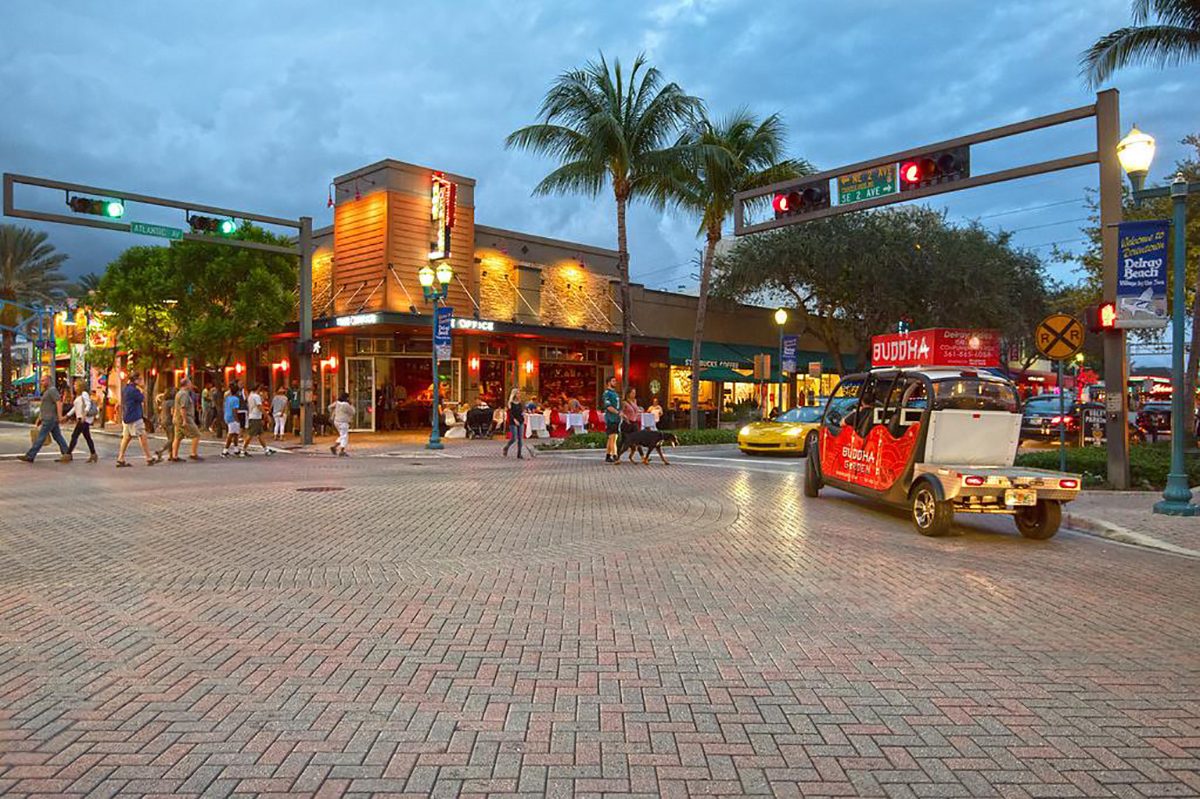
The stretch of Atlantic Avenue between Swinton Avenue and A1A is genuinely one of the better walkable downtown corridors in South Florida. You’ve got restaurants, bars, boutique shops, the Delray Beach Center for the Arts (formerly Old School Square), and a straight shot to the beach at the end of the road. On a Tuesday morning it’s a pleasant place to grab coffee and walk. It’s not manufactured the way some newer downtown developments feel. It grew organically over decades, and that shows in the mix of old Florida buildings next to newer construction. You’ll see a 1930s bungalow turned wine bar sitting next to a five story mixed use building with rooftop dining, and somehow it works. Events like the Delray Affair in spring and the Garlic Fest in the fall bring real crowds downtown and give the city a genuine sense of community identity that a lot of newer master planned towns simply can’t replicate, because they haven’t been around long enough to build that history.
What the postcard leaves out
On a Friday or Saturday night, especially between November and April, Atlantic Avenue turns into something closer to a small nightlife district than a neighborhood street. Parking disappears. Traffic backs up from Federal Highway to the beach. Sidewalks are packed with tourists, bachelorette parties, and diners waiting for tables. If you live in one of the condos or townhomes directly on or near the Avenue, that’s your Friday night whether you want it or not. The public parking garages fill early, street noise runs well past 10pm, and trash pickup after a busy weekend is a very different experience than what a quiet showing on a Tuesday afternoon suggests.
This is the part sellers and some agents gloss over. Living directly downtown means you’re renting the energy of Atlantic Avenue at a premium price, and that energy doesn’t turn off. If you want that lifestyle, it’s real and it’s good. If you thought you were buying a quiet coastal retirement, downtown Delray is the wrong pick. I always tell relocation buyers to do a showing on a Friday night, not just a weekday morning, before they commit to anything within a five minute walk of the Avenue. What you see at 10am on a Tuesday and what you get at 9pm on a Saturday are two different neighborhoods.
East of the Tracks vs. West Delray: Two Very Different Towns
The FEC railroad tracks that run roughly parallel to Swinton Avenue, and I-95 a bit further west, split Delray Beach into what locals think of as two distinct markets. Understanding this divide is the single most useful thing a buyer can know before choosing a neighborhood here. I break this down in more detail in Best Neighborhoods in Delray Beach, FL: The Honest 2026 Guide, but here’s the short version.
East Delray: walkability, historic character, beach proximity
East of the tracks you’re in neighborhoods like the Marina Historic District, Del-Ida Park, Lake Ida, Tropic Isle, Seagate, and the beach blocks off A1A. This is where you pay for location. Small lots, older homes (many updated or torn down and rebuilt), and a genuine walk-or-bike-everywhere lifestyle. Single-family homes east of Federal Highway commonly start in the $900,000s and climb well past $2 million the closer you get to the water. Condos closer to downtown and the beach range widely, roughly from the $300,000s for older, smaller units to well over $1 million for newer buildings with amenities.
The tradeoff here isn’t subtle. Lots are small, often a quarter acre or less and sometimes far less in the historic districts, insurance is higher this close to the coast, and you’re paying for proximity, not square footage. A buyer moving from a 2,800 square foot suburban home in the Midwest is often shocked at what $1.2 million buys east of the tracks in Delray compared to what the same number buys 20 minutes inland. That’s the trade you’re making, and it’s worth being honest with yourself about how much you’ll actually use the walkability before you pay for it.
West Delray: more house, more HOA, more quiet
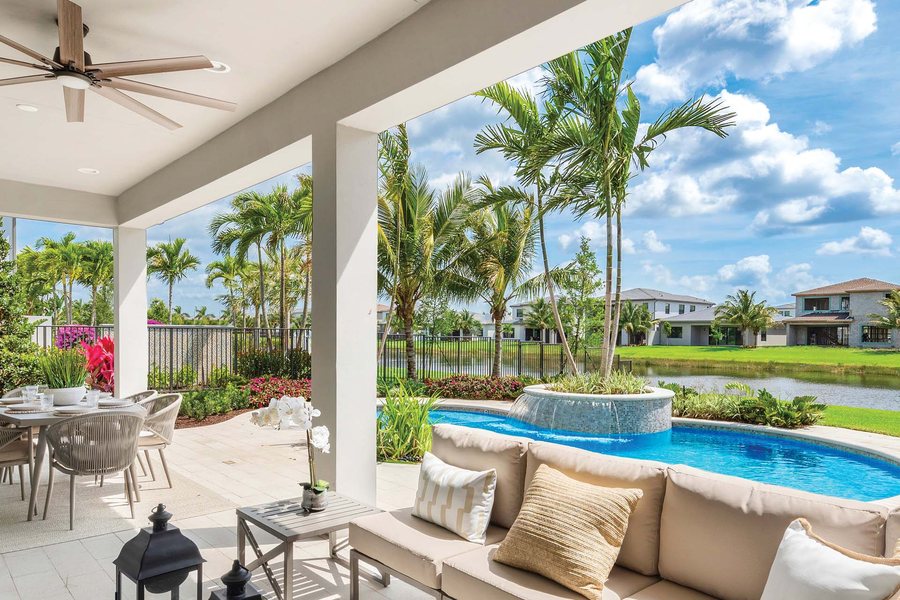
West of I-95, Delray Beach turns into a completely different animal, mostly built out in the 1980s through 2000s as planned communities and gated subdivisions. Neighborhoods like Hamlet Country Club, Delaire Country Club, Mizner Country Club, Country Club Acres, High Point, Sherwood Park, and newer product like Delray Trails by Lennar give you significantly more square footage per dollar than anything east of the tracks. Delray Trails, off Atlantic Avenue near Lyons Road, is a good example of what new construction looks like out here: a mixed 55+ and general community with villas and single-family homes ranging from roughly 1,889 up to nearly 6,700 square feet, with pricing that has run from around $450,000 into the $730,000s and up depending on the plan and lot.
This is also where HOA and CDD fees matter more. Gated communities in west Delray commonly run $300 to $600+ a month in HOA dues depending on amenities (golf, clubhouse, security gates), and some newer developments carry CDD assessments on top of that. Buyers coming from states without HOA culture are often surprised by how much these fees add to the real monthly cost, so always run the math on total carrying cost, not just the mortgage. A $550,000 west Delray home with a $450 monthly HOA and a CDD assessment can carry a meaningfully higher true monthly cost than the mortgage payment alone suggests, and I’ve seen buyers get this wrong when they’re comparing a listing price against a home they saw in a non-HOA state.
West Delray is quieter, more suburban, and where most families actually settle. You lose the walk-to-everything lifestyle, but you gain space, newer construction options, and meaningfully lower price per square foot. For a buyer who wants a three car garage, a real backyard, and a newer roof under warranty, west Delray is usually the smarter financial move, even if it means driving to the beach instead of walking to it.
What Delray Beach Actually Gets Right
Setting the marketing aside, here’s where Delray genuinely delivers:
- A real downtown that isn’t manufactured. Most South Florida cities don’t have a walkable core with this much history and density of independent businesses. Delray does, and it didn’t happen by accident. It’s the product of a genuine downtown revitalization that started decades ago and kept building on itself rather than getting bulldozed for a single master planned “lifestyle center.”
- Beach access without the density of Fort Lauderdale or Miami Beach. Delray’s public beach is well maintained, parking is metered but available, and it doesn’t feel overrun outside of peak season weekends. You can still find a quiet stretch of sand on a weekday morning without fighting for a spot.
- A strong arts and culture presence. Pineapple Grove Arts District, the Delray Beach Center for the Arts, and a genuinely active gallery and public art scene give the city more identity than a lot of newer-built South Florida suburbs. This matters more than people expect when they’re deciding where to actually put down roots versus just buy a house.
- Options across price points. Because the city spans from beachfront to inland golf communities, you can find product from starter condos to eight-figure estates within the same city limits. Very few South Florida cities let you cross-shop a $350,000 condo and a $4 million estate under one municipal government and school district umbrella.
- A commute location that works. Sitting between Boca Raton and Boynton Beach, with I-95 and the Florida Turnpike both accessible, Delray works reasonably well for people commuting to Boca’s office corridor or further north to West Palm Beach. It’s roughly a 20 to 30 minute drive to either downtown Boca or downtown West Palm on a normal day, which makes it a genuinely central location for dual income households working in different directions.
The Genuine Challenges Nobody Puts in the Brochure
An honest review has to include what doesn’t work, and there’s real substance here.
Insurance and flood risk
Homeowners insurance in Palm Beach County has climbed sharply over the past several years, and Delray is no exception, especially for homes east of Federal Highway sitting closer to sea level and storm surge zones. Flood insurance is often required, not optional, for properties in or near flood zones, and older homes without updated roofs or impact windows can see insurance quotes that genuinely change the math on affordability. It’s not unusual to see a homeowners and flood combined bill run several thousand dollars a year higher on an east side property than a comparable west side home with a newer roof and no flood zone designation. Get an insurance quote before you fall in love with a house, not after. I’ve watched deals fall apart at the eleventh hour because a buyer skipped this step and got blindsided during underwriting.
Traffic on the corridors that matter
Atlantic Avenue, Federal Highway (US-1), and Linton Boulevard all see real congestion, particularly during season (roughly November through April) when snowbird population swells and tourism peaks. A drive that takes 10 minutes in July can take 20 to 25 in February. This is a South Florida-wide reality, but Delray’s popularity as a destination makes its main corridors feel it more than a purely residential suburb would. If your daily commute crosses Federal Highway or Linton during peak season rush hours, build in the extra time before you commit to a location based on a summer drive time.
The cost of “downtown adjacent”
Real estate priced as “walk to Atlantic Avenue” or “steps to the beach” carries a real premium, sometimes 20 to 40% higher per square foot than a comparable home ten minutes west. If your priority is genuinely the lifestyle, that premium is worth it to plenty of buyers. If you’re chasing the Delray name without using the downtown lifestyle, you’re paying for something you won’t use. I ask every buyer the same question here: how many nights a month do you actually see yourself walking to the Avenue? If the honest answer is one or two, that premium is expensive convenience you’re barely tapping into.
Gentrification pricing out long-time character
Areas like Osceola Park and parts of the historic districts have seen rapid redevelopment, with older, smaller homes torn down and replaced by new construction at double or triple the previous price point. This is good news if you’re buying now and want appreciation, but it’s changed the character of some blocks quickly, and long-time residents have real, valid frustrations about affordability being pushed further west. If you’re buying in one of these transitioning pockets, expect a construction zone feel on some blocks for the next several years as the rebuild cycle continues.
Schools and Family Life
School zoning is one of the most common questions I get from relocating families, and it varies significantly depending on which side of Delray you’re looking at. West Delray neighborhoods generally zone to schools like Orchard View Elementary, Sunrise Park Elementary, Carver Middle, and Atlantic Community High School, while other pockets zone to Pine Grove Elementary or Plumosa School of the Arts. Ratings and reputations vary block by block more than people expect for a single city, so this is not a detail to guess on. I cover the full zoning breakdown, including which elementary schools consistently outperform, in Delray Beach Schools: What Families Need to Know Before Buying, and it’s worth reading before you write an offer, not after.
Families who want a private school option also have real choices here, with schools like St. Vincent Ferrer and American Heritage’s Delray campus pulling from both the east and west side communities. That matters for buyers who are less concerned with zoned public school boundaries and more focused on commute time to a specific private school gate each morning, since it can open up neighborhoods you’d otherwise rule out over zoning alone.
Beyond school assignment, family life in Delray leans toward west of the tracks. Parks like Miller Park, Pompey Park, and the Delray Swim & Tennis Club give families recreation options without needing to cross I-95 constantly, and the newer subdivisions in west Delray tend to have more kids per block than the historic east-side neighborhoods, which skew toward retirees, second-home owners, and younger professionals without children. If you’re relocating with school-age kids and want a genuine neighborhood with other families on the block, west Delray is where you’ll find that far more consistently than east of the tracks.
Who Delray Beach Is Actually Right For
Based on the buyers I’ve walked through this market, Delray tends to be the right call for:
- Empty nesters and retirees who want walkability and are comfortable paying a premium for proximity to the beach and downtown, particularly in west Delray’s active adult and country club communities like the 55+ sections of Delray Trails.
- Remote professionals who want the downtown energy on weekends but don’t need a daily commute anywhere specific, and who can work around the seasonal traffic and parking crunch on the Avenue.
- Move-up buyers from Boca Raton or further south looking for a bit more character and a lower price point than Boca proper, without giving up much on commute or lifestyle.
- Families prioritizing space and newer construction who are willing to live 10 to 15 minutes from the beach in exchange for a bigger yard and lower HOA-adjusted cost per square foot.
- Second home and part-year buyers who want a lock-and-leave condo near the Avenue for the winter season and don’t need year-round HOA amenities to justify the price, since the downtown lifestyle is exactly what they’re paying for and exactly what they’ll use.
Delray tends to be the wrong call for buyers who want a strictly quiet, low-key neighborhood but also want to be within walking distance of downtown. Those two things don’t coexist here, and no amount of showings will change that math.
How Delray Compares to Its Neighbors
Delray doesn’t exist in a vacuum, and most of my relocation clients are cross-shopping it against at least one other city before they commit. If Boca Raton is on your list, the comparison usually comes down to school district reputation and new construction inventory favoring Boca, against a more affordable and arguably more authentic downtown favoring Delray. I break that matchup down fully in Boca Raton vs. Delray Beach: Which Is Right for You in 2026?.
If you’re weighing Delray against Boynton Beach just to the north, the short version is that Boynton offers meaningfully lower price points for similar commute times, at the cost of a less developed downtown scene, which I cover in Delray Beach vs. Boynton Beach: Which Is the Better Buy in 2026?. For buyers who want to push even further on affordability while staying in the same general corridor, cities like Lake Worth Beach and Greenacres, just north of Boynton, tend to come up in the same conversation, though they trade Delray’s downtown character for a lower entry price and a more suburban feel across the board.
And if you’re still early in deciding whether Delray fits your life at all, whether you’re relocating from out of state or just cross-shopping South Florida cities for the first time, start with Moving to Delray Beach: The Honest Relocation Guide for 2026 for the full picture on cost of living, commute reality, and what your first six months here actually look like. If you want the day-to-day, non-brochure version of what living here feels like once the moving boxes are unpacked, Living in Delray Beach: What Daily Life Actually Looks Like covers that directly.
The Bottom Line
Delray Beach earns its reputation east of the tracks and builds a completely different, quieter case for itself west of I-95. It is a good place to live for people who go in with clear eyes about which version of the city they’re buying into, what the real carrying costs look like once insurance and HOA dues are factored in, and which school zone they’re actually landing in. It is not a good fit for buyers expecting a sleepy beach town or for anyone who hasn’t priced out flood insurance before making an offer.
If you’re seriously considering a move here, the smartest next step is getting specific. Not “is Delray Beach good,” but “is this particular block, in this particular flood zone, zoned to this particular school, worth this particular price.” That’s the conversation worth having, and it’s a different answer for almost every buyer.
Still working through whether Delray fits your situation? Send me the specifics, budget, commute, school priorities, and I’ll tell you straight whether it’s the right move or whether a neighboring city solves your list better.
Watch: learn more
Go deeper with my South Florida Insider videos.

The Best Flex-Space Townhome in West Palm Beach: Pulte's Nautical Plan

Inside Everton's Latitude II Model: $458k New Homes In Palm Beach
The Best Flex-Space Townhome in West Palm Beach: Pulte's Nautical Plan
More articles you might like
Delray Beach FAQ: 18 Questions Buyers Ask Before Moving
17 min readLiving in Delray Beach: What Daily Life Actually Looks Like
16 min readBest Neighborhoods in Delray Beach, FL: The Honest 2026 Guide
14 min readDelray Beach vs. Boynton Beach: Which Is the Better Buy in 2026?
17 min readFirst-Time Buyer's Guide to Delray Beach, FL: What's Actually Possible
14 min read