Is Coconut Creek, Florida a Good Place to Live? An Honest Take (2026)

Below is the full revised post.
If you are asking whether Coconut Creek, Florida is a good place to live, here is the honest answer: yes, for the right buyer. Coconut Creek is a strong pick if you want A-rated schools, real protected green space, and a calmer, more residential pace of life in Broward County, without stretching into Parkland or Weston price tags. It is not the pick if your priority is beach proximity, a dense restaurant scene, or downtown walkability. This article breaks down exactly who Coconut Creek fits, who it doesn’t, and what you’re actually buying into if you move here in 2026.
I work with buyers relocating into South Florida every week, and Coconut Creek comes up constantly, usually from families who got priced out of Parkland or Coral Springs and are looking for the next logical move. I had a couple from Ohio last month ask me almost this exact question on a Tuesday call: “Is Coconut Creek actually good, or is it just the cheaper version of Coral Springs?” That’s a fair question, and the answer is more nuanced than either “yes” or “no.” So let’s go through it the way I’d walk a client through it: no sugarcoating, no generic “great weather” filler, just what the city actually offers and where it comes up short.
Is Coconut Creek a Good Place to Live? The Short Answer
Coconut Creek is a good place to live if you value green space, A-rated zoning, and a lower price point than its neighbors, and you’re not depending on the beach being a 10-minute drive. It’s a city of roughly 60,000 people in northwest Broward County, built around the Lyons Road and Sample Road corridor, known locally as the “Butterfly Capital of the World” because of its early and ongoing commitment to preserved land, parks, and eco-friendly development rules.
That identity matters more than it sounds like it should. Most Broward cities got built out fast in the boom years with whatever density would sell. Coconut Creek didn’t. It kept park space, kept its tree canopy, and built its zoning around livability rather than maximum unit count. That’s the tradeoff you’re buying: less flash, more actual quality of life. It’s also why the city has stayed relatively under the radar compared to Parkland or Weston, even though it’s sitting on some of the same underlying infrastructure and school access.
If you want the full picture beyond this honest take, our Coconut Creek, Florida: The Complete Guide (2026) covers the city in depth, and our Moving to Coconut Creek, Florida (2026): The Honest Relocation Guide is built specifically for people relocating from out of state.
What Coconut Creek Does Well
Green Space and an Actual Identity
Most relocation buyers assume every South Florida suburb looks the same: strip malls, HOA gates, a Publix anchor. Coconut Creek breaks that pattern. The city has built its brand around preserved natural land, Tradewinds Park, and Butterfly World, rather than fighting for beach-adjacent bragging rights it will never have. Tradewinds Park alone runs over 400 acres, with an equestrian center, fishing, biking trails, and a seasonal pumpkin patch and holiday light display that pulls families from Coral Springs and Margate too. Butterfly World sits inside that same park footprint, and it’s the kind of thing you don’t fully appreciate until you’ve lived here a year and realize your kids have been to it more times than Disney.
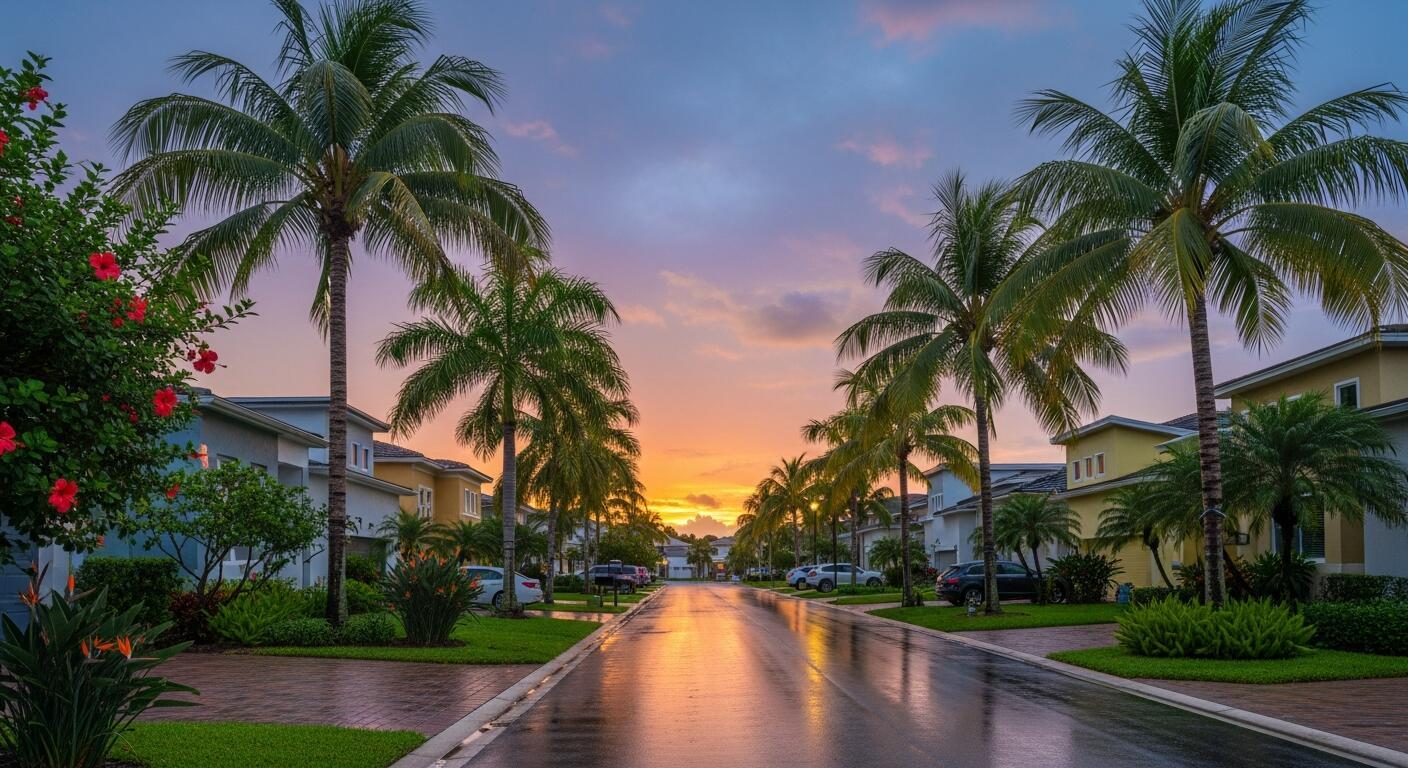
If you want quiet streets, more tree canopy than concrete, and a city government that has actually prioritized green space over density for decades, this is one of the few places in Broward that delivers it. The city’s own planning documents have protected wetlands and buffer zones that a lot of 1980s-era Broward development simply bulldozed. That’s not a small thing if you grew up somewhere with actual seasons and trees, and South Florida’s usual concrete sprawl has been wearing on you.
Schools
This is the number one reason families choose Coconut Creek over cheaper, less-zoned alternatives. Zoning includes Monarch High School, which carries an A rating, and the broader zoning map benefits from the Coral Springs/Coconut Creek school cluster, one of the stronger public school pockets in Broward County. Depending on exactly where you buy, you could also land in zones feeding Ramblewood Middle or Coconut Creek Elementary, and ratings do shift year to year, so don’t assume the rating you saw on a listing site last spring is still current by the time you close.
For a full breakdown of which addresses feed into which schools and how ratings compare, go read the Coconut Creek Schools Guide (2026): Zoning, Ratings, and Where Families Buy before you commit to a specific street. Zoning lines matter enough in this city that two homes a half mile apart can land in different school boundaries. I’ve had clients fall in love with a house, only to find out the home across the street zones to a different, lower-rated school. That’s a five-minute check with Broward County Public Schools before you write an offer, not after.
Price Relative to Its Neighbors
Here’s the part most people don’t say out loud: Coconut Creek is priced below the Broward County median, and it’s priced meaningfully below Parkland and Coral Springs for comparable family homes. The median family home in Coconut Creek runs around $558,000, while Broward County single-family homes overall sit closer to $615,000 with roughly 4.6 months of supply, a market that’s balanced and leaning slightly toward sellers right now. That gap is exactly why I point budget-conscious families here first. You get A-rated zoning without fighting in the most competitive, most expensive price tier in the county.
Put real numbers on it: a comparable three-bedroom single-family home that runs $558,000 in Coconut Creek will often price $75,000 to $125,000 higher in Parkland for a similar lot size, mostly because you’re paying for the Parkland school zoning and newer-build inventory, not a materially different home. For a family stretching their budget to make a move work, that gap is the difference between a comfortable mortgage and a house-poor one. I’ve sat across the table from buyers who were ready to write an offer in Parkland at the top of their pre-approval, and once we walked the numbers on a comparable Coconut Creek home, they ended up with the same school access and $400 a month back in their pocket.
If you want the full pricing breakdown, including what’s moved in the last year and what it means for your negotiating position, read Coconut Creek Real Estate Market (2026): Prices, Trends, and What It Means for Buyers.
Location and Commute Access
Coconut Creek sits right at the Lyons Road and Sample Road intersection, which puts you minutes from Coconut Creek Promenade for shopping and dining, and gives you direct access to the Sawgrass Expressway. From there you’re a short drive to Sawgrass Mills, the Florida Turnpike, and easy reach into Coral Springs, Margate, Pompano Beach, and Deerfield Beach. If your job has you commuting toward Boca Raton, Sunrise, or even downtown Fort Lauderdale on a flexible schedule, the Sawgrass corridor makes that workable without a daily nightmare commute.
In practical terms, that puts you around 20 to 25 minutes from Boca Raton’s job corridor off I-95, around 25 to 30 minutes from downtown Fort Lauderdale off-peak, and closer to 40 to 45 minutes during a bad rush hour. If you’re commuting into Miami daily on a rigid 9-to-5 schedule, be honest with yourself that this isn’t a short drive. It’s workable for flexible or hybrid schedules, less workable if you’re fighting I-95 southbound traffic every single weekday morning.
Safety and a Lower-Traffic Feel
Compared to the Broward County average, Coconut Creek reports lower violent crime numbers, and most of the city is built around residential communities rather than major thoroughfares. This isn’t a city where you’re dodging six lanes of traffic to get your kids to a park. It reads calmer than that, and for a lot of relocating families, that calm is the whole point of leaving where they came from. Walk any of the neighborhood streets off Lyons Road on a weekend afternoon and you’ll see kids riding bikes and people out walking dogs, not cars cutting through at 45 miles an hour.
New Construction Options
If buying new is part of your plan, Coconut Creek currently has active new construction at Mainstreet, a Lennar community at Lyons Road and Sample Road priced from $540,990 to $648,990, with attached homes (villas and townhomes, with condos coming in a later phase) ranging from 1,362 to 1,901 square feet. It’s positioned at the center of the Promenade, Tradewinds Park, and the Sawgrass corridor, which is a strong location read for a new build in this city. Lennar’s Everything’s Included approach means the pricing you see already bundles in finishes and features you’d otherwise pay extra for on a resale renovation, and the community includes EV charging built into the plan, which matters if you’re already driving electric or thinking about it for your next car.
We go deep on that specific community in the Mainstreet in Coconut Creek: The New Construction Guide (Floor Plans, Pricing, What to Know) and give you the unfiltered verdict in Is Mainstreet Worth It? An Honest Look at Lennar’s Coconut Creek Community.
Where Coconut Creek Falls Short
Now the part that gets left out of most city overviews, because most of them are written to sell you on the place, not to actually help you decide.
It’s Not a Beach Town, and It’s Not Trying to Be
Coconut Creek is a solid 25 to 35 minute drive from the nearest beach, depending on traffic and exactly which part of the city you’re in. If beach proximity is a non-negotiable for your lifestyle, be honest with yourself before you fall in love with a floor plan here. This is an inland, green-space-first city. That’s the deal. I’ve had clients who swore they needed to see the water from their lanai, and no amount of A-rated school zoning or lower price point changed their mind once they actually understood the drive. If that’s you, say it out loud now, not after you’ve already toured three homes here.
Some Pockets Feel Dated
I won’t sugarcoat this one. Coconut Creek built out in waves starting in the 1970s and 80s, and some of the older sections, particularly around the original town center areas, show their age. Not every neighborhood has had the reinvestment that newer sections like the area around the Promenade have seen. Some of the older single-family stock still has original 1980s kitchens, outdated electrical panels, or roofs approaching the end of their life, which matters for insurance in this market more than it used to. If you’re buying resale rather than new construction, you need to actually walk the specific community, not just the city, because condition varies block to block more than it does in newer-built cities like Parkland.
Limited Dining and Nightlife Variety
Coconut Creek Promenade covers the basics well, but if you want the density of restaurant options, nightlife, and walkable retail you’d find in Fort Lauderdale’s Las Olas corridor or Boca Raton’s Mizner Park, you won’t find it here. This is a drive-to-dinner city, not a walk-to-dinner city. For some buyers that’s a feature. For others, especially younger professionals used to urban density, it’s a dealbreaker. If your social life revolves around walking to a different restaurant every weekend, you’re going to feel that gap here fast.
HOA Rules Are Real Here
Most of Coconut Creek’s housing stock, including Mainstreet, is HOA-governed. That means defined rules on exterior changes, landscaping, parking, and in some cases rental restrictions. If you’re the type of homeowner who wants to paint your house purple or park a boat trailer in the driveway indefinitely, read the HOA documents before you sign anything, not after. HOA dues in Coconut Creek communities commonly run anywhere from $150 to $450 a month depending on the community and amenities, and those dues typically climb with insurance and maintenance costs, so factor that into your real monthly number, not just the mortgage payment on the listing price.
Sample Road and Lyons Road Traffic
The same corridor that gives Coconut Creek its location advantage also means Sample Road and Lyons Road see real congestion at commute hours, especially near the Promenade and the Sawgrass Expressway on-ramps. It’s not Fort Lauderdale rush hour, but it’s not a ghost town either. If you’re buying near this intersection specifically, drive it at 8am and 5:30pm before you commit, not on a quiet Sunday afternoon showing. A fifteen-minute drive to the Promenade on a Sunday can turn into a twenty-five-minute crawl on a Monday morning, and that difference matters if you’re the one doing a school drop-off before work.
What $558,000 Actually Buys You in Coconut Creek
Numbers without context don’t help you make a decision, so here’s what that median price actually looks like on the ground. A $558,000 budget in Coconut Creek typically gets you a three- or four-bedroom single-family home, roughly 1,800 to 2,400 square feet, built anywhere from the late 1980s through the 2000s, often on a quarter-acre or close to it, with a pool in a meaningful share of listings since lot sizes support it. Compare that to the same budget in Parkland, where you’re more likely looking at a townhome or a smaller, older single-family product, because new-build single-family pricing there routinely clears $700,000 to $900,000 and up.
If you want brand-new construction instead of resale at a similar or slightly higher price point, that’s where Mainstreet comes in, trading square footage and a single-family lot for Everything’s Included finishes, a newer HOA community, and no deferred maintenance to inherit. Neither choice is wrong. It depends on whether you’d rather have more land and an older roof, or less land and a warranty.
Two Buyer Scenarios Worth Comparing
It helps to see this play out with real profiles instead of abstractions.
Scenario one: the Parkland-priced-out family. Dual income, two kids in elementary and middle school, relocating from the Northeast, pre-approved around $600,000. They toured Parkland first because everyone online told them to, got discouraged by what that budget actually bought there, and ended up in Coconut Creek with a four-bedroom home near the Promenade, zoned for the Coral Springs/Coconut Creek cluster, with $40,000 left over for closing costs and furnishing the house. Same school outcome, materially better cash position.
Scenario two: the young professional who should not have bought here. Single buyer, works downtown Fort Lauderdale, wanted “something affordable with a yard” and almost bought a townhome near Mainstreet before realizing the actual daily cost was a 30-minute commute each way and a complete absence of walkable nightlife on weeknights. They pivoted to a condo closer to Flagler Village instead, paid more per square foot, and were much happier within three months. Same budget range, completely different lifestyle fit.
That’s the whole point of this article: the city isn’t universally right or wrong, it’s right or wrong for a specific life.
Who Coconut Creek Fits Best
Based on the buyers I actually work with, Coconut Creek is the right call for:
- Families prioritizing school zoning over square footage. If Monarch High School zoning and A-rated public schools matter more to you than a brand-new kitchen, this city delivers at a price point that doesn’t require stretching into Parkland territory.
- Buyers priced out of Coral Springs or Parkland. You get comparable school access and a quieter, green-oriented community for less money.
- Retirees and semi-retirees who want calm over convenience. If you’re not commuting daily and you value quiet streets, mature trees, and parks over nightlife, Coconut Creek is an easy yes.
- Commuters with flexible schedules working the Sawgrass corridor. If your job pulls you toward Sunrise, Coral Springs, or even Boca Raton on a non-rigid schedule, the Sawgrass Expressway access makes this workable.
- Eco-conscious buyers who actually care about green space. This isn’t marketing fluff for Coconut Creek. The protected land and park investment are real and they show up in daily life, not just in brochures.
- Move-up buyers from a rental in Margate or Lauderhill. If you’ve been renting in a less-zoned part of Broward and you’re ready to buy your first home with kids approaching school age, Coconut Creek is one of the better entry points into A-rated zoning without a seven-figure budget.
Who Should Look Elsewhere
Just as important: Coconut Creek is probably not your city if:
- You need to be within 15 minutes of the beach for lifestyle or work reasons. Look at Pompano Beach or Fort Lauderdale instead.
- You want walkable downtown energy, restaurants, and nightlife as part of daily life. Look at Las Olas in Fort Lauderdale or Mizner Park in Boca Raton.
- You’re allergic to HOA rules and want full control over your property’s exterior. Look for non-HOA pockets elsewhere in Broward.
- You’re buying purely on investment flip potential rather than livability. Coconut Creek is a stay-put city, not a churn city.
- You need a rigid, no-traffic commute into downtown Miami every single weekday. The drive is doable, but it’s not short, and it won’t feel short on a bad Monday.
Coconut Creek Real Estate Snapshot (2026)
Here’s the number-driven view, in plain terms:
- Median family home price: around $558,000
- Broward County single-family median: around $615,000, with roughly 4.6 months of supply (a balanced market leaning slightly toward sellers)
- New construction entry point: $540,990 to $648,990 at Mainstreet, 1,362 to 1,901 square feet, attached villas and townhomes with condos planned for a later phase
- Typical HOA dues: roughly $150 to $450 a month depending on the community and amenities
- Market position: priced below the county median and below neighboring Coral Springs and Parkland, which is the main reason budget-conscious, school-focused families end up here
For the full trend data, what’s driving pricing, and how to negotiate in the current market, read Coconut Creek Real Estate Market (2026): Prices, Trends, and What It Means for Buyers. If you’re buying your first home anywhere in this city, our First-Time Home Buyer’s Guide to Coconut Creek, Florida (2026) walks through financing, inspection, and closing specifics for this exact market.
Neighborhoods and Where to Actually Look
Coconut Creek isn’t one uniform product. Older established neighborhoods near the city’s original town center differ a lot from newer sections built around the Promenade and the Sample/Lyons corridor, and new construction like Mainstreet is its own category entirely (HOA-managed, Everything’s Included finishes, EV charging built in). The difference between buying in an older pocket near the original town center versus a newer section near the Promenade can mean a ten- to fifteen-year gap in build date, which affects everything from your insurance premium to how soon you’ll need a new roof.
Before you pick a street, read Best Neighborhoods in Coconut Creek (2026): Where to Buy by Budget and Lifestyle. It breaks the city down by budget and by what kind of lifestyle each pocket actually supports, rather than treating “Coconut Creek” as one answer.
How Coconut Creek Compares to Its Neighbors
If you’re cross-shopping, here’s the quick version. Coral Springs gives you more established retail and a bigger city feel for a similar or slightly higher price, along with its own strong school zoning, though you’ll be competing with more buyers for the same inventory. Parkland gives you larger lots and bigger homes, but at a meaningfully higher price tag, often into seven figures for newer product, and that premium is really a school-zoning and exclusivity premium more than a materially different lifestyle. Margate sits below Coconut Creek on price but with less consistent school zoning, which makes it a fine option if schools aren’t your top priority but a weaker one if they are.
Deerfield Beach and Pompano Beach get you closer to the water but trade away some of the quiet, green-space feel, along with a different price structure driven by proximity to the coast rather than by schools. Weston, if you expand your search that far south, gives you a similar green, family-first identity to Coconut Creek but at a noticeably higher price point and a longer commute toward most of Broward’s job centers.
Coconut Creek’s actual position in that lineup is the “quiet, green, A-rated schools, still affordable” slot, and that’s a real gap in the Broward market, not a marketing angle.
The Honest Bottom Line
Is Coconut Creek, Florida a good place to live? If you want A-rated school zoning, real green space, a calmer pace, and a price point below the Broward County median, yes, this is one of the smarter picks in northwest Broward right now. If you need beach access, nightlife, or a denser urban feel, you’ll be happier in Fort Lauderdale, Pompano Beach, or Boca Raton, and you should stop forcing Coconut Creek into a lifestyle it was never built for.
The reality is most relocation mistakes in South Florida aren’t about picking a “bad” city. They’re about picking a city that doesn’t match the actual life the buyer is trying to live. Coconut Creek is a genuinely good city. It’s just a specific kind of good, and knowing that before you write an offer saves you a lot of regret six months in.
If you’re still working through the decision, start with the Moving to Coconut Creek, Florida (2026): The Honest Relocation Guide for the full relocation picture, or the Coconut Creek, Florida: The Complete Guide (2026) if you want everything in one place before you start touring homes.
DM me “CREEK” and I’ll send you current listings, HOA documents for the communities you’re considering, and a straight read on whether a specific street fits what you’re looking for.


More articles you might like
Coconut Creek, Florida: The Complete Guide (2026)
19 min readCoconut Creek Real Estate Market (2026): Prices, Trends, and What It Means for Buyers
18 min readBest Neighborhoods in Coconut Creek (2026): Where to Buy by Budget and Lifestyle
17 min readCoconut Creek Schools Guide (2026): Zoning, Ratings, and Where Families Buy
18 min readFirst-Time Home Buyer's Guide to Coconut Creek, Florida (2026)
13 min read